Oceania → Solomon Islands → Honiara

🍽️ DINNER
Motu (Solomon Islands Stone-Oven Pork and Root Crops)
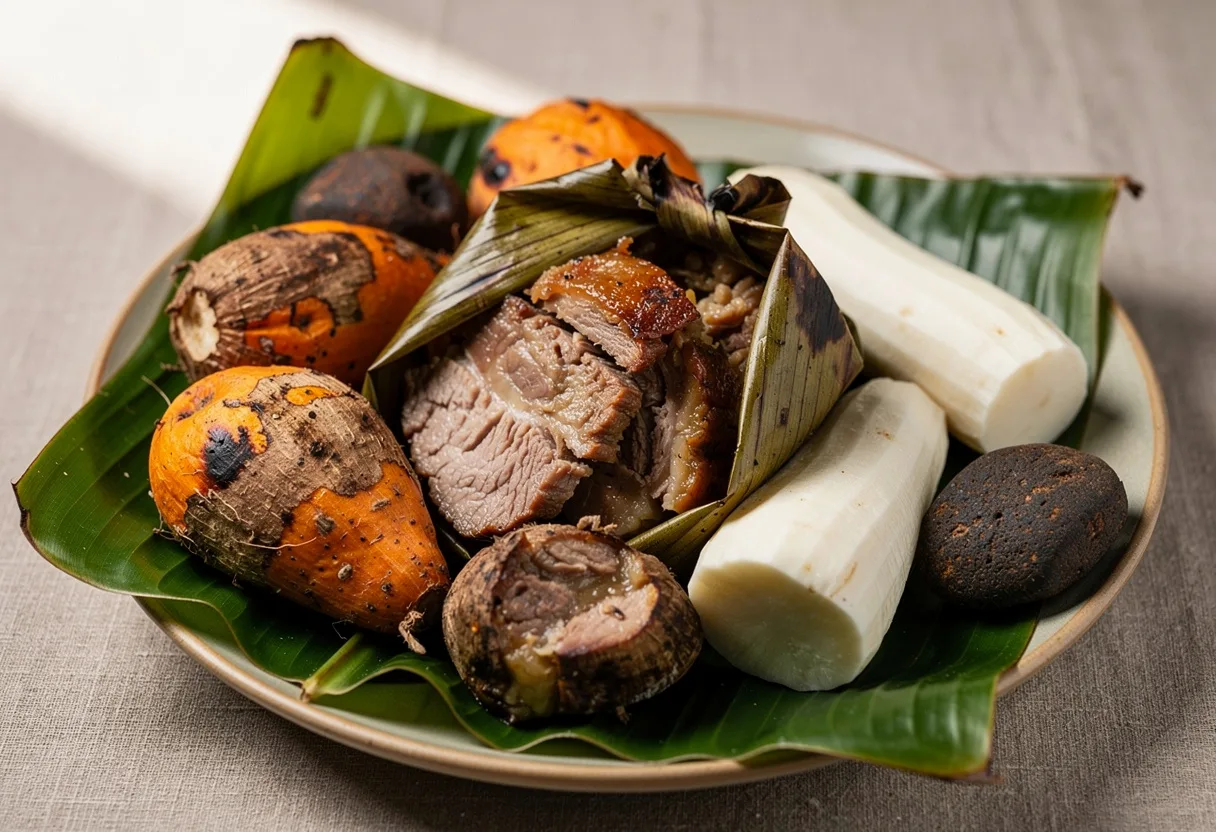
The Solomon Islands feast oven: leaf-wrapped pork and whole taro, kumara and cassava steamed and roasted among hot stones under layers of banana leaves, adapted here for a covered roasting tin.
Solomon Islander · medium · serves 6
prep 30 min · cook 180 min
~879 cal · 60g protein · 93g carbs · 28g fat · 10g fiber · 6g sugars · 10g sat fat (estimated, per serving)
↓ Jump to Recipe
AI-generated illustration
Motu is the traditional Solomon Islands way of cooking, and the feast that comes out of it. Stones are heated in a fire and arranged with paddles and big wooden tongs; peeled root crops such as (the local favourite), yam, sweet potato and are set among them and covered with more hot stones, then banana leaves are layered over the top in alternating directions to seal the heat in. The leaves keep the moisture in too, so the food is steamed and roasted at once: soft and moist inside, smoky and crisp outside.
For special occasions pork or whole fish, wrapped in banana leaves, goes onto the stones with the roots, along with puddings of grated root crop and . It is heavy work, from digging the roots and cutting firewood to moving the stones several times, and a motu is usually made by many hands for a village celebration.
Motu is a method more than a fixed recipe, and it cannot really be made in a kitchen. This card adapts it for a covered roasting tin lined with banana leaves: the pork and roots cook slowly in their own steam, though without the stones' smoke.
Saved recipes and passport stamps are kept on this device. Sign in to keep them across your devices and leave reviews.
Make it yours
✓ Naturally gluten-, dairy-, egg- and nut-free. No swaps needed.
Toggle a diet and the ingredients rewrite themselves with regional substitutes.
🥕 Vegetarian
🌱 Vegan
🌾 Gluten-Free
🥛 Dairy-Free
🥜 Nut-Free
🥚 Egg-Free
🐖 Pork-Free
Dietary labels are a cooking guide, not allergen-safety advice. We track dairy, egg, gluten, tree nuts and peanuts (we count coconut as a tree nut, following FDA labeling), fish, and shellfish; we do not screen for sesame, soy, mustard, celery, or sulphites. If you have a food allergy, read the label on every product you use, and note that a kitchen can cross-contaminate in ways a recipe cannot control.
Ingredients
US
Metric
Serves 6
- 1.2 kg bone-in pork shoulder, skin scored
- 1 tbsp sea salt
- 800 g , peeled
- 600 g kumara (sweet potato), peeled
- 600 g or yam, peeled and cut into large pieces
- 10 large banana leaves, softened over a flameHard to find? baking parchment inside a layer of foil - it wraps and steams the food just as well; you lose the grassy perfume of the leaf. Frozen banana leaves are stocked by most Asian and Pacific grocers
Instructions
- 1Heat the oven to 170C. Rub the pork all over with most of the salt and wrap it snugly in two or three layers of banana leaves.
- 2Line a large, deep roasting tin with banana leaves, overlapping them in alternating directions as a motu is sealed, with plenty hanging over the sides.
- 3Set the pork parcel in the middle and pack the taro, kumara and cassava around it. Sprinkle the roots with the remaining salt and a splash of water.
- 4Fold the overhanging leaves over everything, add more leaves on top, and cover the tin tightly with a double layer of foil.✎ Chef’s noteIn a real motu, hot stones go on top as well as underneath and the leaves are layered thickly to hold the heat; the tight foil does that job here.
- 5Bake about 3 hours, until the pork is tender enough to pull apart and the roots are soft right through. For a browner finish, uncover for the last 20 minutes at 200C.✎ Chef’s noteHome-oven adaptation: an oven gives the steam but not the smoke and stone-roasted crust of a motu.
- 6Rest 15 minutes, then open the parcels and serve the pork and roots together on banana leaves.
Solomon Islands motu tradition; covered-tin home adaptation.
Ratings & reviews
Cooked it? Rate this dish:
No account needed. Sign in to leave a full review with a comment.
Cooked it?
Kept on this device, no account needed. Sign in to leave a review and keep your passport across your devices.
No reviews yet, be the first to cook it.
🌏 While it simmers, know your destination
📍
Honiara. Honiara sits on Guadalcanal and eats fish with kumara sweet potato and slippery cabbage cooked in coconut milk. Solomon Islands cooking relies on taro, cassava, and reef fish, often baked in a motu stone oven for gatherings.
🗺️
Solomon Islands. Slippery cabbage is aibika, Abelmoschus manihot, and the slipperiness is its mucilage, the same quality okra has; it is cooked down in coconut milk until it thickens the pot itself. The motu is the earth oven, and there is a small version where hot stones go straight into a covered pot rather than into a pit.
🌍
Oceania. Oceania spans Australia, New Zealand, and thousands of Pacific islands, where the ocean and the coconut palm define the pantry. Traditional Polynesian and Melanesian cooking centers on root crops, taro, yam, cassava, and sweet potato, slow-cooked in earth ovens (the umu or mumu) alongside fresh reef fish and rich coconut cream. Modern Australian and Māori kitchens blend these deep roots with waves of Asian and European influence.
The story behind this dish is up top, worth a read while the pot works.
More from Solomon Islands
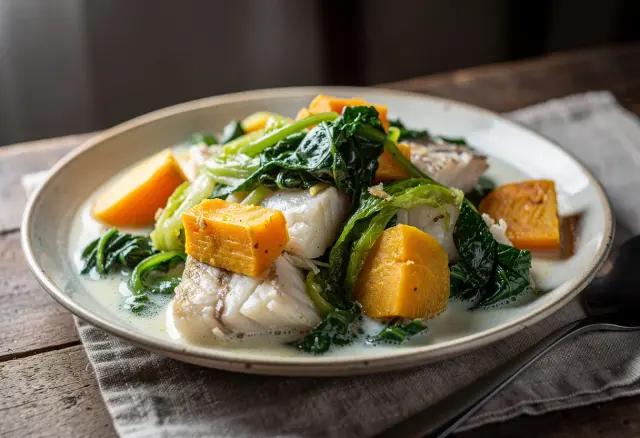
Fish with Slippery Cabbage & KumaraReef fish and kumara simmered in coconut cream with slippery cabbage (aibika) greens.
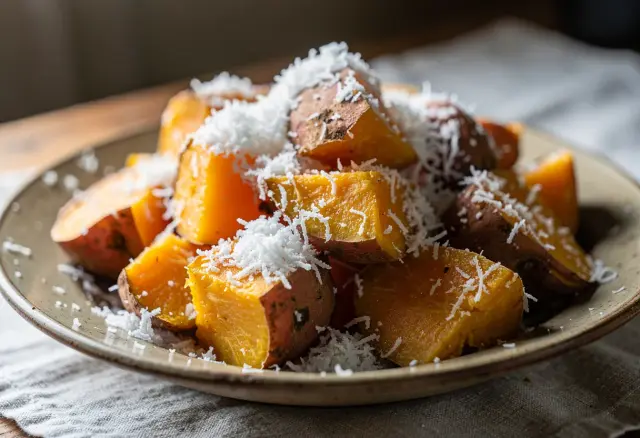
Boiled Kumara with Fresh CoconutTender boiled kumara (sweet potato) tossed with fresh grated coconut and a little salt, an honest, everyday Solomon Islands breakfast.
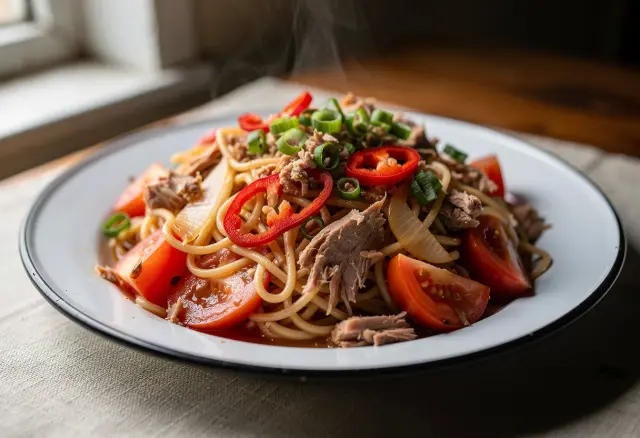
Chili Taiyo (Tinned Tuna Noodles)The Solomon Islands' favorite fast lunch: tinned Taiyo tuna tossed with noodles, fresh chili, tomato and onion into a quick, fiery plate.
Browse all Solomon Islands recipes →
Good to know
You’ll need: Oven, Mould or tin.
Storing it: Best straight off the heat. Leftovers keep 2 to 3 days refrigerated and reheat well in a hot oven rather than the microwave.
Make it a Solomon Islands meal
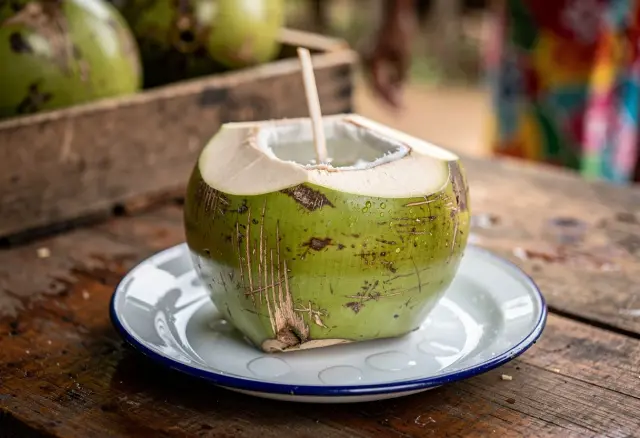
KulauDrink
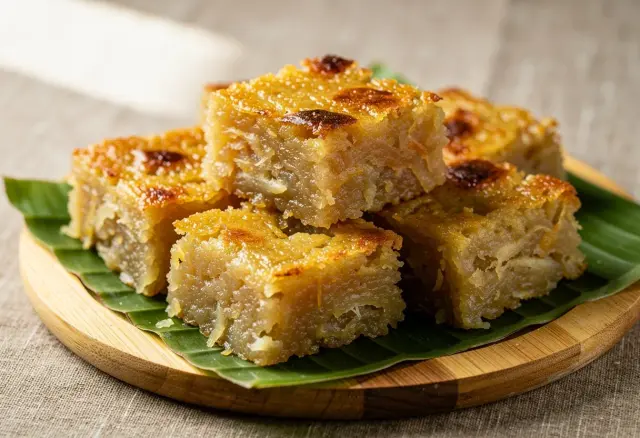
Solomon Islands Cassava PuddingDessert
Chili Taiyo (Tinned Tuna Noodles)Lunch
Similar dishes from around the world
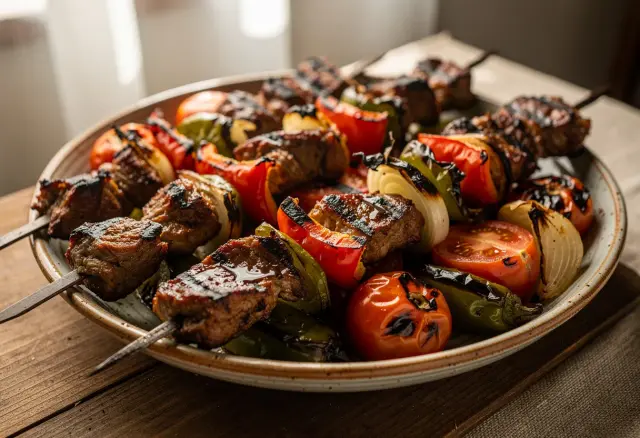
KhorovatsArmenia

Schweinshaxe (Roast Pork Knuckle)Germany
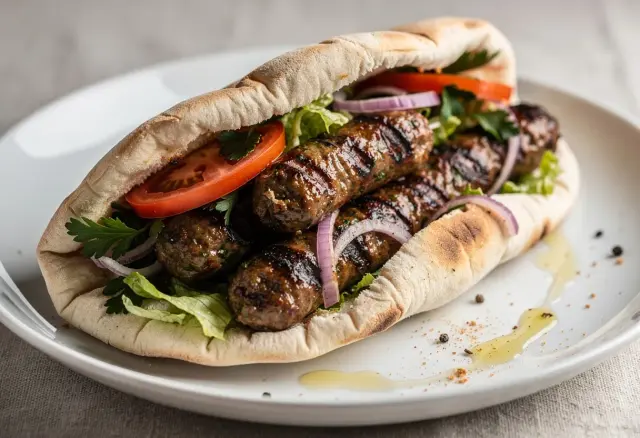
SheftaliaCyprus

Inihaw na Liempo (Grilled Pork Belly)Philippines
Cochinita PibilMexico
KebapcheBulgaria
Cuisine
Diet
Gluten-Free Recipes from Around the World
Dairy-Free Recipes from Around the World
Nut-Free Recipes from Around the World
Egg-Free Recipes from Around the World
Gluten-Free Solomon Islander Recipes
Gluten-Free Dinners from Around the World
Dairy-Free Dinners from Around the World
Nut-Free Dinners from Around the World
Egg-Free Dinners from Around the World
Frequently asked questions
What is Motu (Solomon Islands Stone-Oven Pork and Root Crops)?
The Solomon Islands feast oven: leaf-wrapped pork and whole taro, kumara and cassava steamed and roasted among hot stones under layers of banana leaves, adapted here for a covered roasting tin.
Where does Motu (Solomon Islands Stone-Oven Pork and Root Crops) come from?
Motu (Solomon Islands Stone-Oven Pork and Root Crops) is a Solomon Islander dish from Honiara, Solomon Islands.
Can Motu (Solomon Islands Stone-Oven Pork and Root Crops) be made vegan, gluten-free, or dairy-free?
This Motu (Solomon Islands Stone-Oven Pork and Root Crops) recipe includes substitution suggestions for vegetarian, vegan, gluten-free, dairy-free, nut-free, egg-free, and pork-free versions. Treat the substitutions as a starting guide rather than a guarantee, and see the allergen note below.
Is Motu (Solomon Islands Stone-Oven Pork and Root Crops) safe for people with food allergies?
Our dietary labels and substitutions are a cooking guide, not medical or allergen-safety advice. We track dairy, egg, gluten, tree nuts and peanuts (we still count coconut as a tree nut to be cautious, although the FDA stopped listing it as one in 2025), fish, and shellfish, but we do not screen for sesame, soy, mustard, celery, or sulphites. If you have a food allergy, always read the label on every product you use, and remember a home or commercial kitchen can cross-contaminate ingredients in ways a recipe cannot control.
How long does Motu (Solomon Islands Stone-Oven Pork and Root Crops) take to make?
About 210 minutes total (30 minutes prep, 180 minutes cooking), serving 6.
Get the Sunday Spin
One dish from somewhere in the world, in your inbox every Sunday. No spam, just dinner inspiration you can cook that day.