
🥔 SIDE
Mchadi (Georgian Cornbread)
Thick little oval cakes of stone-ground white cornmeal, salt and water, fried in a covered pan until crisp and golden outside and dense and crumbly within, served warm with lobio and cheese.
Georgian · easy · serves 6
prep 10 min · cook 24 min
~323 cal · 5g protein · 53g carbs · 12g fat · 5g fiber · 0g sugars · 2g sat fat (estimated, per serving)
↓ Jump to Recipe
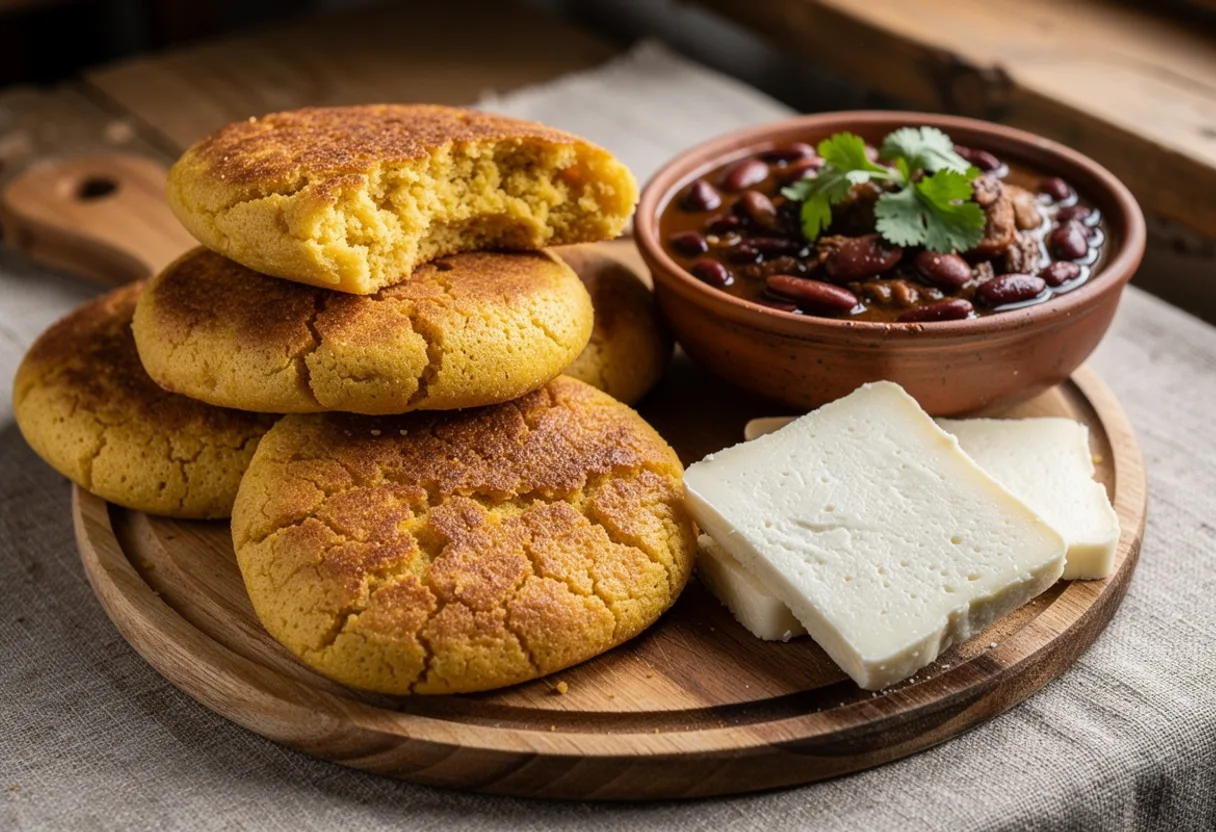
AI-generated illustration
Mchadi is the everyday bread of western Georgia, the regions such as Imereti and Samegrelo where maize grows better than wheat. Georgians half-jokingly speak of a line running down the country not far from Tbilisi, with a corn belt to the west and a wheat belt to the east. Maize arrived in the Caucasus no earlier than the sixteenth century, but in the west it has long since become the staple.
It could hardly be simpler: stone-ground cornmeal, preferably white, a pinch of salt and just enough cold water to bring it together like damp sand. Handfuls are pressed into thick ovals, smoothed with a wet spoon and fried in a heavy pan, lid on for the first side, until they have a hard golden crust and a dense, crumbly middle. The oldest recipes use nothing but cornmeal and water, cooked on a dry pan.
Mchadi is not eaten on its own. It arrives with a pot of lobio, the bean stew, to be broken up and dipped or crumbled into the bowl, with slices of Imeretian cheese or sulguni pressed into the warm bread, pickles and a bottle of tkemali on the side. Lobio, mchadi and cheese together make one of the cheapest and best-loved meals in the country.
Saved recipes and passport stamps are kept on this device. Sign in to keep them across your devices and leave reviews.
Make it yours
✓ Naturally vegetarian, vegan and gluten-, dairy-, nut-, egg- and pork-free. No swaps needed.
Toggle a diet and the ingredients rewrite themselves with regional substitutes.
🥕 Vegetarian
🌱 Vegan
🌾 Gluten-Free
🥛 Dairy-Free
🥜 Nut-Free
🥚 Egg-Free
🐖 Pork-Free
Dietary labels are a cooking guide, not allergen-safety advice. We track dairy, egg, gluten, tree nuts and peanuts (we count coconut as a tree nut, following FDA labeling), fish, and shellfish; we do not screen for sesame, soy, mustard, celery, or sulphites. If you have a food allergy, read the label on every product you use, and note that a kitchen can cross-contaminate in ways a recipe cannot control.
Ingredients
US
Metric
Serves 6
- 400 g stone-ground cornmeal, preferably white
- 1/2 tsp salt
- about 1 cup (240 ml) cold water, add it gradually, you may need a little more
- 4 tbsp sunflower oil, for frying
Instructions
- 1Mix the cornmeal and salt in a bowl. Add the cold water a little at a time, working it in with your hand, until the mixture holds together when squeezed, like wet sand, firm but not wet.✎ Chef’s noteStone-ground meal varies a lot in how much water it drinks, so go slowly. Too wet and the cakes spread and will not crisp.
- 2With wet hands, take portions the size of a tennis ball and press them into thick ovals about 8 to 10 cm long and 2 cm thick.
- 3Heat a thin layer of oil in a large heavy frying pan, cast iron if you have one, over medium heat until it shimmers. Lay in the cakes, smooth their tops with the back of a wet spoon, cover and cook for 5 to 6 minutes, until the underside is crisp and golden.
- 4Turn them and cook uncovered for another 5 to 6 minutes, until deep golden on the second side. Cook in two batches if they do not all fit, adding a little more oil.
- 5Serve warm, with lobio, cheese, pickles and tkemali.✎ Chef’s noteMchadi is at its best within the hour. Press a slice of cheese into a warm one and it softens straight away.
Western Georgian home tradition.
Ratings & reviews
Cooked it? Rate this dish:
No account needed. Sign in to leave a full review with a comment.
Cooked it?
Kept on this device, no account needed. Sign in to leave a review and keep your passport across your devices.
No reviews yet, be the first to cook it.
🌏 While it simmers, know your destination
📍
Imereti. Western Georgia's Imereti gives its name to imeruli khachapuri, the round, fully enclosed cheese bread filled with the region's own brined imeruli cheese. (The open, boat-shaped khachapuri with an egg in it is adjaruli, from Adjara on the Black Sea coast.) Imeretian cooking also runs to walnut-rich sauces and dishes laced with fresh herbs, and its wine and cheese traditions run deep in the Georgian feast.
🗺️
Georgia. Georgian food is one of the world's great undiscovered cuisines, famous for khachapuri (cheese-filled bread), soup dumplings called khinkali, and walnut-thickened sauces. As the likely birthplace of wine, its feasts (the supra) are legendary rituals of toasting and abundance.
🌍
Asia. Fermentation is the thread that runs the whole way across: soy sauce and miso, Korean doenjang and kimchi, Southeast Asian fish sauces, the soured batter behind an idli. Chilli is the newcomer among them, arriving only after 1500 with Portuguese and Spanish traders, which makes the heat in Sichuan, Thai and Korean cooking far younger than the fermenting underneath it.
The story behind this dish is up top, worth a read while the pot works.
More from Georgia
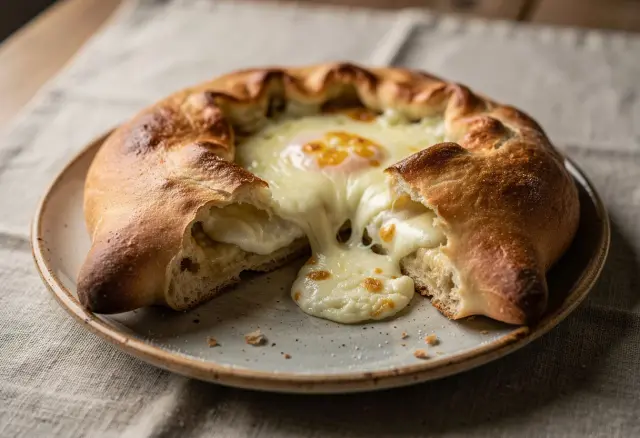
Imeruli Khachapuri (Cheese-Stuffed Bread)A golden, pan-baked flatbread sealed around a molten heart of tangy, salty cheese.
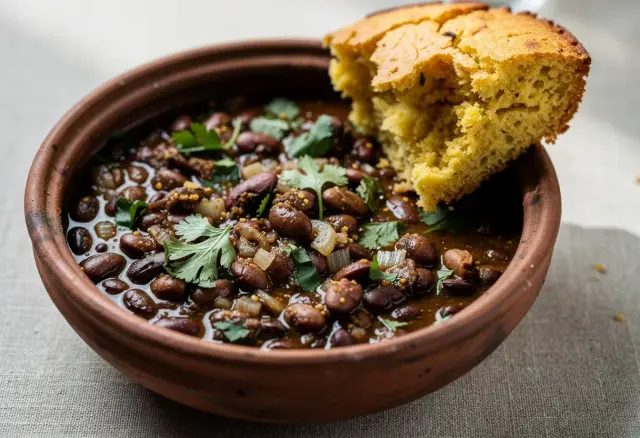
LobioKidney beans simmered and half-crushed with walnuts, coriander, and Georgian spice, served in clay with cornbread.
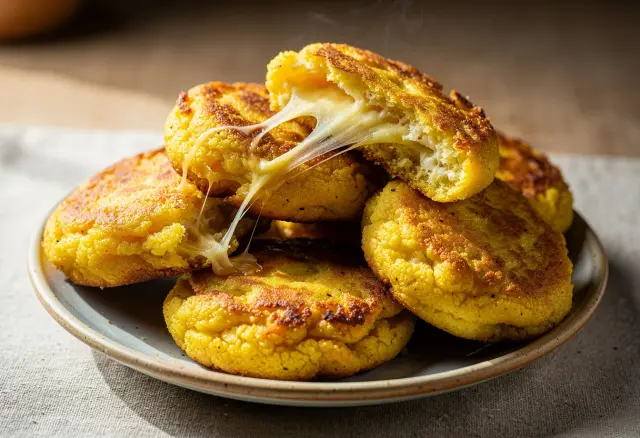
Chvishtari (Cornmeal Cheese Bread)Griddled cornmeal cakes packed with young melting cheese, crisp outside and molten within, from the mountains of western Georgia.
Browse all Georgia recipes →
Good to know
You’ll need: Skillet or frying pan.
Storing it: Best the day it is made. Wrap well and refresh in a warm oven, or freeze and reheat straight from frozen.
Make it a Georgia meal

TarkhunaDrink
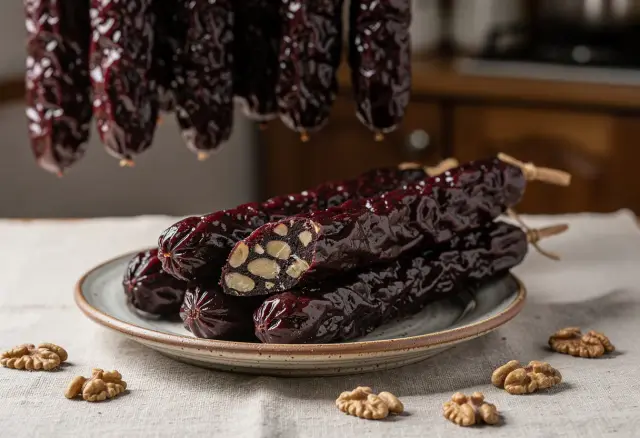
ChurchkhelaDessert
Similar dishes from around the world
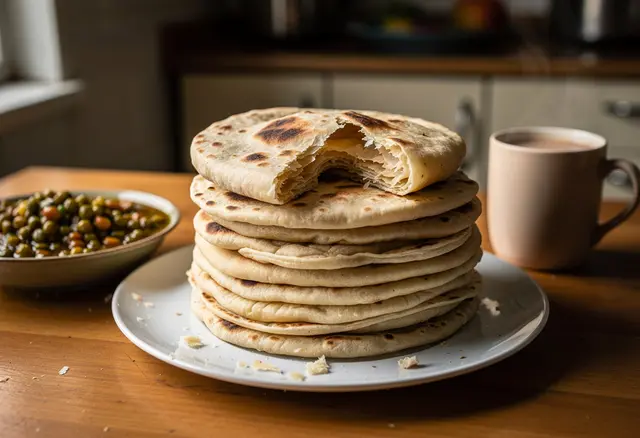
Chapati (Kenyan Soft Layered Flatbread)Kenya
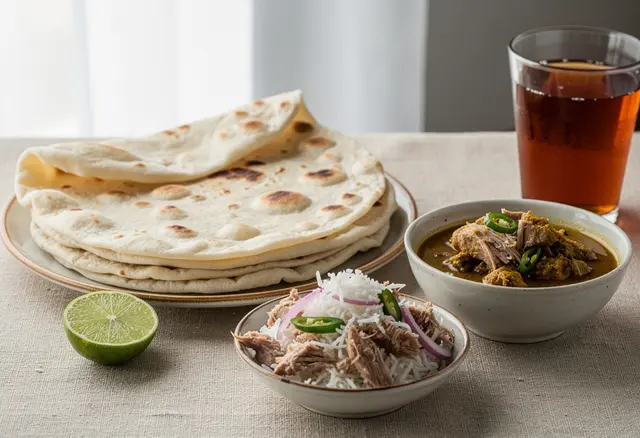
Roshi (Maldivian Flatbread)Maldives
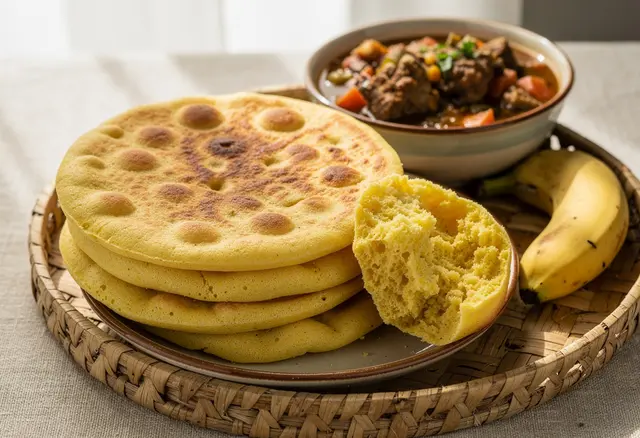
Muufo (Somali Corn Flatbread)Somalia
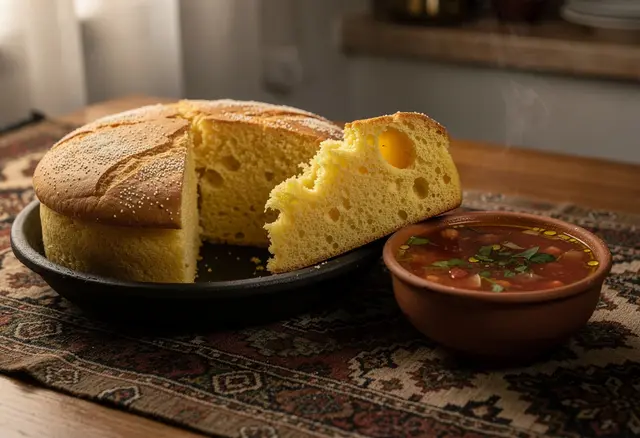
Matlouh (Algerian Semolina Pan Bread)Algeria
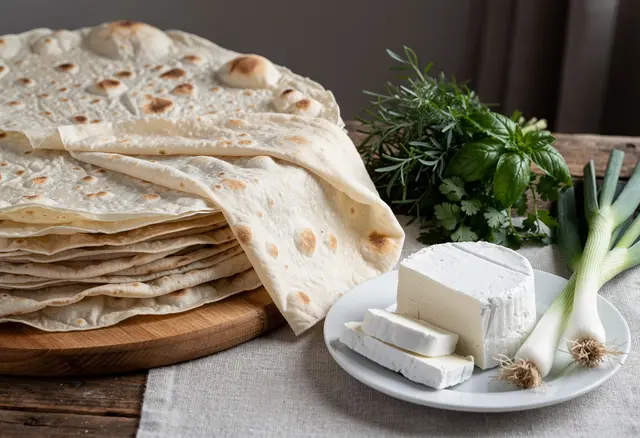
Lavash (Armenian Thin Flatbread)Armenia
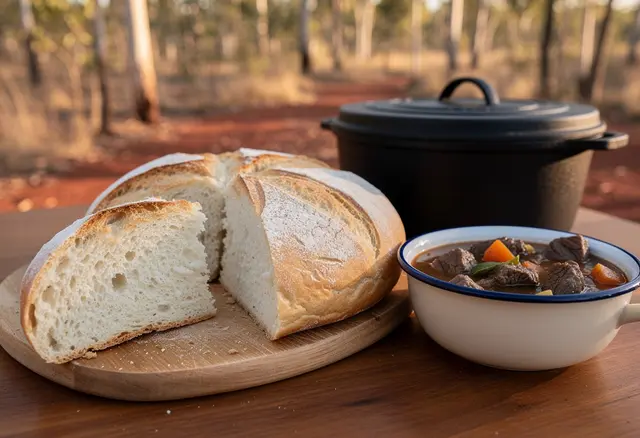
Damper (Australian Bush Bread)Australia
Cuisine
Diet
Vegetarian Recipes from Around the World
Vegan Recipes from Around the World
Gluten-Free Recipes from Around the World
Dairy-Free Recipes from Around the World
Nut-Free Recipes from Around the World
Egg-Free Recipes from Around the World
Pork-Free Recipes from Around the World
Vegetarian Georgian Recipes
Dairy-Free Georgian Recipes
Frequently asked questions
What is Mchadi (Georgian Cornbread)?
Thick little oval cakes of stone-ground white cornmeal, salt and water, fried in a covered pan until crisp and golden outside and dense and crumbly within, served warm with lobio and cheese.
Where does Mchadi (Georgian Cornbread) come from?
Mchadi (Georgian Cornbread) is a Georgian dish from Imereti, Georgia.
Can Mchadi (Georgian Cornbread) be made vegan, gluten-free, or dairy-free?
This Mchadi (Georgian Cornbread) recipe includes substitution suggestions for vegetarian, vegan, gluten-free, dairy-free, nut-free, egg-free, and pork-free versions. Treat the substitutions as a starting guide rather than a guarantee, and see the allergen note below.
Is Mchadi (Georgian Cornbread) safe for people with food allergies?
Our dietary labels and substitutions are a cooking guide, not medical or allergen-safety advice. We track dairy, egg, gluten, tree nuts and peanuts (we still count coconut as a tree nut to be cautious, although the FDA stopped listing it as one in 2025), fish, and shellfish, but we do not screen for sesame, soy, mustard, celery, or sulphites. If you have a food allergy, always read the label on every product you use, and remember a home or commercial kitchen can cross-contaminate ingredients in ways a recipe cannot control.
How long does Mchadi (Georgian Cornbread) take to make?
About 34 minutes total (10 minutes prep, 24 minutes cooking), serving 6.
Get the Sunday Spin
One dish from somewhere in the world, in your inbox every Sunday. No spam, just dinner inspiration you can cook that day.