
🥔 SIDE
Matlouh (Algerian Semolina Pan Bread)
A soft, risen semolina bread shaped into thick rounds and cooked on a hot clay tajine or griddle until golden and hollow-sounding, torn and eaten with soups, stews and salads.
Algerian · medium · serves 6
prep 20 min · cook 16 min · plus 2 h 20 min hands-off time
~299 cal · 9g protein · 57g carbs · 3g fat · 3g fiber · 2g sugars · 0g sat fat (estimated, per serving)
↓ Jump to Recipe
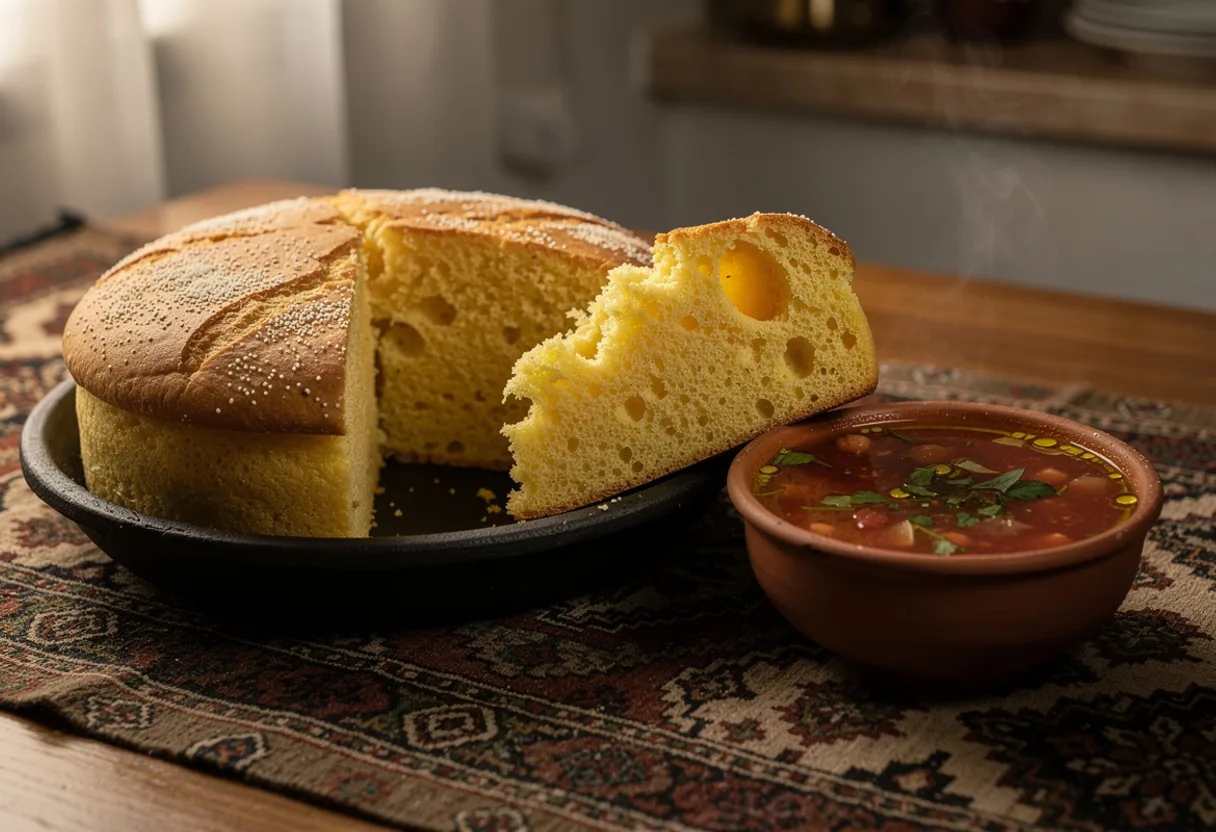
AI-generated illustration
Matlouh, also called khobz tajine or khobz matlou, is the everyday risen bread of Algerian homes. It is made from , water, salt and a leaven, patted into thick rounds and baked not in an oven but on a tajine, a shallow clay or cast-iron pan set over the flame, where it puffs up and turns golden and speckled on both sides.
It is bread for the whole meal: torn and used to scoop up a tajine or a stew, eaten with chorba and with salads, and it is especially important during Ramadan, when a fresh matlouh is on almost every table at the evening meal. The old way leavens it with a natural sourdough starter; most home cooks now use yeast, and many add a little sugar to help it rise. Recipes vary by region and family, and some cooks scatter nigella or anise seeds over the top.
Saved recipes and passport stamps are kept on this device. Sign in to keep them across your devices and leave reviews.
Make it yours
✓ Naturally vegetarian, vegan and dairy-, nut-, egg- and pork-free. No swaps needed.
Toggle a diet and the ingredients rewrite themselves with regional substitutes.
🥕 Vegetarian
🌱 Vegan
🌾 Gluten-Free
🥛 Dairy-Free
🥜 Nut-Free
🥚 Egg-Free
🐖 Pork-Free
Dietary labels are a cooking guide, not allergen-safety advice. We track dairy, egg, gluten, tree nuts and peanuts (we count coconut as a tree nut, following FDA labeling), fish, and shellfish; we do not screen for sesame, soy, mustard, celery, or sulphites. If you have a food allergy, read the label on every product you use, and note that a kitchen can cross-contaminate in ways a recipe cannot control.
Ingredients
US
Metric
Serves 6
- 450 g (about 2 1/2 cups) fine and medium , mixed, plus extra for dusting
- 2 tsp instant yeast
- 1 tsp salt
- 1 tbsp sugar
- 250 to 300 ml (1 to 1 1/4 cups) warm water
- 1 tbsp oil, for your hands and the surface
Instructions
- 1Mix the semolina, yeast, salt and sugar. Add the warm water gradually, mixing, until you have a soft, slightly sticky dough. Knead for 3 to 5 minutes on an oiled surface until smooth.
- 2Cover the bowl and leave to rise in a warm place for 1 to 1 1/2 hours, until doubled.
- 3Divide the dough into 2 balls without knocking out too much air, set them on a cloth dusted with semolina, cover and leave for 15 minutes.
- 4With your palms, flatten each ball into a round about 1.5 cm thick. Dust with semolina, cover and leave to rise for 30 minutes more.
- 5Heat a clay tajine, cast-iron griddle or heavy frying pan over medium heat. Cook one bread at a time for 4 minutes a side, turning it a couple of times and rotating it so the edges colour too, until golden and puffed and it sounds hollow when tapped.✎ Chef’s noteIf the outside browns before the middle is done, lower the heat and stand the bread on its edge on the pan, rolling it round, to cook the rim.
- 6Wrap in a cloth to keep soft and serve warm, cut into wedges, with soup, a tajine or salads.
Algerian home tradition.
Ratings & reviews
Cooked it? Rate this dish:
No account needed. Sign in to leave a full review with a comment.
Cooked it?
Kept on this device, no account needed. Sign in to leave a review and keep your passport across your devices.
No reviews yet, be the first to cook it.
🌏 While it simmers, know your destination
📍
Algiers. Algiers cooks Mediterranean-Maghreb food, couscous, chorba soup, and dolma, brightened by fresh vegetables and olive oil. French, Berber, and Ottoman layers meet in the white capital.
🗺️
Algeria. Couscous belongs to four countries at once. UNESCO inscribed the knowledge, know-how and practices around it in 2020 as a joint element of Algeria, Mauritania, Morocco and Tunisia, a rare four-nation nomination that exists precisely because no one of them can claim it. Chorba frik, thickened with green cracked wheat, is the soup that opens the meal through Ramadan.
🌍
Africa. The structure repeats across most of the continent: one starch and one sauce. A grain or root is cooked stiff, torn or rolled by hand, and used to carry a stew of leaves, groundnut, okra or fish, usually from a shared bowl and with the right hand. UNESCO listings have followed that logic, inscribing couscous in 2020 as a shared Maghreb tradition and Ivorian attieke in 2024.
The story behind this dish is up top, worth a read while the pot works.
More from Algeria
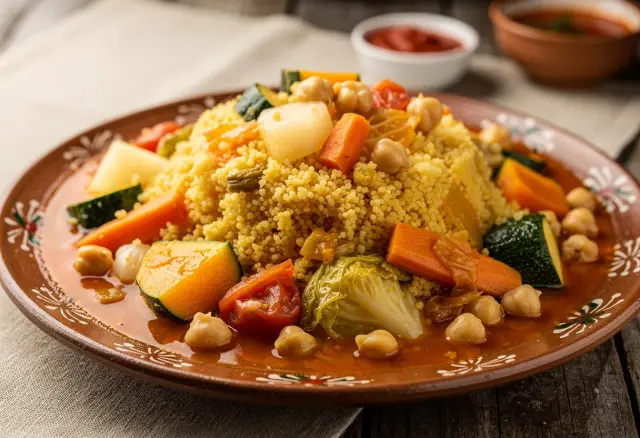
Friday Couscous with Seven VegetablesSteamed couscous under a saffron-tinted vegetable stew, the meal that gathers Algerian families every Friday.
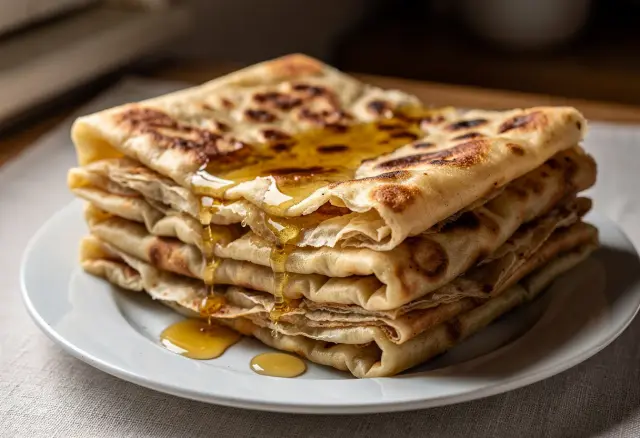
MsemenFlaky square semolina flatbreads folded in layers and griddled, served with honey or jam.
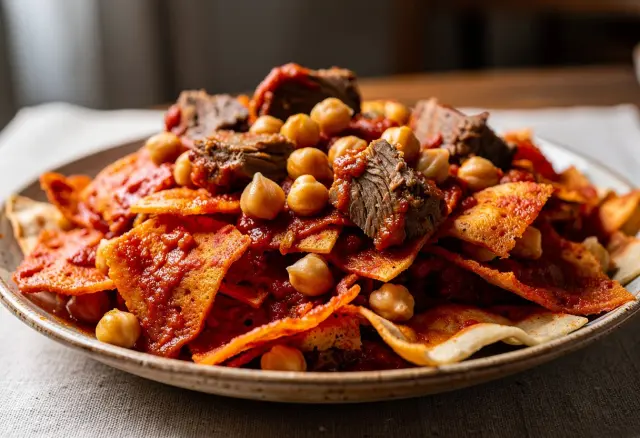
ChakhchoukhaTorn flatbread bathed in a spiced lamb, chickpea, and tomato sauce, an Algerian dish for gatherings.
Browse all Algeria recipes →
Good to know
You’ll need: Skillet or frying pan, Griddle or flat pan.
Storing it: Best the day it is made. Wrap well and refresh in a warm oven, or freeze and reheat straight from frozen.
Make it an Algeria meal

Cherbet el LozDrink
Kalb el LouzDessert
Similar dishes from around the world

Somun (Bosnian Flatbread)Bosnia & Herzegovina
Chapati (Kenyan Soft Layered Flatbread)Kenya
Roshi (Maldivian Flatbread)Maldives
Muufo (Somali Corn Flatbread)Somalia
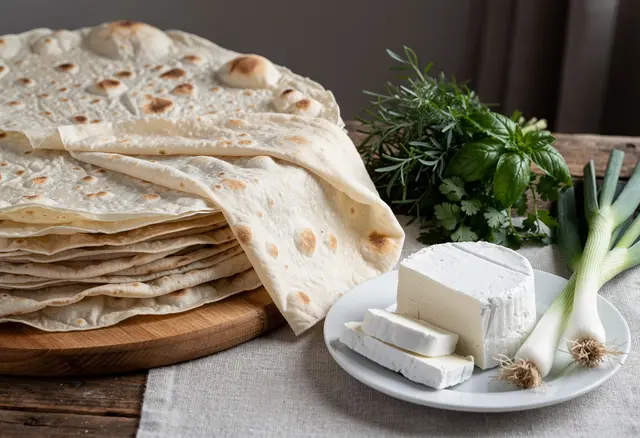
Lavash (Armenian Thin Flatbread)Armenia

Flatkaka (Icelandic Rye Flatbread)Iceland
Cuisine
Diet
Themes
Frequently asked questions
What is Matlouh (Algerian Semolina Pan Bread)?
A soft, risen semolina bread shaped into thick rounds and cooked on a hot clay tajine or griddle until golden and hollow-sounding, torn and eaten with soups, stews and salads.
Where does Matlouh (Algerian Semolina Pan Bread) come from?
Matlouh (Algerian Semolina Pan Bread) is an Algerian dish from Algiers, Algeria.
Can Matlouh (Algerian Semolina Pan Bread) be made vegan, gluten-free, or dairy-free?
This Matlouh (Algerian Semolina Pan Bread) recipe includes substitution suggestions for vegetarian, vegan, gluten-free, dairy-free, nut-free, egg-free, and pork-free versions. Treat the substitutions as a starting guide rather than a guarantee, and see the allergen note below.
Is Matlouh (Algerian Semolina Pan Bread) safe for people with food allergies?
Our dietary labels and substitutions are a cooking guide, not medical or allergen-safety advice. We track dairy, egg, gluten, tree nuts and peanuts (we still count coconut as a tree nut to be cautious, although the FDA stopped listing it as one in 2025), fish, and shellfish, but we do not screen for sesame, soy, mustard, celery, or sulphites. If you have a food allergy, always read the label on every product you use, and remember a home or commercial kitchen can cross-contaminate ingredients in ways a recipe cannot control.
How long does Matlouh (Algerian Semolina Pan Bread) take to make?
About 2 h 56 min in all: 20 minutes prep and 16 minutes cooking, plus 2 h 20 min of hands-off waiting the method needs, serving 6.
Get the Sunday Spin
One dish from somewhere in the world, in your inbox every Sunday. No spam, just dinner inspiration you can cook that day.