
🍢 SNACK
Kolo (Ethiopian Roasted Barley Snack)
Barley, chickpeas and peanuts roasted until crunchy and deeply toasted, tossed with salt and a pinch of berbere and eaten by the handful with coffee.
Ethiopian · easy · serves 8
prep 10 min · cook 45 min · plus 20 min hands-off time
~250 cal · 9g protein · 33g carbs · 10g fat · 7g fiber · 2g sugars · 1g sat fat (estimated, per serving)
↓ Jump to Recipe
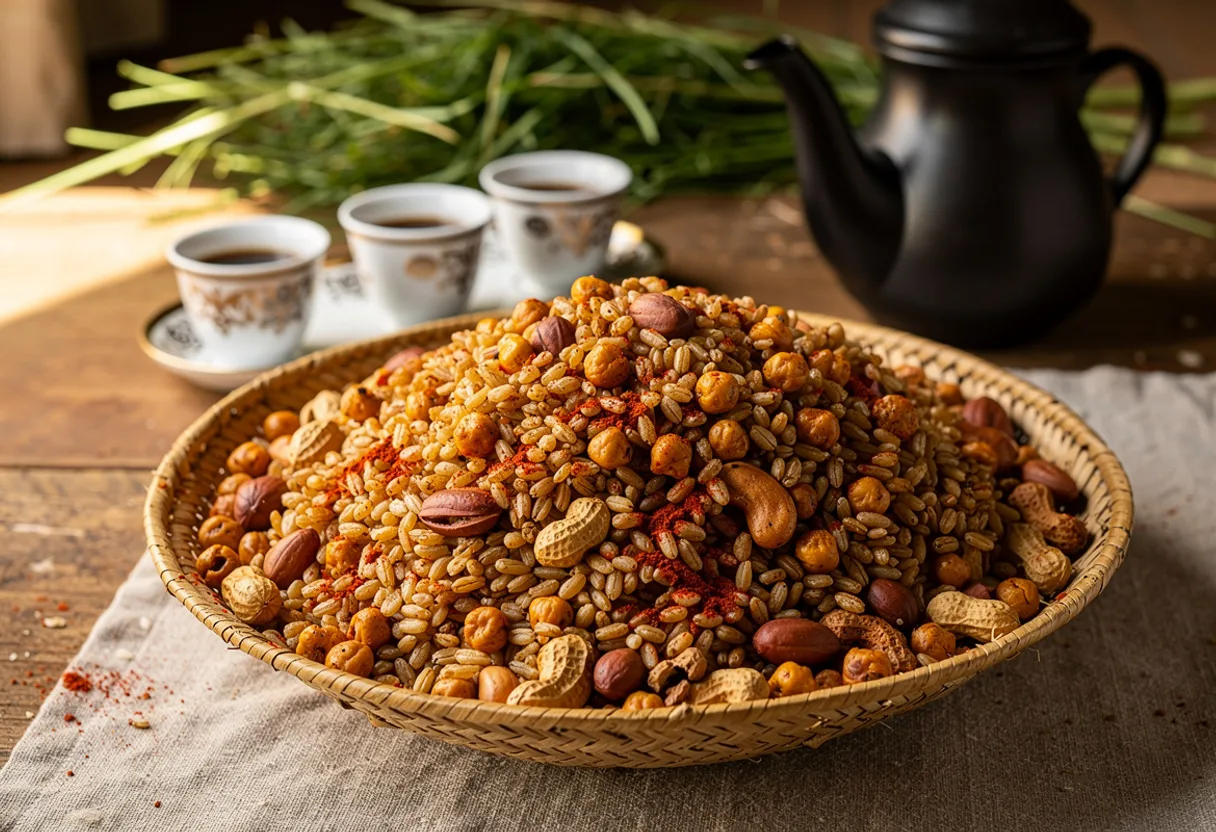
AI-generated illustration
Kolo is Ethiopia's snack of roasted grain: barley, usually mixed with roasted chickpeas and peanuts and sometimes sunflower seeds, salted and eaten by the handful. It is crunchy, nutty and plain in the best way.
It turns up everywhere. Kolo is offered to guests before a meal and passed around during the coffee ceremony, where a small bowl of it sits beside the cups as the three rounds of coffee are poured. It is packed for long bus rides and pilgrimages, and street sellers sell it by the paper cone. At home it is roasted in a dry pan and stirred constantly until the grains crackle and turn golden brown; a pinch of at the end gives it a little warmth.
This version roasts the barley and chickpeas in the oven, which is easier to control in a home kitchen, and uses pearl barley and cooked chickpeas, which roast crisp without cracking your teeth.
Saved recipes and passport stamps are kept on this device. Sign in to keep them across your devices and leave reviews.
Make it yours
✓ Naturally vegetarian, vegan and dairy-, egg- and pork-free. No swaps needed.
Toggle a diet and the ingredients rewrite themselves with regional substitutes.
🥕 Vegetarian
🌱 Vegan
🌾 Gluten-Free
🥛 Dairy-Free
🥜 Nut-Free
🥚 Egg-Free
🐖 Pork-Free
Dietary labels are a cooking guide, not allergen-safety advice. We track dairy, egg, gluten, tree nuts and peanuts (we count coconut as a tree nut, following FDA labeling), fish, and shellfish; we do not screen for sesame, soy, mustard, celery, or sulphites. If you have a food allergy, read the label on every product you use, and note that a kitchen can cross-contaminate in ways a recipe cannot control.
Ingredients
US
Metric
Serves 8
- 250 g (about 1 1/4 cups) pearl barley
- 240 g (one 400 g tin) cooked chickpeas, drained
- 120 g (3/4 cup) raw peanuts, skinned
- 1 tbsp sunflower oil
- 1 tsp salt, or to taste
- 1/2 tsp (optional)
Instructions
- 1Pat the chickpeas very dry with a clean cloth and leave them spread out, uncovered, for 20 minutes so the surface dries.✎ Chef’s noteDamp chickpeas steam instead of crisping, so do not skip the drying.
- 2Heat the oven to 190°C (375°F). Toss the chickpeas with half the oil, spread them on a baking tray and roast for 20 minutes.
- 3Rinse the barley, dry it well on a cloth, toss it with the rest of the oil and add it to the tray. Stir and roast for 15 minutes more.
- 4Add the peanuts, stir and roast for 10 minutes more, stirring once, until the barley is deep golden and crunchy when a grain is cooled and bitten. Watch it closely at the end so nothing burns.
- 5Toss the hot kolo with the salt and berbere, spread it out to cool completely, then store it airtight. Serve in a bowl with coffee.
Ethiopian coffee-ceremony and street tradition.
Ratings & reviews
Cooked it? Rate this dish:
No account needed. Sign in to leave a full review with a comment.
Cooked it?
Kept on this device, no account needed. Sign in to leave a review and keep your passport across your devices.
No reviews yet, be the first to cook it.
🌏 While it simmers, know your destination
📍
Addis Ababa. Addis Ababa eats from a shared platter of injera, the spongy sour teff flatbread, spread with wot stews. Orthodox fasting built a deep vegan repertoire here, and chickpea-flour shiro is its everyday comfort, seasoned with berbere - though on fasting days the spiced butter niter kibbeh gives way to oil.
🗺️
Ethiopia. Ethiopia broke the Scramble for Africa at Adwa in 1896 and was never made a European colony, though Italy did occupy it from 1936 to 1941, and Liberia holds a similar claim. Its cuisine stands equally apart, built around injera, a tangy fermented teff flatbread that doubles as plate and utensil for an array of spiced stews called wat. The fiery berbere spice blend and spiced clarified butter niter kibbeh give the food its signature depth, and long fasting traditions have produced a rich vegan repertoire.
🌍
Africa. Much of what reads as timeless African cooking is younger than the Atlantic crossings. Maize, cassava, groundnut, chilli and tomato all arrived from the Americas after 1500 and pushed older crops aside; millet, sorghum, teff, yam and fonio are the ones that were already here, and the map still shows the join.
The story behind this dish is up top, worth a read while the pot works.
More from Ethiopia
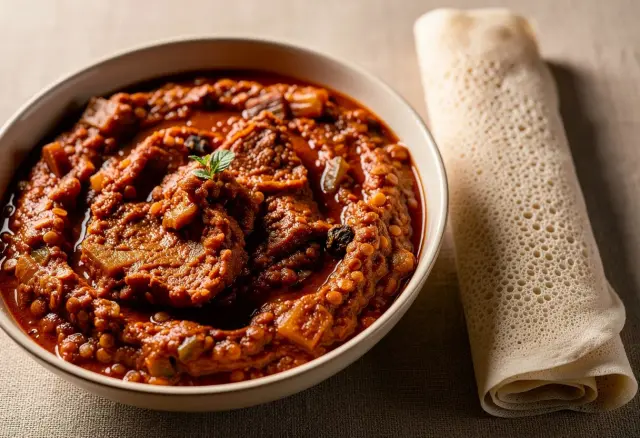
Misir Wot (Spiced Red Lentil Stew)Red lentils melted into a deep, chili-red stew built on berbere spice and slow-caramelized onions.
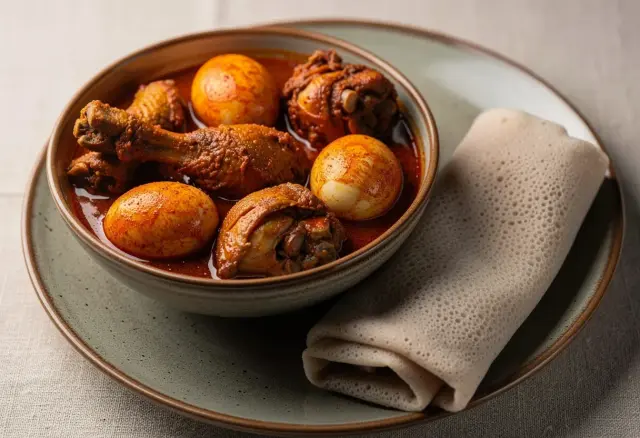
Doro WatEthiopia’s celebration dish: chicken slow-stewed in a mountain of caramelized onions and berbere, with whole eggs.
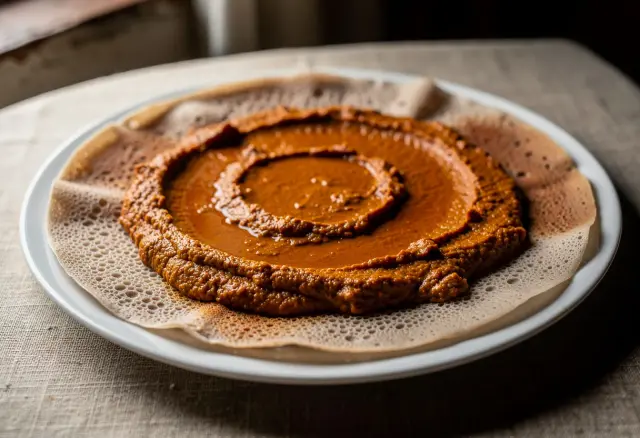
Shiro WotGround-chickpea flour whisked into a spiced, silky stew, the dish that feeds Ethiopia on fasting days and hard times alike.
Browse all Ethiopia recipes →
Good to know
You’ll need: Oven.
Storing it: Best straight off the heat. Leftovers keep 2 to 3 days refrigerated and reheat well in a hot oven rather than the microwave.
Make it an Ethiopia meal

Ethiopian Coffee (Buna)Drink
Yemarina Yewotet Dabo (Honey and Milk Bread)Dessert
Similar dishes from around the world
Maputi aneNzungu (Zimbabwean Roasted Maize and Peanuts)Zimbabwe
Kitaba (Angolan Spiced Peanut Paste)Angola
Lipabi (Basotho Roasted Maize Meal)Lesotho
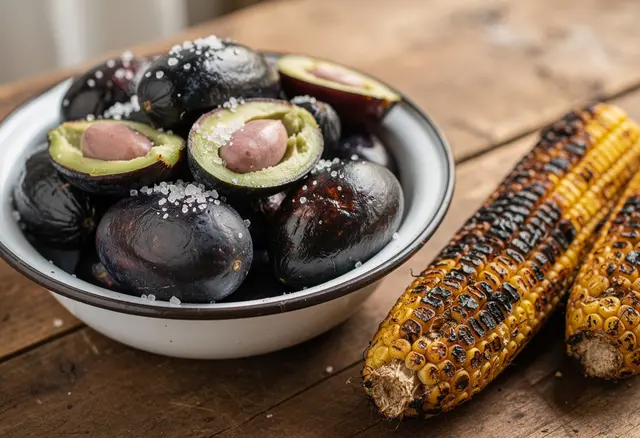
Safou (Congolese Warm Salted African Plums)Republic of the Congo
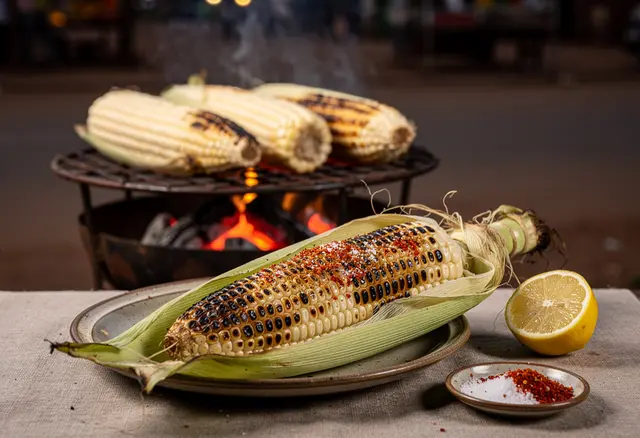
Mahindi Choma (Kenyan Roasted Maize)Kenya

Elote (Mexican Street Corn)Mexico
Cuisine
Diet
Frequently asked questions
What is Kolo (Ethiopian Roasted Barley Snack)?
Barley, chickpeas and peanuts roasted until crunchy and deeply toasted, tossed with salt and a pinch of berbere and eaten by the handful with coffee.
Where does Kolo (Ethiopian Roasted Barley Snack) come from?
Kolo (Ethiopian Roasted Barley Snack) is an Ethiopian dish from Addis Ababa, Ethiopia.
Can Kolo (Ethiopian Roasted Barley Snack) be made vegan, gluten-free, or dairy-free?
This Kolo (Ethiopian Roasted Barley Snack) recipe includes substitution suggestions for vegetarian, vegan, gluten-free, dairy-free, nut-free, egg-free, and pork-free versions. Treat the substitutions as a starting guide rather than a guarantee, and see the allergen note below.
Is Kolo (Ethiopian Roasted Barley Snack) safe for people with food allergies?
Our dietary labels and substitutions are a cooking guide, not medical or allergen-safety advice. We track dairy, egg, gluten, tree nuts and peanuts (we still count coconut as a tree nut to be cautious, although the FDA stopped listing it as one in 2025), fish, and shellfish, but we do not screen for sesame, soy, mustard, celery, or sulphites. If you have a food allergy, always read the label on every product you use, and remember a home or commercial kitchen can cross-contaminate ingredients in ways a recipe cannot control.
How long does Kolo (Ethiopian Roasted Barley Snack) take to make?
About 1 h 15 min in all: 10 minutes prep and 45 minutes cooking, plus 20 min of hands-off waiting the method needs, serving 8.
Get the Sunday Spin
One dish from somewhere in the world, in your inbox every Sunday. No spam, just dinner inspiration you can cook that day.