
🥤 DRINK
Ethiopian Coffee (Buna)
Freshly roasted beans ground and brewed dark in a clay jebena, the heart of the coffee ceremony.
Ethiopian · medium · serves 6
prep 15 min · cook 15 min
~0 cal · 0g protein · 0g carbs · 0g fat · 0g fiber · 0g sugars · 0g sat fat (estimated, per serving)
↓ Jump to Recipe
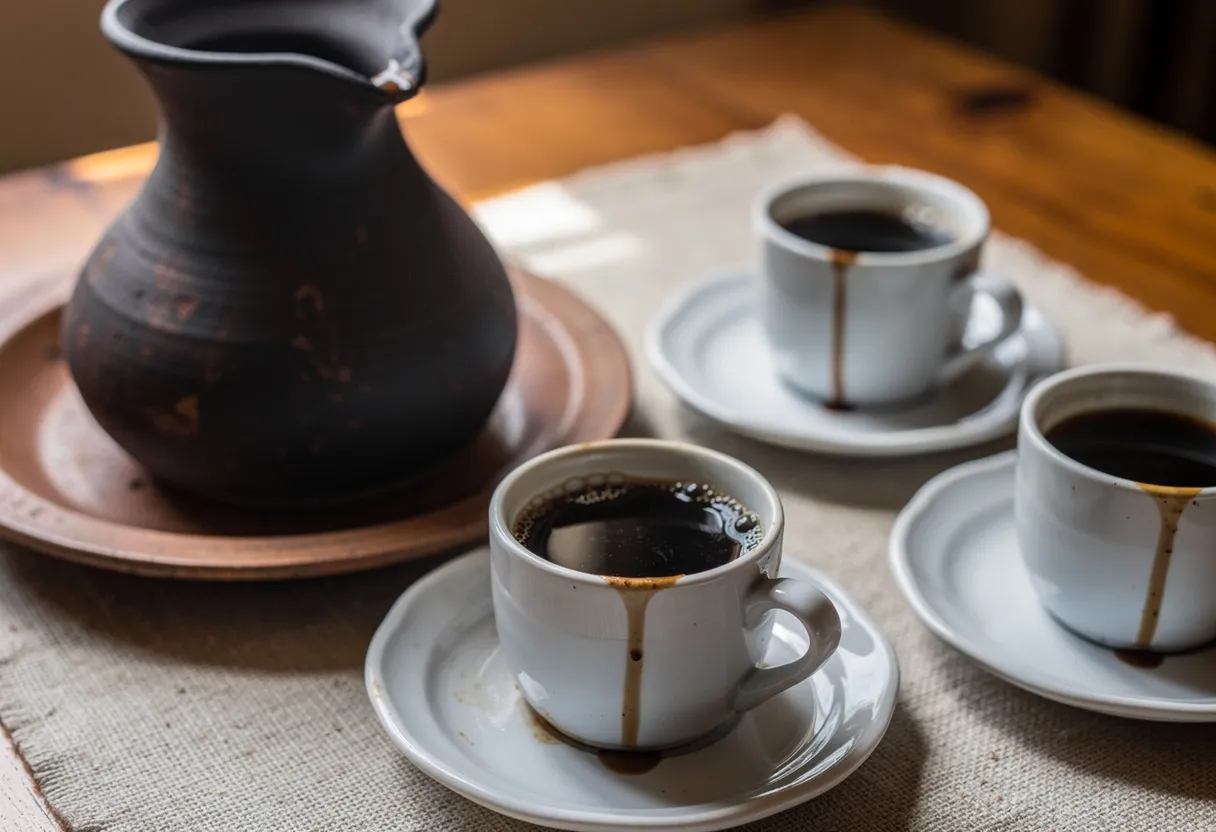
AI-generated illustration
Buna, Ethiopian coffee, is not merely a drink but a ceremony, and Ethiopia is widely regarded as the birthplace of coffee itself, where the plant grows wild in the highland forests. In the traditional ceremony, green beans are washed and roasted over coals in front of the guests, the fragrant smoke wafted toward them before the beans are ground and brewed.
The coffee is brewed dark in a rounded clay pot called a jebena and poured, from a height, into small handleless cups. It is served in three rounds, 'abol,' 'tona,' and 'baraka', each weaker than the last, and to stay for all three is a mark of respect and friendship. Incense burns and popcorn or snacks accompany it.
The ceremony can take hours and is central to Ethiopian social life, a way of honoring guests, marking occasions, and simply gathering. In a country that gave the world coffee, the ritual around it is treated with a reverence that matches its origins.
Saved recipes and passport stamps are kept on this device. Sign in to keep them across your devices and leave reviews.
Make it yours
✓ Naturally vegetarian and gluten-, egg-, nut- and pork-free. No swaps needed.
Toggle a diet and the ingredients rewrite themselves with regional substitutes.
🥕 Vegetarian
🌱 Vegan
🌾 Gluten-Free
🥛 Dairy-Free
🥜 Nut-Free
🥚 Egg-Free
🐖 Pork-Free
Dietary labels are a cooking guide, not allergen-safety advice. We track dairy, egg, gluten, tree nuts and peanuts (we count coconut as a tree nut, following FDA labeling), fish, and shellfish; we do not screen for sesame, soy, mustard, celery, or sulphites. If you have a food allergy, read the label on every product you use, and note that a kitchen can cross-contaminate in ways a recipe cannot control.
Ingredients
US
Metric
Serves 6
- 1/2 cup green (or dark-roast) coffee beans
- 5 cups water
- to taste sugar (or salt/butter, regionally)
Instructions
- 1Roast the green beans in a dry pan until deep brown and fragrant (or start with dark-roast beans).
- 2Grind them coarsely by hand.
- 3Bring the water to a boil in a jebena or small pot, add the grounds, and let it rise and settle a few times.
- 4Rest a minute so the grounds sink.
- 5Pour in a thin stream into small cups, sweetening to taste, and serve in rounds.
Amhara coffee ceremony.
Ratings & reviews
Cooked it? Rate this dish:
No account needed. Sign in to leave a full review with a comment.
Cooked it?
Kept on this device, no account needed. Sign in to leave a review and keep your passport across your devices.
No reviews yet, be the first to cook it.
🌏 While it simmers, know your destination
📍
Amhara. The Ethiopian highlands of Amhara are the heartland of injera and long-simmered wats, where teff grows and the spice blend berbere is prized. Fasting traditions of the Orthodox Church have shaped a deep vegan repertoire.
🗺️
Ethiopia. Orthodox fasting rules bar animal products on a great many days of the year, which has quietly built one of the world's deepest everyday vegan repertoires: shiro milled from chickpeas, lentil stews, and boiled greens, set out together on a woven mesob basket. Coffee gets its own unhurried ritual, green beans roasted over charcoal in front of the guests, ground by hand and brewed in a long-necked clay pot.
🌍
Africa. Much of what reads as timeless African cooking is younger than the Atlantic crossings. Maize, cassava, groundnut, chilli and tomato all arrived from the Americas after 1500 and pushed older crops aside; millet, sorghum, teff, yam and fonio are the ones that were already here, and the map still shows the join.
The story behind this dish is up top, worth a read while the pot works.
More from Ethiopia
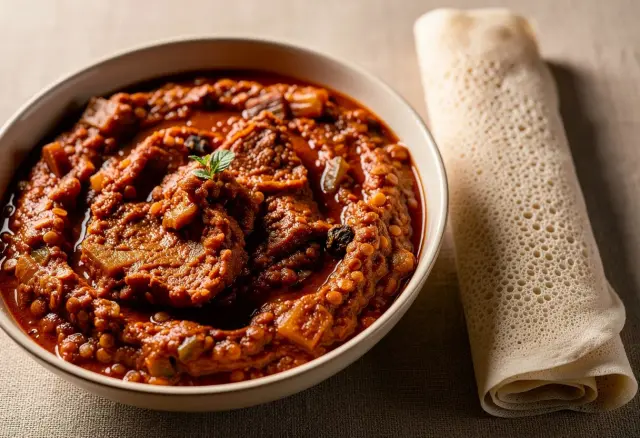
Misir Wot (Spiced Red Lentil Stew)Red lentils melted into a deep, chili-red stew built on berbere spice and slow-caramelized onions.
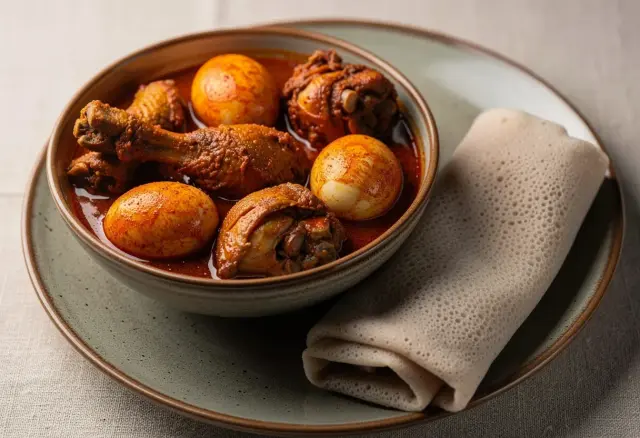
Doro WatEthiopia’s celebration dish: chicken slow-stewed in a mountain of caramelized onions and berbere, with whole eggs.
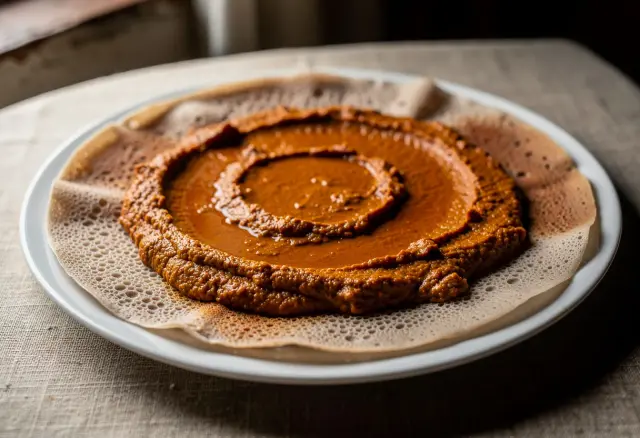
Shiro WotGround-chickpea flour whisked into a spiced, silky stew, the dish that feeds Ethiopia on fasting days and hard times alike.
Browse all Ethiopia recipes →
Good to know
You’ll need: Pot or saucepan, Oven.
Storing it: Best straight off the heat. Leftovers keep 2 to 3 days refrigerated and reheat well in a hot oven rather than the microwave.
Make it an Ethiopia meal
Doro WatDinner
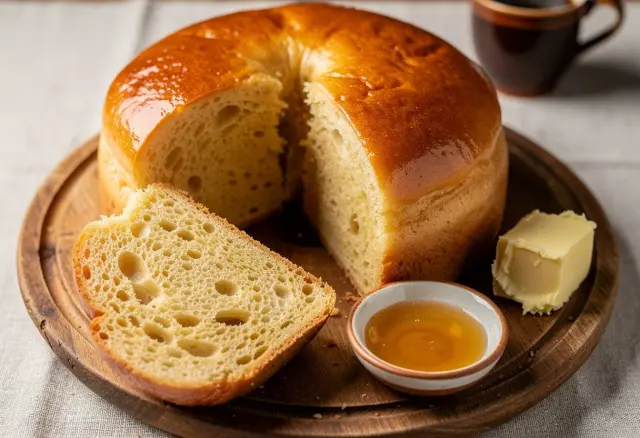
Yemarina Yewotet Dabo (Honey and Milk Bread)Dessert
Similar dishes from around the world

Gahwa (Bahraini Arabic Coffee)Bahrain

Qahwa OmaniOman

Koko SamoaSamoa

Jabana (Sudanese Spiced Coffee)Sudan

Maksym (Kyrgyz Fermented Grain Drink)Kyrgyzstan
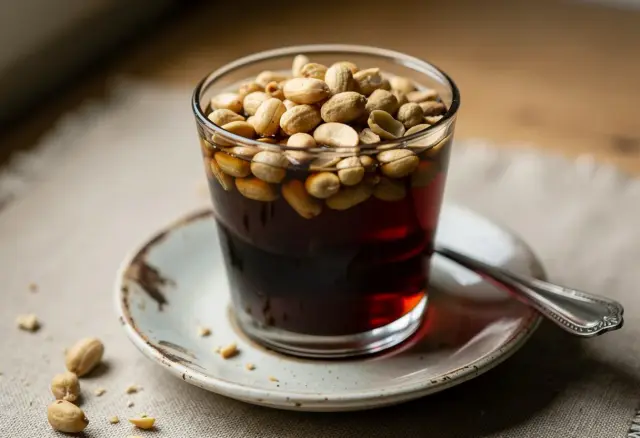
Shahi bil Ful (Libyan Tea)Libya
Drinks
Frequently asked questions
What is Ethiopian Coffee (Buna)?
Freshly roasted beans ground and brewed dark in a clay jebena, the heart of the coffee ceremony.
Where does Ethiopian Coffee (Buna) come from?
Ethiopian Coffee (Buna) is an Ethiopian dish from Amhara, Ethiopia.
Can Ethiopian Coffee (Buna) be made vegan, gluten-free, or dairy-free?
This Ethiopian Coffee (Buna) recipe includes substitution suggestions for vegetarian, vegan, gluten-free, dairy-free, nut-free, egg-free, and pork-free versions. Treat the substitutions as a starting guide rather than a guarantee, and see the allergen note below.
Is Ethiopian Coffee (Buna) safe for people with food allergies?
Our dietary labels and substitutions are a cooking guide, not medical or allergen-safety advice. We track dairy, egg, gluten, tree nuts and peanuts (we still count coconut as a tree nut to be cautious, although the FDA stopped listing it as one in 2025), fish, and shellfish, but we do not screen for sesame, soy, mustard, celery, or sulphites. If you have a food allergy, always read the label on every product you use, and remember a home or commercial kitchen can cross-contaminate ingredients in ways a recipe cannot control.
How long does Ethiopian Coffee (Buna) take to make?
About 30 minutes total (15 minutes prep, 15 minutes cooking), serving 6.
Get the Sunday Spin
One dish from somewhere in the world, in your inbox every Sunday. No spam, just dinner inspiration you can cook that day.