Africa → Republic of the Congo → Brazzaville

🍢 SNACK
Safou (Congolese Warm Salted African Plums)
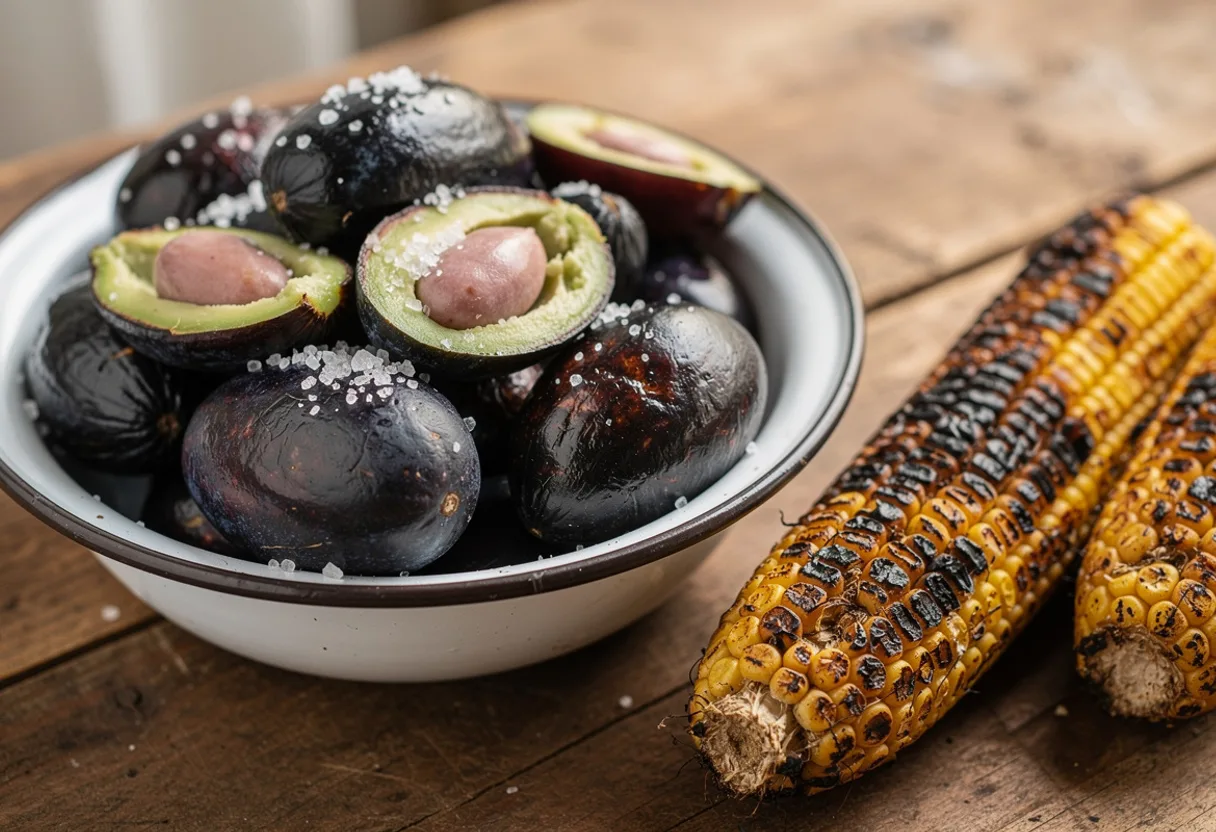
Purple safou, the African plum, warmed briefly in salted water until the green flesh turns soft and buttery, eaten with roasted maize as a seasonal snack.
Congolese · easy · serves 4
prep 5 min · cook 20 min
~174 cal · 9g protein · 21g carbs · 6g fat · 3g fiber · 0g sugars · 3g sat fat (estimated, per serving)
↓ Jump to Recipe
AI-generated illustration
Safou is the fruit of the safoutier (Dacryodes edulis), a tree of Central and West Africa, known in English as the African plum or bush pear. The fruit looks like a large purple olive, and inside the thin skin is a pale green flesh around a big stone. Raw it is firm and sharp; heated, it turns soft and buttery, which is why it is also called butterfruit, and the flesh is rich in oil.
In the Republic of the Congo, as in Cameroon and Gabon, safou is a seasonal fruit of the rainy months, sold at markets and along the roads, and it is usually cooked before it is eaten. Most often it is dropped briefly into hot salted water, or roasted on the coals of a street grill, until the flesh slips from the skin and the stone.
It is eaten by hand, the soft flesh scraped from the skin with the teeth, often together with roasted maize, or . The harvest times differ between Cameroon, Gabon and Congo-Brazzaville, so the fruit crosses borders through the year.
Saved recipes and passport stamps are kept on this device. Sign in to keep them across your devices and leave reviews.
Make it yours
✓ Naturally vegetarian, vegan and gluten-, dairy-, nut-, egg- and pork-free. No swaps needed.
Toggle a diet and the ingredients rewrite themselves with regional substitutes.
🥕 Vegetarian
🌱 Vegan
🌾 Gluten-Free
🥛 Dairy-Free
🥜 Nut-Free
🥚 Egg-Free
🐖 Pork-Free
Dietary labels are a cooking guide, not allergen-safety advice. We track dairy, egg, gluten, tree nuts and peanuts (we count coconut as a tree nut, following FDA labeling), fish, and shellfish; we do not screen for sesame, soy, mustard, celery, or sulphites. If you have a food allergy, read the label on every product you use, and note that a kitchen can cross-contaminate in ways a recipe cannot control.
Ingredients
US
Metric
Serves 4
- 500 g (about 15) safou (African plums), firm, with no soft or split spots
- 1.5 litres water
- 1 tbsp salt, plus a pinch for serving
- 2 ears of fresh corn, husked
Instructions
- 1Heat a grill or a heavy ridged pan until very hot and roast the corn for 12 to 15 minutes, turning it often, until the kernels are golden and charred in patches.
- 2Meanwhile rinse the safou. Bring the water to the boil with the salt, then lower the heat so it barely simmers.
- 3Slide in the safou and warm them for 3 to 5 minutes, just until the skins wrinkle slightly and the fruit gives when pressed gently.✎ Chef’s noteTake them out as soon as they soften. Left too long in the water the flesh turns mushy and grey.
- 4Drain, sprinkle with a pinch of salt and eat warm with the roasted corn, pressing the soft flesh from the skin and around the stone.
Congolese seasonal tradition.
Ratings & reviews
Cooked it? Rate this dish:
No account needed. Sign in to leave a full review with a comment.
Cooked it?
Kept on this device, no account needed. Sign in to leave a review and keep your passport across your devices.
No reviews yet, be the first to cook it.
🌏 While it simmers, know your destination
📍
Brazzaville. Liboke is Lingala for a bundle, and the technique belongs to the whole Congo basin rather than to one bank of the river: Kinshasa, directly across the water, does exactly the same thing. Fish is seasoned, wrapped in banana leaf and steamed, which is cooking en papillote without the paper.
🗺️
Republic of the Congo. Liboke is Lingala for bundle, and the technique belongs to the whole Congo basin including Kinshasa on the other bank, so neither Congo can claim it: fish or chicken seasoned with chilli and onion, sealed in a leaf parcel and steamed over embers so nothing escapes. It is a cooking method and a serving vessel at once.
🌍
Africa. The structure repeats across most of the continent: one starch and one sauce. A grain or root is cooked stiff, torn or rolled by hand, and used to carry a stew of leaves, groundnut, okra or fish, usually from a shared bowl and with the right hand. UNESCO listings have followed that logic, inscribing couscous in 2020 as a shared Maghreb tradition and Ivorian attieke in 2024.
The story behind this dish is up top, worth a read while the pot works.
More from Republic of the Congo
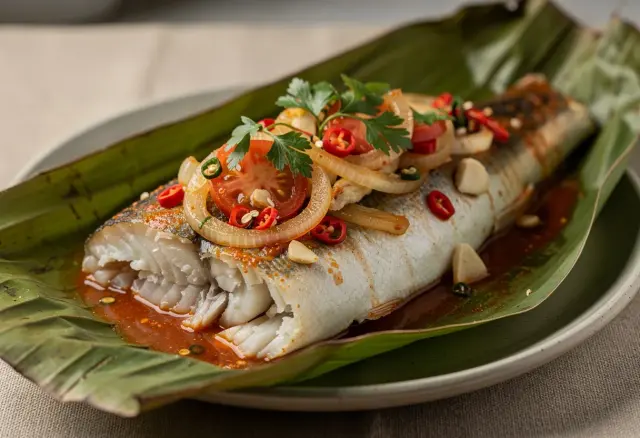
Liboke ya MbisiWhole fish seasoned and steamed in banana or marantacea leaves until fragrant and flaking.
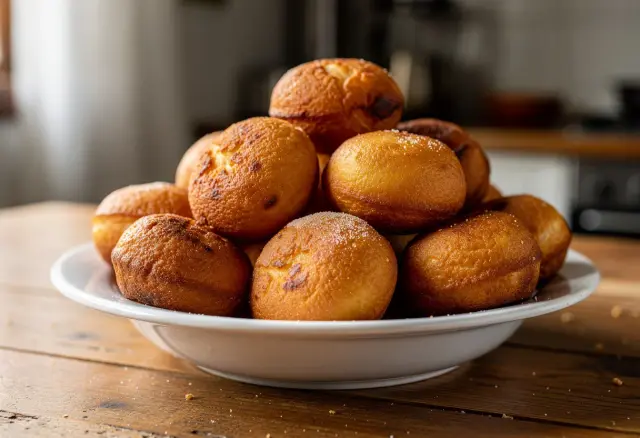
Beignets CongolaisPuffy, faintly sweet fried dough balls sold hot on Brazzaville street corners and eaten with sweet coffee at daybreak.
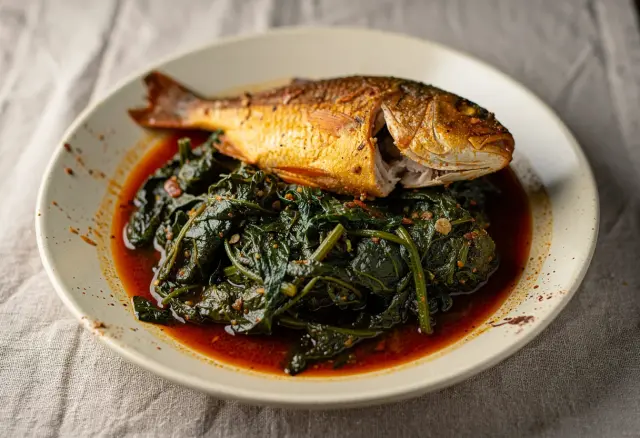
Ngai NgaiA tart roselle-leaf stew (ngai ngai means "sour sour") cooked down with onion, tomato, and red palm oil and served with fried fish and fufu, a Congolese staple.
Browse all Republic of the Congo recipes →
Good to know
You’ll need: Oven, Grill or barbecue.
Storing it: Best straight off the heat. Leftovers keep 2 to 3 days refrigerated and reheat well in a hot oven rather than the microwave.
Make it a Republic of the Congo meal
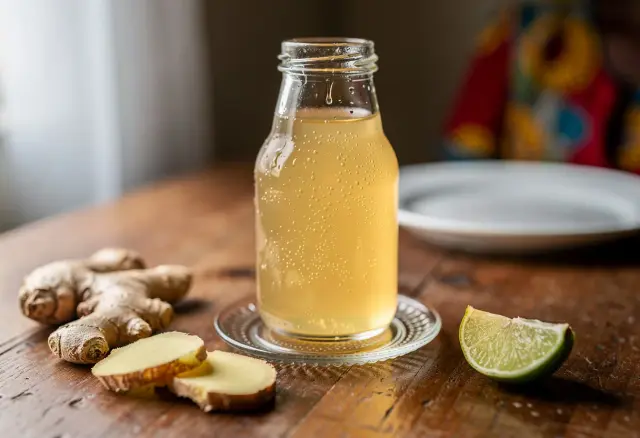
Tangawisi (Congolese Ginger Tonic)Drink
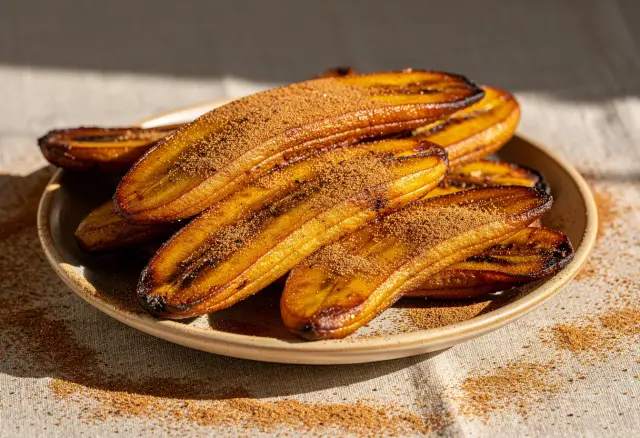
Makemba (Sweet Fried Plantain)Dessert
Similar dishes from around the world
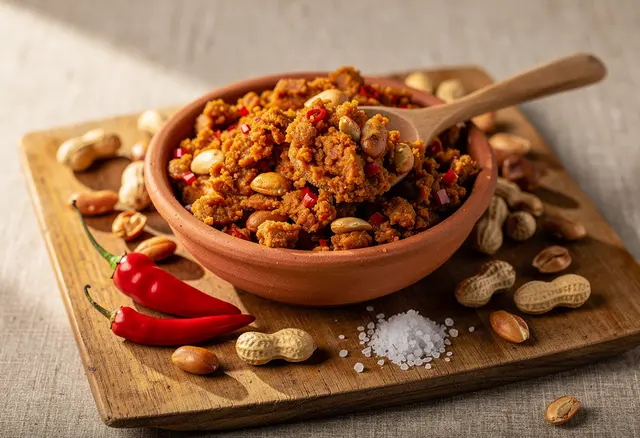
Kitaba (Angolan Spiced Peanut Paste)Angola
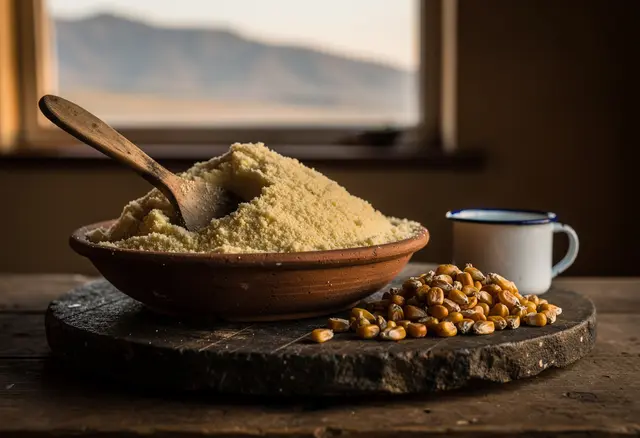
Lipabi (Basotho Roasted Maize Meal)Lesotho
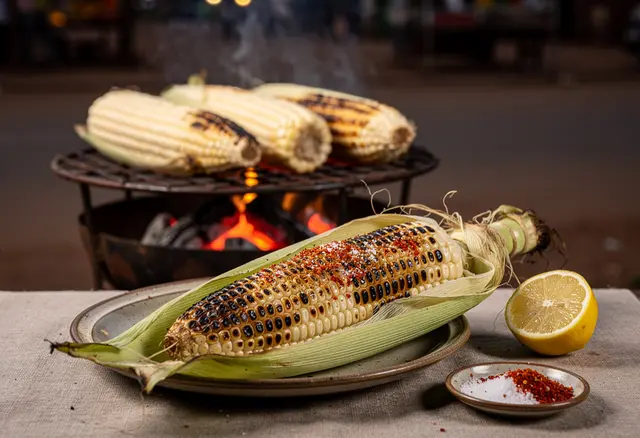
Mahindi Choma (Kenyan Roasted Maize)Kenya
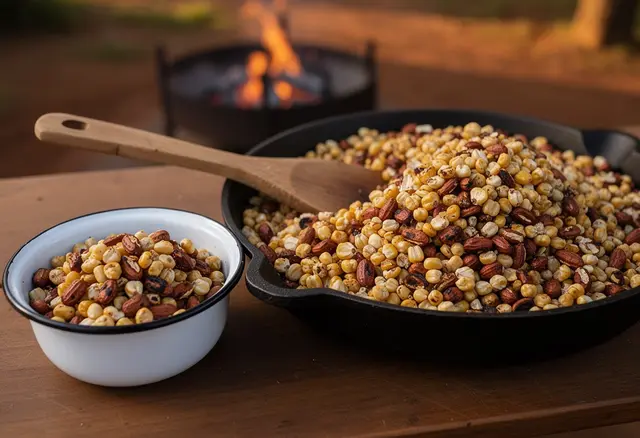
Maputi aneNzungu (Zimbabwean Roasted Maize and Peanuts)Zimbabwe
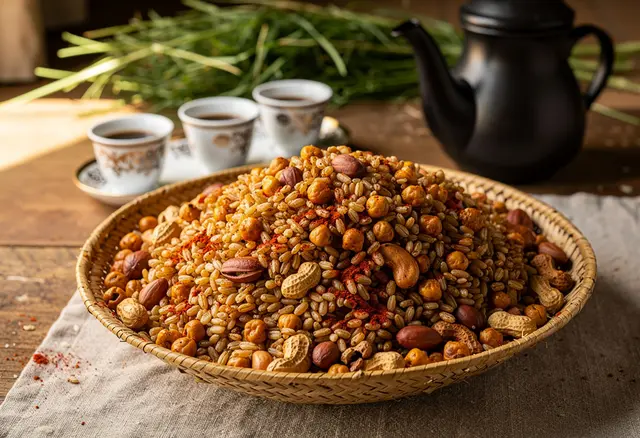
Kolo (Ethiopian Roasted Barley Snack)Ethiopia

Elote (Mexican Street Corn)Mexico
Cuisine
Diet
Vegetarian Recipes from Around the World
Vegan Recipes from Around the World
Gluten-Free Recipes from Around the World
Dairy-Free Recipes from Around the World
Nut-Free Recipes from Around the World
Egg-Free Recipes from Around the World
Pork-Free Recipes from Around the World
Vegan Congolese Recipes
Gluten-Free Congolese Recipes
Dairy-Free Congolese Recipes
Themes
Frequently asked questions
What is Safou (Congolese Warm Salted African Plums)?
Purple safou, the African plum, warmed briefly in salted water until the green flesh turns soft and buttery, eaten with roasted maize as a seasonal snack.
Where does Safou (Congolese Warm Salted African Plums) come from?
Safou (Congolese Warm Salted African Plums) is a Congolese dish from Brazzaville, Republic of the Congo.
Can Safou (Congolese Warm Salted African Plums) be made vegan, gluten-free, or dairy-free?
This Safou (Congolese Warm Salted African Plums) recipe includes substitution suggestions for vegetarian, vegan, gluten-free, dairy-free, nut-free, egg-free, and pork-free versions. Treat the substitutions as a starting guide rather than a guarantee, and see the allergen note below.
Is Safou (Congolese Warm Salted African Plums) safe for people with food allergies?
Our dietary labels and substitutions are a cooking guide, not medical or allergen-safety advice. We track dairy, egg, gluten, tree nuts and peanuts (we still count coconut as a tree nut to be cautious, although the FDA stopped listing it as one in 2025), fish, and shellfish, but we do not screen for sesame, soy, mustard, celery, or sulphites. If you have a food allergy, always read the label on every product you use, and remember a home or commercial kitchen can cross-contaminate ingredients in ways a recipe cannot control.
How long does Safou (Congolese Warm Salted African Plums) take to make?
About 25 minutes total (5 minutes prep, 20 minutes cooking), serving 4.
Get the Sunday Spin
One dish from somewhere in the world, in your inbox every Sunday. No spam, just dinner inspiration you can cook that day.