
🍢 SNACK
Lipabi (Basotho Roasted Maize Meal)
Dried maize kernels roasted golden in a dry pan, ground to a fine, toasty powder and seasoned with a pinch of salt and sugar, the Basotho travelling food eaten by the spoonful or stirred into water.
Basotho · easy · serves 8
prep 20 min · cook 20 min · plus 20 min hands-off time
~66 cal · 2g protein · 15g carbs · 1g fat · 1g fiber · 5g sugars · 0g sat fat (estimated, per serving)
↓ Jump to Recipe
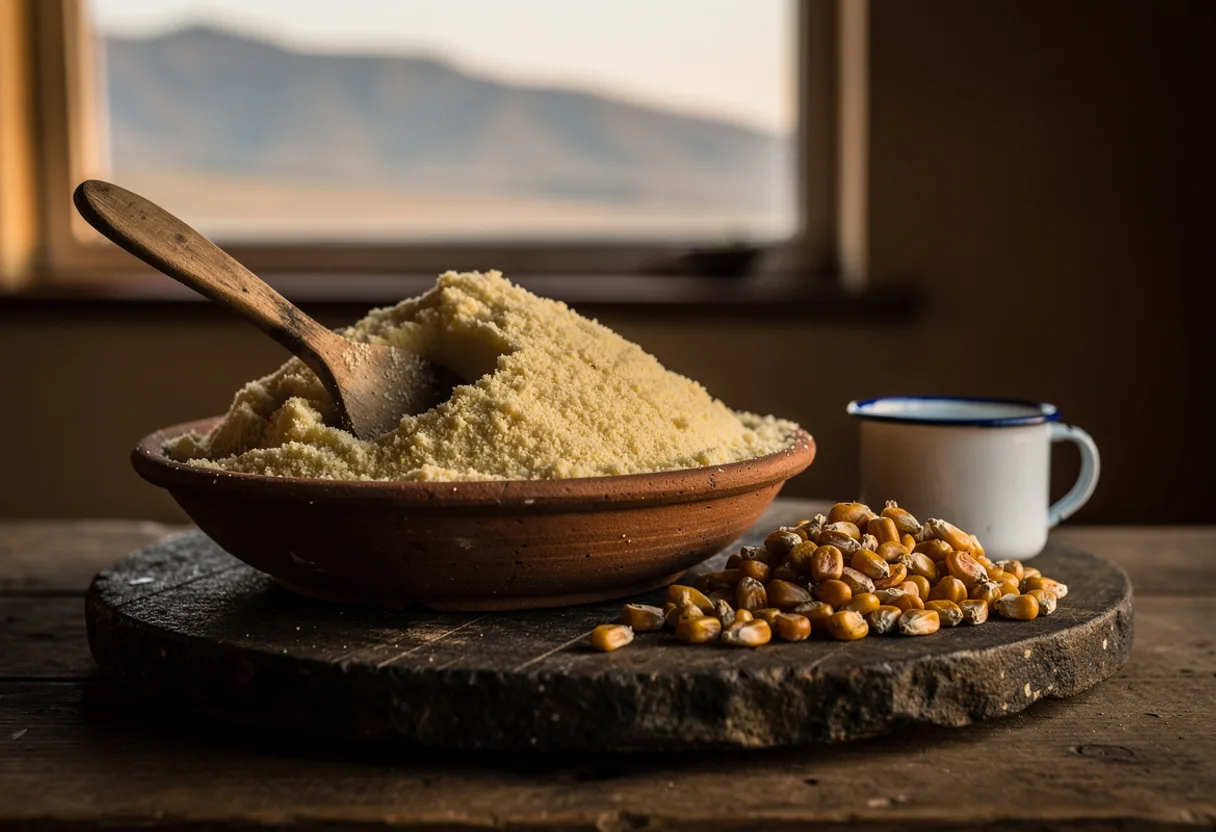
AI-generated illustration
Lipabi is a fine powder of roasted maize, one of the old staple foods of the Basotho. The maize is dried, roasted until fully cooked, then crushed into a very fine powder on a stone hand mill, and a pinch of salt and sugar is mixed in for taste.
It was made as food for the road. Because the maize is already cooked and dry, lipabi stays fresh for a long time, and Basotho travellers carried it on long journeys, eating it as it is or mixed with water. It is still made for traditional occasions and served as a snack, and the Slow Food Foundation has listed it on its Ark of Taste. In the towns it has become rare: a few street vendors sell it in packets, but most lipabi is made at home.
Hand grinding gives it its particular texture and the roasting its warm, toasty smell. A spice grinder or a strong blender gets close at home.
Saved recipes and passport stamps are kept on this device. Sign in to keep them across your devices and leave reviews.
Make it yours
✓ Naturally vegetarian, vegan and gluten-, dairy-, nut-, egg- and pork-free. No swaps needed.
Toggle a diet and the ingredients rewrite themselves with regional substitutes.
🥕 Vegetarian
🌱 Vegan
🌾 Gluten-Free
🥛 Dairy-Free
🥜 Nut-Free
🥚 Egg-Free
🐖 Pork-Free
Dietary labels are a cooking guide, not allergen-safety advice. We track dairy, egg, gluten, tree nuts and peanuts (we count coconut as a tree nut, following FDA labeling), fish, and shellfish; we do not screen for sesame, soy, mustard, celery, or sulphites. If you have a food allergy, read the label on every product you use, and note that a kitchen can cross-contaminate in ways a recipe cannot control.
Ingredients
US
Metric
Serves 8
- 500 g (about 3 cups) dried white maize kernels (dried corn)
- 2 tbsp sugar, or to taste
- 1/2 tsp salt
- a little cold water, to serve (optional)
Instructions
- 1Pick over the maize and wipe it clean with a dry cloth; do not wash it, as it needs to be dry for roasting.
- 2Heat a large, heavy, dry frying pan over medium heat and roast the maize in two batches, stirring and shaking all the time, for about 10 minutes per batch, until the kernels are golden brown all over and smell toasty.✎ Chef’s noteKeep it moving: kernels that sit still scorch on one side before the inside is cooked.
- 3Tip the maize onto a tray and leave it to cool completely, about 20 minutes.
- 4Grind the roasted maize in small batches in a grain mill, a spice grinder or a powerful blender until it is a very fine powder. Sift it and grind any coarse bits again.
- 5Mix in the sugar and salt. Eat it by the spoonful as it is, or stir a few spoonfuls with a little cold water into a thick paste. Store the rest in an airtight jar.
Basotho home tradition.
Ratings & reviews
Cooked it? Rate this dish:
No account needed. Sign in to leave a full review with a comment.
Cooked it?
Kept on this device, no account needed. Sign in to leave a review and keep your passport across your devices.
No reviews yet, be the first to cook it.
🌏 While it simmers, know your destination
📍
Maseru. The whole country lies above 1,400 metres, the only one in the world of which that is true, and the cooking answers the cold: stiff porridge, beans, slow-stewed meat and sour milk that keeps without refrigeration. Sorghum is grown as much for the traditional beer as for the pot.
🗺️
Lesotho. Lesotho, the mountain kingdom, cooks hearty highland food, maize-meal papa with moroho greens, sorghum porridge, and slow-cooked meat. Sorghum beer and communal eating warm the cold Maloti heights.
🌍
Africa. The structure repeats across most of the continent: one starch and one sauce. A grain or root is cooked stiff, torn or rolled by hand, and used to carry a stew of leaves, groundnut, okra or fish, usually from a shared bowl and with the right hand. UNESCO listings have followed that logic, inscribing couscous in 2020 as a shared Maghreb tradition and Ivorian attieke in 2024.
The story behind this dish is up top, worth a read while the pot works.
More from Lesotho
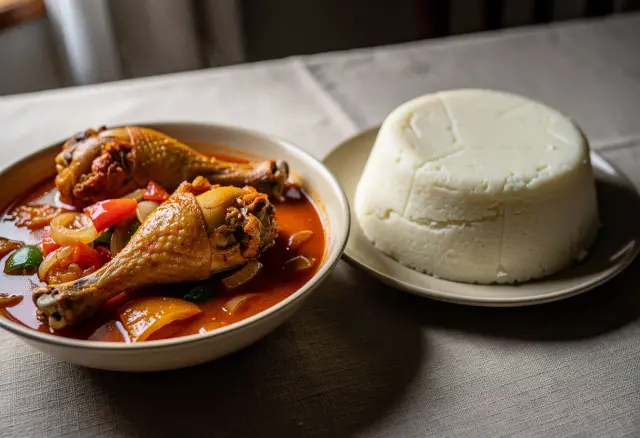
Basotho Chicken Stew with PapaA highland chicken stew served with papa, the stiff maize porridge of Lesotho.

MakoenyaGolden Basotho fat cakes: crisp-edged deep-fried dough balls, soft and lightly sweet inside, sold hot from street stands for breakfast.
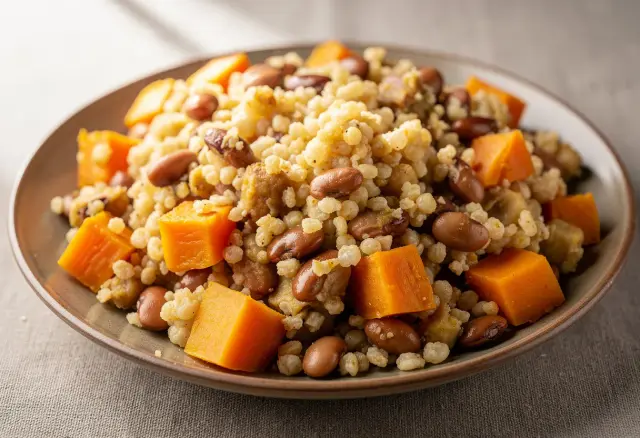
NyekoeA filling one-pot of sorghum and beans simmered slow with pumpkin and onion, the warming everyday lunch of the Lesotho highlands.
Browse all Lesotho recipes →
Good to know
You’ll need: Skillet or frying pan, Oven, Blender.
Storing it: Best straight off the heat. Leftovers keep 2 to 3 days refrigerated and reheat well in a hot oven rather than the microwave.
Make it a Lesotho meal

Leting la MabeleDrink

Ditjhedi tsa Mokopu (Basotho Pumpkin Fritters)Dessert
Similar dishes from around the world
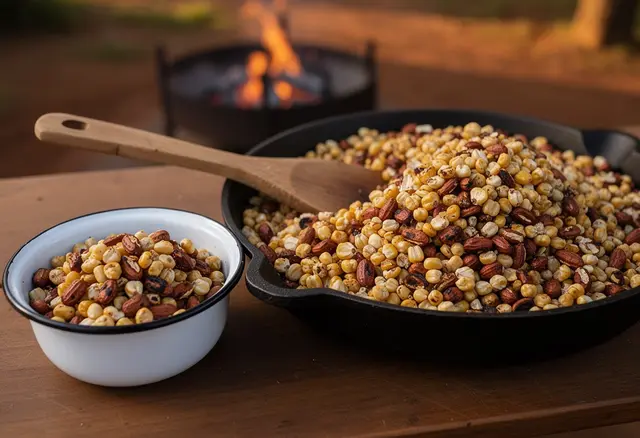
Maputi aneNzungu (Zimbabwean Roasted Maize and Peanuts)Zimbabwe
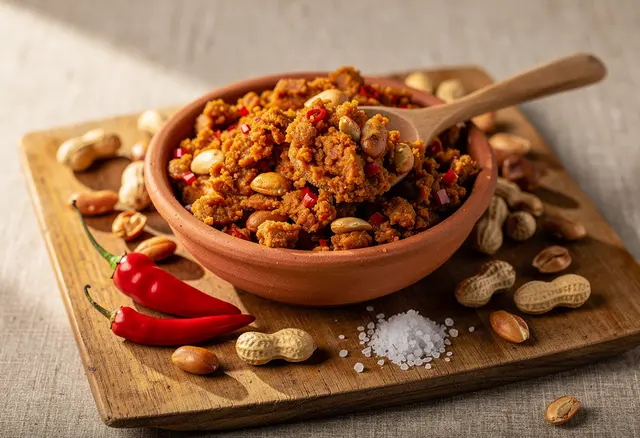
Kitaba (Angolan Spiced Peanut Paste)Angola
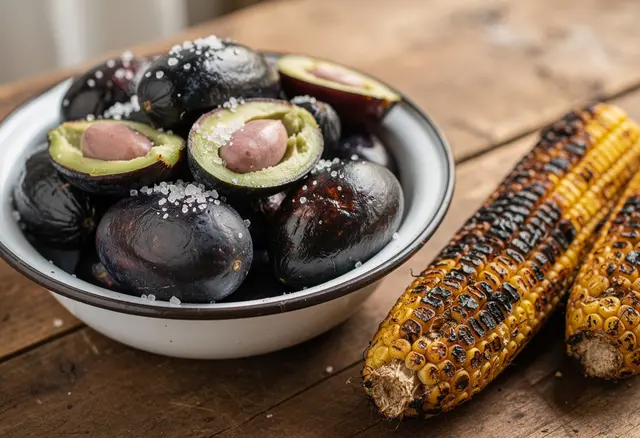
Safou (Congolese Warm Salted African Plums)Republic of the Congo
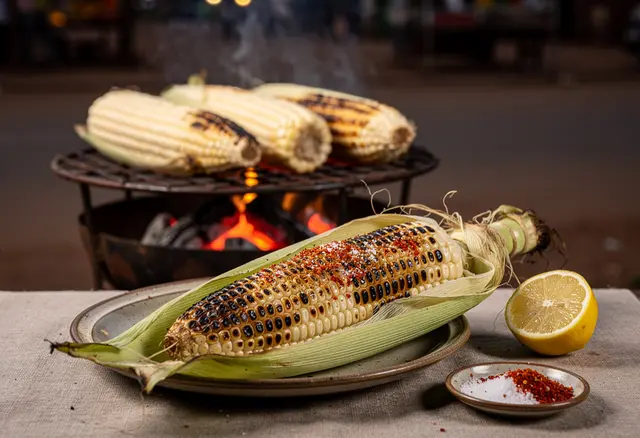
Mahindi Choma (Kenyan Roasted Maize)Kenya
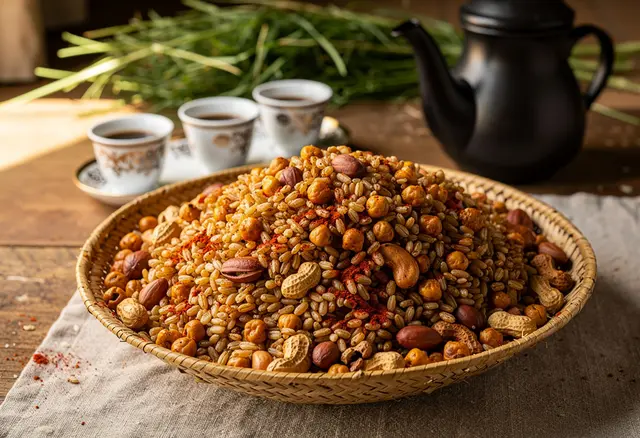
Kolo (Ethiopian Roasted Barley Snack)Ethiopia

Elote (Mexican Street Corn)Mexico
Cuisine
Diet
Frequently asked questions
What is Lipabi (Basotho Roasted Maize Meal)?
Dried maize kernels roasted golden in a dry pan, ground to a fine, toasty powder and seasoned with a pinch of salt and sugar, the Basotho travelling food eaten by the spoonful or stirred into water.
Where does Lipabi (Basotho Roasted Maize Meal) come from?
Lipabi (Basotho Roasted Maize Meal) is a Basotho dish from Maseru, Lesotho.
Can Lipabi (Basotho Roasted Maize Meal) be made vegan, gluten-free, or dairy-free?
This Lipabi (Basotho Roasted Maize Meal) recipe includes substitution suggestions for vegetarian, vegan, gluten-free, dairy-free, nut-free, egg-free, and pork-free versions. Treat the substitutions as a starting guide rather than a guarantee, and see the allergen note below.
Is Lipabi (Basotho Roasted Maize Meal) safe for people with food allergies?
Our dietary labels and substitutions are a cooking guide, not medical or allergen-safety advice. We track dairy, egg, gluten, tree nuts and peanuts (we still count coconut as a tree nut to be cautious, although the FDA stopped listing it as one in 2025), fish, and shellfish, but we do not screen for sesame, soy, mustard, celery, or sulphites. If you have a food allergy, always read the label on every product you use, and remember a home or commercial kitchen can cross-contaminate ingredients in ways a recipe cannot control.
How long does Lipabi (Basotho Roasted Maize Meal) take to make?
About 1 h in all: 20 minutes prep and 20 minutes cooking, plus 20 min of hands-off waiting the method needs, serving 8.
Get the Sunday Spin
One dish from somewhere in the world, in your inbox every Sunday. No spam, just dinner inspiration you can cook that day.