North America → Canada → British Columbia

🥔 SIDE
Bannock (Indigenous Canadian Pan Bread)
A quick bread of flour, baking powder, fat, salt and cold water, pressed into a round and cooked slowly in a cast-iron pan until golden, eaten warm with stews, soups, jam or berries.
Canadian (Indigenous) · easy · serves 6
prep 10 min · cook 16 min · plus 10 min hands-off time
~347 cal · 8g protein · 58g carbs · 8g fat · 2g fiber · 0g sugars · 1g sat fat (estimated, per serving)
↓ Jump to Recipe
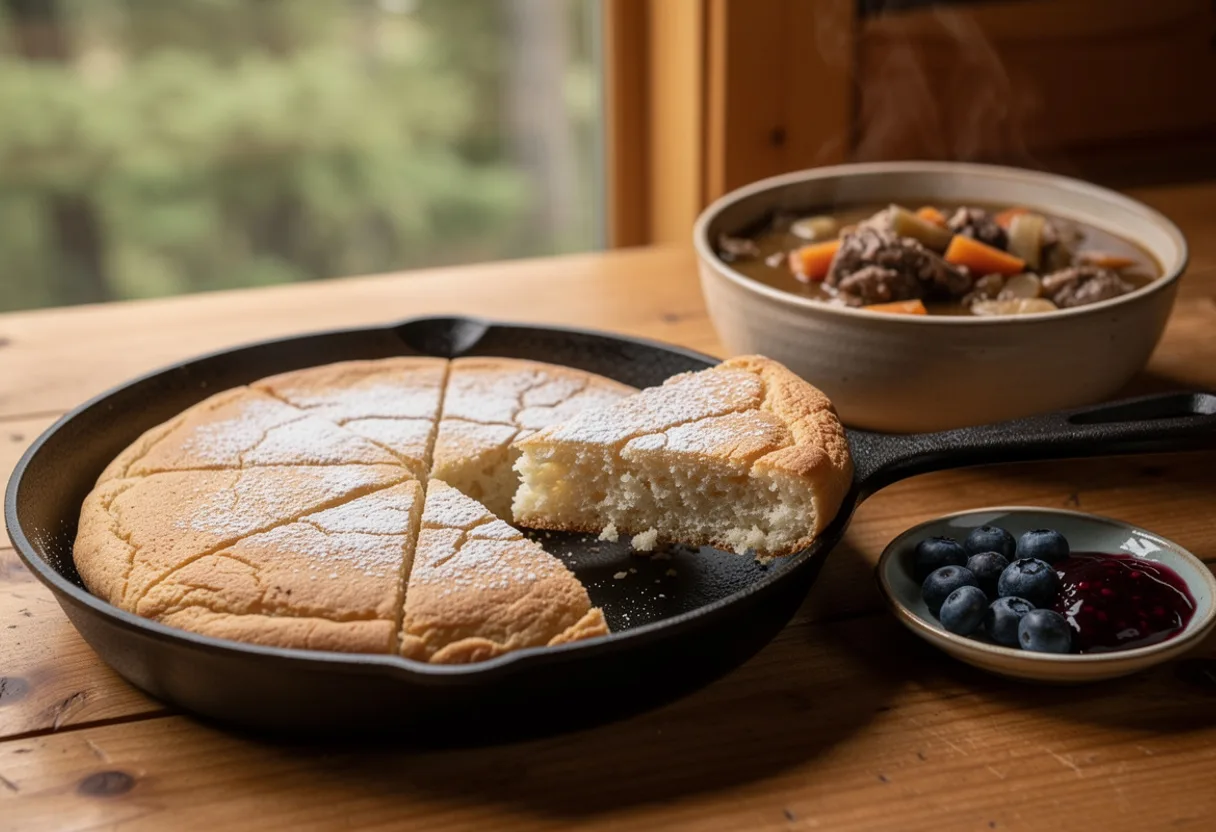
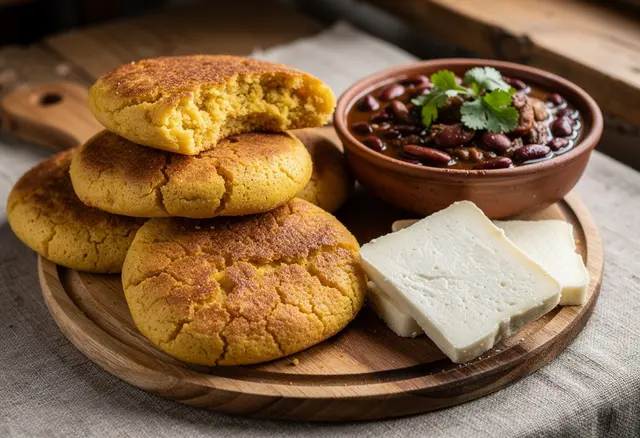
AI-generated illustration
Bannock is the most universal dish in Indigenous Canadian cooking, made by First Nations, Métis and Inuit cooks from the Arctic and the Plains to the subarctic forests and the Pacific coast. It is quick, filling and travels well, and it is eaten with stews and soups, with jam or wild berries, or on its own, still warm from the pan.
Its history is layered. Before contact, many peoples made breads and cakes from corn, roots such as camas, and nut meal. Wheat flour and the Scottish name bannock arrived with the fur trade, and the flour, lard and baking powder version made today was shaped in large part by the government rations handed out on reserves in the late nineteenth century, when access to traditional foods was restricted. Despite that history it remains a food of great significance to Indigenous families and communities.
Every family has its own version, some with sugar, raisins or berries, some deep-fried, some baked in the oven or wound round a green stick over a fire. This one, cooked as one thick round in a cast-iron pan, is adapted from a traditional Métis recipe that interpreters make for visitors at Rocky Mountain House in Alberta.
Saved recipes and passport stamps are kept on this device. Sign in to keep them across your devices and leave reviews.
Make it yours
✓ Naturally dairy-, nut- and egg-free. No swaps needed.
Toggle a diet and the ingredients rewrite themselves with regional substitutes.
🥕 Vegetarian
🌱 Vegan
🌾 Gluten-Free
🥛 Dairy-Free
🥜 Nut-Free
🥚 Egg-Free
🐖 Pork-Free
Dietary labels are a cooking guide, not allergen-safety advice. We track dairy, egg, gluten, tree nuts and peanuts (we count coconut as a tree nut, following FDA labeling), fish, and shellfish; we do not screen for sesame, soy, mustard, celery, or sulphites. If you have a food allergy, read the label on every product you use, and note that a kitchen can cross-contaminate in ways a recipe cannot control.
Ingredients
US
Metric
Serves 6
- 3 cups (460 g) all-purpose flour
- 1 tbsp baking powder
- 1/2 tsp salt
- 3 tbsp lard, melted, or vegetable oil
- 1 cup (250 ml) cold water
- 1 tsp vegetable oil, for the pan
- to taste jam or wild berries, to serve, optional
Instructions
- 1Stir the flour, baking powder and salt together in a bowl, then mix in the lard or oil until the flour looks like coarse sand.
- 2Pour in the cold water and mix, then knead briefly in the bowl, just until you have a soft, smooth dough. Shape it into a ball, cover and leave for 10 minutes.✎ Chef’s noteHandle it as little as you can. Overworked dough makes a heavy, tough bannock.
- 3Heat a large cast-iron frying pan over medium-low heat and wipe it with the teaspoon of oil. Press the dough into a round about 2 cm thick, the size of the pan.
- 4Lay it in the pan and cook for 7 to 8 minutes, until the underside is golden and it has risen, then turn it and cook the other side for another 7 to 8 minutes, until golden and it sounds hollow when tapped.✎ Chef’s noteKeep the heat gentle so the middle cooks before the crust gets too dark. Over a campfire, prop the pan near the embers rather than on them.
- 5Score or cut into wedges while warm and serve with stew or soup, or with jam or wild berries.
First Nations, Métis and Inuit tradition across Canada (Métis recipe from Rocky Mountain House).
Ratings & reviews
Cooked it? Rate this dish:
No account needed. Sign in to leave a full review with a comment.
Cooked it?
Kept on this device, no account needed. Sign in to leave a review and keep your passport across your devices.
No reviews yet, be the first to cook it.
🌏 While it simmers, know your destination
📍
British Columbia. Vancouver's Chinese and Japanese kitchens are not a recent addition. Chinese labourers came for the gold rushes of the 1850s and the railway of the 1880s, Japanese fishing families settled the coast from the 1870s, and the result is a city where a Cantonese seafood house and an izakaya are ordinary neighbourhood options.
🗺️
Canada. Canada's food reflects its vast geography and immigrant makeup, Québécois poutine and tourtière, Atlantic seafood, prairie grains, and Indigenous game and berries. Maple syrup remains its sweet national signature.
🌍
North America. The most consequential technique on this continent is nixtamalisation, cooking maize with lime or wood ash. It loosens the skins, makes the dough that becomes tortillas and tamales, and frees up niacin the body cannot otherwise absorb, which is why maize spread around the world without the technique and took pellagra with it.
The story behind this dish is up top, worth a read while the pot works.
More from Canada

PoutineHot fries, squeaky cheese curds, and glossy pepper gravy, rural Québec’s gift to late nights everywhere.
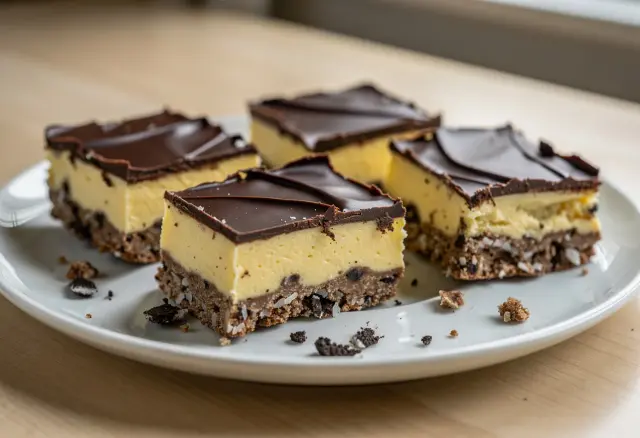
Nanaimo BarsA no-bake three-layer bar: coconut-crumb base, custard-cream middle, chocolate top, named for a BC harbor town.
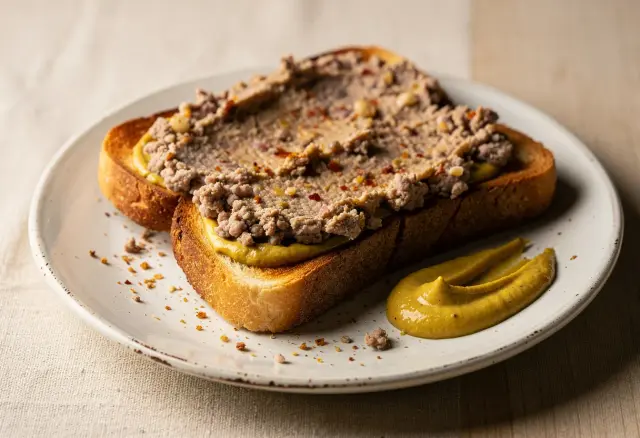
Cretons sur Pain GrilléA Québécois spiced pork-and-onion spread, cold from the fridge, smeared thick on hot buttered toast with a smear of mustard.
Browse all Canada recipes →
Good to know
You’ll need: Skillet or frying pan.
Storing it: Best the day it is made. Wrap well and refresh in a warm oven, or freeze and reheat straight from frozen.
Make it a Canada meal
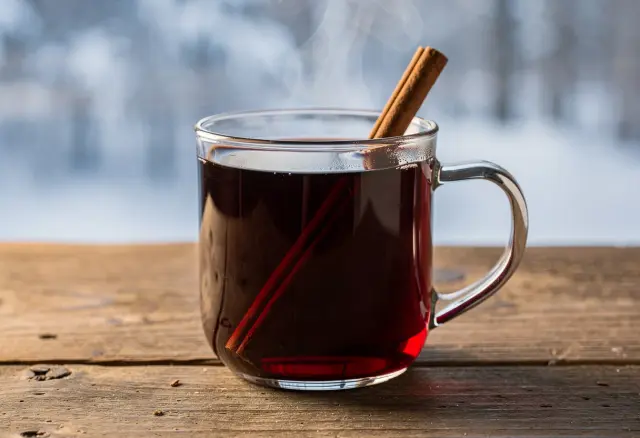
CaribouDrink
Nanaimo BarsDessert
Similar dishes from around the world
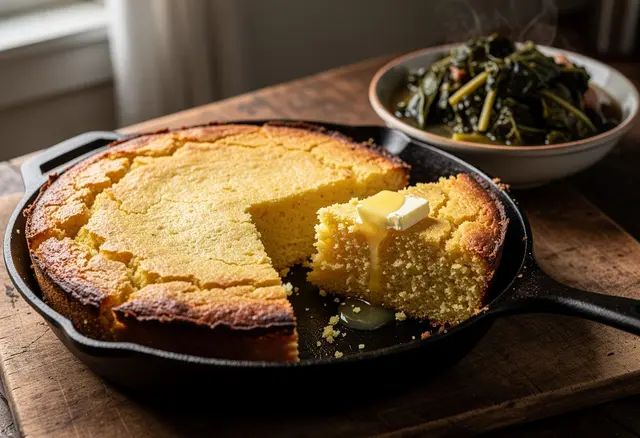
Southern Skillet CornbreadUnited States
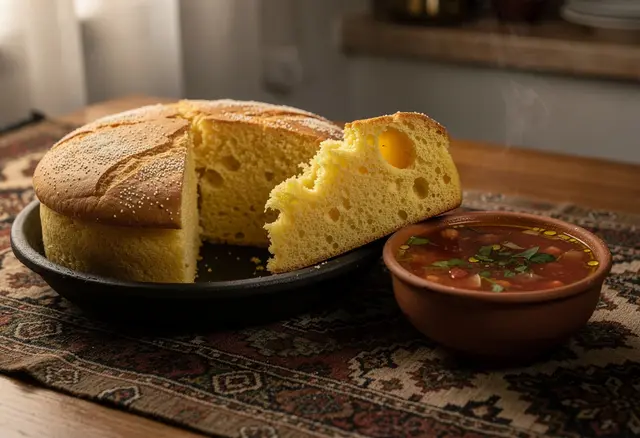
Matlouh (Algerian Semolina Pan Bread)Algeria
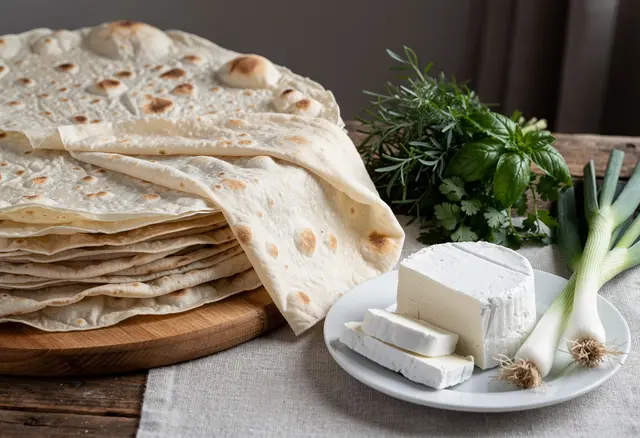
Lavash (Armenian Thin Flatbread)Armenia
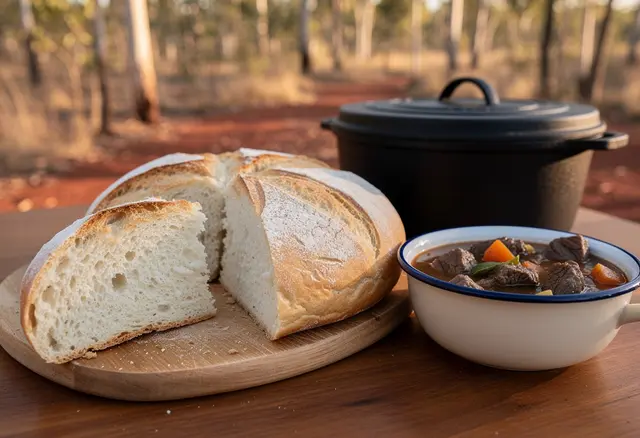
Damper (Australian Bush Bread)Australia

Somun (Bosnian Flatbread)Bosnia & Herzegovina
Mchadi (Georgian Cornbread)Georgia
Cuisine
Diet
Frequently asked questions
What is Bannock (Indigenous Canadian Pan Bread)?
A quick bread of flour, baking powder, fat, salt and cold water, pressed into a round and cooked slowly in a cast-iron pan until golden, eaten warm with stews, soups, jam or berries.
Where does Bannock (Indigenous Canadian Pan Bread) come from?
Bannock (Indigenous Canadian Pan Bread) is a Canadian (Indigenous) dish from British Columbia, Canada.
Can Bannock (Indigenous Canadian Pan Bread) be made vegan, gluten-free, or dairy-free?
This Bannock (Indigenous Canadian Pan Bread) recipe includes substitution suggestions for vegetarian, vegan, gluten-free, dairy-free, nut-free, egg-free, and pork-free versions. Treat the substitutions as a starting guide rather than a guarantee, and see the allergen note below.
Is Bannock (Indigenous Canadian Pan Bread) safe for people with food allergies?
Our dietary labels and substitutions are a cooking guide, not medical or allergen-safety advice. We track dairy, egg, gluten, tree nuts and peanuts (we still count coconut as a tree nut to be cautious, although the FDA stopped listing it as one in 2025), fish, and shellfish, but we do not screen for sesame, soy, mustard, celery, or sulphites. If you have a food allergy, always read the label on every product you use, and remember a home or commercial kitchen can cross-contaminate ingredients in ways a recipe cannot control.
How long does Bannock (Indigenous Canadian Pan Bread) take to make?
About 36 min in all: 10 minutes prep and 16 minutes cooking, plus 10 min of hands-off waiting the method needs, serving 6.
Get the Sunday Spin
One dish from somewhere in the world, in your inbox every Sunday. No spam, just dinner inspiration you can cook that day.