Asia → Uzbekistan → Tashkent

🥔 SIDE
Obi Non (Uzbek Stamped Bread)
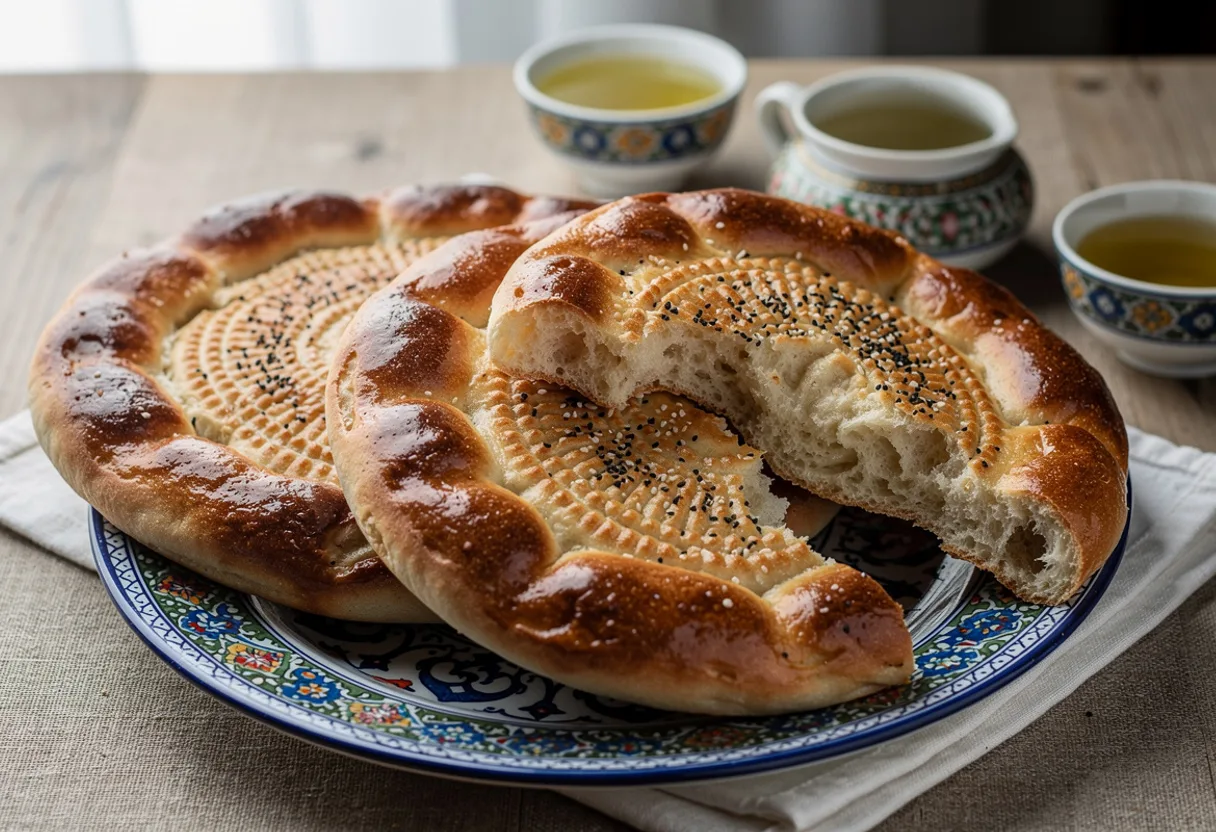
Round yeasted flatbreads with a thick, soft, golden rim and a thin crisp centre stamped with a pattern of holes, glazed with milk and scattered with nigella and sesame seeds.
Uzbek · medium · serves 6
prep 30 min · cook 30 min · plus 1 h 40 min hands-off time
~353 cal · 9g protein · 64g carbs · 6g fat · 2g fiber · 1g sugars · 1g sat fat (estimated, per serving)
↓ Jump to Recipe
AI-generated illustration
Non is the bread on every Uzbek table, and obi non is its everyday round loaf: thick and soft at the rim, thin and crisp in the middle, with a pattern pricked into the centre. It is baked in a tandir, a clay oven, slapped onto the hot inner wall where it blisters and browns in minutes.
The pattern is made with a chekich, a wooden stamp set with rows of pins or nails. The holes are decorative, but they also let steam escape from the flattened centre so it bakes flat and crisp while the rim puffs up around it. Tashkent-style non is one of several regional styles, alongside the famous bread of Samarkand.
Bread is treated with respect. It is never put on the ground or cut with a knife; it is torn by hand and shared out at the start of the meal, and it goes with everything from plov to shurpa and a pot of green tea. At home, a very hot oven and a baking stone or heavy tray stand in for the tandir, and a fork for the chekich.
Saved recipes and passport stamps are kept on this device. Sign in to keep them across your devices and leave reviews.
Make it yours
✓ Naturally vegetarian and nut-, egg- and pork-free. No swaps needed.
Toggle a diet and the ingredients rewrite themselves with regional substitutes.
🥕 Vegetarian
🌱 Vegan
🌾 Gluten-Free
🥛 Dairy-Free
🥜 Nut-Free
🥚 Egg-Free
🐖 Pork-Free
Dietary labels are a cooking guide, not allergen-safety advice. We track dairy, egg, gluten, tree nuts and peanuts (we count coconut as a tree nut, following FDA labeling), fish, and shellfish; we do not screen for sesame, soy, mustard, celery, or sulphites. If you have a food allergy, read the label on every product you use, and note that a kitchen can cross-contaminate in ways a recipe cannot control.
Ingredients
US
Metric
Serves 6
- 500 g bread flour
- 300 ml warm water
- 1 1/2 tsp (5 g) instant yeast
- 1 tsp sugar
- 1 1/2 tsp salt
- 2 tbsp sunflower oil
- 2 tbsp milk (for glazing)
- 1 tsp nigella seeds
- 1 tsp sesame seeds
Instructions
- 1Mix the flour, yeast, sugar and salt, then add the water and oil and knead for about 10 minutes, by hand or in a mixer, to a smooth, fairly firm dough.
- 2Cover and leave to rise in a warm place for 1 to 1 1/2 hours, until doubled.
- 3Divide the dough into 3 pieces, shape each into a tight ball and leave them covered for 20 minutes. Meanwhile heat the oven to 240C (465F) with a baking stone or heavy baking tray on the middle shelf.
- 4Flatten each ball into a disc about 18 cm across. Press the centre thin with your fingertips, leaving a thick rim about 3 cm wide all round, then stamp the centre all over with a chekich or prick it densely with a fork in rings.✎ Chef’s notePrick right through the centre. Without the holes it balloons like pitta instead of baking flat.
- 5Cover the breads and leave them for 20 minutes, then brush with the milk and scatter with nigella and sesame seeds.
- 6Bake one or two at a time on the hot stone or tray for 12 to 15 minutes, until deep golden. Wrap in a cloth to keep the crust soft, and tear by hand to serve.
Uzbek tandir-bread tradition (Tashkent style).
Ratings & reviews
Cooked it? Rate this dish:
No account needed. Sign in to leave a full review with a comment.
Cooked it?
Kept on this device, no account needed. Sign in to leave a review and keep your passport across your devices.
No reviews yet, be the first to cook it.
🌏 While it simmers, know your destination
📍
Tashkent. Tashkent, a Silk Road crossroads, cooks plov in giant kazan cauldrons, plus samsa pastries and non bread; every Uzbek region argues for its own style, and Tashkent's is only one of them. Palov culture went onto UNESCO's intangible heritage list in 2016. Central Asian hospitality and Uzbek tradition center the capital's table.
🗺️
Uzbekistan. Uzbek cuisine is the crossroads of the Silk Road, anchored by plov, a fragrant rice pilaf of lamb, carrots, and cumin cooked in a giant cauldron. Bread (non), samsa pastries, and green tea define its generous, hospitable table.
🌍
Asia. Fermentation is the thread that runs the whole way across: soy sauce and miso, Korean doenjang and kimchi, Southeast Asian fish sauces, the soured batter behind an idli. Chilli is the newcomer among them, arriving only after 1500 with Portuguese and Spanish traders, which makes the heat in Sichuan, Thai and Korean cooking far younger than the fermenting underneath it.
The story behind this dish is up top, worth a read while the pot works.
More from Uzbekistan
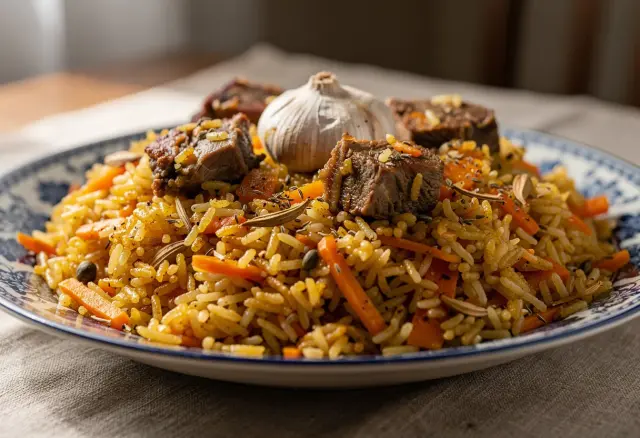
Uzbek PlovSilk Road rice cooked in one kazan with lamb, mountains of carrots, cumin, and whole garlic heads.
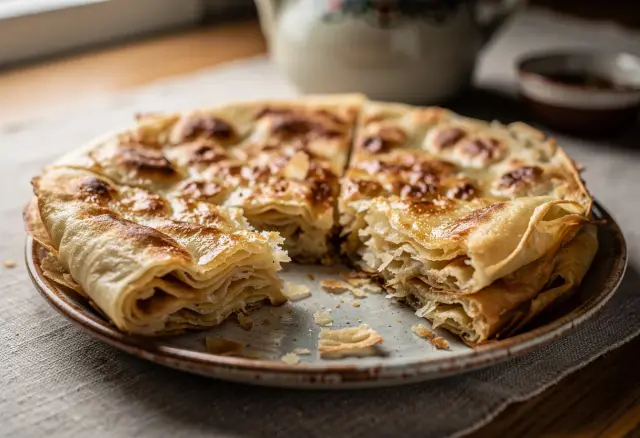
KatlamaFlaky, layered pan-fried flatbread brushed with oil and folded, a Central Asian morning staple.

SamsaFlaky baked pastries filled with spiced lamb and onion, blistered golden in a tandoor, a Silk Road staple.
Browse all Uzbekistan recipes →
Good to know
You’ll need: Oven.
Storing it: Best the day it is made. Wrap well and refresh in a warm oven, or freeze and reheat straight from frozen.
Make it an Uzbekistan meal
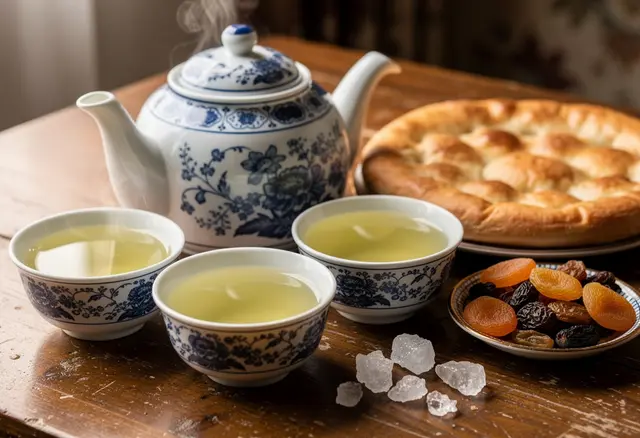
Kok Choy (Uzbek Green Tea)Drink
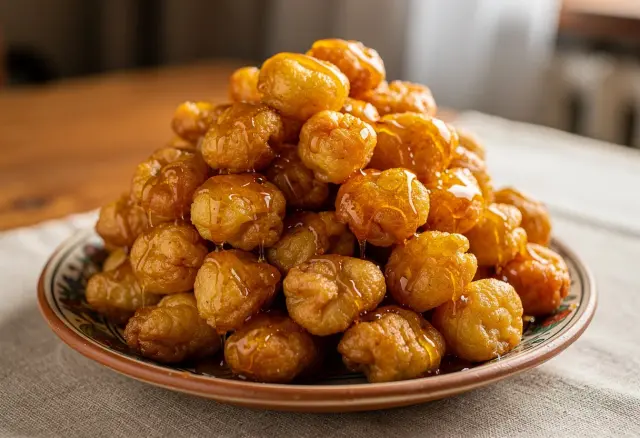
Chak-ChakDessert
Similar dishes from around the world

Somun (Bosnian Flatbread)Bosnia & Herzegovina
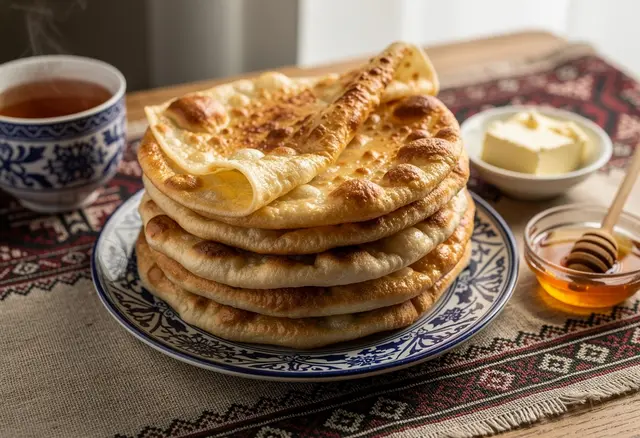
Shelpek (Kazakh Fried Flatbread)Kazakhstan
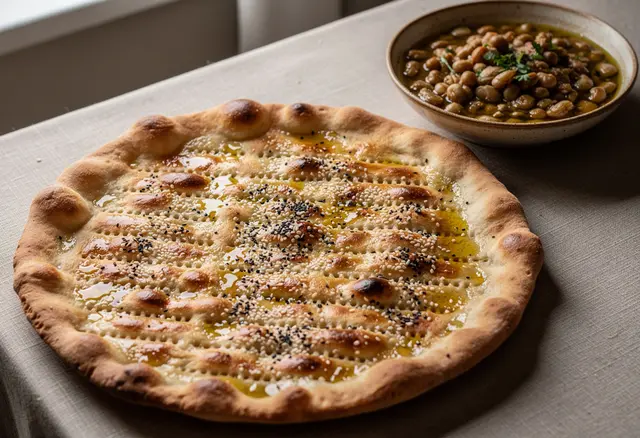
Tamees (Saudi Hejazi Flatbread)Saudi Arabia
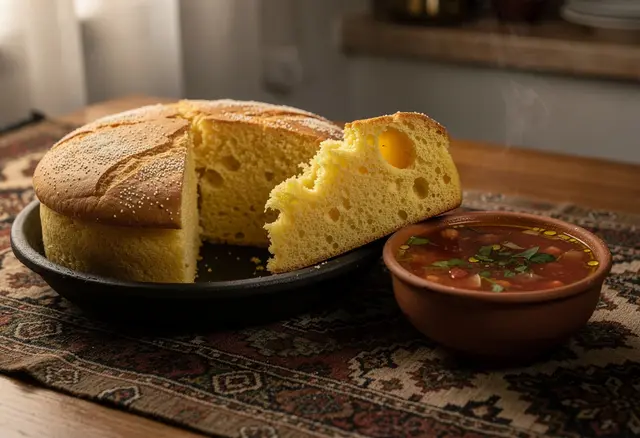
Matlouh (Algerian Semolina Pan Bread)Algeria
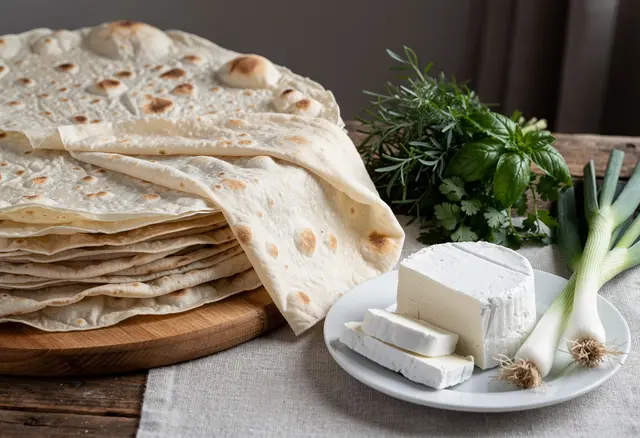
Lavash (Armenian Thin Flatbread)Armenia

Flatkaka (Icelandic Rye Flatbread)Iceland
Cuisine
Diet
Frequently asked questions
What is Obi Non (Uzbek Stamped Bread)?
Round yeasted flatbreads with a thick, soft, golden rim and a thin crisp centre stamped with a pattern of holes, glazed with milk and scattered with nigella and sesame seeds.
Where does Obi Non (Uzbek Stamped Bread) come from?
Obi Non (Uzbek Stamped Bread) is an Uzbek dish from Tashkent, Uzbekistan.
Can Obi Non (Uzbek Stamped Bread) be made vegan, gluten-free, or dairy-free?
This Obi Non (Uzbek Stamped Bread) recipe includes substitution suggestions for vegetarian, vegan, gluten-free, dairy-free, nut-free, egg-free, and pork-free versions. Treat the substitutions as a starting guide rather than a guarantee, and see the allergen note below.
Is Obi Non (Uzbek Stamped Bread) safe for people with food allergies?
Our dietary labels and substitutions are a cooking guide, not medical or allergen-safety advice. We track dairy, egg, gluten, tree nuts and peanuts (we still count coconut as a tree nut to be cautious, although the FDA stopped listing it as one in 2025), fish, and shellfish, but we do not screen for sesame, soy, mustard, celery, or sulphites. If you have a food allergy, always read the label on every product you use, and remember a home or commercial kitchen can cross-contaminate ingredients in ways a recipe cannot control.
How long does Obi Non (Uzbek Stamped Bread) take to make?
About 2 h 40 min in all: 30 minutes prep and 30 minutes cooking, plus 1 h 40 min of hands-off waiting the method needs, serving 6.
Get the Sunday Spin
One dish from somewhere in the world, in your inbox every Sunday. No spam, just dinner inspiration you can cook that day.