
🥗 STARTER
Kueh Pie Tee (Crispy Nyonya Top Hats)
Paper-thin, crisp fried pastry cups shaped on a brass mould, filled at the last moment with braised shredded jicama, carrot and prawn, topped with omelette strips, coriander, fried shallots and chili sauce.
Singaporean · advanced · serves 6
prep 45 min · cook 90 min · plus 30 min hands-off time
~155 cal · 9g protein · 19g carbs · 5g fat · 1g fiber · 2g sugars · 1g sat fat (estimated, per serving)
↓ Jump to Recipe
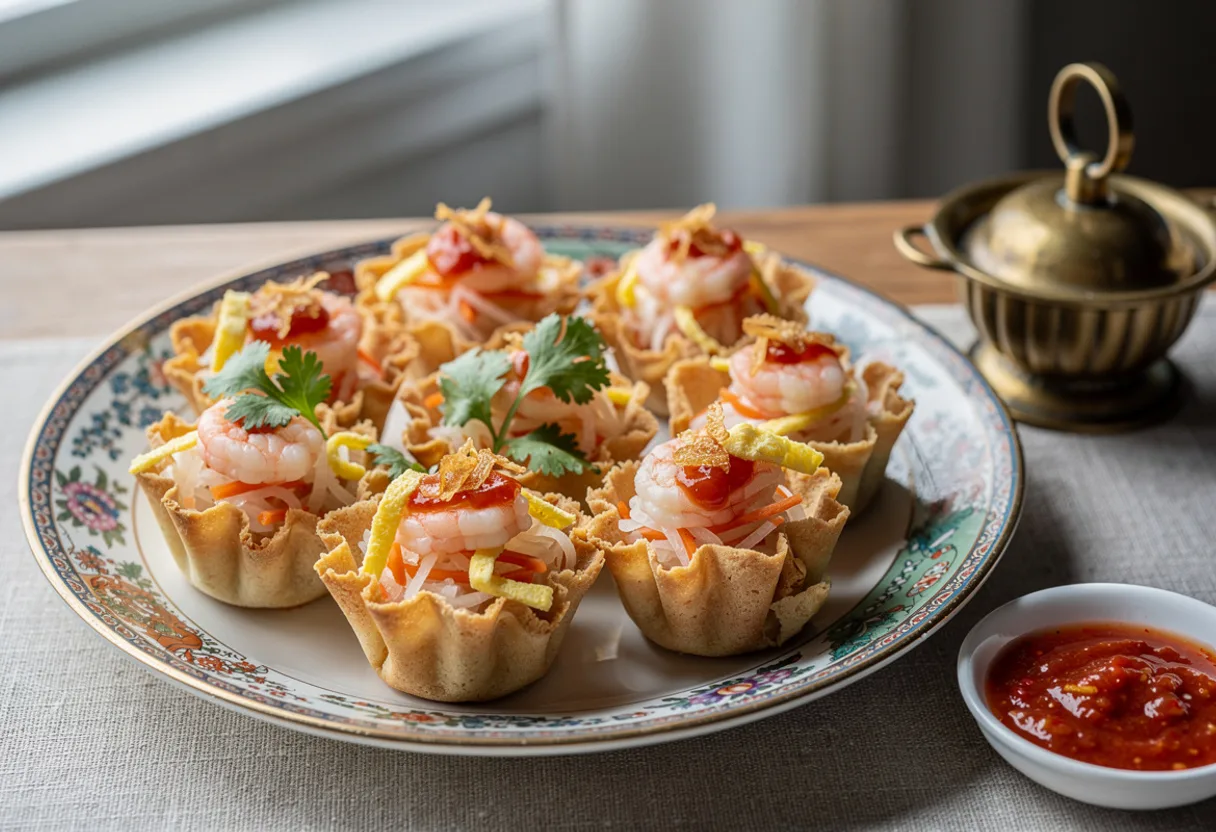
AI-generated illustration
Kueh pie tee are small crisp pastry cups, shaped like upside-down top hats, filled with a sweet and savoury of shredded jicama. They are one of the best-loved Peranakan (Nyonya) appetisers, served at tea parties, weddings and at Chinese New Year, and they are popular in both Singapore and Malaysia. The Peranakan writer Baba Ong Jin Teong suggested they may have begun in Singapore, and they are also known as Singapore poh piah or Selat popiah, a bite-sized cousin of the fresh spring roll with the same filling.
The shells are made by dipping a small fluted brass or cast iron mould first into hot oil, then into a thin batter of rice flour, wheat flour and egg, and back into the oil, where the cup fries crisp and slips off the mould. The name probably comes from the English word "patty", after the moulds brought into Singapore in the early 1900s.
The filling is jicama (bangkuang) and carrot with garlic, soybean paste and prawns until soft and sweet. It goes into the shells only at the table, so they stay crisp, finished with a little egg, herbs, fried shallots and chili sauce.
Saved recipes and passport stamps are kept on this device. Sign in to keep them across your devices and leave reviews.
Make it yours
✓ Naturally dairy-, nut- and pork-free. No swaps needed.
Toggle a diet and the ingredients rewrite themselves with regional substitutes.
🥕 Vegetarian
🌱 Vegan
🌾 Gluten-Free
🥛 Dairy-Free
🥜 Nut-Free
🥚 Egg-Free
🐖 Pork-Free
Dietary labels are a cooking guide, not allergen-safety advice. We track dairy, egg, gluten, tree nuts and peanuts (we count coconut as a tree nut, following FDA labeling), fish, and shellfish; we do not screen for sesame, soy, mustard, celery, or sulphites. If you have a food allergy, read the label on every product you use, and note that a kitchen can cross-contaminate in ways a recipe cannot control.
Ingredients
US
Metric
Serves 6
- 60 g rice flour (for the shells)
- 20 g all-purpose flour (for the shells)
- 25 g cornstarch (for the shells)
- 1/4 tsp salt (for the shells)
- 1 egg (for the shells)
- 200 ml water (for the shells)
- about 1 litre , for deep frying
- 1 tbsp oil (for the filling)
- 3 cloves garlic, minced
- 1 tbsp soybean paste (taucu), lightly mashed
- 100 g small raw prawns, peeled and chopped
- 400 g jicama (bangkuang), peeled and cut into fine matchsticks
- 1 small carrot, cut into fine matchsticks
- 1 tbsp light soy sauce
- 1 tsp dark soy sauce
- 1/2 tbsp sugar
- 1/2 tsp salt (for the filling)
- 400 ml water (for the filling)
- 2 eggs, beaten (for the omelette topping)
- 1 small bunch fresh coriander leaves, to serve
- 3 tbsp fried shallots, to serve
- 1/4 cup sweet chili sauce or sambal, to serve
Instructions
- 1For the shells, whisk the rice flour, wheat flour, cornstarch and salt together, then whisk in the egg and water to a smooth batter as thin as crepe batter. Strain it through a sieve and leave it to rest for 30 minutes.
- 2Meanwhile, make the filling. Heat the oil in a wok over medium heat and stir-fry the garlic and fermented soybean paste for about 1 minute, until fragrant. Add the prawns and stir-fry for 1 minute, then add the jicama, carrot, both soy sauces, sugar and salt and pour in the water.
- 3Simmer over low heat for about 1 hour, stirring now and then, until the jicama is very soft and sweet and most of the liquid has gone. Drain off any liquid left so the filling is moist but not wet, and keep it warm.
- 4For the topping, cook the beaten eggs into a thin omelette in a lightly oiled pan, roll it up and slice it into fine strips.
- 5Heat about 8 cm of oil in a small deep pan to 170 to 180 C. Heat the pie tee mould in the oil for a minute, lift it out, shake off the excess and dip it into the batter, leaving the top 1 mm of the mould uncovered. Plunge it straight back into the oil and fry for 30 to 60 seconds, until the cup is golden and slides off. Drain upside down on paper towels. Repeat, stirring the batter each time, to make about 30 shells.✎ Chef’s noteIf the batter will not cling, the mould is not hot enough; if it slides off in the oil at once, the batter is too thick. Cooled shells keep crisp for days in an airtight tin.
- 6Just before eating, fill each shell with a spoonful of the warm jicama filling, top with omelette strips, a coriander leaf, fried shallots and a little chili sauce, and serve at once.✎ Chef’s noteFill only as many as will be eaten straight away. Left to stand, the shells go soft.
Peranakan (Nyonya) tradition of Singapore and Malaysia.
Ratings & reviews
Cooked it? Rate this dish:
No account needed. Sign in to leave a full review with a comment.
Cooked it?
Kept on this device, no account needed. Sign in to leave a review and keep your passport across your devices.
No reviews yet, be the first to cook it.
🌏 While it simmers, know your destination
📍
Singapore. Chicken rice is claimed on both sides of the causeway. It descends from Hainan's Wenchang chicken, brought over by Hainanese migrants and reworked with Cantonese technique, so Singapore and Malaysia each have a case and neither has a clinching one. The rice cooked in the poaching stock is the part nobody argues about.
🗺️
Singapore. Hawker culture was inscribed by UNESCO on 16 December 2020, Singapore's first inscription, and what was listed was the hawker centre as a community dining room rather than any dish in it. That framing is the point: the centres were built from the 1970s to move street vendors indoors, and they remain where the whole country eats.
🌍
Asia. Asia is the world's largest and most populous continent, and its food spans the delicate seasonality of Japanese washoku, the chili-fired curries of India and Thailand, and the wheat-and-lamb traditions of Central Asia. Rice, noodles, soy, and fermentation recur across its regions, while ancient spice routes and religious traditions shaped distinct grammars of flavor. Whether from a street-cart wok or a monastery kitchen, eating is deeply communal and ritual-rich.
The story behind this dish is up top, worth a read while the pot works.
More from Singapore
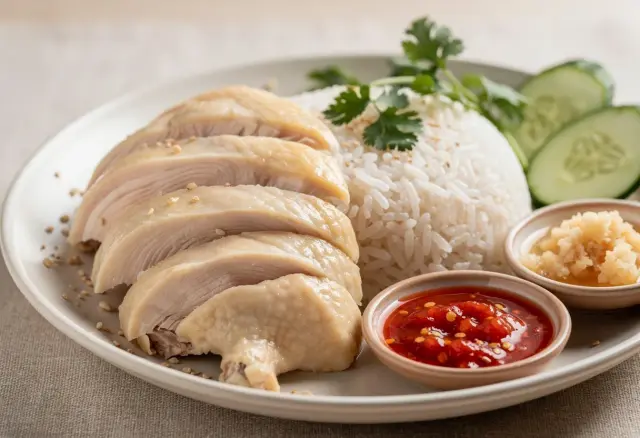
Hainanese Chicken RiceSilken poached chicken over rice cooked in its broth, with chili-ginger sauce, Singapore’s national obsession.
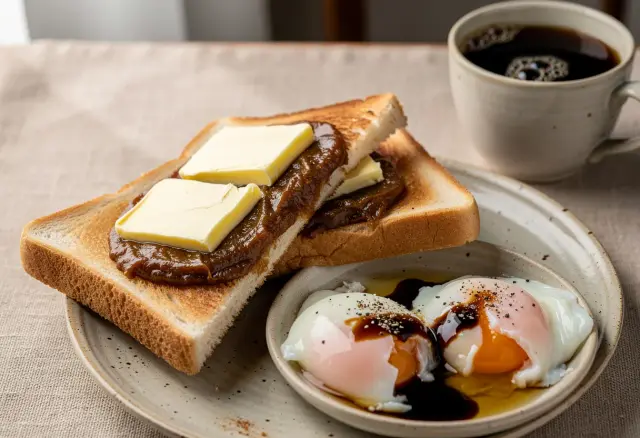
Kaya ToastToasted bread spread with coconut-egg kaya jam and butter, with soft-cooked eggs and kopi.
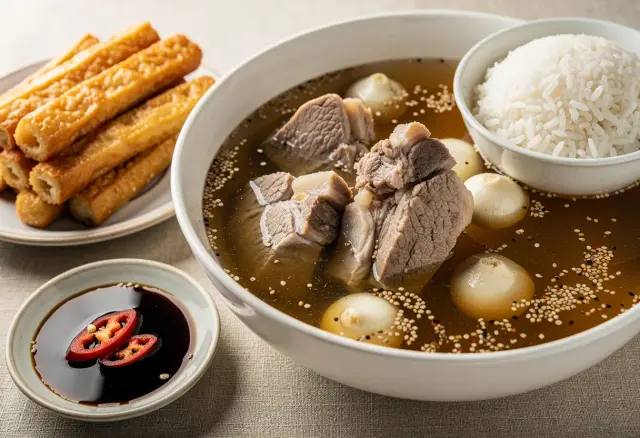
Bak Kut TehPork ribs simmered in a peppery, garlicky broth, Singapore's restorative bowl eaten with rice and dough fritters.
Browse all Singapore recipes →
Good to know
You’ll need: Wok, Mould or tin, Whisk.
Storing it: Fried food is best eaten fresh while crisp. Re-crisp leftovers in a hot oven or air fryer; the microwave makes them soft.
Make it a Singapore meal
BandungDrink
Pulut HitamDessert
Similar dishes from around the world
Balchi di Piska (Curaçao Fish Balls)Curaçao
Moreia Frita (Cape Verdean Fried Moray Eel)Cape Verde
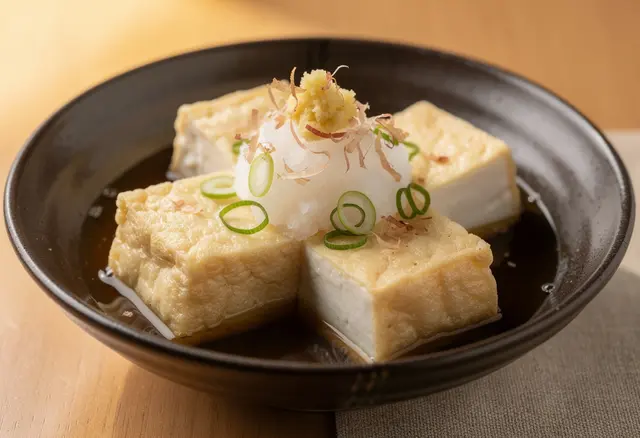
Agedashi Tofu (Fried Tofu in Dashi Broth)Japan
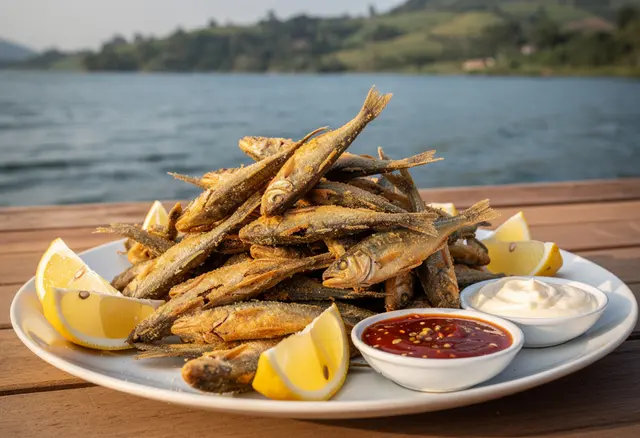
Sambaza (Rwandan Fried Lake Kivu Fish)Rwanda
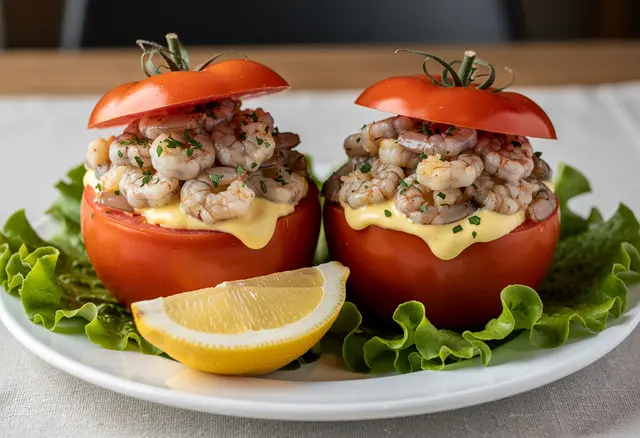
Tomate Crevettes (Belgian Tomatoes Stuffed with Grey Shrimp)Belgium
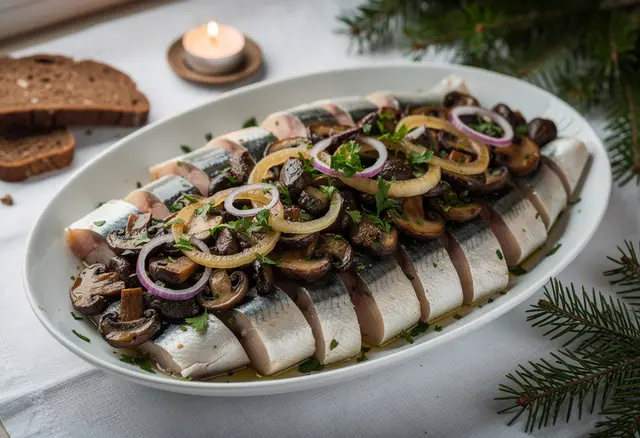
Silkė su Grybais (Lithuanian Herring with Mushrooms)Lithuania
Frequently asked questions
What is Kueh Pie Tee (Crispy Nyonya Top Hats)?
Paper-thin, crisp fried pastry cups shaped on a brass mould, filled at the last moment with braised shredded jicama, carrot and prawn, topped with omelette strips, coriander, fried shallots and chili sauce.
Where does Kueh Pie Tee (Crispy Nyonya Top Hats) come from?
Kueh Pie Tee (Crispy Nyonya Top Hats) is a Singaporean dish from Singapore, Singapore.
Can Kueh Pie Tee (Crispy Nyonya Top Hats) be made vegan, gluten-free, or dairy-free?
This Kueh Pie Tee (Crispy Nyonya Top Hats) recipe includes substitution suggestions for vegetarian, vegan, gluten-free, dairy-free, nut-free, egg-free, and pork-free versions. Treat the substitutions as a starting guide rather than a guarantee, and see the allergen note below.
Is Kueh Pie Tee (Crispy Nyonya Top Hats) safe for people with food allergies?
Our dietary labels and substitutions are a cooking guide, not medical or allergen-safety advice. We track dairy, egg, gluten, tree nuts and peanuts (we still count coconut as a tree nut to be cautious, although the FDA stopped listing it as one in 2025), fish, and shellfish, but we do not screen for sesame, soy, mustard, celery, or sulphites. If you have a food allergy, always read the label on every product you use, and remember a home or commercial kitchen can cross-contaminate ingredients in ways a recipe cannot control.
How long does Kueh Pie Tee (Crispy Nyonya Top Hats) take to make?
About 2 h 45 min in all: 45 minutes prep and 90 minutes cooking, plus 30 min of hands-off waiting the method needs, serving 6.
Get the Sunday Spin
One dish from somewhere in the world, in your inbox every Sunday. No spam, just dinner inspiration you can cook that day.