
🥔 SIDE
Dagga (Gazan Hot Tomato and Dill Salad)
Onion, hot green chili, dill and ripe tomato pounded together with salt in a clay bowl into a fiery, chunky salsa, sharpened with lemon and drowned in olive oil, served beside fish, rice and stews.
Palestinian · easy · serves 4
prep 15 min · cook 0 min
~152 cal · 1g protein · 7g carbs · 14g fat · 2g fiber · 3g sugars · 2g sat fat (estimated, per serving)
↓ Jump to Recipe
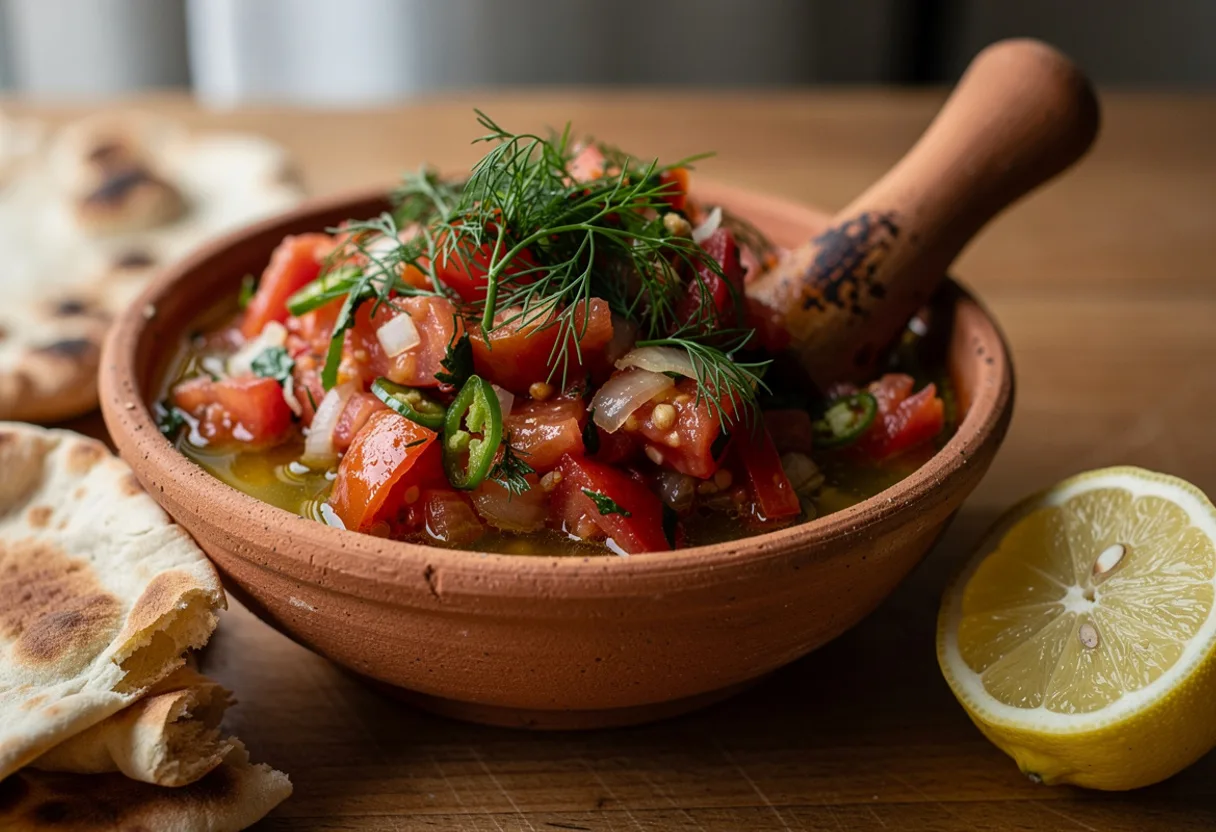
AI-generated illustration
Dagga, or salata gazawiyya, Gazan salad, is the most basic and most often made salad of Gaza. Its name comes from the Arabic for pounded, because it is not chopped but crushed, traditionally in a zibdiya, a small unglazed clay bowl made in Gaza, with a wooden pestle. Every Gazan kitchen has one, and they are handed down.
The salt and onion are pounded first, then hot green chili, then dill, which is Gaza's signature herb: fresh dill leaves, or dill seed, which sets Gazan cooking apart from the rest of Palestine. Ripe tomatoes are crushed in last, as smooth or chunky as you like, and the whole thing is finished with lemon juice and plenty of olive oil.
It is fiercely hot, and it is served on the side of almost everything: with fish and seafood on the coast, with grilled meat and chicken, and with rice dishes and meaty stews, and scooped up with bread. The recipe was recorded by Laila El-Haddad and Maggie Schmitt in The Gaza Kitchen.
Saved recipes and passport stamps are kept on this device. Sign in to keep them across your devices and leave reviews.
Make it yours
✓ Naturally vegetarian, vegan and gluten-, dairy-, nut-, egg- and pork-free. No swaps needed.
Toggle a diet and the ingredients rewrite themselves with regional substitutes.
🥕 Vegetarian
🌱 Vegan
🌾 Gluten-Free
🥛 Dairy-Free
🥜 Nut-Free
🥚 Egg-Free
🐖 Pork-Free
Dietary labels are a cooking guide, not allergen-safety advice. We track dairy, egg, gluten, tree nuts and peanuts (we count coconut as a tree nut, following FDA labeling), fish, and shellfish; we do not screen for sesame, soy, mustard, celery, or sulphites. If you have a food allergy, read the label on every product you use, and note that a kitchen can cross-contaminate in ways a recipe cannot control.
Ingredients
US
Metric
Serves 4
- 1/2 tsp salt
- 1 small onion, chopped
- 2 hot green chilies, roughly chopped, or to taste
- 1 small clove garlic, optional
- 1 cup (about 20 g) fresh dill, finely chopped, or 1 tsp dill seeds
- 2 medium very ripe tomatoes, chopped
- 1 to 2 tbsp lemon juice
- 1/4 cup extra-virgin olive oil
Instructions
- 1Put the salt and onion in a clay bowl, a mortar or any heavy curved bowl, and pound them with a pestle into a rough paste.
- 2Add the chilies, and the garlic if using, and keep crushing until they break down.
- 3Add half the fresh dill, or all the dill seeds, and crush it to release its oils.
- 4Add the tomatoes and pound them to the texture you like, smooth or chunky. Stir in the rest of the fresh dill and the lemon juice.
- 5Pour the olive oil generously over the top and serve straight away, on the side of fish, grilled meat, rice or stew, with flatbread for scooping.
Gazan tradition, after Laila El-Haddad and Maggie Schmitt, The Gaza Kitchen.
Ratings & reviews
Cooked it? Rate this dish:
No account needed. Sign in to leave a full review with a comment.
Cooked it?
Kept on this device, no account needed. Sign in to leave a review and keep your passport across your devices.
No reviews yet, be the first to cook it.
🌏 While it simmers, know your destination
📍
West Bank. Musakhan means heated, and the name comes from farmers warming yesterday's taboon bread through with the new oil. It belongs particularly to the Tulkarm and Jenin area, it is made at the olive harvest when the oil is fresh and green, and pine nuts or almonds go over the top of it.
🗺️
Palestine. Palestinian cuisine is deeply tied to the land, musakhan (sumac chicken over flatbread), maqluba's dramatic 'upside-down' rice, and olive oil pressed from ancient groves. Za'atar, sumac, and communal platters define the table.
🌍
Asia. Fermentation is the thread that runs the whole way across: soy sauce and miso, Korean doenjang and kimchi, Southeast Asian fish sauces, the soured batter behind an idli. Chilli is the newcomer among them, arriving only after 1500 with Portuguese and Spanish traders, which makes the heat in Sichuan, Thai and Korean cooking far younger than the fermenting underneath it.
The story behind this dish is up top, worth a read while the pot works.
More from Palestine
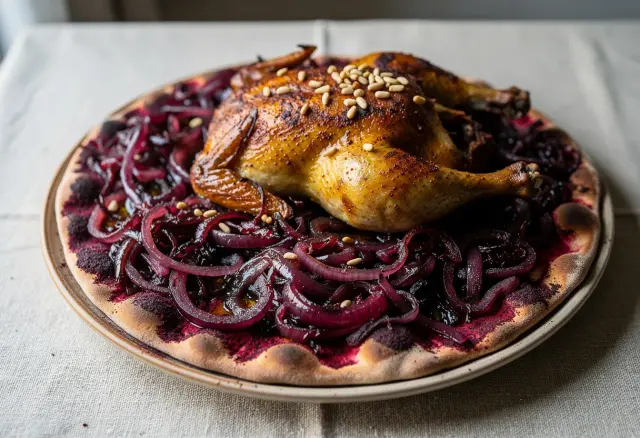
MusakhanSumac-and-onion roasted chicken over olive-oil-soaked taboon bread, showered with toasted pine nuts, Palestine on a platter.
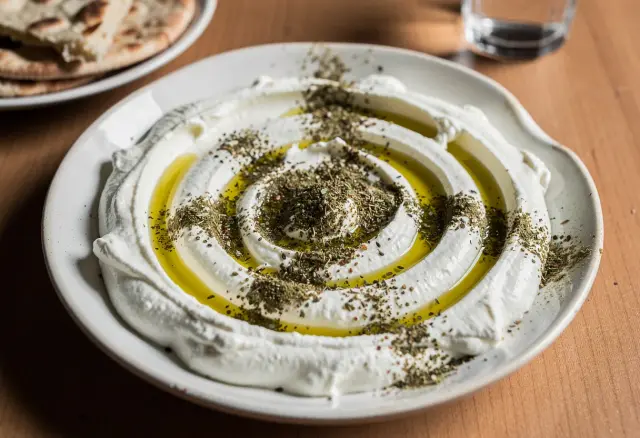
Labneh with Za'atarThick strained yogurt swirled with olive oil and za'atar, scooped with warm taboon bread.
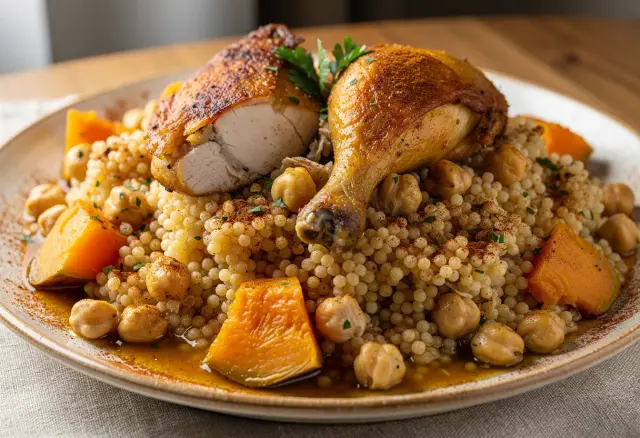
MaftoulHand-rolled Palestinian couscous simmered with chicken and chickpeas in a warmly spiced broth, a warming village dish.
Browse all Palestine recipes →
Good to know
You’ll need: Mortar and pestle.
Storing it: Best assembled just before serving. Prep the components ahead and dress at the last moment so it stays crisp.
Make it a Palestine meal

Kharroub (Carob Drink)Drink

QatayefDessert
Similar dishes from around the world

Lasary Voatabia (Malagasy Tomato and Onion Relish)Madagascar

Salat Katzutz (Israeli Chopped Salad)Israel
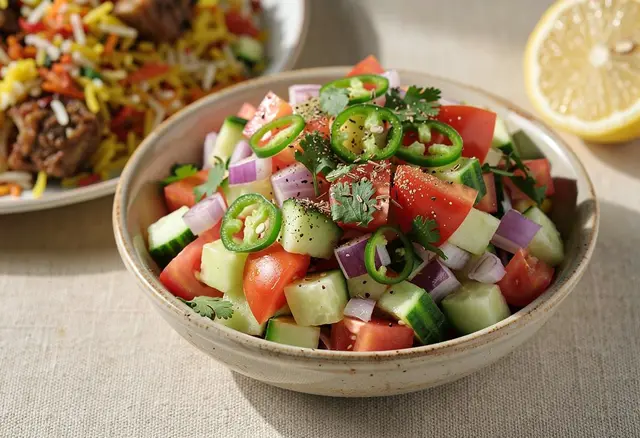
Kachumber (Pakistani Tomato, Cucumber and Onion Salad)Pakistan
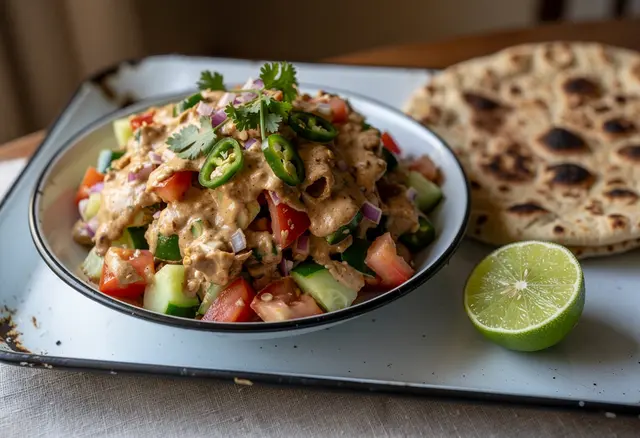
Salatet Dakwa (Sudanese Peanut Salad)Sudan
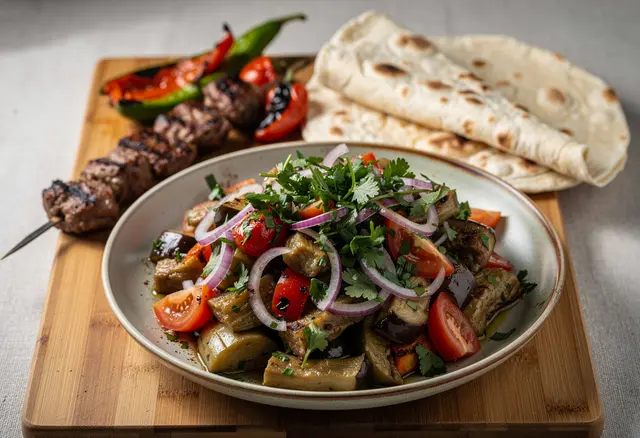
Mangal Salatı (Azerbaijani Grilled Vegetable Salad)Azerbaijan
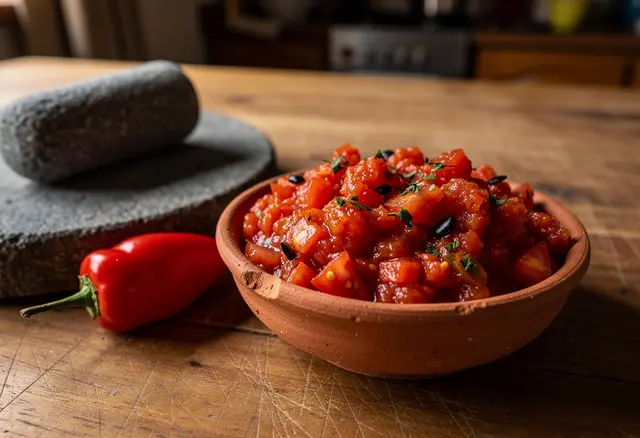
Llajua (Bolivian Locoto and Tomato Salsa)Bolivia
Cuisine
Diet
Vegetarian Recipes from Around the World
Vegan Recipes from Around the World
Gluten-Free Recipes from Around the World
Dairy-Free Recipes from Around the World
Nut-Free Recipes from Around the World
Egg-Free Recipes from Around the World
Pork-Free Recipes from Around the World
Dairy-Free Palestinian Recipes
Frequently asked questions
What is Dagga (Gazan Hot Tomato and Dill Salad)?
Onion, hot green chili, dill and ripe tomato pounded together with salt in a clay bowl into a fiery, chunky salsa, sharpened with lemon and drowned in olive oil, served beside fish, rice and stews.
Where does Dagga (Gazan Hot Tomato and Dill Salad) come from?
Dagga (Gazan Hot Tomato and Dill Salad) is a Palestinian dish from West Bank, Palestine.
Can Dagga (Gazan Hot Tomato and Dill Salad) be made vegan, gluten-free, or dairy-free?
This Dagga (Gazan Hot Tomato and Dill Salad) recipe includes substitution suggestions for vegetarian, vegan, gluten-free, dairy-free, nut-free, egg-free, and pork-free versions. Treat the substitutions as a starting guide rather than a guarantee, and see the allergen note below.
Is Dagga (Gazan Hot Tomato and Dill Salad) safe for people with food allergies?
Our dietary labels and substitutions are a cooking guide, not medical or allergen-safety advice. We track dairy, egg, gluten, tree nuts and peanuts (we still count coconut as a tree nut to be cautious, although the FDA stopped listing it as one in 2025), fish, and shellfish, but we do not screen for sesame, soy, mustard, celery, or sulphites. If you have a food allergy, always read the label on every product you use, and remember a home or commercial kitchen can cross-contaminate ingredients in ways a recipe cannot control.
How long does Dagga (Gazan Hot Tomato and Dill Salad) take to make?
About 15 minutes total (15 minutes prep, 0 minutes cooking), serving 4.
Get the Sunday Spin
One dish from somewhere in the world, in your inbox every Sunday. No spam, just dinner inspiration you can cook that day.