
🥔 SIDE
Salatet Dakwa (Sudanese Peanut Salad)
Diced tomato, cucumber, green pepper, red onion and green chili tossed in a tangy dressing of peanut paste loosened with lime juice, water and oil.
Sudanese · easy · serves 4
prep 15 min · cook 0 min
~240 cal · 8g protein · 16g carbs · 18g fat · 4g fiber · 7g sugars · 3g sat fat (estimated, per serving)
↓ Jump to Recipe
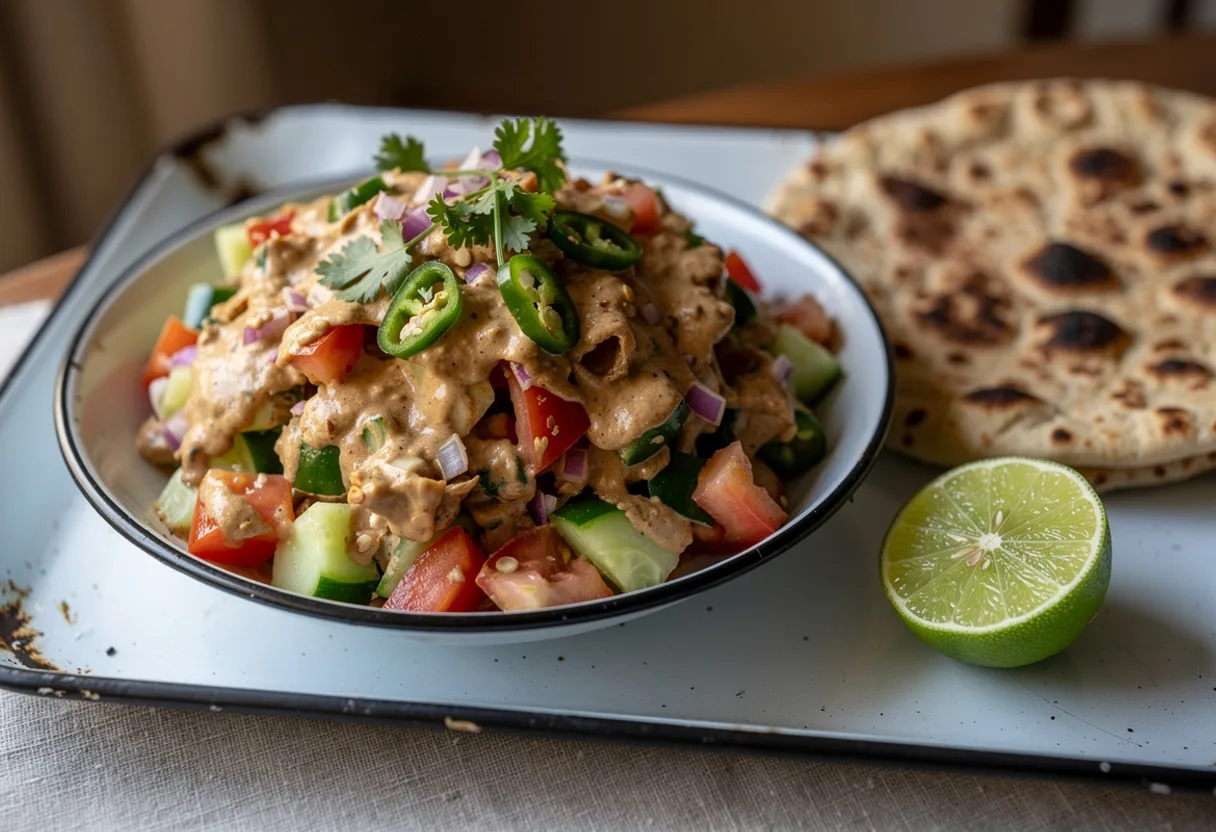
AI-generated illustration
Dakwa is the Sudanese word for peanut paste, one of the country's best-loved ingredients, and salatet dakwa, peanut salad, is one of its most characteristic dishes. Peanuts are so bound up with Sudan that in parts of the Arabic-speaking world they were once known as Sudanese beans.
The salad is simple: tomato, onion and green pepper, often cucumber and a green chili, chopped small and dressed with peanut paste that has been thinned with water, lime or lemon juice and a little oil into a creamy, sharp dressing. Some cooks add a splash of vinegar, crushed garlic, a pinch of cumin, fresh coriander or rocket, and sesame oil is a traditional alternative to olive oil.
It is eaten as a side dish with grilled or fried meat, fish and oven-cooked dishes, and it is just as often a quick meal on its own, scooped up with bread.
Saved recipes and passport stamps are kept on this device. Sign in to keep them across your devices and leave reviews.
Make it yours
✓ Naturally vegetarian, vegan and gluten-, dairy-, egg- and pork-free. No swaps needed.
Toggle a diet and the ingredients rewrite themselves with regional substitutes.
🥕 Vegetarian
🌱 Vegan
🌾 Gluten-Free
🥛 Dairy-Free
🥜 Nut-Free
🥚 Egg-Free
🐖 Pork-Free
Dietary labels are a cooking guide, not allergen-safety advice. We track dairy, egg, gluten, tree nuts and peanuts (we count coconut as a tree nut, following FDA labeling), fish, and shellfish; we do not screen for sesame, soy, mustard, celery, or sulphites. If you have a food allergy, read the label on every product you use, and note that a kitchen can cross-contaminate in ways a recipe cannot control.
Ingredients
US
Metric
Serves 4
- 6 tbsp smooth unsweetened peanut butter (dakwa)
- 4 to 6 tbsp water
- 3 tbsp (about 1 lime) lime juice
- 2 tbsp olive oil
- 1 tsp white vinegar, optional
- to taste salt and black pepper
- 3 medium ripe tomatoes, diced
- 1 cucumber, diced
- 1 small green bell pepper, diced
- 1/2 red onion, finely chopped
- 1 to 2 green chili, finely chopped
- a small handful fresh coriander, chopped, optional
Instructions
- 1In a large bowl, beat the peanut butter with 4 tbsp of the water until smooth.✎ Chef’s notePeanut butter seizes at first when liquid goes in and then loosens as you keep stirring, so add the water gradually.
- 2Beat in the lime juice, olive oil and vinegar if using, then add more water a spoonful at a time until the dressing is like thick cream. Season with salt and pepper.
- 3Add the tomatoes, cucumber, green pepper, onion and chili and toss until every piece is coated.
- 4Taste for salt and lime, scatter over the coriander if using and serve straight away with bread or beside grilled meat.
Sudanese home tradition.
Ratings & reviews
Cooked it? Rate this dish:
No account needed. Sign in to leave a full review with a comment.
Cooked it?
Kept on this device, no account needed. Sign in to leave a review and keep your passport across your devices.
No reviews yet, be the first to cook it.
🌏 While it simmers, know your destination
📍
Khartoum. Peanut is a sauce ingredient here rather than a snack. Dakwa, ground peanut, goes into stews and into salads such as salata aswad, made with grilled aubergine. Breakfast is fuul, fava beans cooked soft and dressed with sesame oil and crumbled white jibna cheese.
🗺️
Sudan. Sudanese cooking bridges Arab and African worlds, built on sorghum, ful medames, and stews thickened with peanut or dried okra (weika). Flatbreads like kisra and gurasa scoop up richly spiced sauces.
🌍
Africa. The structure repeats across most of the continent: one starch and one sauce. A grain or root is cooked stiff, torn or rolled by hand, and used to carry a stew of leaves, groundnut, okra or fish, usually from a shared bowl and with the right hand. UNESCO listings have followed that logic, inscribing couscous in 2020 as a shared Maghreb tradition and Ivorian attieke in 2024.
The story behind this dish is up top, worth a read while the pot works.
More from Sudan
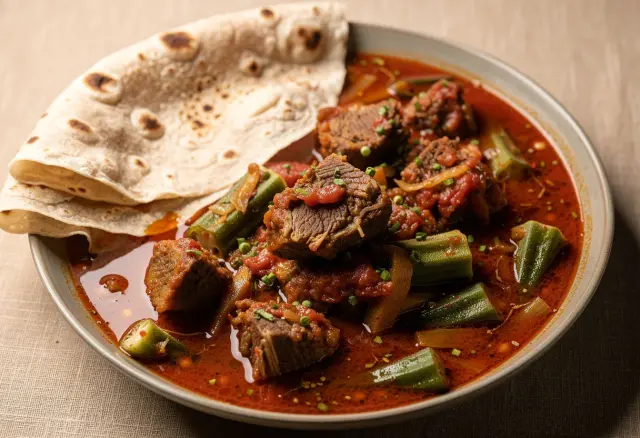
Bamia (Sudanese Okra Stew)Tender lamb and okra simmered in a garlicky tomato broth spiced with black lime, Sudan’s everyday comfort, scooped with kisra.
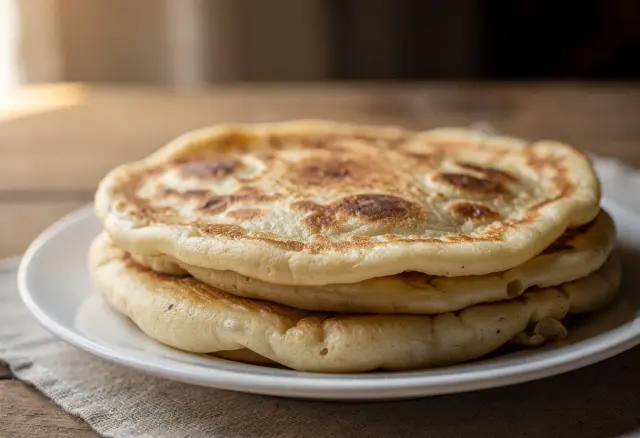
GurasaA thick, soft Sudanese griddle pancake eaten with a stew or with sugar and ghee for breakfast.

ShaiyahStrips of lamb quickly fried with onion, peppers, and spices, a popular Sudanese meat dish for gatherings.
Browse all Sudan recipes →
Good to know
Storing it: Best assembled just before serving. Prep the components ahead and dress at the last moment so it stays crisp.
Make it a Sudan meal

Jabana (Sudanese Spiced Coffee)Drink

Basbousa (Semolina Cake in Syrup)Dessert
Similar dishes from around the world

Lasary Voatabia (Malagasy Tomato and Onion Relish)Madagascar
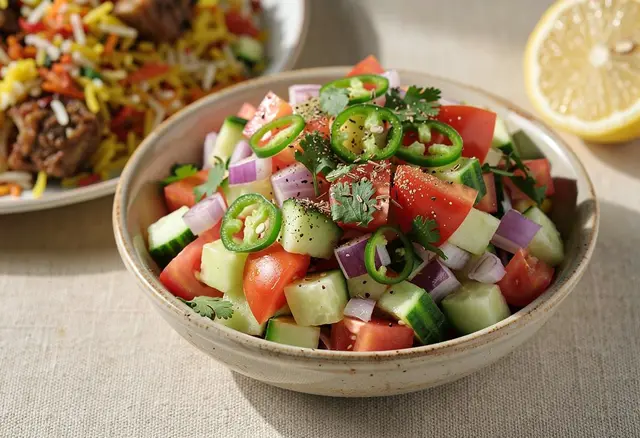
Kachumber (Pakistani Tomato, Cucumber and Onion Salad)Pakistan

Ensalada Chilena (Chilean Tomato and Onion Salad)Chile

Salat Katzutz (Israeli Chopped Salad)Israel

Dagga (Gazan Hot Tomato and Dill Salad)Palestine

Salad Shirazi (Persian Cucumber, Tomato and Onion Salad)Iran
Cuisine
Diet
Frequently asked questions
What is Salatet Dakwa (Sudanese Peanut Salad)?
Diced tomato, cucumber, green pepper, red onion and green chili tossed in a tangy dressing of peanut paste loosened with lime juice, water and oil.
Where does Salatet Dakwa (Sudanese Peanut Salad) come from?
Salatet Dakwa (Sudanese Peanut Salad) is a Sudanese dish from Khartoum, Sudan.
Can Salatet Dakwa (Sudanese Peanut Salad) be made vegan, gluten-free, or dairy-free?
This Salatet Dakwa (Sudanese Peanut Salad) recipe includes substitution suggestions for vegetarian, vegan, gluten-free, dairy-free, nut-free, egg-free, and pork-free versions. Treat the substitutions as a starting guide rather than a guarantee, and see the allergen note below.
Is Salatet Dakwa (Sudanese Peanut Salad) safe for people with food allergies?
Our dietary labels and substitutions are a cooking guide, not medical or allergen-safety advice. We track dairy, egg, gluten, tree nuts and peanuts (we still count coconut as a tree nut to be cautious, although the FDA stopped listing it as one in 2025), fish, and shellfish, but we do not screen for sesame, soy, mustard, celery, or sulphites. If you have a food allergy, always read the label on every product you use, and remember a home or commercial kitchen can cross-contaminate ingredients in ways a recipe cannot control.
How long does Salatet Dakwa (Sudanese Peanut Salad) take to make?
About 15 minutes total (15 minutes prep, 0 minutes cooking), serving 4.
Get the Sunday Spin
One dish from somewhere in the world, in your inbox every Sunday. No spam, just dinner inspiration you can cook that day.