South America → Bolivia → La Paz

🥔 SIDE
Llajua (Bolivian Locoto and Tomato Salsa)
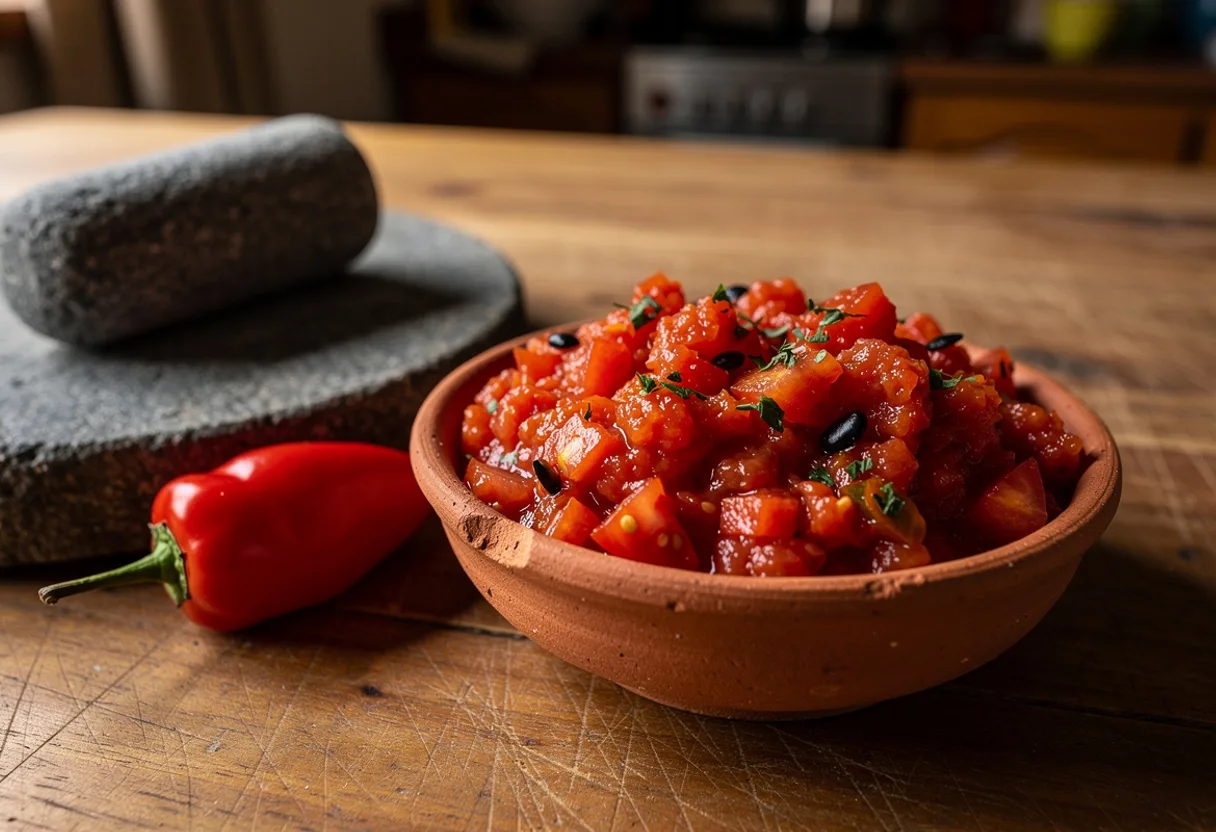
Raw tomato and fiery locoto chili ground to a rough red salsa with salt and a green Andean herb, the table sauce that goes with almost every Bolivian meal.
Bolivian · easy · serves 4
prep 10 min · cook 0 min
~11 cal · 1g protein · 2g carbs · 0g fat · 1g fiber · 2g sugars · 0g sat fat (estimated, per serving)
↓ Jump to Recipe
AI-generated illustration
Llajua is Bolivia's everyday hot sauce, and it is on the table at almost every meal. At its simplest it is raw tomato and locoto, the thick-fleshed, black-seeded Andean chili, ground together with salt. Most cooks add a green herb, and the herb changes with the region: quirquiña, a pungent Bolivian cousin of cilantro, in Cochabamba, and huacataya, black mint, on the Altiplano and in Sucre. Some add a little onion, oil or vinegar.
The traditional way to make it is on a batán, a flat grinding stone, with a rounded stone called the uña rocked back and forth over the tomato, then over the locoto and salt, until everything is crushed together. Many Bolivians say it tastes better that way than grated or blended.
It is spooned over potatoes, cheese, eggs, mote and chuño, over fricasé and chicharrón, into soups, and onto anticuchos and grilled meat.
Saved recipes and passport stamps are kept on this device. Sign in to keep them across your devices and leave reviews.
Make it yours
✓ Naturally vegetarian, vegan and gluten-, dairy-, nut-, egg- and pork-free. No swaps needed.
Toggle a diet and the ingredients rewrite themselves with regional substitutes.
🥕 Vegetarian
🌱 Vegan
🌾 Gluten-Free
🥛 Dairy-Free
🥜 Nut-Free
🥚 Egg-Free
🐖 Pork-Free
Dietary labels are a cooking guide, not allergen-safety advice. We track dairy, egg, gluten, tree nuts and peanuts (we count coconut as a tree nut, following FDA labeling), fish, and shellfish; we do not screen for sesame, soy, mustard, celery, or sulphites. If you have a food allergy, read the label on every product you use, and note that a kitchen can cross-contaminate in ways a recipe cannot control.
Ingredients
US
Metric
Serves 4
- 2 medium ripe tomatoes
- 1 locoto (rocoto) chili, or 1 habanero; use more for a hotter sauce
- 2 tbsp quirquiña or huacataya leaves, choppedHard to find? cilantro, with a few mint leaves - milder and less resinous than quirquiña, but it gives the same fresh green note
- 1/2 tsp salt
Instructions
- 1Cut the tomatoes into pieces. Split the locoto and remove the seeds and veins if you want a milder sauce.
- 2On a batán or in a large mortar, crush the tomato first, then add the locoto and salt and keep grinding until everything is crushed together into a rough sauce.✎ Chef’s noteNo stone or mortar? Pulse the tomato, locoto and salt in a blender a few times; keep it coarse rather than smooth.
- 3Stir in the chopped herb and taste for salt and heat.
- 4Serve fresh, in a bowl on the table, with potatoes, cheese, soups and grilled meat. It is best eaten the day it is made.
Bolivian Andean tradition.
Ratings & reviews
Cooked it? Rate this dish:
No account needed. Sign in to leave a full review with a comment.
Cooked it?
Kept on this device, no account needed. Sign in to leave a review and keep your passport across your devices.
No reviews yet, be the first to cook it.
🌏 While it simmers, know your destination
📍
La Paz. La Paz sits above 3,600 metres, and its food is built for thin, cold air: peanut-thickened soups, hearty stews, and chuno, potatoes freeze-dried in the Andean night. Aji peppers, corn, and dozens of native potato varieties anchor a kitchen shaped by altitude.
🗺️
Bolivia. Chuno is the altiplano's answer to having no refrigerator and too much frost: potatoes are left out overnight to freeze, trodden underfoot to press out the water, and dried in the sun over several days until they are light, grey and will keep for years. Rehydrated, they go into soups and stews and taste nothing like a fresh potato.
🌍
South America. Migration reworked the plate within living memory. Japanese arrivals in Peru and Brazil produced Nikkei cooking, Italians made pasta and pizza entirely ordinary in Argentina, Uruguay and Sao Paulo, and West African cooking carried into Bahia by the slave trade gave Brazil dende palm oil, okra and a whole ritual repertoire.
The story behind this dish is up top, worth a read while the pot works.
More from Bolivia
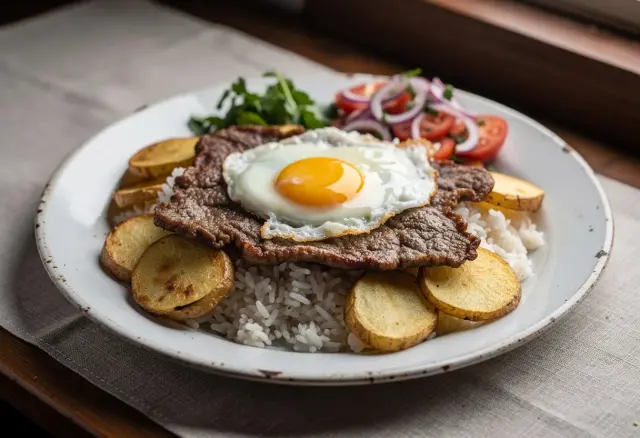
SilpanchoA Cochabamba plate of rice, potato, a thin breaded beef cutlet, and a fried egg over chopped salad.

Api con PastelA hot, spiced purple-corn drink thick with cinnamon and clove, served with a crisp fried cheese pastry dusted in sugar.
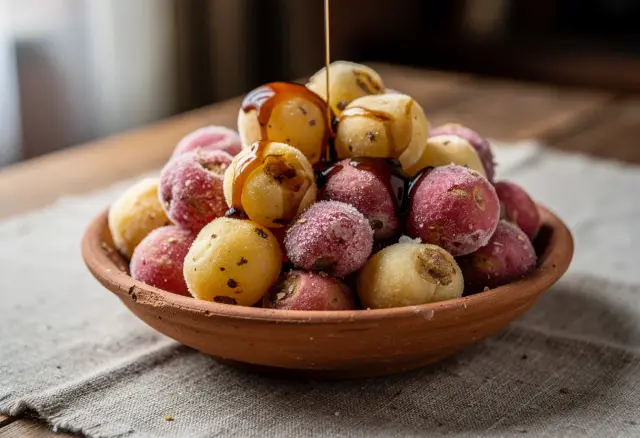
Thayacha (Andean Frozen Oca)An ancient Bolivian altiplano treat: sweet oca tubers boiled with cinnamon, then frozen overnight into a natural ice, sold in the winter markets of La Paz and El Alto.
Browse all Bolivia recipes →
Good to know
You’ll need: Mortar and pestle.
Storing it: Best assembled just before serving. Prep the components ahead and dress at the last moment so it stays crisp.
Make it a Bolivia meal
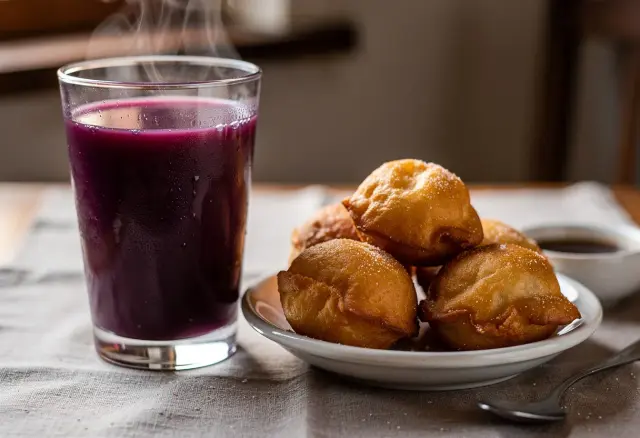
Api MoradoDrink
Thayacha (Andean Frozen Oca)Dessert
Similar dishes from around the world

Salat Katzutz (Israeli Chopped Salad)Israel

Lasary Voatabia (Malagasy Tomato and Onion Relish)Madagascar
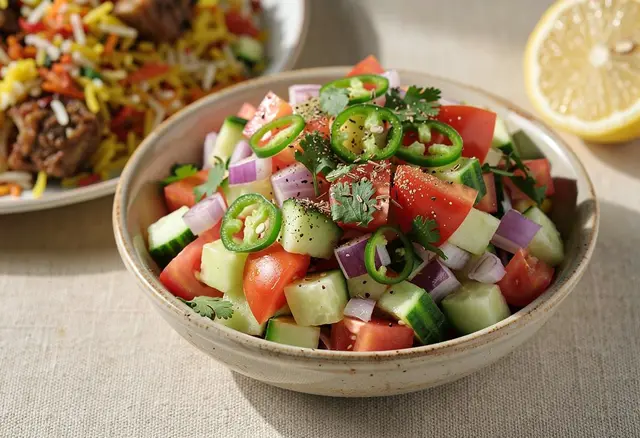
Kachumber (Pakistani Tomato, Cucumber and Onion Salad)Pakistan

Dagga (Gazan Hot Tomato and Dill Salad)Palestine
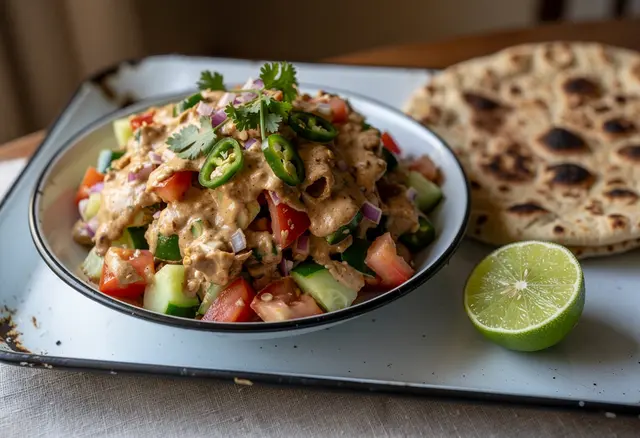
Salatet Dakwa (Sudanese Peanut Salad)Sudan
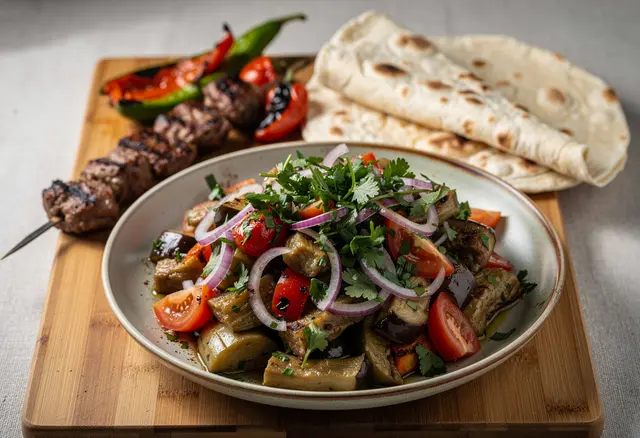
Mangal Salatı (Azerbaijani Grilled Vegetable Salad)Azerbaijan
Cuisine
Diet
Frequently asked questions
What is Llajua (Bolivian Locoto and Tomato Salsa)?
Raw tomato and fiery locoto chili ground to a rough red salsa with salt and a green Andean herb, the table sauce that goes with almost every Bolivian meal.
Where does Llajua (Bolivian Locoto and Tomato Salsa) come from?
Llajua (Bolivian Locoto and Tomato Salsa) is a Bolivian dish from La Paz, Bolivia.
Can Llajua (Bolivian Locoto and Tomato Salsa) be made vegan, gluten-free, or dairy-free?
This Llajua (Bolivian Locoto and Tomato Salsa) recipe includes substitution suggestions for vegetarian, vegan, gluten-free, dairy-free, nut-free, egg-free, and pork-free versions. Treat the substitutions as a starting guide rather than a guarantee, and see the allergen note below.
Is Llajua (Bolivian Locoto and Tomato Salsa) safe for people with food allergies?
Our dietary labels and substitutions are a cooking guide, not medical or allergen-safety advice. We track dairy, egg, gluten, tree nuts and peanuts (we still count coconut as a tree nut to be cautious, although the FDA stopped listing it as one in 2025), fish, and shellfish, but we do not screen for sesame, soy, mustard, celery, or sulphites. If you have a food allergy, always read the label on every product you use, and remember a home or commercial kitchen can cross-contaminate ingredients in ways a recipe cannot control.
How long does Llajua (Bolivian Locoto and Tomato Salsa) take to make?
About 10 minutes total (10 minutes prep, 0 minutes cooking), serving 4.
Get the Sunday Spin
One dish from somewhere in the world, in your inbox every Sunday. No spam, just dinner inspiration you can cook that day.