
🥔 SIDE
Shrak (Jordanian Bedouin Saj Bread)
Paper-thin, soft, unleavened flatbread of whole-wheat and white flour, stretched by hand into wide sheets and baked in seconds on a domed saj or an upturned wok.
Jordanian · advanced · serves 8
prep 30 min · cook 15 min · plus 30 min hands-off time
~243 cal · 6g protein · 48g carbs · 2g fat · 2g fiber · 0g sugars · 0g sat fat (estimated, per serving)
↓ Jump to Recipe
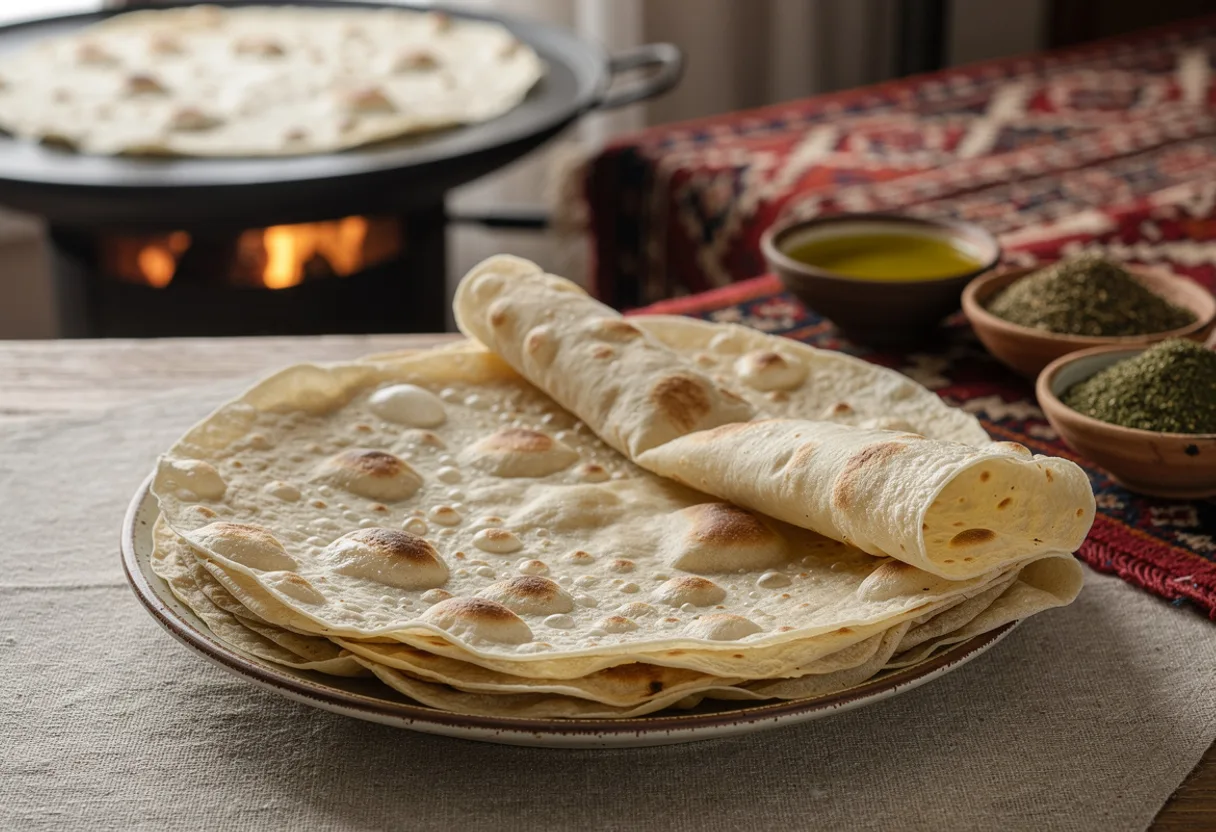
AI-generated illustration
Shrak is the daily bread of the Bedouin table in Jordan, known across the Levant as markook or saj bread. The dough is nothing but flour, salt and water, kneaded long and hard until it is elastic enough to stretch into a sheet larger than a pizza and thin enough to see light through.
The sheet is tossed from hand to hand, or spread over a round cushion, and flipped onto a saj, a domed metal griddle like an upturned wok set over a fire or a gas flame. It bubbles and spots brown in well under a minute a side and is folded and stacked in a cloth to keep soft.
Shrak is torn and used as a scoop for stews, dips and olive oil with , and it is the bread laid under the rice and lamb of mansaf, where it soaks up the yogurt sauce. In Jordan it is traditionally made in quantity before Eid, ready for mansaf and fatteh. Many home recipes add a little yeast and oil for a softer bread; the Bedouin version needs neither.
Saved recipes and passport stamps are kept on this device. Sign in to keep them across your devices and leave reviews.
Make it yours
✓ Naturally vegetarian, vegan and dairy-, nut-, egg- and pork-free. No swaps needed.
Toggle a diet and the ingredients rewrite themselves with regional substitutes.
🥕 Vegetarian
🌱 Vegan
🌾 Gluten-Free
🥛 Dairy-Free
🥜 Nut-Free
🥚 Egg-Free
🐖 Pork-Free
Dietary labels are a cooking guide, not allergen-safety advice. We track dairy, egg, gluten, tree nuts and peanuts (we count coconut as a tree nut, following FDA labeling), fish, and shellfish; we do not screen for sesame, soy, mustard, celery, or sulphites. If you have a food allergy, read the label on every product you use, and note that a kitchen can cross-contaminate in ways a recipe cannot control.
Ingredients
US
Metric
Serves 8
- 250 g whole-wheat flour
- 250 g plain (all-purpose) flour
- 1 tsp salt
- about 330 ml warm water
- as needed plain flour, for stretching
- 1 tbsp olive oil, a little for the dough balls
Instructions
- 1Mix the flours and salt, then add the water gradually to make a soft dough. Knead for a full 15 minutes, by hand or in a mixer, until very smooth and elastic.✎ Chef’s noteThe long knead is what lets the dough stretch paper-thin without tearing.
- 2Divide into 8 balls, rub them lightly with oil and leave covered for 30 minutes to relax.
- 3Heat a saj, or a large wok turned upside down over a high gas flame, for about 5 minutes until very hot.
- 4Flatten a ball on a floured surface, then lift it and stretch it by passing it quickly from the back of one hand to the other, letting its weight pull it out, or spread it over a floured cushion, until it is 35 to 40 cm across and almost transparent.
- 5Flip the sheet onto the hot dome and cook for 30 to 60 seconds, until bubbled and spotted brown underneath, then turn it briefly to set the other side. Fold it and stack it in a clean cloth while you make the rest.
Bedouin tradition of Jordan.
Ratings & reviews
Cooked it? Rate this dish:
No account needed. Sign in to leave a full review with a comment.
Cooked it?
Kept on this device, no account needed. Sign in to leave a review and keep your passport across your devices.
No reviews yet, be the first to cook it.
🌏 While it simmers, know your destination
📍
Amman. Amman's tables celebrate mansaf, lamb in fermented dried-yogurt sauce over rice, plus falafel, mezze, and knafeh. Bedouin hospitality and Levantine tradition define the Jordanian capital.
🗺️
Jordan. Mansaf was inscribed by UNESCO in 2022, and the inscription records how it is actually eaten: five to seven people gathered around each platter, the meat sheep or goat, the rice scattered with fried almonds, and the right hand used while the left is held behind the back. The sauce is jameed, dried fermented yoghurt reconstituted into something sharp and salty.
🌍
Asia. Asia is the world's largest and most populous continent, and its food spans the delicate seasonality of Japanese washoku, the chili-fired curries of India and Thailand, and the wheat-and-lamb traditions of Central Asia. Rice, noodles, soy, and fermentation recur across its regions, while ancient spice routes and religious traditions shaped distinct grammars of flavor. Whether from a street-cart wok or a monastery kitchen, eating is deeply communal and ritual-rich.
The story behind this dish is up top, worth a read while the pot works.
More from Jordan

Maqluba (Upside-Down Rice)Layers of chicken, fried eggplant, cauliflower, and spiced rice cooked in one pot, then flipped tableside.
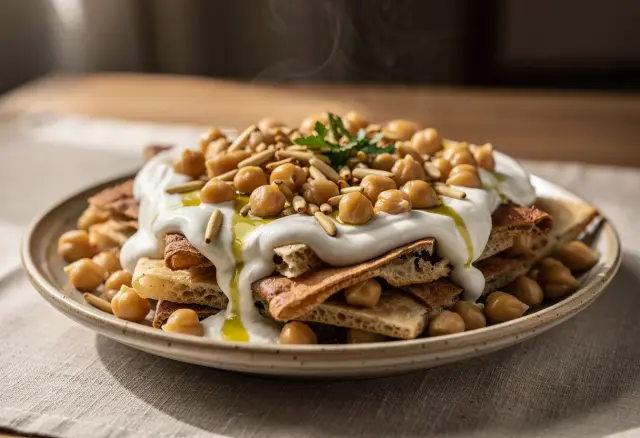
FattehLayers of toasted bread, warm chickpeas, and garlicky yogurt topped with sizzled butter and pine nuts.
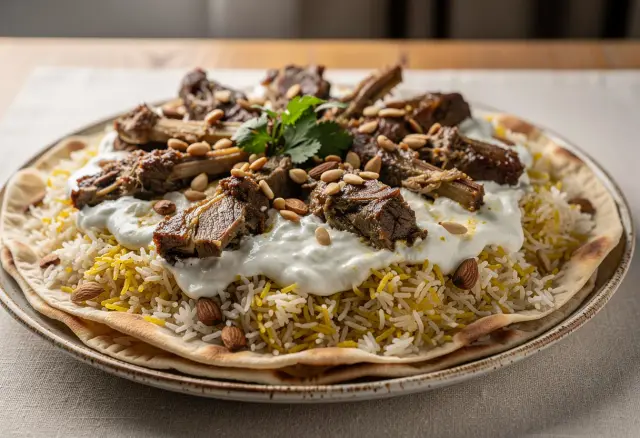
MansafLamb cooked in a tangy fermented-yogurt sauce over rice and flatbread, Jordan's national dish of hospitality.
Browse all Jordan recipes →
Good to know
You’ll need: Wok.
Storing it: Best the day it is made. Wrap well and refresh in a warm oven, or freeze and reheat straight from frozen.
Make it a Jordan meal

Qamar al-DinDrink
MahalabiaDessert
Similar dishes from around the world
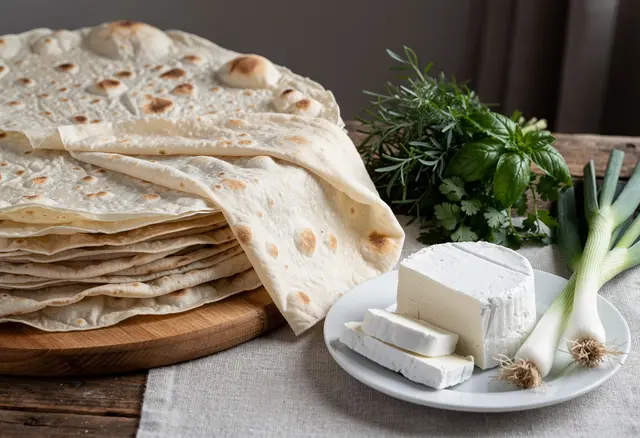
Lavash (Armenian Thin Flatbread)Armenia

Flatkaka (Icelandic Rye Flatbread)Iceland
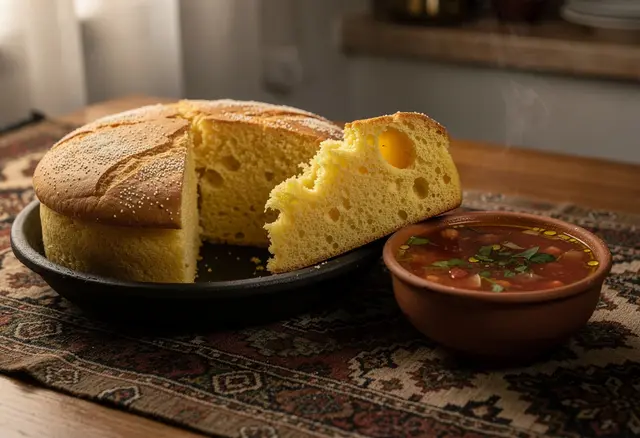
Matlouh (Algerian Semolina Pan Bread)Algeria

Somun (Bosnian Flatbread)Bosnia & Herzegovina
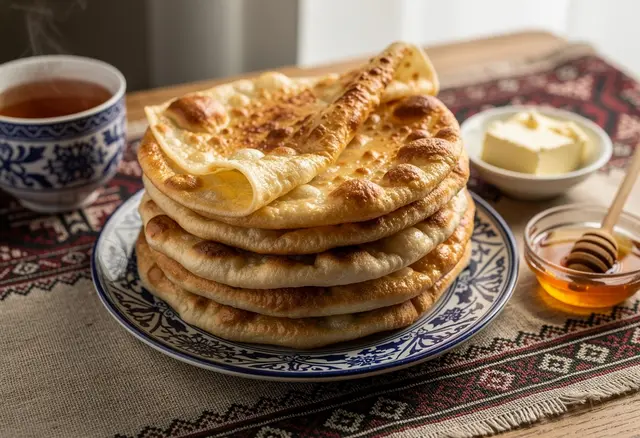
Shelpek (Kazakh Fried Flatbread)Kazakhstan
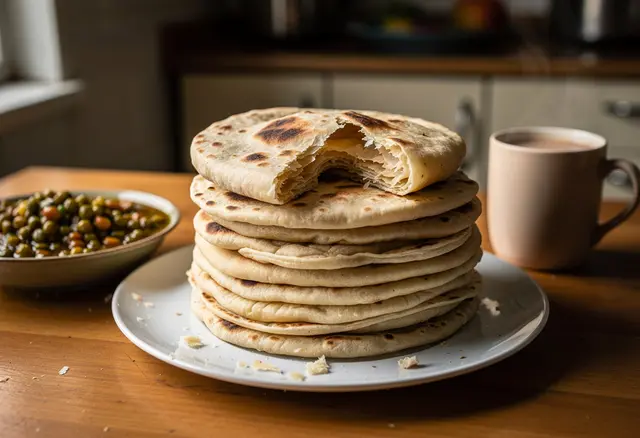
Chapati (Kenyan Soft Layered Flatbread)Kenya
Cuisine
Diet
Frequently asked questions
What is Shrak (Jordanian Bedouin Saj Bread)?
Paper-thin, soft, unleavened flatbread of whole-wheat and white flour, stretched by hand into wide sheets and baked in seconds on a domed saj or an upturned wok.
Where does Shrak (Jordanian Bedouin Saj Bread) come from?
Shrak (Jordanian Bedouin Saj Bread) is a Jordanian dish from Amman, Jordan.
Can Shrak (Jordanian Bedouin Saj Bread) be made vegan, gluten-free, or dairy-free?
This Shrak (Jordanian Bedouin Saj Bread) recipe includes substitution suggestions for vegetarian, vegan, gluten-free, dairy-free, nut-free, egg-free, and pork-free versions. Treat the substitutions as a starting guide rather than a guarantee, and see the allergen note below.
Is Shrak (Jordanian Bedouin Saj Bread) safe for people with food allergies?
Our dietary labels and substitutions are a cooking guide, not medical or allergen-safety advice. We track dairy, egg, gluten, tree nuts and peanuts (we still count coconut as a tree nut to be cautious, although the FDA stopped listing it as one in 2025), fish, and shellfish, but we do not screen for sesame, soy, mustard, celery, or sulphites. If you have a food allergy, always read the label on every product you use, and remember a home or commercial kitchen can cross-contaminate ingredients in ways a recipe cannot control.
How long does Shrak (Jordanian Bedouin Saj Bread) take to make?
About 1 h 15 min in all: 30 minutes prep and 15 minutes cooking, plus 30 min of hands-off waiting the method needs, serving 8.
Get the Sunday Spin
One dish from somewhere in the world, in your inbox every Sunday. No spam, just dinner inspiration you can cook that day.