Africa → Equatorial Guinea → Malabo

🥔 SIDE
Envuelto de Calabaza (Equatoguinean Pumpkin-Seed Parcels)
Ground pumpkin seeds beaten with water, smoked fish, onion and hot pepper into a thick paste, wrapped in banana leaves and cooked slowly into firm, savoury parcels.
Equatoguinean · medium · serves 6
prep 40 min · cook 120 min
~93 cal · 10g protein · 8g carbs · 3g fat · 1g fiber · 3g sugars · 1g sat fat (estimated, per serving)
↓ Jump to Recipe

AI-generated illustration
Envueltos, "wrapped things", are a family of Equatoguinean dishes in which banana or other broad leaves are filled with vegetables, meat or fish and cooked in a pot or among the embers. Every ethnic group has its own, and the envuelto de calabaza, made from ground pumpkin seeds, is a Fang favourite known in Fang as abuma nguan and in Spanish, affectionately, as anita blanca.
The shelled seeds are ground fine and mixed with water into a pale paste, then mixed with smoked or salted fish or meat and wrapped in leaves to cook. Traditionally the parcels were cooked over firewood, and they come out firm, rich and savoury, with a texture somewhere between a terrine and a pudding. Across the border in Cameroon a close relative, often enriched with egg, is called pudding.
Traditionally Fang, it has become a fixture of national celebrations: a wedding, baptism or first communion in Equatorial Guinea rarely goes by without envueltos of pumpkin seed or peanut on the table. It is eaten with boiled or .
Saved recipes and passport stamps are kept on this device. Sign in to keep them across your devices and leave reviews.
Make it yours
✓ Naturally gluten-, dairy-, nut-, egg- and pork-free. No swaps needed.
Toggle a diet and the ingredients rewrite themselves with regional substitutes.
🥕 Vegetarian
🌱 Vegan
🌾 Gluten-Free
🥛 Dairy-Free
🥜 Nut-Free
🥚 Egg-Free
🐖 Pork-Free
Dietary labels are a cooking guide, not allergen-safety advice. We track dairy, egg, gluten, tree nuts and peanuts (we count coconut as a tree nut, following FDA labeling), fish, and shellfish; we do not screen for sesame, soy, mustard, celery, or sulphites. If you have a food allergy, read the label on every product you use, and note that a kitchen can cross-contaminate in ways a recipe cannot control.
Ingredients
US
Metric
Serves 6
- 3 cups (about 350 g) shelled pumpkin or seeds, finely ground, sold ready-ground as egusi in African grocers
- about 2 cups water, plus more for cooking
- 250 g smoked fish (such as mackerel or catfish), skinned, boned and flaked
- 1 medium onion, finely chopped
- 1 to 2 hot peppers (), finely chopped
- 1 tsp salt
- 6 large pieces banana leaves, for wrapping
Instructions
- 1Soften the banana leaves by passing them over a flame or dipping them in boiling water, so they fold without tearing.
- 2Put the ground seeds in a large bowl and gradually beat in the water with a wooden spoon or your hand until the paste is thick, smooth and fluffy, like a soft dough.
- 3Mix in the smoked fish, onion, hot pepper and salt.
- 4Spoon about a cupful of the paste onto each leaf and fold the leaf into a tight, closed parcel, tying it with a strip of leaf or string.
- 5Line a large pot with leaf scraps, pack in the parcels, cover them with hot water and cook over medium heat for 2 hours, topping up the water as needed, until the parcels are firm all the way through.✎ Chef’s noteThe leaf lining stops the parcels at the bottom scorching, the same job sand or embers do in a traditional kitchen.
- 6Let them stand for a few minutes, then serve warm in their leaves, with boiled cassava or plantain.
Fang tradition, Equatorial Guinea.
Ratings & reviews
Cooked it? Rate this dish:
No account needed. Sign in to leave a full review with a comment.
Cooked it?
Kept on this device, no account needed. Sign in to leave a review and keep your passport across your devices.
No reviews yet, be the first to cook it.
🌏 While it simmers, know your destination
📍
Malabo. Malabo is on Bioko, a volcanic island off the Cameroonian coast rather than on the country's mainland, which is why fish and seafood dominate here. Bambucha is the cassava-leaf sauce, and the Spanish colonial layer shows in ordinary things like a tortilla appearing beside plantain and yam.
🗺️
Equatorial Guinea. The country is in two pieces and they do not cook identically. Bioko is a volcanic island in the Gulf of Guinea, closer to Cameroon than to the rest of the country and historically Bubi, while Rio Muni is mainland forest between Cameroon and Gabon. Spanish rule left tortilla and a bread habit on top of a Central African base.
🌍
Africa. Much of what reads as timeless African cooking is younger than the Atlantic crossings. Maize, cassava, groundnut, chilli and tomato all arrived from the Americas after 1500 and pushed older crops aside; millet, sorghum, teff, yam and fonio are the ones that were already here, and the map still shows the join.
The story behind this dish is up top, worth a read while the pot works.
More from Equatorial Guinea
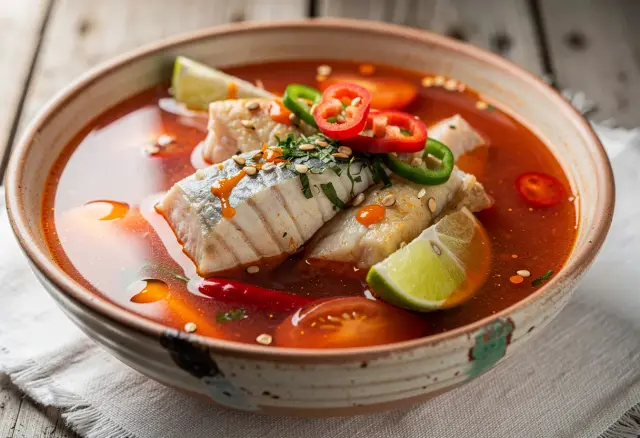
PepesupA fiery, clear fish pepper soup of Equatorial Guinea, sharp with chili, ginger, and lime.

Plátano Frito con HuevoSweet ripe plantains fried till caramelized and topped with a fried egg, Spanish and African breakfast worlds on one plate.
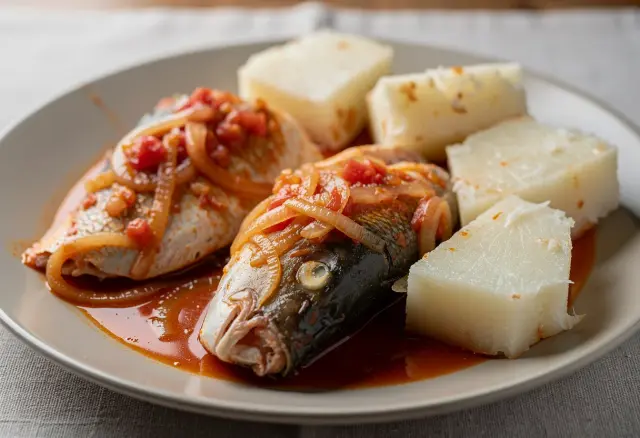
Pescado con YucaFish braised in a tomato and onion sofrito, served with boiled cassava, a Spanish-inflected coastal lunch of Malabo.
Browse all Equatorial Guinea recipes →
Good to know
You’ll need: Pot or saucepan.
Storing it: Keeps 2 to 3 days refrigerated. Resteam or warm through gently to serve.
Make it an Equatorial Guinea meal

MalambaDrink
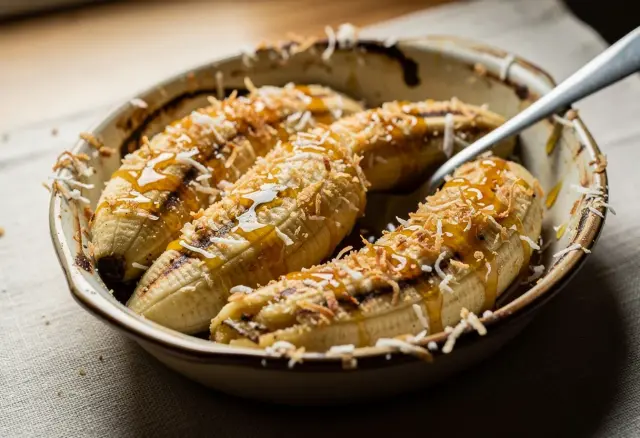
Akwadu (Baked Bananas with Coconut)Dessert
Similar dishes from around the world
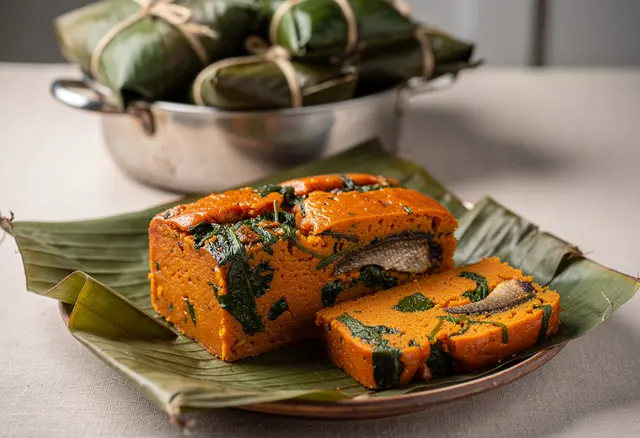
Kwacoco Bible (Cameroonian Cocoyam Parcels)Cameroon
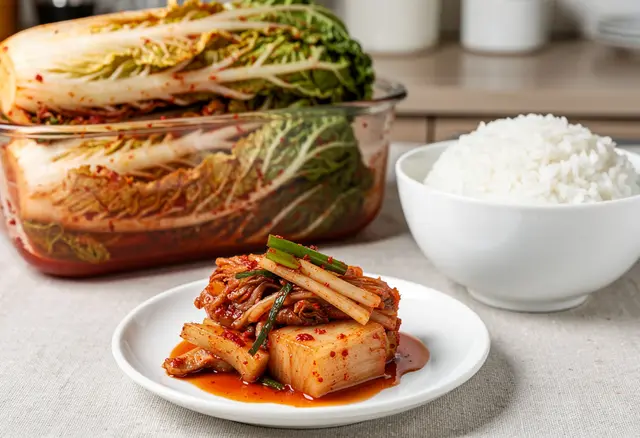
Baechu-Kimchi (Napa Cabbage Kimchi)South Korea
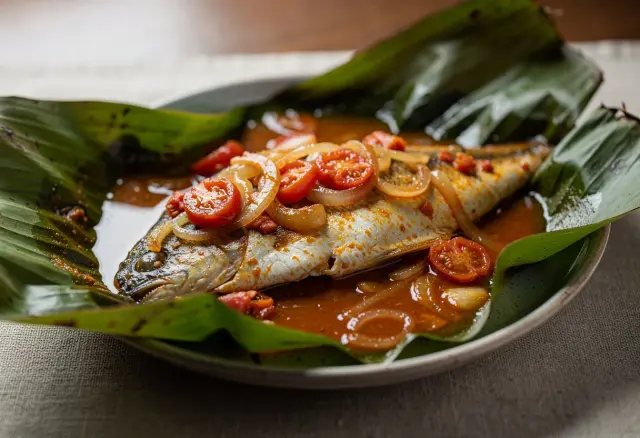
Maboké de Capitaine (Steamed Fish in Banana Leaf)Central African Republic
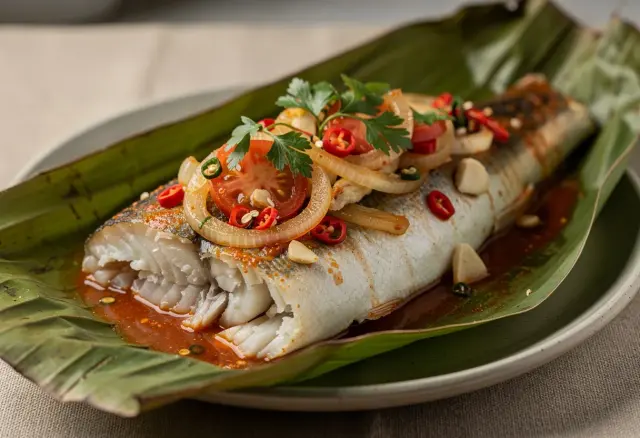
Liboke ya MbisiRepublic of the Congo

Cou-Cou & Flying FishBarbados

Pulpo a la GallegaSpain
Cuisine
Diet
Frequently asked questions
What is Envuelto de Calabaza (Equatoguinean Pumpkin-Seed Parcels)?
Ground pumpkin seeds beaten with water, smoked fish, onion and hot pepper into a thick paste, wrapped in banana leaves and cooked slowly into firm, savoury parcels.
Where does Envuelto de Calabaza (Equatoguinean Pumpkin-Seed Parcels) come from?
Envuelto de Calabaza (Equatoguinean Pumpkin-Seed Parcels) is an Equatoguinean dish from Malabo, Equatorial Guinea.
Can Envuelto de Calabaza (Equatoguinean Pumpkin-Seed Parcels) be made vegan, gluten-free, or dairy-free?
This Envuelto de Calabaza (Equatoguinean Pumpkin-Seed Parcels) recipe includes substitution suggestions for vegetarian, vegan, gluten-free, dairy-free, nut-free, egg-free, and pork-free versions. Treat the substitutions as a starting guide rather than a guarantee, and see the allergen note below.
Is Envuelto de Calabaza (Equatoguinean Pumpkin-Seed Parcels) safe for people with food allergies?
Our dietary labels and substitutions are a cooking guide, not medical or allergen-safety advice. We track dairy, egg, gluten, tree nuts and peanuts (we still count coconut as a tree nut to be cautious, although the FDA stopped listing it as one in 2025), fish, and shellfish, but we do not screen for sesame, soy, mustard, celery, or sulphites. If you have a food allergy, always read the label on every product you use, and remember a home or commercial kitchen can cross-contaminate ingredients in ways a recipe cannot control.
How long does Envuelto de Calabaza (Equatoguinean Pumpkin-Seed Parcels) take to make?
About 160 minutes total (40 minutes prep, 120 minutes cooking), serving 6.
Get the Sunday Spin
One dish from somewhere in the world, in your inbox every Sunday. No spam, just dinner inspiration you can cook that day.