Asia → South Korea → Seoul (Gyeonggi)

🥔 SIDE
Baechu-Kimchi (Napa Cabbage Kimchi)
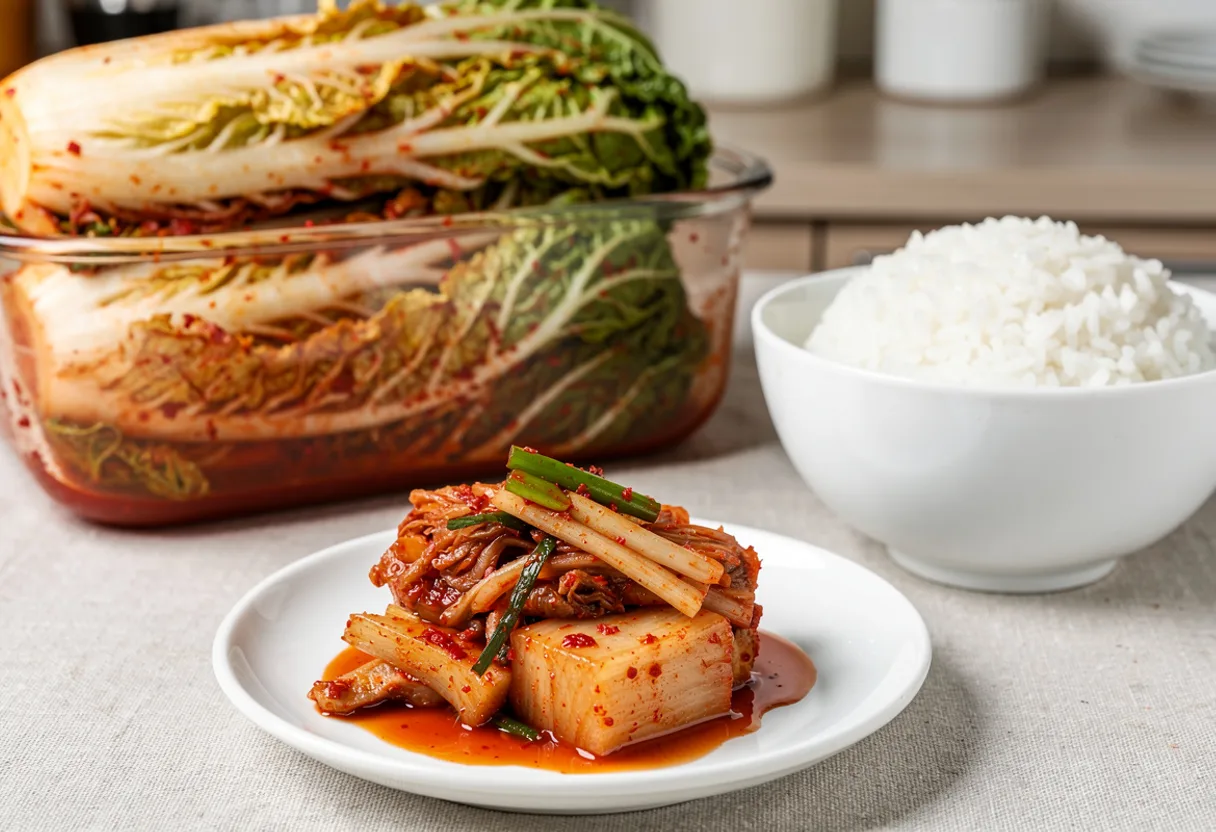
Quartered napa cabbage salted until pliable, then packed leaf by leaf with a red paste of gochugaru, garlic, ginger, fish sauce and salted shrimp with radish and spring onion, and left to ferment.
Korean · advanced · serves 20
prep 60 min · cook 3 min · plus 1.5 days hands-off time
~55 cal · 3g protein · 12g carbs · 0g fat · 4g fiber · 5g sugars · 0g sat fat (estimated, per serving)
↓ Jump to Recipe
AI-generated illustration
When Koreans say kimchi they usually mean baechu-kimchi, salted and napa cabbage. It is the essential banchan, the side dishes that come with a Korean meal, and most Koreans eat it at least once a day, alongside rice, soup and whatever else is on the table.
The method has three parts. Whole cabbages are quartered and salted for hours, first in brine and then with coarse salt rubbed into the thick white stems, until the leaves bend without snapping. They are rinsed well and drained. Then comes the seasoning: gochugaru, the Korean red chilli flakes that give kimchi its colour, mixed with garlic, ginger, and saeujeot (salted shrimp) into a thin porridge of glutinous rice flour, with matchsticks of Korean radish and spring onion folded through. The paste is spread between every leaf.
The kimchi then , a day or two at room temperature and then in the cold, turning more sour and complex over the following weeks. Styles vary by region: in the north kimchi tends to be milder with more liquid, in the south saltier and more pungent. In late autumn, families still gather for gimjang, the communal making of the winter's kimchi.
Saved recipes and passport stamps are kept on this device. Sign in to keep them across your devices and leave reviews.
Make it yours
✓ Naturally gluten-, dairy-, nut-, egg- and pork-free. No swaps needed.
Toggle a diet and the ingredients rewrite themselves with regional substitutes.
🥕 Vegetarian
🌱 Vegan
🌾 Gluten-Free
🥛 Dairy-Free
🥜 Nut-Free
🥚 Egg-Free
🐖 Pork-Free
Dietary labels are a cooking guide, not allergen-safety advice. We track dairy, egg, gluten, tree nuts and peanuts (we count coconut as a tree nut, following FDA labeling), fish, and shellfish; we do not screen for sesame, soy, mustard, celery, or sulphites. If you have a food allergy, read the label on every product you use, and note that a kitchen can cross-contaminate in ways a recipe cannot control.
Ingredients
US
Metric
Serves 20
- 1 large (about 2.5 kg) napa cabbage
- 1 cup (about 200 g) Korean coarse sea salt, for salting the cabbage
- 5 cups (1.2 litres) water (for the brine)
- 1 tbsp glutinous rice flour
- 1/2 cup (120 ml) water (for the rice paste)
- 450 g Korean radish (mu), cut into matchsticksHard to find? 450 g daikon radish - a little more watery and less sweet
- 4 spring onions, cut into 3 cm lengths
- 1/2 cup (about 50 g) gochugaru (Korean chilli flakes)
- 3 tbsp (anchovy)
- 1/4 cup saeujeot (salted shrimp), finely chopped
- 3 tbsp garlic, minced
- 1 tsp fresh ginger, grated
- 1 tsp sugar
Instructions
- 1Cut the cabbage in half lengthwise from the base, then cut each half partway through the base again and pull it apart into quarters. Dissolve half the salt in the 5 cups of water, dip each quarter in the brine so every leaf is wet, then sprinkle the remaining salt between the leaves, mostly on the thick white stems.
- 2Lay the quarters cut side up in a large bowl, pour the leftover brine over and leave for 6 to 8 hours, turning them every 2 hours, until the white stems bend easily without snapping.✎ Chef’s noteThis is the step that decides the kimchi. Under-salted cabbage stays stiff and can spoil; over-salted is too salty to eat. Bend a stem to check.
- 3Rinse the cabbage three times in cold water, gently opening the leaves, then leave it cut side down in a colander for at least 30 minutes to drain well.
- 4Meanwhile make the rice paste: whisk the glutinous rice flour into the 1/2 cup water in a small pan and cook over medium heat, stirring, for 2 to 3 minutes until it thickens into a thin porridge. Let it cool.
- 5In a large bowl mix the cooled rice paste with the gochugaru, fish sauce, saeujeot, garlic, ginger and sugar into a thick red paste. Fold in the radish and spring onion.
- 6Wearing gloves, spread the seasoning between every leaf of each cabbage quarter, from the base to the tip, working it in well. Fold each quarter over on itself and pack them tightly into a clean airtight container, pressing down to remove air.
- 7Leave at room temperature for 1 to 2 days, until it smells lively and a little sour, then keep it in the fridge. To serve, cut a quarter into bite-sized pieces and set it on the table as a side with rice and the rest of the meal.✎ Chef’s noteIt can be eaten fresh, but kimchi takes about two weeks in the fridge to develop its full flavour, and older, sour kimchi is prized for stews and fried rice.
Korean home tradition.
Ratings & reviews
Cooked it? Rate this dish:
No account needed. Sign in to leave a full review with a comment.
Cooked it?
Kept on this device, no account needed. Sign in to leave a review and keep your passport across your devices.
No reviews yet, be the first to cook it.
🌏 While it simmers, know your destination
📍
Seoul (Gyeonggi). Royal court cuisine is a preserved thing rather than a living everyday one: it was designated a national intangible cultural property in 1971, with its twelve-dish table settings and its insistence on colour and balance. What people actually eat rests on banchan, the small side dishes that arrive unordered and are refilled without being asked.
🗺️
South Korea. Kimjang, the late-autumn making and sharing of a winter's worth of kimchi, was inscribed by UNESCO in 2013. Households pool labour and cabbages over a few days and the results are distributed among neighbours and relatives, which makes it a social obligation as much as a preserving method.
🌍
Asia. Asia is the world's largest and most populous continent, and its food spans the delicate seasonality of Japanese washoku, the chili-fired curries of India and Thailand, and the wheat-and-lamb traditions of Central Asia. Rice, noodles, soy, and fermentation recur across its regions, while ancient spice routes and religious traditions shaped distinct grammars of flavor. Whether from a street-cart wok or a monastery kitchen, eating is deeply communal and ritual-rich.
The story behind this dish is up top, worth a read while the pot works.
More from South Korea
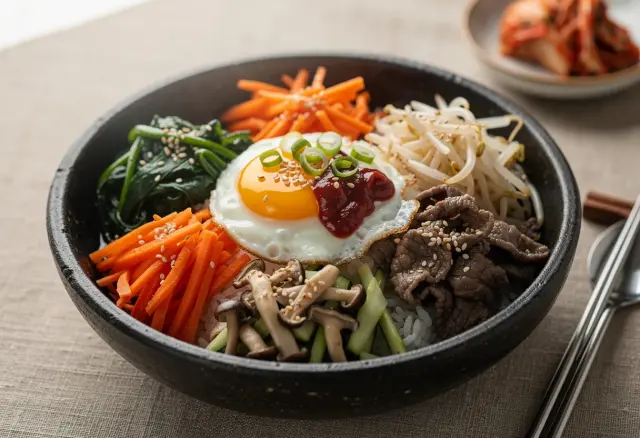
BibimbapA bowl of rice crowned with seasoned vegetables, beef, and a fried egg, all mixed with gochujang at the table.
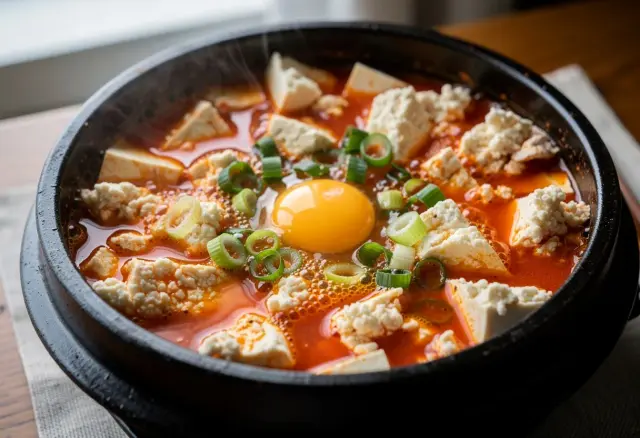
Sundubu-jjigae (Soft Tofu Stew)Bubbling-hot soft tofu stew, brick-red with gochugaru, finished with an egg cracked in at the table.
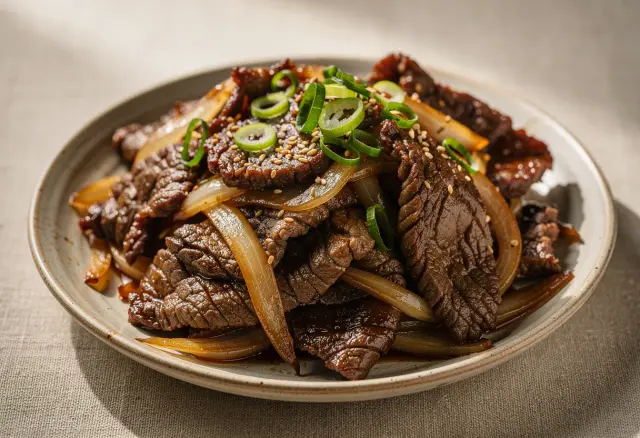
BulgogiThin beef marinated in soy, pear, sesame, and garlic, seared fast and sweet-savory, Korea’s beloved "fire meat."
Browse all South Korea recipes →
Good to know
You’ll need: Whisk.
Storing it: Keeps 2 to 3 days refrigerated. Resteam or warm through gently to serve.
Make it a South Korea meal

SikhyeDrink
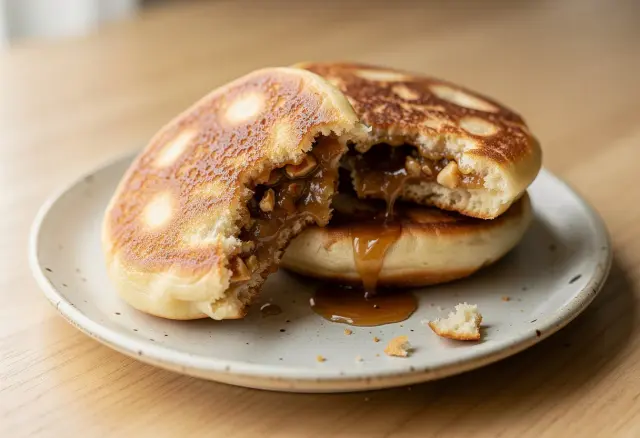
HotteokDessert
Similar dishes from around the world
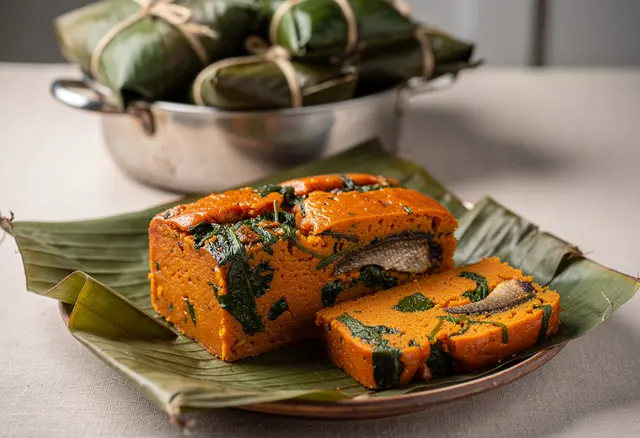
Kwacoco Bible (Cameroonian Cocoyam Parcels)Cameroon

Envuelto de Calabaza (Equatoguinean Pumpkin-Seed Parcels)Equatorial Guinea

Cou-Cou & Flying FishBarbados
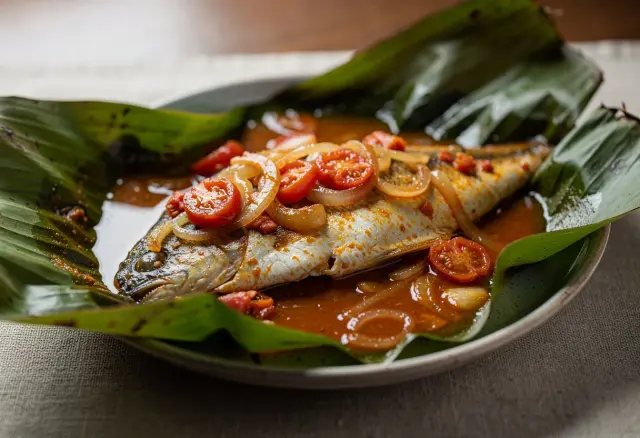
Maboké de Capitaine (Steamed Fish in Banana Leaf)Central African Republic
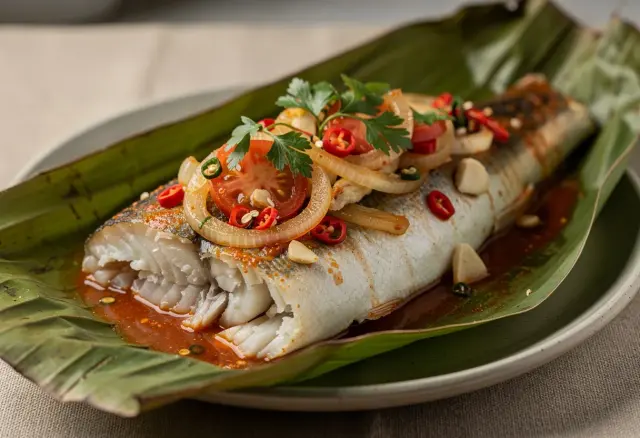
Liboke ya MbisiRepublic of the Congo

Pulpo a la GallegaSpain
Cuisine
Diet
Frequently asked questions
What is Baechu-Kimchi (Napa Cabbage Kimchi)?
Quartered napa cabbage salted until pliable, then packed leaf by leaf with a red paste of gochugaru, garlic, ginger, fish sauce and salted shrimp with radish and spring onion, and left to ferment.
Where does Baechu-Kimchi (Napa Cabbage Kimchi) come from?
Baechu-Kimchi (Napa Cabbage Kimchi) is a Korean dish from Seoul (Gyeonggi), South Korea.
Can Baechu-Kimchi (Napa Cabbage Kimchi) be made vegan, gluten-free, or dairy-free?
This Baechu-Kimchi (Napa Cabbage Kimchi) recipe includes substitution suggestions for vegetarian, vegan, gluten-free, dairy-free, nut-free, egg-free, and pork-free versions. Treat the substitutions as a starting guide rather than a guarantee, and see the allergen note below.
Is Baechu-Kimchi (Napa Cabbage Kimchi) safe for people with food allergies?
Our dietary labels and substitutions are a cooking guide, not medical or allergen-safety advice. We track dairy, egg, gluten, tree nuts and peanuts (we still count coconut as a tree nut to be cautious, although the FDA stopped listing it as one in 2025), fish, and shellfish, but we do not screen for sesame, soy, mustard, celery, or sulphites. If you have a food allergy, always read the label on every product you use, and remember a home or commercial kitchen can cross-contaminate ingredients in ways a recipe cannot control.
How long does Baechu-Kimchi (Napa Cabbage Kimchi) take to make?
About 1.5 days in all: 60 minutes prep and 3 minutes cooking, plus 1.5 days of hands-off waiting the method needs, serving 20.
Get the Sunday Spin
One dish from somewhere in the world, in your inbox every Sunday. No spam, just dinner inspiration you can cook that day.