South America → Uruguay → Montevideo

🥔 SIDE
Fainá (Uruguayan Chickpea Flour Flatbread)
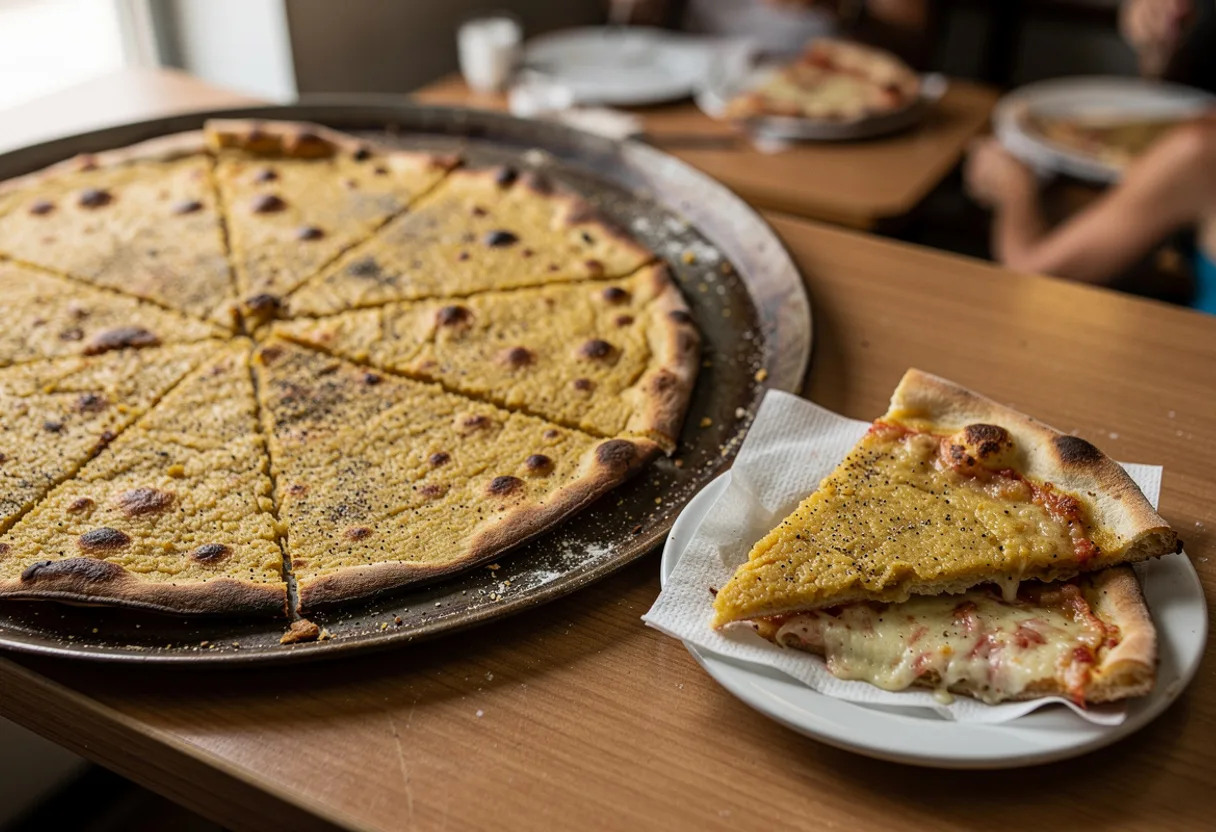
A thin batter of chickpea flour, water, olive oil and salt baked in a very hot, oiled pan until golden with crisp edges, cut in wedges and eaten with pizza.
Uruguayan · easy · serves 6
prep 10 min · cook 25 min · plus 30 min hands-off time
~263 cal · 9g protein · 24g carbs · 14g fat · 5g fiber · 5g sugars · 2g sat fat (estimated, per serving)
↓ Jump to Recipe
AI-generated illustration
Fainá is the Genoese farinata as the River Plate eats it. Ligurian emigrants brought it to Montevideo and Buenos Aires between the nineteenth and twentieth centuries, and they kept its dialect name, fainâ. In Uruguay it counts as a traditional dish in its own right, and 27 August is celebrated there as Fainá Day.
It is sold in every pizzeria, cut into wedges from the same wide round pans as the pizza, and ordered alongside it. The classic way to eat it is a caballo, on horseback: a wedge of fainá laid straight on top of a slice of pizza, with a grind of black pepper. Regulars have their preference, de orillo from the crisp, thin edge or del medio from the softer, thicker middle.
The batter is nothing more than chickpea flour whisked with about three times its weight of water, olive oil and salt, rested so the flour hydrates, and poured into a pan that has been heating in the hottest oven you have. It comes out golden and blistered on top, crisp at the edges and soft inside.
Saved recipes and passport stamps are kept on this device. Sign in to keep them across your devices and leave reviews.
Make it yours
✓ Naturally vegetarian, vegan and gluten-, dairy-, nut-, egg- and pork-free. No swaps needed.
Toggle a diet and the ingredients rewrite themselves with regional substitutes.
🥕 Vegetarian
🌱 Vegan
🌾 Gluten-Free
🥛 Dairy-Free
🥜 Nut-Free
🥚 Egg-Free
🐖 Pork-Free
Dietary labels are a cooking guide, not allergen-safety advice. We track dairy, egg, gluten, tree nuts and peanuts (we count coconut as a tree nut, following FDA labeling), fish, and shellfish; we do not screen for sesame, soy, mustard, celery, or sulphites. If you have a food allergy, read the label on every product you use, and note that a kitchen can cross-contaminate in ways a recipe cannot control.
Ingredients
US
Metric
Serves 6
- 250 g (about 2 cups) chickpea flour ()
- 750 ml water
- 1 tsp salt
- to taste black pepper
- 5 tbsp olive oil, 2 tbsp for the batter, 3 tbsp for the pan
Instructions
- 1Put the chickpea flour, salt and a little pepper in a bowl and whisk in the water gradually, so no lumps form. Whisk in 2 tablespoons of the olive oil. The batter should be thin, like crêpe batter.
- 2Cover and leave the batter to rest for at least 30 minutes at room temperature so the flour hydrates. Skim off any foam that rises.✎ Chef’s noteSome cooks rest it for several hours. The longer it sits, the smoother and less floury the fainá.
- 3Heat the oven as high as it goes, 250C (480F) if possible, with a 30 to 35 cm round pizza pan or a large baking tin inside for at least 10 minutes.
- 4Take the hot pan out, pour in the remaining 3 tablespoons of oil and tilt it to coat. Stir the batter and pour it in straight away; it should be only about 5 mm deep. Put it back in the oven quickly.
- 5Bake for 15 to 25 minutes, until the top is set and golden with darker blisters and the edges are crisp and pulling away from the pan. For a browner top, finish for 2 to 3 minutes under a hot grill.
- 6Cut into wedges, grind over black pepper and serve hot, on its own or laid on top of a slice of pizza.
Uruguayan pizzeria tradition (from Genoese farinata).
Ratings & reviews
Cooked it? Rate this dish:
No account needed. Sign in to leave a full review with a comment.
Cooked it?
Kept on this device, no account needed. Sign in to leave a review and keep your passport across your devices.
No reviews yet, be the first to cook it.
🌏 While it simmers, know your destination
📍
Montevideo. The parrilla is a design rather than just a grill. Wood burns down in a side box, embers are raked underneath as they are needed, and the grate is cranked up or down to control the heat, which is why an asado runs for hours and the beef never sees an actual flame.
🗺️
Uruguay. The chivito was invented at El Mejillon in Punta del Este in the mid-1940s and only reached Montevideo in 1949, so the capital adopted it rather than produced it. It comes two ways: al pan, in a roll, and al plato, deconstructed onto a plate with chips and salads, and the beef inside is a thin steak rather than the goat the name suggests.
🌍
South America. Migration reworked the plate within living memory. Japanese arrivals in Peru and Brazil produced Nikkei cooking, Italians made pasta and pizza entirely ordinary in Argentina, Uruguay and Sao Paulo, and West African cooking carried into Bahia by the slave trade gave Brazil dende palm oil, okra and a whole ritual repertoire.
The story behind this dish is up top, worth a read while the pot works.
More from Uruguay
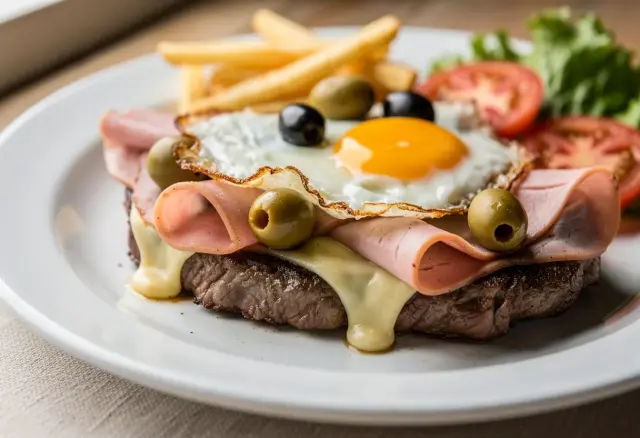
Chivito al PlatoUruguay’s glorious everything-plate: thin steak under ham, cheese, olives, and a fried egg with ensalada rusa.

Torta FritaGolden discs of fried dough with a slit in the middle, crisp-edged and pillowy, the treat Uruguayans make whenever it rains, dusted with sugar and dunked in mate.

Tarta PascualinaA flaky double-crust pie of chard and ricotta with whole eggs baked inside, an everyday River Plate lunch.
Browse all Uruguay recipes →
Good to know
You’ll need: Oven, Grill or barbecue, Mould or tin, Whisk.
Storing it: Best the day it is made. Wrap well and refresh in a warm oven, or freeze and reheat straight from frozen.
Make it a Uruguay meal

Medio y MedioDrink
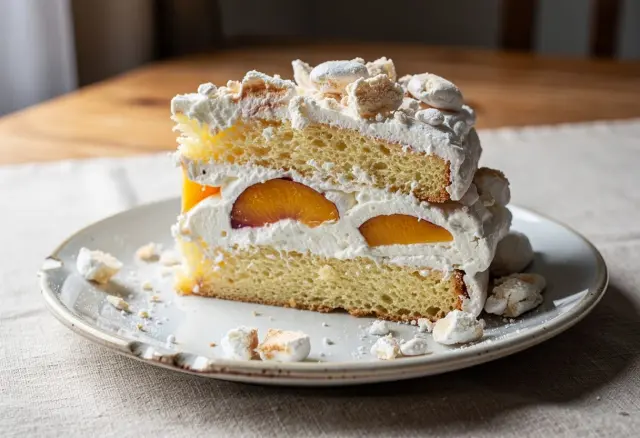
ChajáDessert
Similar dishes from around the world

Somun (Bosnian Flatbread)Bosnia & Herzegovina
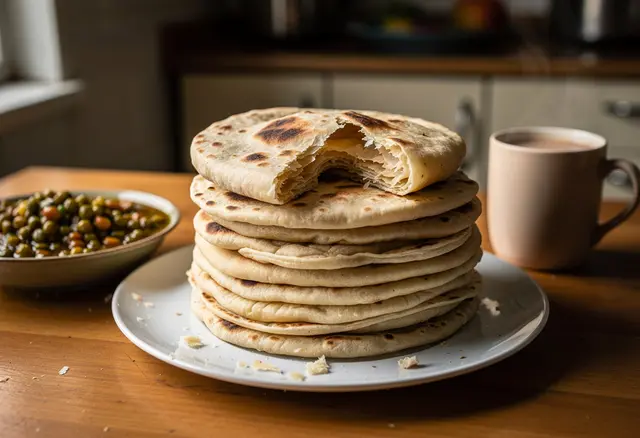
Chapati (Kenyan Soft Layered Flatbread)Kenya
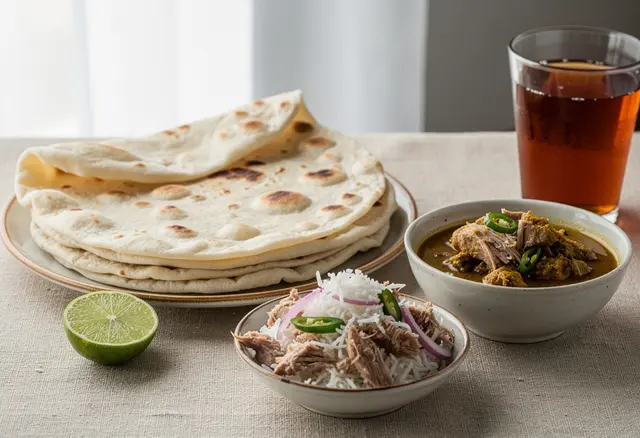
Roshi (Maldivian Flatbread)Maldives
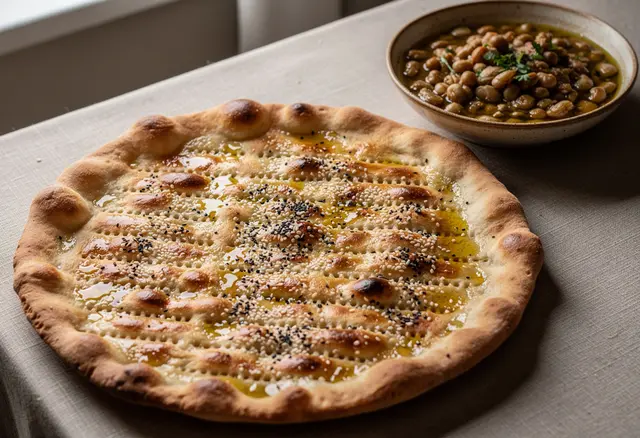
Tamees (Saudi Hejazi Flatbread)Saudi Arabia
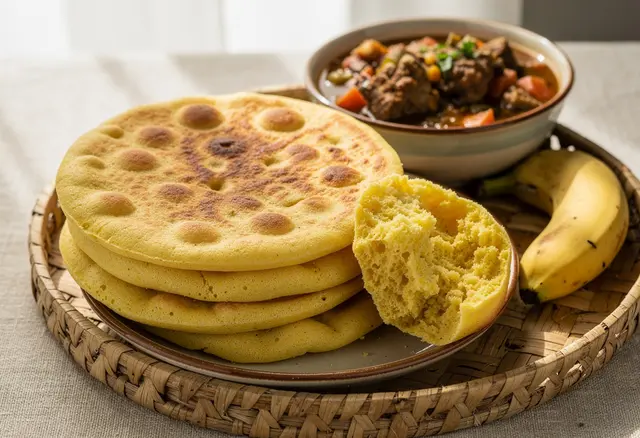
Muufo (Somali Corn Flatbread)Somalia
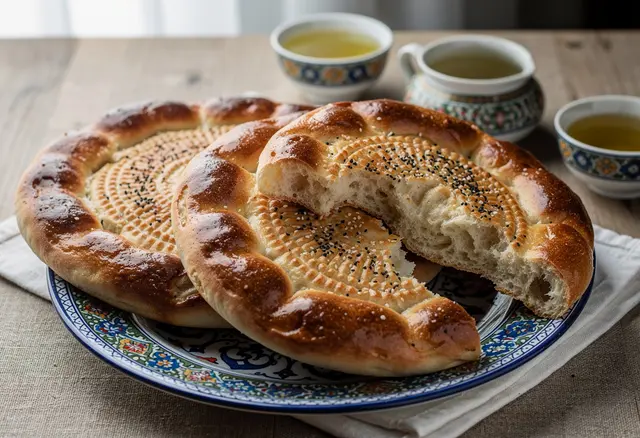
Obi Non (Uzbek Stamped Bread)Uzbekistan
Cuisine
Diet
Frequently asked questions
What is Fainá (Uruguayan Chickpea Flour Flatbread)?
A thin batter of chickpea flour, water, olive oil and salt baked in a very hot, oiled pan until golden with crisp edges, cut in wedges and eaten with pizza.
Where does Fainá (Uruguayan Chickpea Flour Flatbread) come from?
Fainá (Uruguayan Chickpea Flour Flatbread) is a Uruguayan dish from Montevideo, Uruguay.
Can Fainá (Uruguayan Chickpea Flour Flatbread) be made vegan, gluten-free, or dairy-free?
This Fainá (Uruguayan Chickpea Flour Flatbread) recipe includes substitution suggestions for vegetarian, vegan, gluten-free, dairy-free, nut-free, egg-free, and pork-free versions. Treat the substitutions as a starting guide rather than a guarantee, and see the allergen note below.
Is Fainá (Uruguayan Chickpea Flour Flatbread) safe for people with food allergies?
Our dietary labels and substitutions are a cooking guide, not medical or allergen-safety advice. We track dairy, egg, gluten, tree nuts and peanuts (we still count coconut as a tree nut to be cautious, although the FDA stopped listing it as one in 2025), fish, and shellfish, but we do not screen for sesame, soy, mustard, celery, or sulphites. If you have a food allergy, always read the label on every product you use, and remember a home or commercial kitchen can cross-contaminate ingredients in ways a recipe cannot control.
How long does Fainá (Uruguayan Chickpea Flour Flatbread) take to make?
About 1 h 5 min in all: 10 minutes prep and 25 minutes cooking, plus 30 min of hands-off waiting the method needs, serving 6.
Get the Sunday Spin
One dish from somewhere in the world, in your inbox every Sunday. No spam, just dinner inspiration you can cook that day.