North America → Puerto Rico → San Juan

🥔 SIDE
Guineítos en Escabeche (Puerto Rican Pickled Green Bananas)
Boiled green bananas steeped in a warm olive-oil and vinegar escabeche with soft onions, garlic, bay, peppercorns and green olives, served cool beside roast pork or fried fish.
Puerto Rican · easy · serves 6
prep 20 min · cook 25 min · plus 4 h hands-off time
~412 cal · 2g protein · 39g carbs · 29g fat · 5g fiber · 19g sugars · 4g sat fat (estimated, per serving)
↓ Jump to Recipe
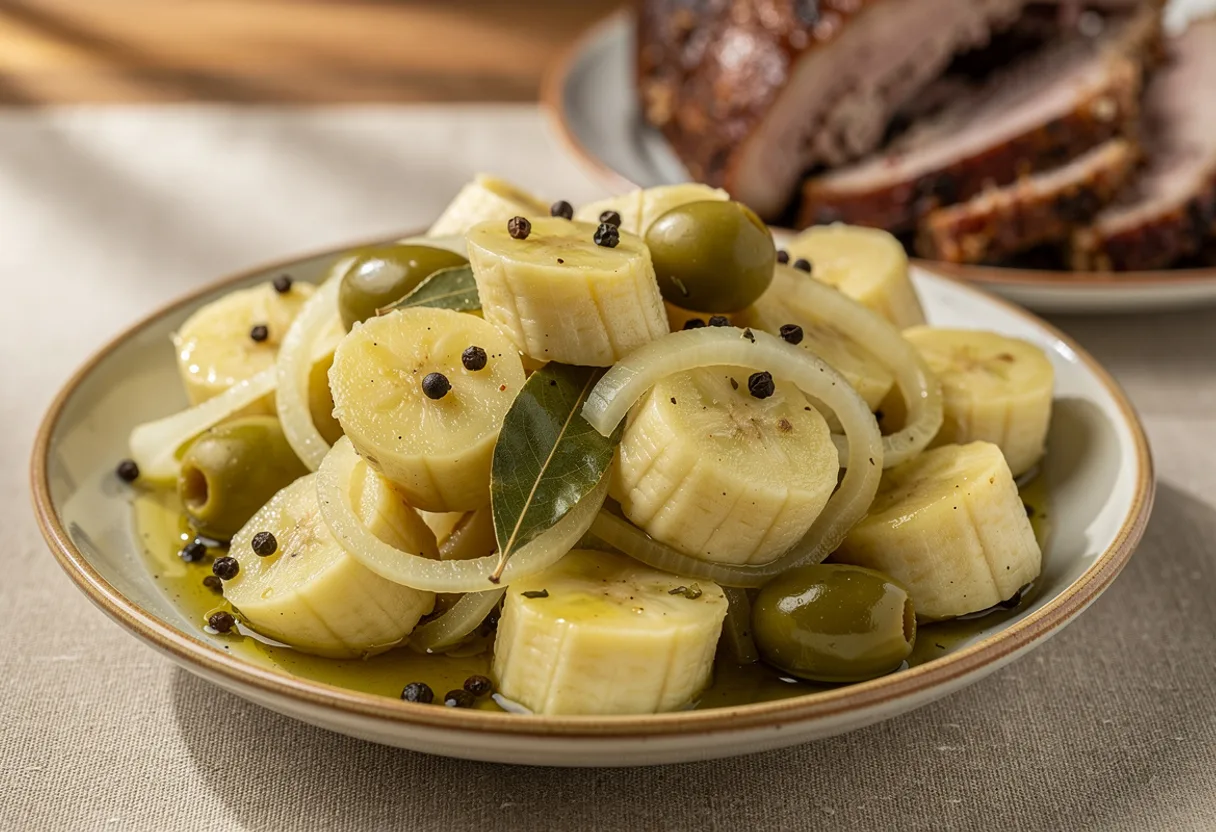
AI-generated illustration
Guineítos en escabeche, also called guineos en escabeche, is one of Puerto Rico's classic cold side dishes. It sits on the table at family gatherings and holidays, next to pernil and other roast and fried meats, and it is just as often served as a small appetizer.
Guineos are green, unripe bananas, a starch in Puerto Rican kitchens rather than a fruit. Peeled and boiled, they turn firm and potato-like, and they soak up a marinade beautifully. Escabeche is the old Spanish and Mediterranean method of preserving food in vinegar and oil, used across Latin America for fish; here it is poured over the bananas instead.
The escabeche is simple: olive oil and vinegar warmed with sliced onion, bay leaves, black peppercorns, salt and garlic until the onion softens, then poured over the hot bananas with green olives. The dish needs at least a few hours, better a night in the fridge, for the bananas to take on the sharp, garlicky dressing.
Saved recipes and passport stamps are kept on this device. Sign in to keep them across your devices and leave reviews.
Make it yours
✓ Naturally vegetarian, vegan and gluten-, dairy-, nut-, egg- and pork-free. No swaps needed.
Toggle a diet and the ingredients rewrite themselves with regional substitutes.
🥕 Vegetarian
🌱 Vegan
🌾 Gluten-Free
🥛 Dairy-Free
🥜 Nut-Free
🥚 Egg-Free
🐖 Pork-Free
Dietary labels are a cooking guide, not allergen-safety advice. We track dairy, egg, gluten, tree nuts and peanuts (we count coconut as a tree nut, following FDA labeling), fish, and shellfish; we do not screen for sesame, soy, mustard, celery, or sulphites. If you have a food allergy, read the label on every product you use, and note that a kitchen can cross-contaminate in ways a recipe cannot control.
Ingredients
US
Metric
Serves 6
- 6 (about 900 g) green (unripe) bananas
- 1 tbsp salt (for the cooking water)
- 3/4 cup olive oil
- 1/2 cup white vinegar
- 1 large onion, thinly sliced into rings
- 4 cloves garlic, thinly sliced
- 3 bay leaves
- 1 tsp black peppercorns
- 1 tsp salt (for the escabeche)
- 1/2 cup pimento-stuffed green olives
Instructions
- 1Cut off both ends of each banana, score the skin lengthwise along the ridges and prise it off with your thumb or the knife. Cut the bananas into 3 to 4 cm chunks and drop them into cold water as you go.✎ Chef’s noteOil your hands or wear gloves. Green banana sap stains skin and cloth.
- 2Bring a pot of water to the boil with the tablespoon of salt, add the bananas and simmer for 15 to 20 minutes, until a knife slides in easily but they still hold their shape. Drain.
- 3Meanwhile make the escabeche: warm the olive oil in a frying pan over medium-low heat and add the vinegar, onion, bay leaves, peppercorns and salt. Simmer gently for about 5 minutes until the onion softens, then add the garlic and cook for 1 minute more without letting it brown.
- 4Put the hot bananas and the olives in a glass or ceramic dish, pour the escabeche over them and turn everything gently to coat.
- 5Let it cool, then cover and refrigerate for at least 4 hours, or overnight, turning once or twice. Serve cool or at room temperature.
Puerto Rican tradition.
Ratings & reviews
Cooked it? Rate this dish:
No account needed. Sign in to leave a full review with a comment.
Cooked it?
Kept on this device, no account needed. Sign in to leave a review and keep your passport across your devices.
No reviews yet, be the first to cook it.
🌏 While it simmers, know your destination
📍
San Juan. The earliest written mofongo recipe is in El Cocinero Puerto-Riqueno of 1859, the island's first cookbook. Sofrito does most of the rest of the work in this kitchen, and alcapurrias, often taken for plantain fritters, are actually made from grated green banana and yautia.
🗺️
Puerto Rico. What separates mofongo from West African fufu and from Dominican mangu is one step: the plantains are fried before they are mashed, not boiled, which is where the flavour comes from. Garlic and crackling go in as they are pounded in a wooden pilon, and the earliest written recipe appears in El Cocinero Puerto-Riqueno, the island's first cookbook, in 1859.
🌍
North America. Almost every regional cooking here records who arrived and on what terms. Enslaved West Africans brought rice, okra, black-eyed peas and the techniques behind Lowcountry and Creole food; Chinese railway labour and later Italian, Jewish, Mexican and Vietnamese arrivals built the way the cities eat; and Indigenous foodways sit underneath all of it.
The story behind this dish is up top, worth a read while the pot works.
More from Puerto Rico
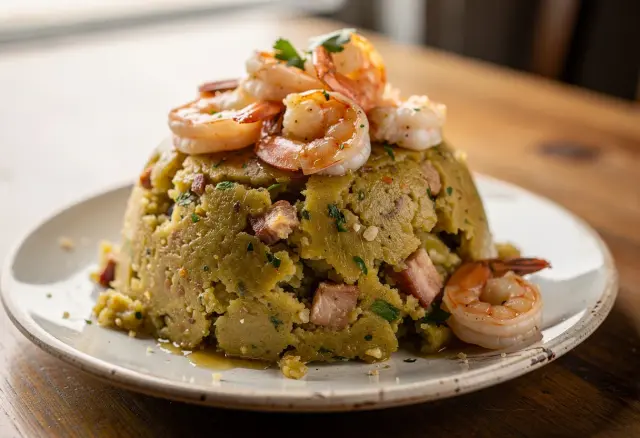
MofongoFried green plantains mashed with garlic and crackling pork, mounded and filled with garlicky shrimp or stew.
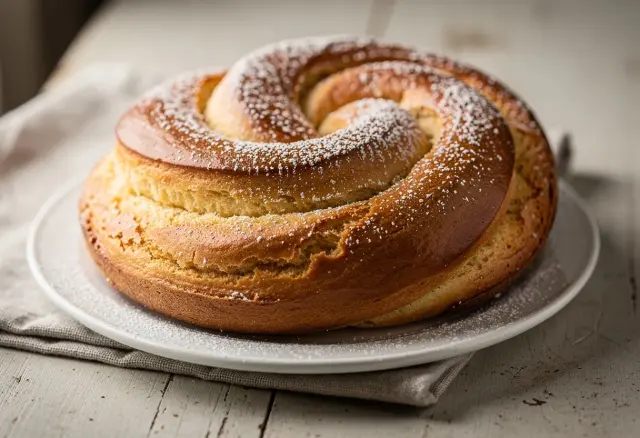
MallorcaA soft, buttery coiled sweet bread, pressed warm and snowed with powdered sugar, the pride of Puerto Rican panaderías at breakfast.
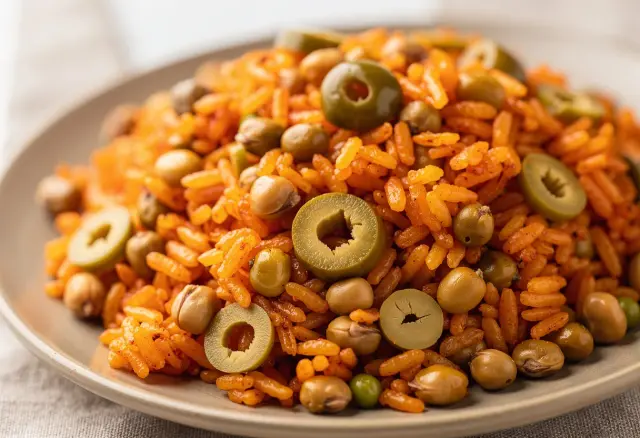
Arroz con GandulesRice cooked with pigeon peas, sofrito, and pork in one pot, forming a prized crust, Puerto Rico's national dish.
Browse all Puerto Rico recipes →
Good to know
You’ll need: Skillet or frying pan, Pot or saucepan.
Storing it: Best straight off the heat. Leftovers keep 2 to 3 days refrigerated and reheat well in a hot oven rather than the microwave.
Make it a Puerto Rico meal
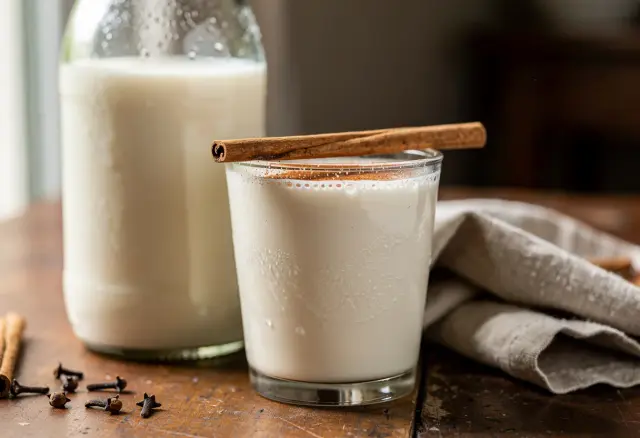
CoquitoDrink
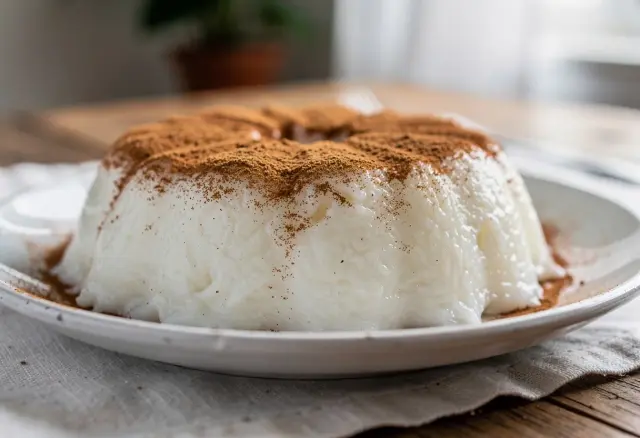
TemblequeDessert
Similar dishes from around the world
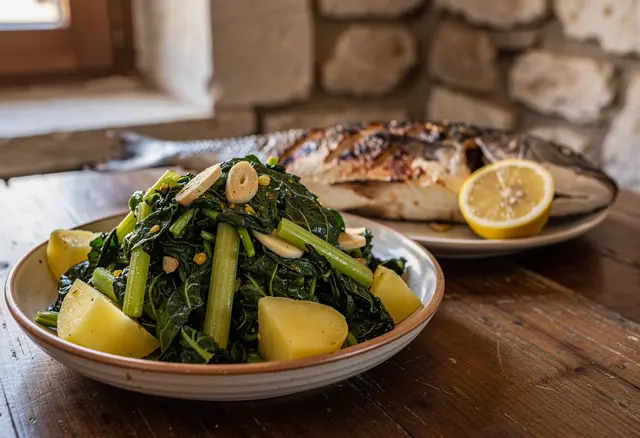
Blitva (Dalmatian Swiss Chard and Potatoes)Croatia

Marineeritud Kõrvits (Estonian Sweet Pickled Pumpkin)Estonia
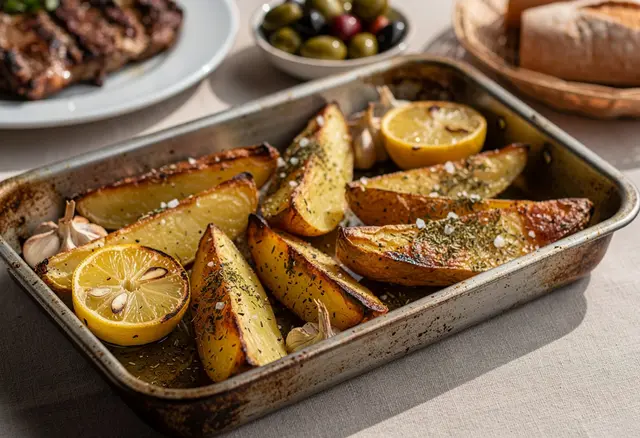
Patates Lemonates (Greek Lemon Roast Potatoes)Greece
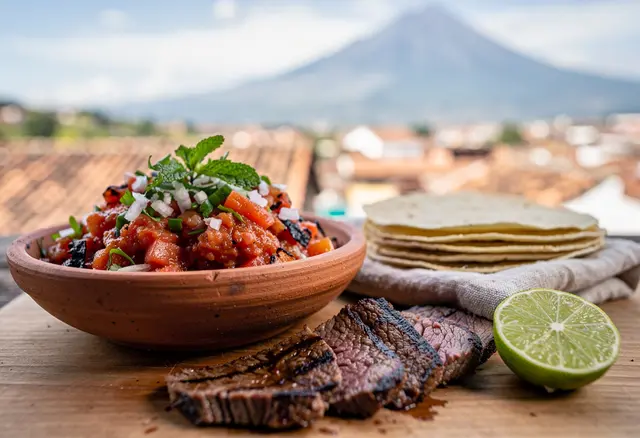
Chirmol (Guatemalan Charred Tomato and Mint Salsa)Guatemala
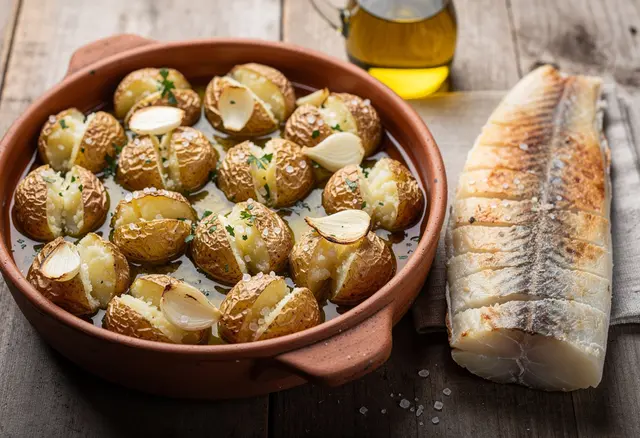
Batatas a Murro (Portuguese Punched Potatoes)Portugal
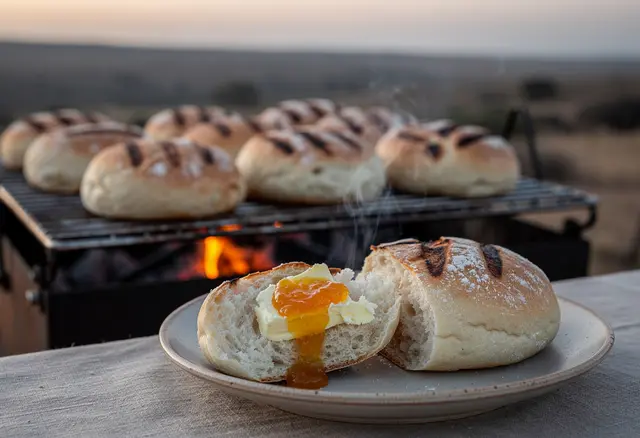
Roosterkoek (South African Braai Grill Bread)South Africa
Cuisine
Diet
Vegetarian Recipes from Around the World
Vegan Recipes from Around the World
Gluten-Free Recipes from Around the World
Dairy-Free Recipes from Around the World
Nut-Free Recipes from Around the World
Egg-Free Recipes from Around the World
Pork-Free Recipes from Around the World
Gluten-Free Puerto Rican Recipes
Dairy-Free Puerto Rican Recipes
Frequently asked questions
What is Guineítos en Escabeche (Puerto Rican Pickled Green Bananas)?
Boiled green bananas steeped in a warm olive-oil and vinegar escabeche with soft onions, garlic, bay, peppercorns and green olives, served cool beside roast pork or fried fish.
Where does Guineítos en Escabeche (Puerto Rican Pickled Green Bananas) come from?
Guineítos en Escabeche (Puerto Rican Pickled Green Bananas) is a Puerto Rican dish from San Juan, Puerto Rico.
Can Guineítos en Escabeche (Puerto Rican Pickled Green Bananas) be made vegan, gluten-free, or dairy-free?
This Guineítos en Escabeche (Puerto Rican Pickled Green Bananas) recipe includes substitution suggestions for vegetarian, vegan, gluten-free, dairy-free, nut-free, egg-free, and pork-free versions. Treat the substitutions as a starting guide rather than a guarantee, and see the allergen note below.
Is Guineítos en Escabeche (Puerto Rican Pickled Green Bananas) safe for people with food allergies?
Our dietary labels and substitutions are a cooking guide, not medical or allergen-safety advice. We track dairy, egg, gluten, tree nuts and peanuts (we still count coconut as a tree nut to be cautious, although the FDA stopped listing it as one in 2025), fish, and shellfish, but we do not screen for sesame, soy, mustard, celery, or sulphites. If you have a food allergy, always read the label on every product you use, and remember a home or commercial kitchen can cross-contaminate ingredients in ways a recipe cannot control.
How long does Guineítos en Escabeche (Puerto Rican Pickled Green Bananas) take to make?
About 4 h 45 min in all: 20 minutes prep and 25 minutes cooking, plus 4 h of hands-off waiting the method needs, serving 6.
Get the Sunday Spin
One dish from somewhere in the world, in your inbox every Sunday. No spam, just dinner inspiration you can cook that day.