
🍢 SNACK
Sfenj (Moroccan Doughnut Rings)
A loose, sticky yeast dough pulled into rings by wet hands and fried until crisp outside and airy within, eaten hot with sugar or honey alongside mint tea.
Moroccan · medium · serves 6
prep 15 min · cook 20 min · plus 1 h 30 min hands-off time
~304 cal · 8g protein · 64g carbs · 1g fat · 2g fiber · 0g sugars · 0g sat fat (estimated, per serving)
↓ Jump to Recipe

AI-generated illustration
Sfenj takes its name from the Arabic word for sponge, and that is exactly its texture: a light, open, chewy ring with a thin crisp shell. The dough is nothing but flour, water, yeast and salt, left loose and sticky and allowed to rise until it has at least doubled.
In Moroccan towns it is rarely made at home. It is bought from the sfenj maker, who sits beside a wide pan of hot oil, pulls off a piece of dough with a wet hand, pokes a hole through it, stretches it into a ring and drops it in. The rings are fished out with a skewer and often threaded on a strip of palm frond to carry away.
Sfenj is sold at two times of day, early in the morning and again in the late afternoon, and eaten hot with a glass of mint tea or coffee. It is unsweetened, so it is dusted with sugar or dipped in honey, and some people eat it with a fried egg. The same doughnut is found across the Maghreb and is thought to have come over from al-Andalus.
Saved recipes and passport stamps are kept on this device. Sign in to keep them across your devices and leave reviews.
Make it yours
✓ Naturally vegetarian, vegan and dairy-, nut-, egg- and pork-free. No swaps needed.
Toggle a diet and the ingredients rewrite themselves with regional substitutes.
🥕 Vegetarian
🌱 Vegan
🌾 Gluten-Free
🥛 Dairy-Free
🥜 Nut-Free
🥚 Egg-Free
🐖 Pork-Free
Dietary labels are a cooking guide, not allergen-safety advice. We track dairy, egg, gluten, tree nuts and peanuts (we count coconut as a tree nut, following FDA labeling), fish, and shellfish; we do not screen for sesame, soy, mustard, celery, or sulphites. If you have a food allergy, read the label on every product you use, and note that a kitchen can cross-contaminate in ways a recipe cannot control.
Ingredients
US
Metric
Serves 6
- 500 g (about 4 cups) plain white flour
- 1 tbsp active dry yeast
- 1/4 tsp sugar, only to wake the yeast
- 1 tsp salt
- 400 ml (1 2/3 cups) lukewarm water, plus a bowl of water for your hands
- about 1 litre vegetable oil, for deep frying
- to taste sugar or honey, to serve
Instructions
- 1Stir the yeast and sugar into a few tablespoons of the lukewarm water and leave for 5 to 10 minutes, until foamy.
- 2Mix the flour and salt in a large bowl, add the yeast and the rest of the water and beat hard with your hand or a wooden spoon for 5 to 10 minutes, until the dough is smooth, very sticky and stretchy.✎ Chef’s noteThe dough should be too soft to knead on a board. That looseness is what gives sfenj its open, spongy crumb.
- 3Cover the bowl and leave the dough to rise in a warm place for 1 1/2 hours, until at least doubled and full of bubbles.
- 4Heat oil at least 5 cm deep in a wide pan to 180°C (350°F). Set a bowl of water beside the dough.
- 5Wet your hand, pull off a piece of dough the size of a plum, poke your thumb through the middle and stretch it quickly into a ring, then lay it in the hot oil. Fry 3 or 4 at a time, without crowding.
- 6Fry for about 2 minutes a side, turning once or twice, until crisp and golden. Lift out and drain on a rack or paper.
- 7Serve hot, dusted with sugar or dipped in honey, with mint tea or coffee.
Moroccan street-stall tradition.
Ratings & reviews
Cooked it? Rate this dish:
No account needed. Sign in to leave a full review with a comment.
Cooked it?
Kept on this device, no account needed. Sign in to leave a review and keep your passport across your devices.
No reviews yet, be the first to cook it.
🌏 While it simmers, know your destination
📍
Fès-Meknès. Bread in the medina is made at home and baked in public. Households knead their own dough, mark it with a family sign so it can be told apart, and carry it on a board to the neighbourhood ferran, the wood-fired communal oven that sits beside the mosque, the hammam and the fountain as one of the fixed points of a quarter. Tangia and pastilla go in the same way.
🗺️
Morocco. The Moroccan pantry is shaped by what the land gives: olives and olive oil, argan from the southwest, lemons packed in salt until the peel goes soft, and smen, butter preserved until it turns sharp. Barley was the everyday grain in the south well into the twentieth century before wheat took over, and bakeries turning out fresh khobz remain a fixture of every town.
🌍
Africa. Much of what reads as timeless African cooking is younger than the Atlantic crossings. Maize, cassava, groundnut, chilli and tomato all arrived from the Americas after 1500 and pushed older crops aside; millet, sorghum, teff, yam and fonio are the ones that were already here, and the map still shows the join.
The story behind this dish is up top, worth a read while the pot works.
More from Morocco
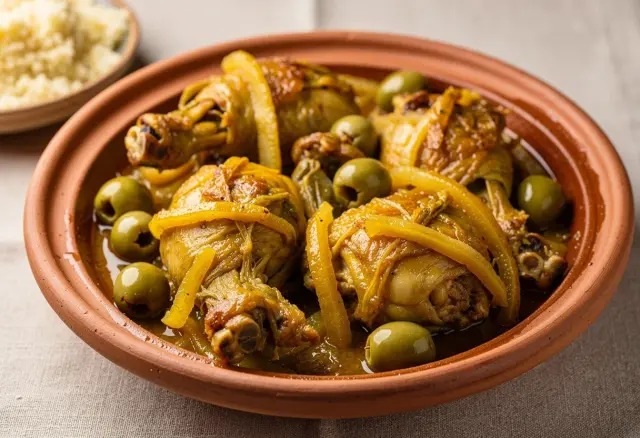
Chicken Tagine with Preserved Lemon & OlivesSlow-braised chicken perfumed with saffron and ginger, brightened by salty preserved lemon and green olives.
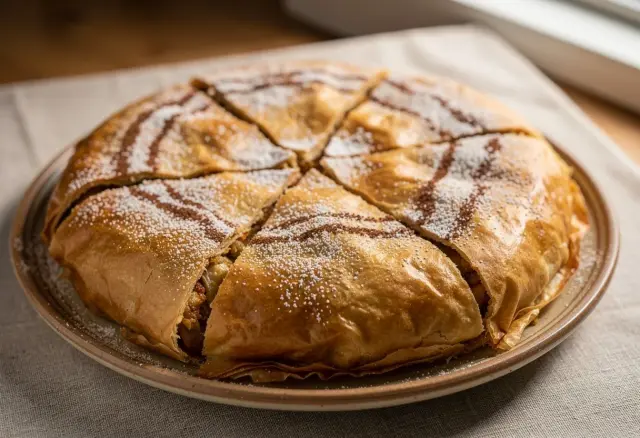
Chicken BastillaA sweet-savory pie of spiced shredded chicken and almonds in crackling pastry, dusted with sugar and cinnamon.
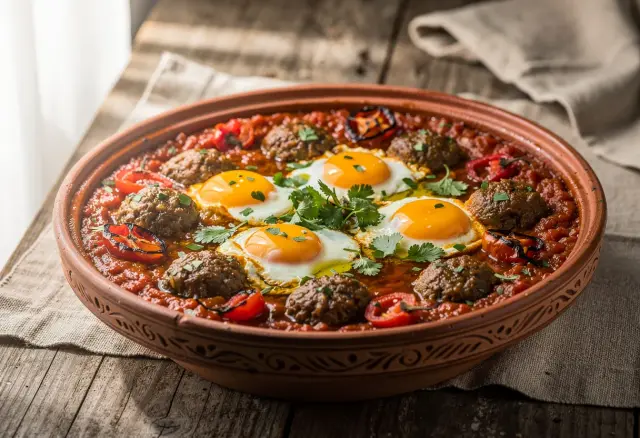
Kefta Mkaouara (Meatball Tagine)Spiced meatballs simmered in a cumin-scented tomato sauce with eggs cracked on top, a bubbling tagine eaten with bread.
Browse all Morocco recipes →
Good to know
Storing it: Fried food is best eaten fresh while crisp. Re-crisp leftovers in a hot oven or air fryer; the microwave makes them soft.
Make it a Morocco meal

Moroccan Mint TeaDrink
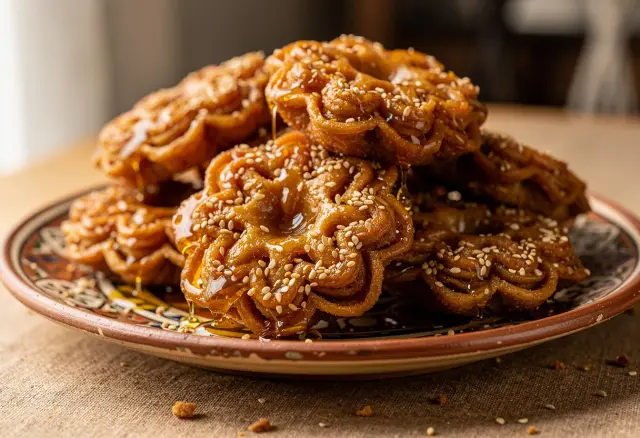
ChebakiaDessert
Similar dishes from around the world

Pirozhki s Kapustoy (Russian Fried Cabbage Buns)Russia

Pyrizhky z Kartopleiu (Ukrainian Fried Potato Buns)Ukraine
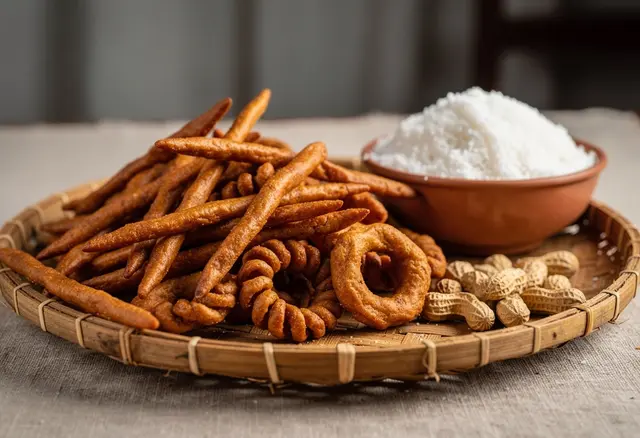
Klui-Klui (Beninese Peanut Sticks)Benin

Baya Kyaw (Burmese Split Pea Fritters)Myanmar
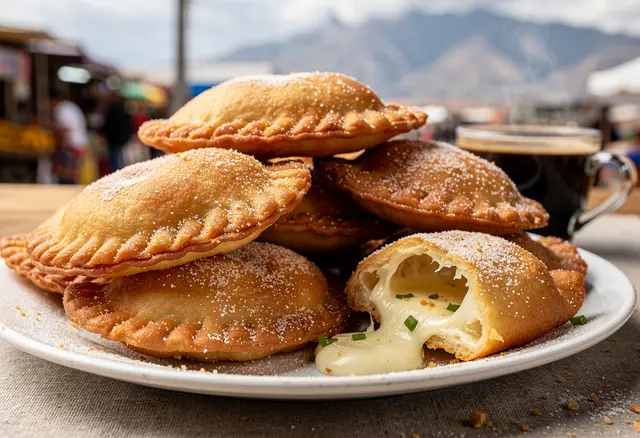
Empanadas de Viento (Ecuadorian Fried Cheese Empanadas)Ecuador
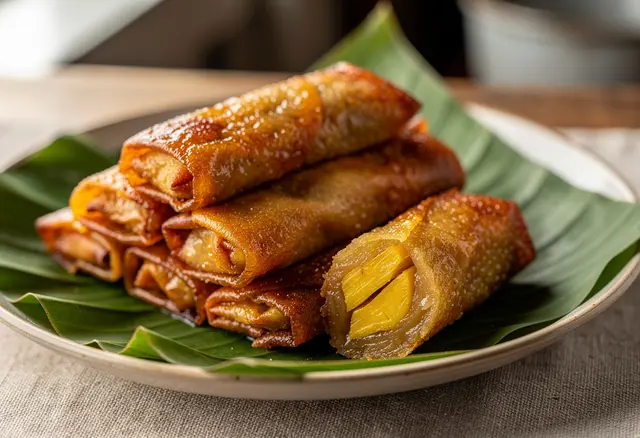
Turon (Filipino Caramelised Banana Rolls)Philippines
Cuisine
Diet
Frequently asked questions
What is Sfenj (Moroccan Doughnut Rings)?
A loose, sticky yeast dough pulled into rings by wet hands and fried until crisp outside and airy within, eaten hot with sugar or honey alongside mint tea.
Where does Sfenj (Moroccan Doughnut Rings) come from?
Sfenj (Moroccan Doughnut Rings) is a Moroccan dish from Fès-Meknès, Morocco.
Can Sfenj (Moroccan Doughnut Rings) be made vegan, gluten-free, or dairy-free?
This Sfenj (Moroccan Doughnut Rings) recipe includes substitution suggestions for vegetarian, vegan, gluten-free, dairy-free, nut-free, egg-free, and pork-free versions. Treat the substitutions as a starting guide rather than a guarantee, and see the allergen note below.
Is Sfenj (Moroccan Doughnut Rings) safe for people with food allergies?
Our dietary labels and substitutions are a cooking guide, not medical or allergen-safety advice. We track dairy, egg, gluten, tree nuts and peanuts (we still count coconut as a tree nut to be cautious, although the FDA stopped listing it as one in 2025), fish, and shellfish, but we do not screen for sesame, soy, mustard, celery, or sulphites. If you have a food allergy, always read the label on every product you use, and remember a home or commercial kitchen can cross-contaminate ingredients in ways a recipe cannot control.
How long does Sfenj (Moroccan Doughnut Rings) take to make?
About 2 h 5 min in all: 15 minutes prep and 20 minutes cooking, plus 1 h 30 min of hands-off waiting the method needs, serving 6.
Get the Sunday Spin
One dish from somewhere in the world, in your inbox every Sunday. No spam, just dinner inspiration you can cook that day.