North America → Cuba → Havana

🥔 SIDE
Tostones con Mojo (Cuban Twice-Fried Green Plantains)
Thick rounds of green plantain fried soft, smashed flat, fried again until crisp and salted, served with a garlicky sour-orange mojo for dipping.
Cuban · easy · serves 4
prep 15 min · cook 20 min
~459 cal · 2g protein · 49g carbs · 30g fat · 4g fiber · 23g sugars · 4g sat fat (estimated, per serving)
↓ Jump to Recipe
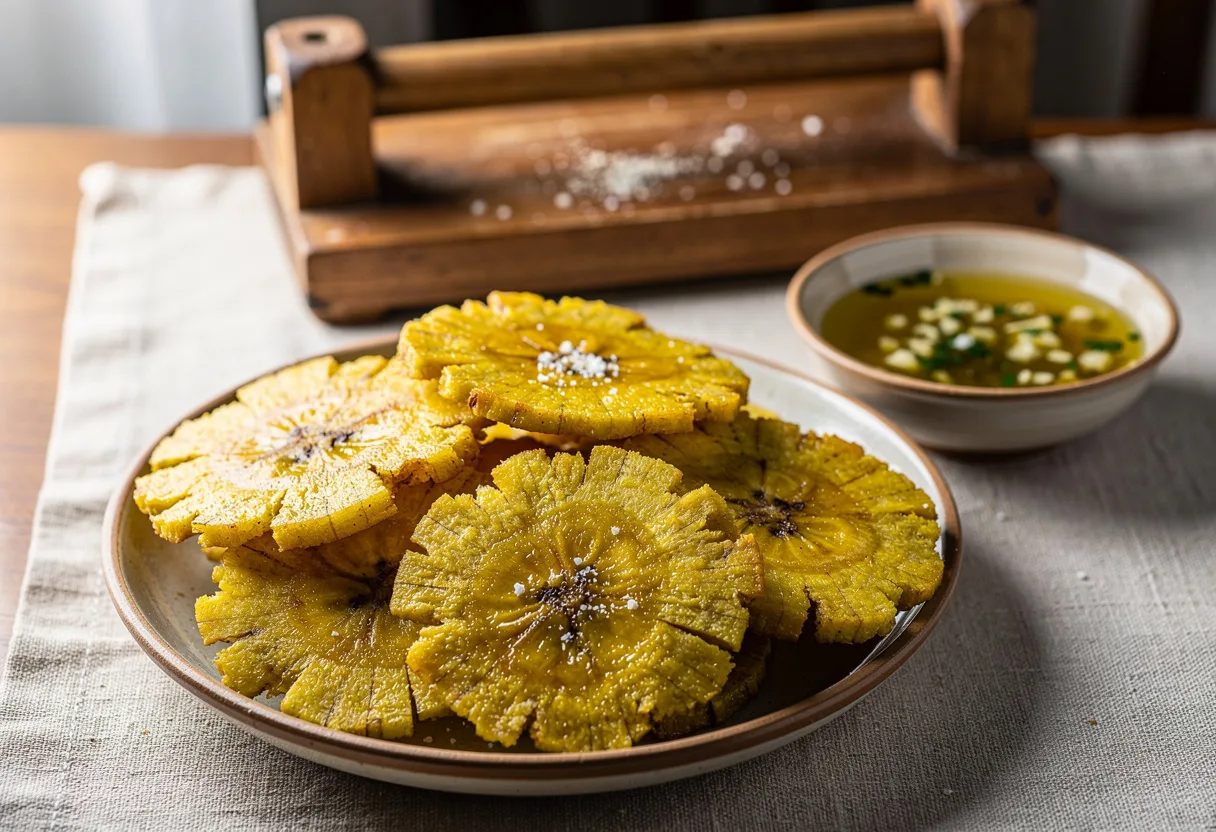
AI-generated illustration
Tostones, from tostar, to toast, are the side of the Spanish-speaking Caribbean, eaten in Cuba, Puerto Rico and the Dominican Republic and, as patacones, across much of Latin America. In Cuba they are also called chatinos, and they come to the table beside ropa vieja, roast pork and arroz con pollo, or on their own as something salty and crisp to eat with a drink.
They are made from green, unripe , starchy rather than sweet. Thick rounds are fried gently until soft but still pale, then flattened, traditionally in a hinged wooden press called a tostonera, and fried a second time in hotter oil until golden and crunchy at the edges and still tender in the middle. They are salted the moment they come out of the pan.
In Cuba they are served with mojo, the country's great sauce: garlic crushed with salt and loosened with the juice of sour oranges and olive oil, often with a little cumin and oregano. Tostones are dunked in it or have it spooned over, and they should be eaten hot.
Saved recipes and passport stamps are kept on this device. Sign in to keep them across your devices and leave reviews.
Make it yours
✓ Naturally vegetarian, vegan and gluten-, dairy-, nut-, egg- and pork-free. No swaps needed.
Toggle a diet and the ingredients rewrite themselves with regional substitutes.
🥕 Vegetarian
🌱 Vegan
🌾 Gluten-Free
🥛 Dairy-Free
🥜 Nut-Free
🥚 Egg-Free
🐖 Pork-Free
Dietary labels are a cooking guide, not allergen-safety advice. We track dairy, egg, gluten, tree nuts and peanuts (we count coconut as a tree nut, following FDA labeling), fish, and shellfish; we do not screen for sesame, soy, mustard, celery, or sulphites. If you have a food allergy, read the label on every product you use, and note that a kitchen can cross-contaminate in ways a recipe cannot control.
Ingredients
US
Metric
Serves 4
- 3 green (unripe)
- 2 cups vegetable oil, for frying, about 2 cm deep in the pan
- to taste coarse salt
- 6 cloves garlic (for the mojo)
- 1/2 tsp salt (for the mojo)
- 1/2 cup sour orange juice, or half lime juice and half orange juice
- 1/3 cup olive oil (for the mojo)
- 1/4 tsp ground cumin
- 1/4 tsp dried oregano
- a pinch black pepper
Instructions
- 1Make the mojo: mash the garlic to a paste with the salt, then whisk in the sour orange juice, olive oil, cumin, oregano and pepper. Set aside while you fry.✎ Chef’s noteSome Cuban cooks warm the garlic briefly in the olive oil before adding the juice, which softens its bite. Either way is right.
- 2Trim both ends of the plantains, score the peel lengthwise along the ridges and pry it off with your thumb. Cut the plantains into 2.5 cm rounds.
- 3Heat the oil in a deep frying pan to about 160C (325F) and fry the rounds for 3 to 5 minutes, turning, until pale golden and tender but not browned. Drain on paper.
- 4While they are still warm, flatten each round to about 1 cm thick with a tostonera or by pressing it between two plates or under the base of a heavy glass.
- 5Raise the heat to 190C (375F) and fry the flattened plantains again for 2 to 3 minutes until deep golden and crisp. Drain, salt them at once, and serve hot with the mojo.✎ Chef’s noteFry in batches so the oil stays hot. Crowded tostones steam instead of crisping.
Cuban home tradition.
Ratings & reviews
Cooked it? Rate this dish:
No account needed. Sign in to leave a full review with a comment.
Cooked it?
Kept on this device, no account needed. Sign in to leave a review and keep your passport across your devices.
No reviews yet, be the first to cook it.
🌏 While it simmers, know your destination
📍
Havana. Havana cooks Cuban comfort, ropa vieja, slow-roast pork with garlicky mojo, and rice and beans. Sofrito, citrus, and plantains flavor the salt-air capital.
🗺️
Cuba. Cuban cooking blends Spanish, African, and Caribbean roots into ropa vieja, slow-roast pork, and rice and beans (moros y cristianos). Sofrito, citrus-garlic mojo, and plantains flavor a warm, unfussy island cuisine.
🌍
North America. The most consequential technique on this continent is nixtamalisation, cooking maize with lime or wood ash. It loosens the skins, makes the dough that becomes tortillas and tamales, and frees up niacin the body cannot otherwise absorb, which is why maize spread around the world without the technique and took pellagra with it.
The story behind this dish is up top, worth a read while the pot works.
More from Cuba
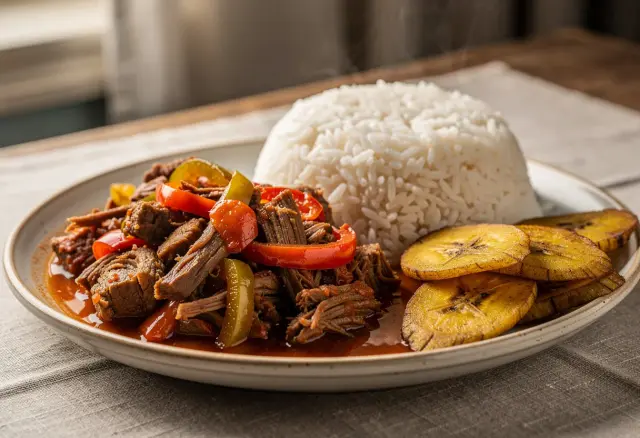
Ropa ViejaBeef braised and shredded into a rich tomato-pepper sofrito, Cuba’s national dish, named "old clothes."
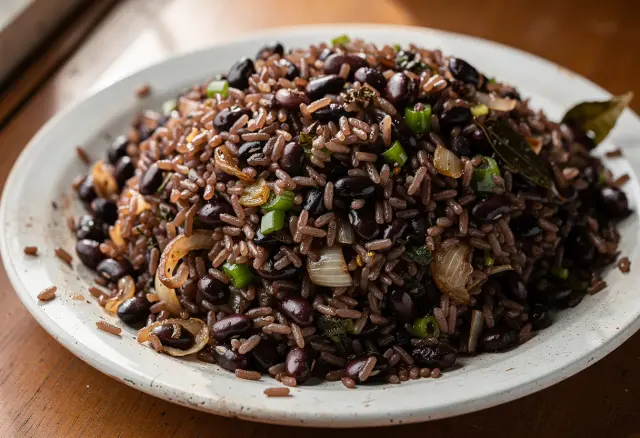
Moros y CristianosBlack beans and white rice cooked together in one pot with a cumin-scented sofrito until every grain turns dusky and savory, the everyday soul of the Cuban table.
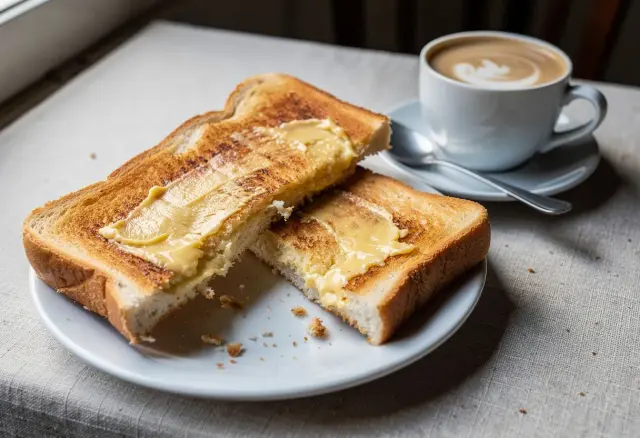
Tostada Cubana con Café con LecheButtered Cuban bread pressed flat and crisp, cut into batons for dunking into sweet, milky espresso, the quintessential Havana breakfast.
Browse all Cuba recipes →
Good to know
You’ll need: Skillet or frying pan, Whisk.
Storing it: Fried food is best eaten fresh while crisp. Re-crisp leftovers in a hot oven or air fryer; the microwave makes them soft.
Make it a Cuba meal
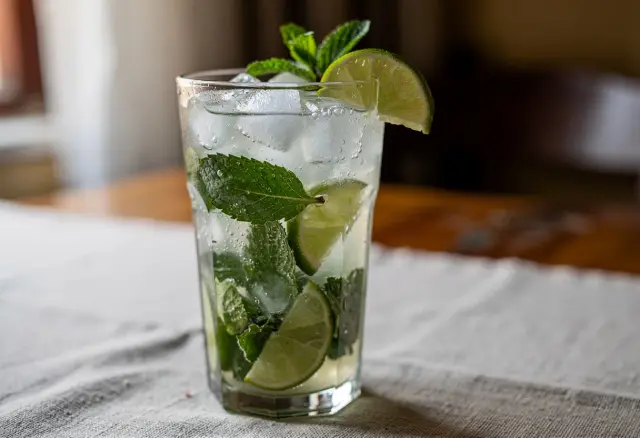
MojitoDrink
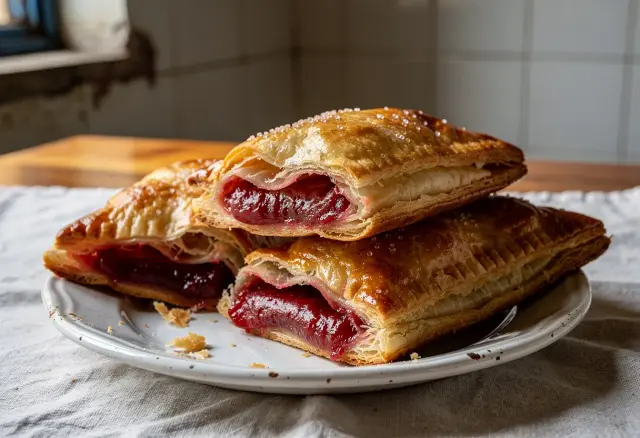
Pastelitos de GuayabaDessert
Similar dishes from around the world
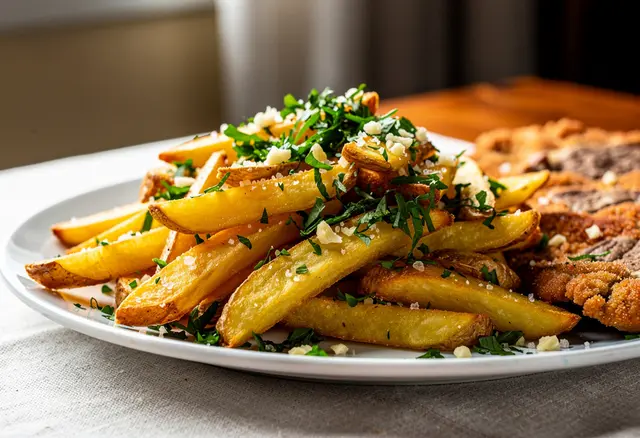
Papas a la Provenzal (Argentine Garlic and Parsley Fries)Argentina
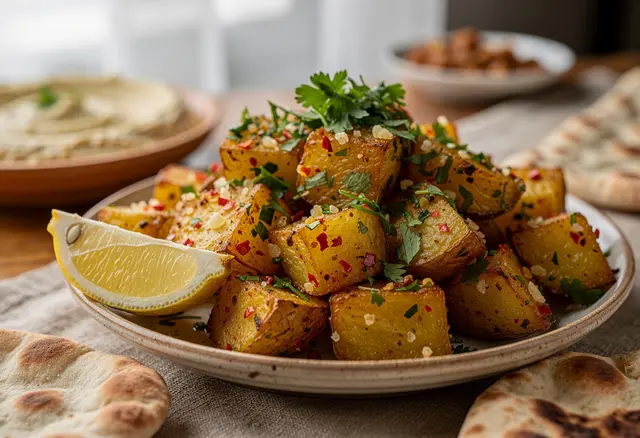
Batata Harra (Lebanese Spicy Potatoes)Lebanon
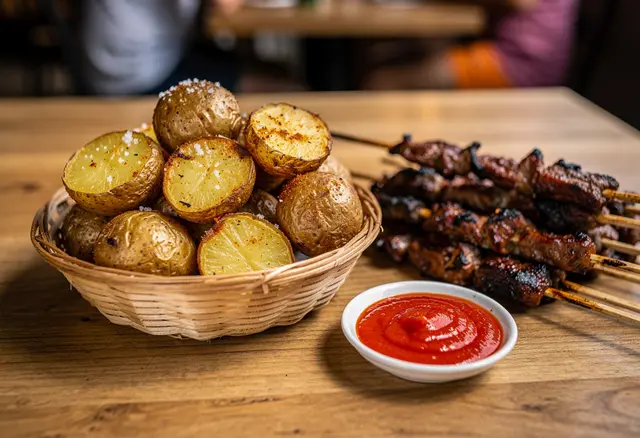
Ibirayi (Rwandan Spiced Fried Potatoes)Rwanda
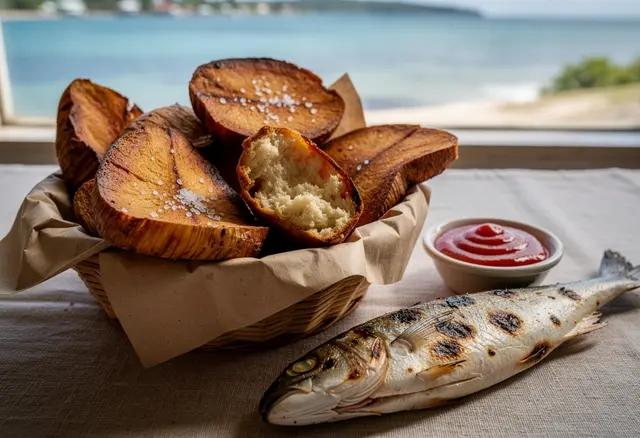
Mei Chips (Tongan Fried Breadfruit Chips)Tonga
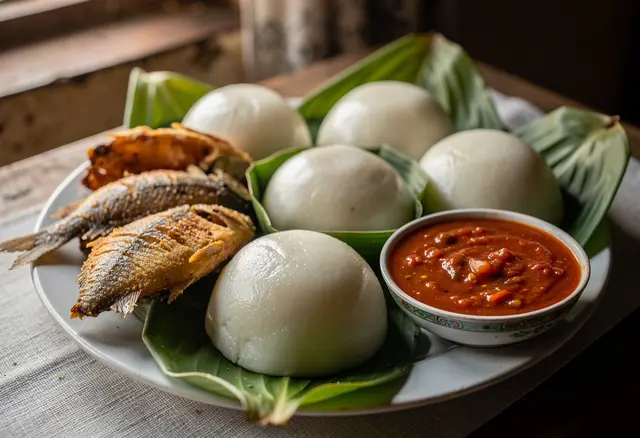
Akassa (Beninese Fermented Corn Dough)Benin
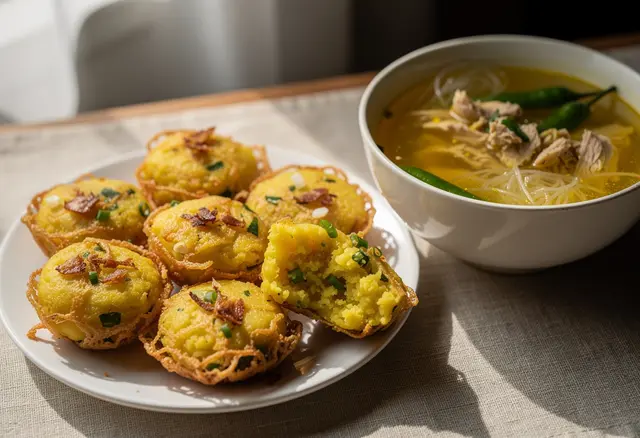
Perkedel Kentang (Indonesian Potato Fritters)Indonesia
Cuisine
Diet
Frequently asked questions
What is Tostones con Mojo (Cuban Twice-Fried Green Plantains)?
Thick rounds of green plantain fried soft, smashed flat, fried again until crisp and salted, served with a garlicky sour-orange mojo for dipping.
Where does Tostones con Mojo (Cuban Twice-Fried Green Plantains) come from?
Tostones con Mojo (Cuban Twice-Fried Green Plantains) is a Cuban dish from Havana, Cuba.
Can Tostones con Mojo (Cuban Twice-Fried Green Plantains) be made vegan, gluten-free, or dairy-free?
This Tostones con Mojo (Cuban Twice-Fried Green Plantains) recipe includes substitution suggestions for vegetarian, vegan, gluten-free, dairy-free, nut-free, egg-free, and pork-free versions. Treat the substitutions as a starting guide rather than a guarantee, and see the allergen note below.
Is Tostones con Mojo (Cuban Twice-Fried Green Plantains) safe for people with food allergies?
Our dietary labels and substitutions are a cooking guide, not medical or allergen-safety advice. We track dairy, egg, gluten, tree nuts and peanuts (we still count coconut as a tree nut to be cautious, although the FDA stopped listing it as one in 2025), fish, and shellfish, but we do not screen for sesame, soy, mustard, celery, or sulphites. If you have a food allergy, always read the label on every product you use, and remember a home or commercial kitchen can cross-contaminate ingredients in ways a recipe cannot control.
How long does Tostones con Mojo (Cuban Twice-Fried Green Plantains) take to make?
About 35 minutes total (15 minutes prep, 20 minutes cooking), serving 4.
Get the Sunday Spin
One dish from somewhere in the world, in your inbox every Sunday. No spam, just dinner inspiration you can cook that day.