
🥔 SIDE
Akassa (Beninese Fermented Corn Dough)
Maize flour soaked and soured for two days, sieved and settled, then stirred over the heat into a smooth, white, gently tangy dough, wrapped in leaves to set and served with fried fish and a peppery tomato sauce.
Beninese · medium · serves 6
prep 20 min · cook 20 min · plus 2.5 days hands-off time
~303 cal · 8g protein · 63g carbs · 1g fat · 2g fiber · 0g sugars · 0g sat fat (estimated, per serving)
↓ Jump to Recipe
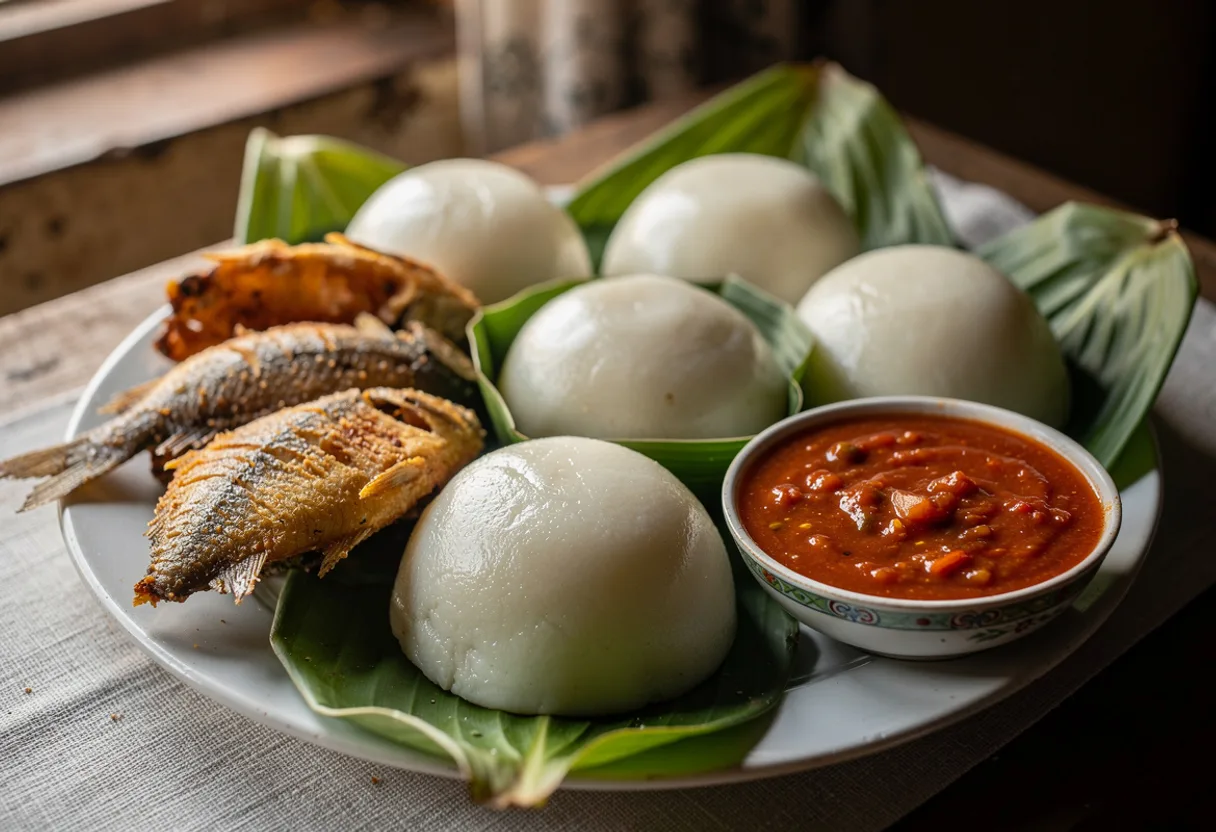
AI-generated illustration
Akassa, called gui in the Fon language, is a staple of southern Benin, a white dough of maize that sits beside the sauce on countless plates. It is sold in every Beninese market as small white loaves wrapped in green leaves: teak leaves in the centre and north, banana leaves in Yoruba and Nago areas, and plastic or bowls in the south. In Bohicon and Abomey a firmer version called lio comes wrapped in leaves.
It takes patience rather than skill. The maize is soaked in water for two or three days until it starts to sour, ground very fine and sieved to separate the starch from the bran. The starch settles as a thick white paste, which is cooked in water over the fire and stirred hard until it becomes a smooth, supple dough.
The taste is mild and lightly sour, which is why it goes so well with bold sauces. In Benin akassa is eaten with fried fish and a peppery tomato sauce, with sauce, with peanut sauce or with meat, and it is good hot or at room temperature. The same maize dough is eaten in Togo, Nigeria, Burkina Faso and Côte d'Ivoire.
Saved recipes and passport stamps are kept on this device. Sign in to keep them across your devices and leave reviews.
Make it yours
✓ Naturally vegetarian, vegan and gluten-, dairy-, nut-, egg- and pork-free. No swaps needed.
Toggle a diet and the ingredients rewrite themselves with regional substitutes.
🥕 Vegetarian
🌱 Vegan
🌾 Gluten-Free
🥛 Dairy-Free
🥜 Nut-Free
🥚 Egg-Free
🐖 Pork-Free
Dietary labels are a cooking guide, not allergen-safety advice. We track dairy, egg, gluten, tree nuts and peanuts (we count coconut as a tree nut, following FDA labeling), fish, and shellfish; we do not screen for sesame, soy, mustard, celery, or sulphites. If you have a food allergy, read the label on every product you use, and note that a kitchen can cross-contaminate in ways a recipe cannot control.
Ingredients
US
Metric
Serves 6
- 500 g (about 3 1/2 cups) fine white maize flour, or dried white maize kernels, ground very fine after soaking
- 1.5 litres (6 cups) water, for soaking
- 750 ml (3 cups) water, for cooking, plus a little hot water if needed
- 6 banana leaves, cut into 25 cm squares, or squares of foil or small bowls
Instructions
- 1Stir the maize flour into the soaking water in a large bowl. Cover with a cloth and leave at warm room temperature for 2 days, stirring once a day, until it smells pleasantly sour.✎ Chef’s noteThis is where the flavour comes from. In a cool kitchen it can take a third day.
- 2Stir well and pour the mixture through a very fine sieve or a clean cloth into a second bowl, pressing and squeezing to push all the starch through. Throw away the coarse bran left behind.
- 3Leave the strained liquid to stand for about 6 hours, until the starch has settled as a thick white layer at the bottom. Carefully pour off the clear water on top and keep the paste.
- 4Bring the cooking water to the boil in a heavy pot, then lower the heat to medium. Stir the paste to loosen it and pour it in slowly, stirring hard with a sturdy wooden spoon so no lumps form.
- 5Keep cooking and stirring for 15 to 20 minutes, until the dough is thick, smooth and glossy and pulls away from the sides of the pot. If it gets too stiff before it is smooth, work in a splash of hot water.✎ Chef’s noteThe colour turns from chalky to a slightly translucent white when it is cooked.
- 6Soften the banana leaves by passing them quickly over a flame. Spoon a portion of hot dough onto each leaf, fold the leaf over into a parcel, and leave the parcels to cool and firm for about 1 hour.
- 7Unwrap and serve at room temperature or warm, with fried fish and a peppery tomato sauce, or with okra or peanut sauce.
Southern Beninese tradition.
Ratings & reviews
Cooked it? Rate this dish:
No account needed. Sign in to leave a full review with a comment.
Cooked it?
Kept on this device, no account needed. Sign in to leave a review and keep your passport across your devices.
No reviews yet, be the first to cook it.
🌏 While it simmers, know your destination
📍
Cotonou. Cotonou is Benin's bustling seaside city, eating amiwo, cornmeal cooked directly in a red tomato and pepper sauce so the starch carries the seasoning. Grilled fish, akassa fermented dough, and fiery pepper sauces come with almost everything.
🗺️
Benin. Vodun's centre is here, in the Fon kingdom of Dahomey in what is now southern Benin, but it spans Togo, Ghana and Nigeria and absorbed a great deal of Yoruba practice, so it is a regional religion with a Beninese heartland. The slave port at Ouidah carried it across the Atlantic to Haiti, Cuba and Brazil, where its descendants are still practised.
🌍
Africa. Africa's fifty-four nations hold cuisines as different as Morocco's slow-cooked tagines and South Africa's open-fire braai, yet shared threads run through them: ancient grains like millet, sorghum, and teff; stews thickened with groundnut, okra, or palm; and fiery condiments from Tunisian harissa to Ethiopian berbere. Staple starches, fufu, injera, ugali, couscous, anchor communal meals often eaten by hand from a shared dish, where hospitality is a point of honor.
The story behind this dish is up top, worth a read while the pot works.
More from Benin

AmiwoCornmeal cooked directly in a spiced red tomato-and-pepper sauce, served with braised chicken.

AbloSoft, slightly sweet steamed rice-and-corn cakes eaten plain or with a spicy sauce for breakfast.
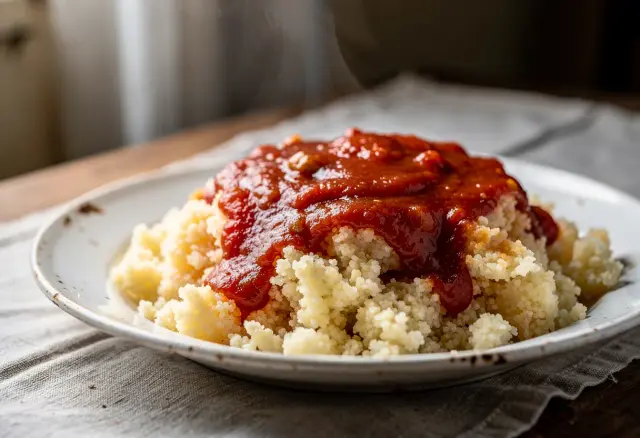
Wassa-WassaSteamed yam-flour couscous tossed with a spiced tomato and onion sauce, a northern Beninese lunch staple.
Browse all Benin recipes →
Good to know
You’ll need: Pot or saucepan.
Storing it: Fried food is best eaten fresh while crisp. Re-crisp leftovers in a hot oven or air fryer; the microwave makes them soft.
Make it a Benin meal
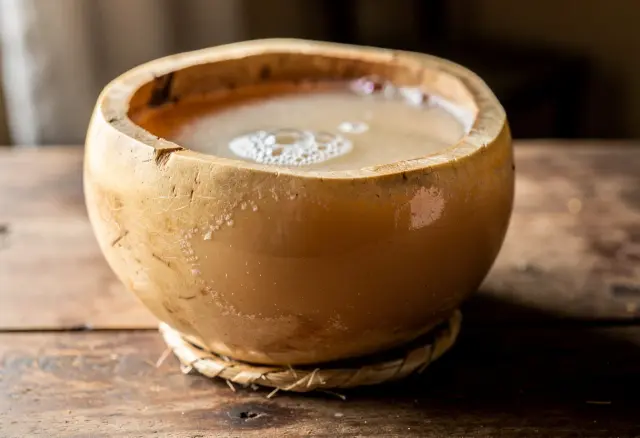
TchoukoutouDrink

Yovo Doko (Sweet Fritters)Dessert
Similar dishes from around the world
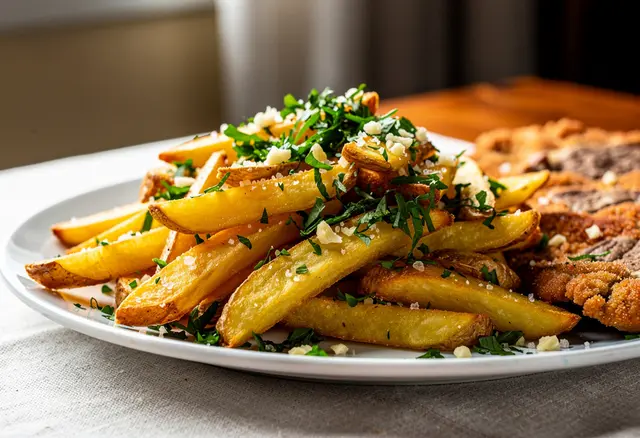
Papas a la Provenzal (Argentine Garlic and Parsley Fries)Argentina
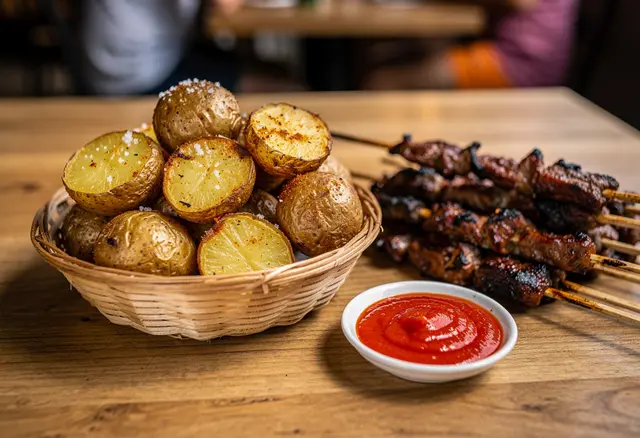
Ibirayi (Rwandan Spiced Fried Potatoes)Rwanda
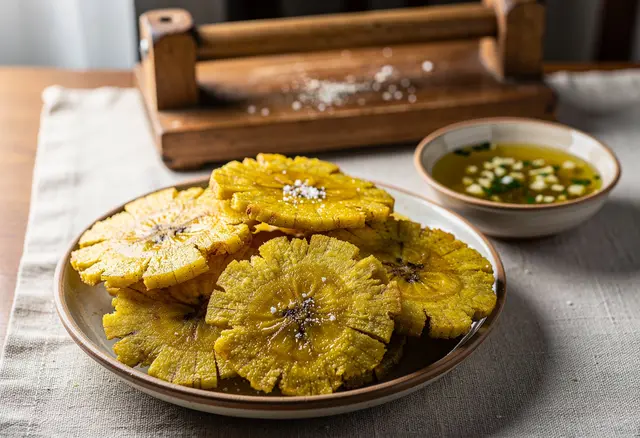
Tostones con Mojo (Cuban Twice-Fried Green Plantains)Cuba
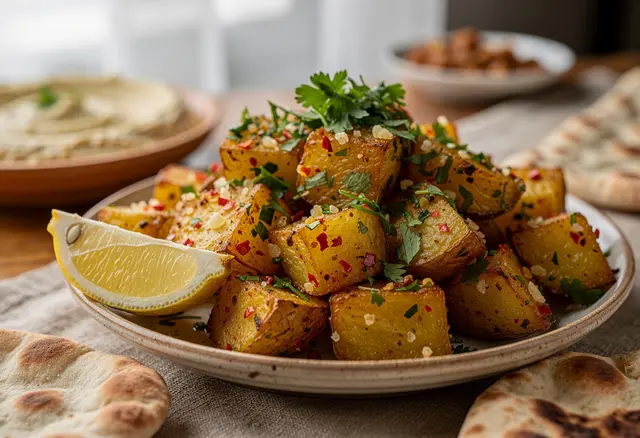
Batata Harra (Lebanese Spicy Potatoes)Lebanon
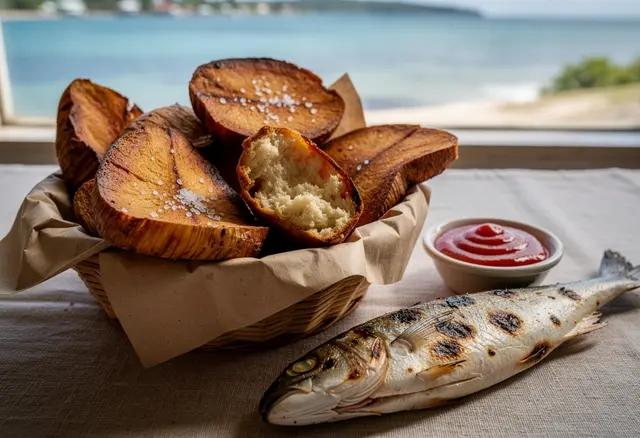
Mei Chips (Tongan Fried Breadfruit Chips)Tonga

Patatas a lo Pobre (Andalusian Poor Man’s Potatoes)Spain
Cuisine
Diet
Vegetarian Recipes from Around the World
Vegan Recipes from Around the World
Gluten-Free Recipes from Around the World
Dairy-Free Recipes from Around the World
Nut-Free Recipes from Around the World
Egg-Free Recipes from Around the World
Pork-Free Recipes from Around the World
Vegan Beninese Recipes
Vegetarian Beninese Recipes
Gluten-Free Beninese Recipes
Dairy-Free Beninese Recipes
Frequently asked questions
What is Akassa (Beninese Fermented Corn Dough)?
Maize flour soaked and soured for two days, sieved and settled, then stirred over the heat into a smooth, white, gently tangy dough, wrapped in leaves to set and served with fried fish and a peppery tomato sauce.
Where does Akassa (Beninese Fermented Corn Dough) come from?
Akassa (Beninese Fermented Corn Dough) is a Beninese dish from Cotonou, Benin.
Can Akassa (Beninese Fermented Corn Dough) be made vegan, gluten-free, or dairy-free?
This Akassa (Beninese Fermented Corn Dough) recipe includes substitution suggestions for vegetarian, vegan, gluten-free, dairy-free, nut-free, egg-free, and pork-free versions. Treat the substitutions as a starting guide rather than a guarantee, and see the allergen note below.
Is Akassa (Beninese Fermented Corn Dough) safe for people with food allergies?
Our dietary labels and substitutions are a cooking guide, not medical or allergen-safety advice. We track dairy, egg, gluten, tree nuts and peanuts (we still count coconut as a tree nut to be cautious, although the FDA stopped listing it as one in 2025), fish, and shellfish, but we do not screen for sesame, soy, mustard, celery, or sulphites. If you have a food allergy, always read the label on every product you use, and remember a home or commercial kitchen can cross-contaminate ingredients in ways a recipe cannot control.
How long does Akassa (Beninese Fermented Corn Dough) take to make?
About 2.5 days in all: 20 minutes prep and 20 minutes cooking, plus 2.5 days of hands-off waiting the method needs, serving 6.
Get the Sunday Spin
One dish from somewhere in the world, in your inbox every Sunday. No spam, just dinner inspiration you can cook that day.