
🥔 SIDE
Kelupis (Bruneian Glutinous Rice Rolls in Leaves)
Glutinous rice cooked in coconut milk until glossy, wrapped in slim rolls of leaf and steamed, served with rendang, curry or peanut sauce at Hari Raya.
Bruneian · medium · serves 8
prep 45 min · cook 85 min
~399 cal · 6g protein · 53g carbs · 19g fat · 2g fiber · 2g sugars · 14g sat fat (estimated, per serving)
↓ Jump to Recipe
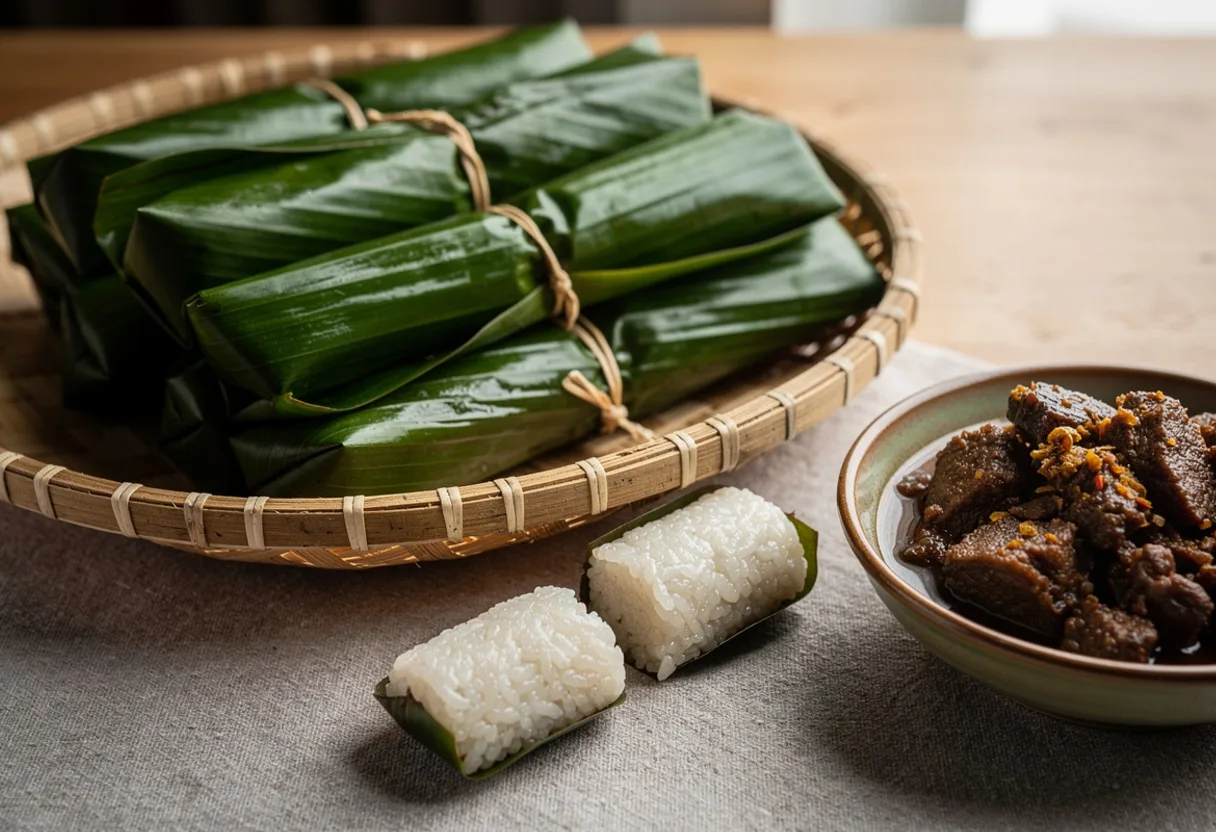
AI-generated illustration
Kelupis, literally "glutinous rice rolls", is the Bornean answer to ketupat and lemang: glutinous rice half-cooked in with salt, wrapped in leaves and steamed until it sets into firm, fragrant rolls. It belongs to the Brunei Malay, Kedayan, Bisaya, Dusun and Lun Bawang peoples of Brunei and East Malaysia, and in Brunei it is recognised as part of the national cultural heritage.
The traditional wrapper is daun nyirik, a large forest leaf, and the leaf gives kelupis its faint grassy perfume. Families make it in large quantities, often together, for Hari Raya Aidilfitri, weddings and religious gatherings, when it is served with peanut sauce, beef or chicken rendang and curries, and guests unwrap a roll and eat the rice with the rich gravy. Kelupis made in the Brunei Malay tradition is known for being dense and rich in .
Some cooks tuck dried shrimp or anchovies into the rice for a savoury version, but the plain roll is the one that goes with rendang. Nyirik leaves are hard to find outside Borneo, and banana leaves are the usual stand-in.
Saved recipes and passport stamps are kept on this device. Sign in to keep them across your devices and leave reviews.
Make it yours
✓ Naturally vegetarian, vegan and gluten-, dairy-, egg- and pork-free. No swaps needed.
Toggle a diet and the ingredients rewrite themselves with regional substitutes.
🥕 Vegetarian
🌱 Vegan
🌾 Gluten-Free
🥛 Dairy-Free
🥜 Nut-Free
🥚 Egg-Free
🐖 Pork-Free
Dietary labels are a cooking guide, not allergen-safety advice. We track dairy, egg, gluten, tree nuts and peanuts (we count coconut as a tree nut, following FDA labeling), fish, and shellfish; we do not screen for sesame, soy, mustard, celery, or sulphites. If you have a food allergy, read the label on every product you use, and note that a kitchen can cross-contaminate in ways a recipe cannot control.
Ingredients
US
Metric
Serves 8
- 500 g glutinous (sticky) rice
- 500 ml
- 1 tsp salt
- 2 pandan leaves, knotted, optional
- 2 tbsp neutral cooking oil
- 16 pieces nyirik leaves, or banana leaves cut into 18 x 20 cm pieces
- 16 lengths kitchen string
Instructions
- 1Rinse the glutinous rice several times until the water runs almost clear, then drain it well in a sieve.
- 2Put the coconut milk, salt and pandan leaves in a wide pot over low heat and bring it slowly to the boil, stirring, for about 10 minutes, until it bubbles and a little oil starts to separate.
- 3Add the rice and cook over low heat, stirring all the time and adding the oil a little at a time, for 10 to 15 minutes, until the coconut milk is absorbed and the rice is dry, glossy and half cooked. Take out the pandan and let the rice cool until you can handle it.✎ Chef’s noteKeep the heat low and keep stirring; the coconut milk catches easily on the bottom of the pot.
- 4If using banana leaves, pass them briefly over a flame or dip them in hot water to soften, then wipe them dry. Lay 2 to 3 heaped tablespoons of rice along one edge of a leaf, roll it up tightly into a slim log about 3 cm thick, fold in the ends and tie the roll firmly in two places with string.✎ Chef’s noteLeave a little room: the rice swells as it steams, and a roll that is too full splits.
- 5Arrange the rolls in a steamer over boiling water and steam them for 1 hour, topping up the water as needed, until the rice is fully cooked and set firm.
- 6Stand the rolls upright for a few minutes to let the steam escape; this helps them keep. Serve warm or at room temperature, unwrapped and cut into rounds, with rendang, chicken or beef curry, or peanut sauce.
Brunei Malay and Kedayan festive tradition.
Ratings & reviews
Cooked it? Rate this dish:
No account needed. Sign in to leave a full review with a comment.
Cooked it?
Kept on this device, no account needed. Sign in to leave a review and keep your passport across your devices.
No reviews yet, be the first to cook it.
🌏 While it simmers, know your destination
📍
Bandar Seri Begawan. Brunei's capital eats ambuyat, a translucent sago starch twirled on bamboo forks and dipped into sour cacah sauce because it has almost no flavour of its own. Malay cooking surrounds it: coconut rice, grilled fish, and rich beef rendang.
🗺️
Brunei. The dish is not Brunei's alone. The same sago paste is eaten across northern Borneo in Sarawak, Sabah and Labuan, where it is called linut or pinantung, so the sultanate shares it with its neighbours. Sago itself comes from the pith of a palm rather than from a grain, which is why it grows where rice paddies will not.
🌍
Asia. Asia is the world's largest and most populous continent, and its food spans the delicate seasonality of Japanese washoku, the chili-fired curries of India and Thailand, and the wheat-and-lamb traditions of Central Asia. Rice, noodles, soy, and fermentation recur across its regions, while ancient spice routes and religious traditions shaped distinct grammars of flavor. Whether from a street-cart wok or a monastery kitchen, eating is deeply communal and ritual-rich.
The story behind this dish is up top, worth a read while the pot works.
More from Brunei
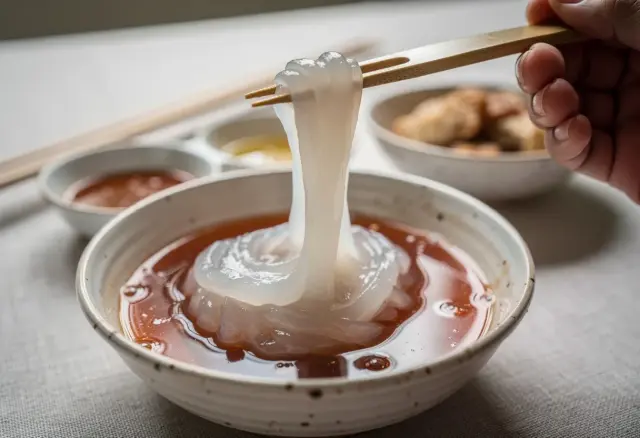
AmbuyatA glassy sago starch eaten with bamboo forks and dipped in a tart, pungent cacah sauce.
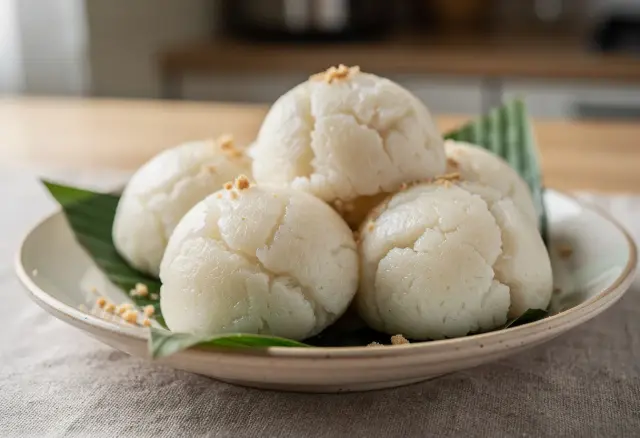
KatilapamSoft steamed rice-flour cakes lightly spiced and faintly sweet, a Bruneian teatime and breakfast bite.
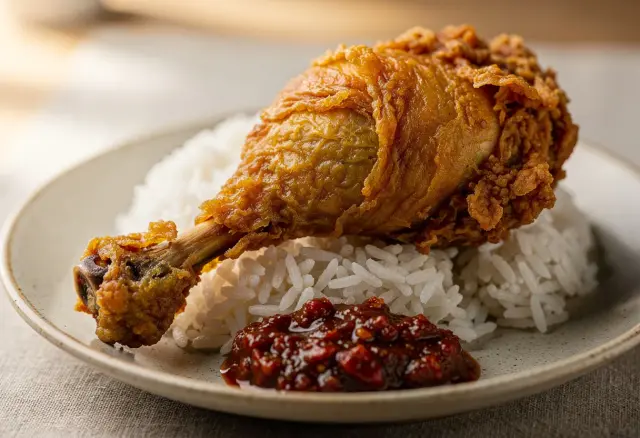
Nasi KatokA simple plate of rice, fried chicken, and fiery sambal, Brunei's famously cheap everyday meal.
Browse all Brunei recipes →
Good to know
You’ll need: Pot or saucepan, Steamer.
Storing it: Cool leftover rice quickly and refrigerate within an hour. Keep up to 2 days and reheat until piping hot all the way through.
Make it a Brunei meal

Air KatiraDrink
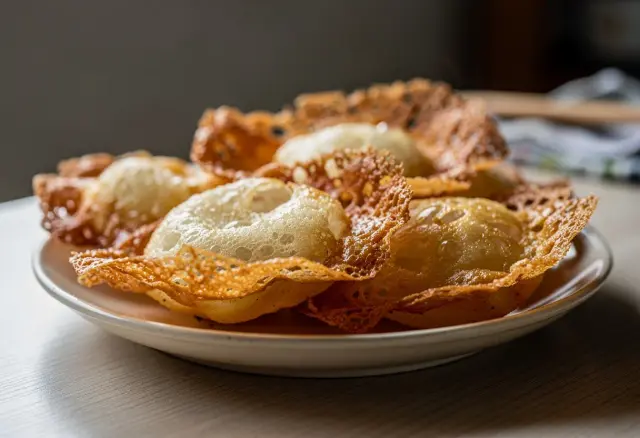
PenyaramDessert
Similar dishes from around the world
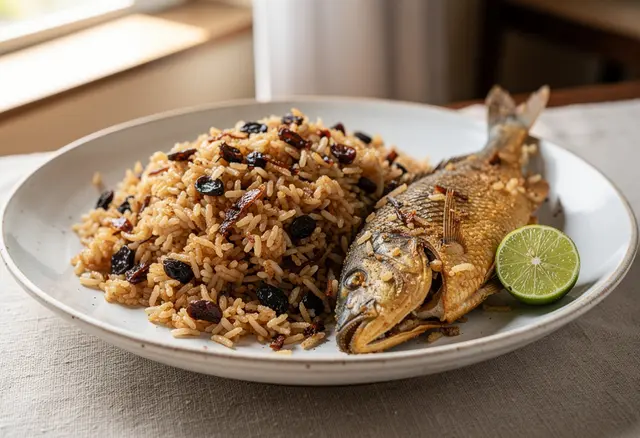
Arroz con Coco Titoté (Colombian Caramelized Coconut Rice)Colombia
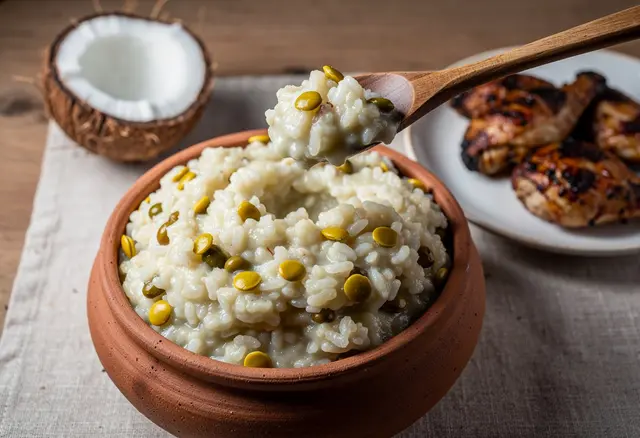
Mucapata (Zambezian Rice with Mung Beans and Coconut)Mozambique

Arroz con Guandú y Coco (Panamanian Rice with Pigeon Peas and Coconut)Panama
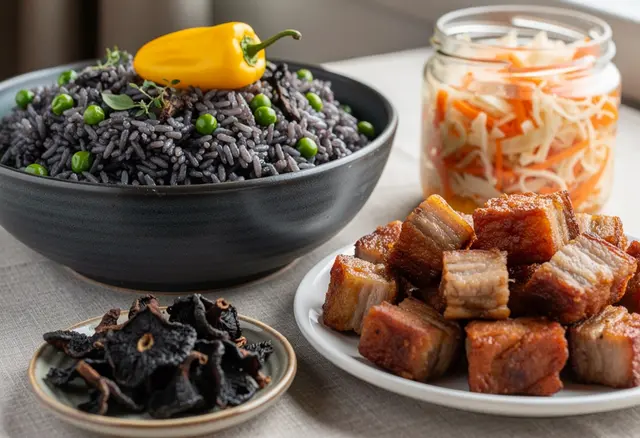
Diri Djon Djon (Haitian Black Mushroom Rice)Haiti

Timman (Iraqi White Rice with a Golden Crust)Iraq

Mashkhool (Kuwaiti White Rice with Onion Crust)Kuwait
Cuisine
Diet
Themes
Frequently asked questions
What is Kelupis (Bruneian Glutinous Rice Rolls in Leaves)?
Glutinous rice cooked in coconut milk until glossy, wrapped in slim rolls of leaf and steamed, served with rendang, curry or peanut sauce at Hari Raya.
Where does Kelupis (Bruneian Glutinous Rice Rolls in Leaves) come from?
Kelupis (Bruneian Glutinous Rice Rolls in Leaves) is a Bruneian dish from Bandar Seri Begawan, Brunei.
Can Kelupis (Bruneian Glutinous Rice Rolls in Leaves) be made vegan, gluten-free, or dairy-free?
This Kelupis (Bruneian Glutinous Rice Rolls in Leaves) recipe includes substitution suggestions for vegetarian, vegan, gluten-free, dairy-free, nut-free, egg-free, and pork-free versions. Treat the substitutions as a starting guide rather than a guarantee, and see the allergen note below.
Is Kelupis (Bruneian Glutinous Rice Rolls in Leaves) safe for people with food allergies?
Our dietary labels and substitutions are a cooking guide, not medical or allergen-safety advice. We track dairy, egg, gluten, tree nuts and peanuts (we still count coconut as a tree nut to be cautious, although the FDA stopped listing it as one in 2025), fish, and shellfish, but we do not screen for sesame, soy, mustard, celery, or sulphites. If you have a food allergy, always read the label on every product you use, and remember a home or commercial kitchen can cross-contaminate ingredients in ways a recipe cannot control.
How long does Kelupis (Bruneian Glutinous Rice Rolls in Leaves) take to make?
About 130 minutes total (45 minutes prep, 85 minutes cooking), serving 8.
Get the Sunday Spin
One dish from somewhere in the world, in your inbox every Sunday. No spam, just dinner inspiration you can cook that day.