Africa → Guinea-Bissau → Bissau

🥤 DRINK
Warga (Bissau-Guinean Sweet Green Tea)
Gunpowder green tea boiled strong with plenty of sugar, poured from glass to pot until it foams, and served in three rounds that grow milder and sweeter, with mint in the last two.
Bissau-Guinean · easy · serves 6
prep 5 min · cook 45 min
~197 cal · 0g protein · 51g carbs · 0g fat · 0g fiber · 51g sugars · 0g sat fat (estimated, per serving)
↓ Jump to Recipe
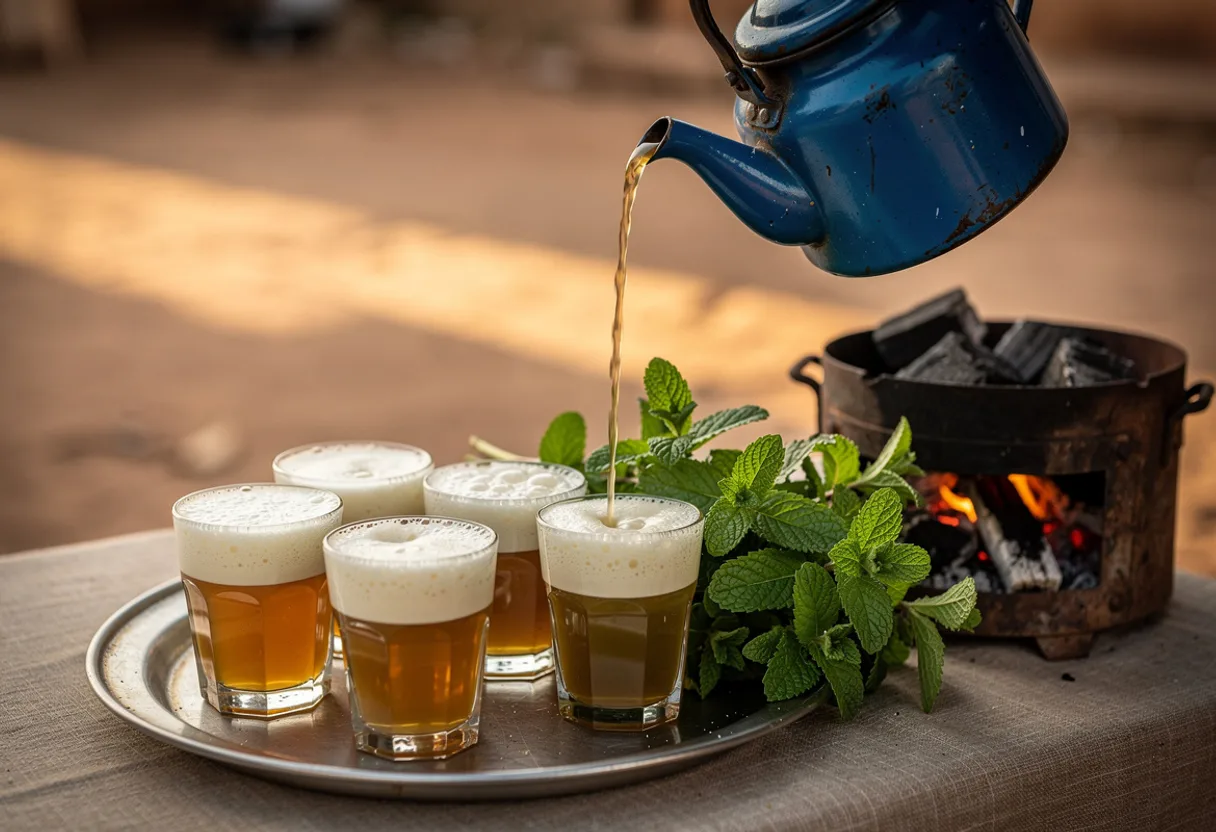
AI-generated illustration
Warga is the sweet green tea of Guinea-Bissau, and it is not a drink to gulp while doing something else: it is an occasion, a slow ritual shared among friends. It is the same tea that Senegal, to the north, calls attaya.
Chinese gunpowder green tea is boiled hard with water and a great deal of sugar in a small pot, then poured from a height into a little glass and back again, over and over, until the glasses are topped with a thick foam. The same leaves make three rounds. The first is strong and bitter even with all its sugar; for the second and third, more water, more sugar and fresh mint go into the pot, and each round comes out milder and sweeter than the last.
Each round takes its time, which is the point. The pouring and the waiting are where the conversation happens.
Saved recipes and passport stamps are kept on this device. Sign in to keep them across your devices and leave reviews.
Make it yours
✓ Naturally vegetarian, vegan and gluten-, dairy-, nut-, egg- and pork-free. No swaps needed.
Toggle a diet and the ingredients rewrite themselves with regional substitutes.
🥕 Vegetarian
🌱 Vegan
🌾 Gluten-Free
🥛 Dairy-Free
🥜 Nut-Free
🥚 Egg-Free
🐖 Pork-Free
Dietary labels are a cooking guide, not allergen-safety advice. We track dairy, egg, gluten, tree nuts and peanuts (we count coconut as a tree nut, following FDA labeling), fish, and shellfish; we do not screen for sesame, soy, mustard, celery, or sulphites. If you have a food allergy, read the label on every product you use, and note that a kitchen can cross-contaminate in ways a recipe cannot control.
Ingredients
US
Metric
Serves 6
- 3 tbsp Chinese gunpowder green tea
- 1 litre water, about 300 ml for each round
- 1.5 cups sugar, divided between the rounds
- 1 large bunch fresh mint
Instructions
- 1Put the tea and 300 ml of the water in a small metal teapot and bring it to a boil. Let it bubble for 10 to 15 minutes, until very dark and strong.
- 2Add about a third of the sugar and bring it back to the boil to dissolve it.
- 3Pour the tea from a height into a small glass, then pour it back into the pot. Keep going, back and forth between glass and pot, until a thick foam forms. Share the foam among the small glasses, then top them up with tea and serve this first, strong round.✎ Chef’s noteThe higher you pour, the more foam you get, and the more foam the better, so do not hurry it.
- 4For the second round, add another 300 ml of water, half the mint and half the remaining sugar to the same leaves. Boil for 10 to 15 minutes, then foam and serve as before. It will be milder and sweeter.
- 5For the third round, repeat with the last of the water, mint and sugar. This round is the sweetest of all.
Bissau-Guinean home tradition.
Ratings & reviews
Cooked it? Rate this dish:
No account needed. Sign in to leave a full review with a comment.
Cooked it?
Kept on this device, no account needed. Sign in to leave a review and keep your passport across your devices.
No reviews yet, be the first to cook it.
🌏 While it simmers, know your destination
📍
Bissau. Bissau is a Luso-African capital built on rice, fish, and palm oil, most fully in caldo de mancarra, a peanut stew. Portuguese contact left bread and stews, while cassava, okra, and smoked fish keep it firmly West African.
🗺️
Guinea-Bissau. Guinea-Bissau's cuisine leans on rice, cashews (its top crop), and fresh seafood, with jollof-style rice and palm-oil stews. Portuguese-Creole and West African roots meet over the fruit and nut of the cashew.
🌍
Africa. Much of what reads as timeless African cooking is younger than the Atlantic crossings. Maize, cassava, groundnut, chilli and tomato all arrived from the Americas after 1500 and pushed older crops aside; millet, sorghum, teff, yam and fonio are the ones that were already here, and the map still shows the join.
The story behind this dish is up top, worth a read while the pot works.
More from Guinea-Bissau
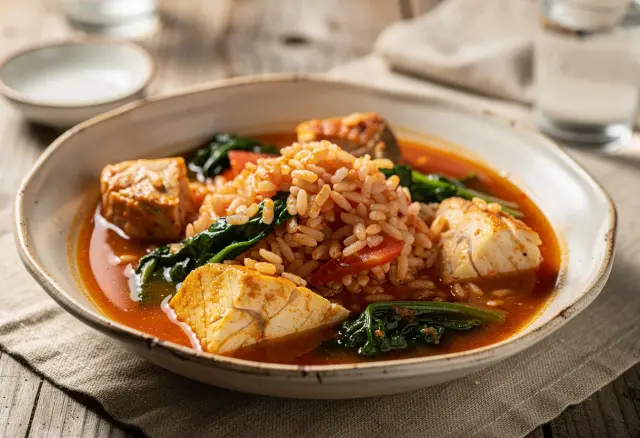
Caldo de PeixeA Guinea-Bissau fish-and-rice pot simmered with palm oil, tomato, and greens in one dish.
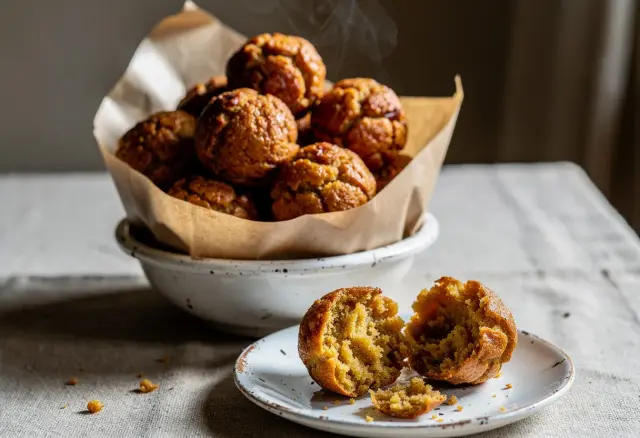
FidjósBissau breakfast fritters: a mashed-banana and flour batter fried into small golden puffs, sold in paper cones on the morning streets.
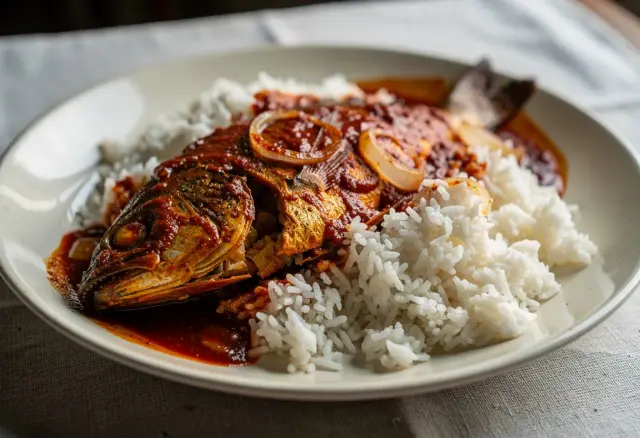
ChabéuFish simmered in a thick red palm-nut sauce with onion, tomato, and chili, served over rice, a signature dish of Guinea-Bissau.
Browse all Guinea-Bissau recipes →
Good to know
You’ll need: Pot or saucepan.
Storing it: Keeps 2 to 3 days refrigerated. Resteam or warm through gently to serve.
Make it a Guinea-Bissau meal
Caldo de PeixeDinner

Doce de Papaia (Papaya Sweet)Dessert
Similar dishes from around the world

Chai Zafran (Kuwaiti Saffron and Cardamom Tea)Kuwait

Icyayi (Rwandan African Tea)Rwanda

Kiri Te (Sri Lankan Milk Tea)Sri Lanka

Bosanska Kafa (Bosnian Coffee)Bosnia & Herzegovina

Karak ChaiUnited Arab Emirates

Shaah SomaliSomalia
Drinks
Frequently asked questions
What is Warga (Bissau-Guinean Sweet Green Tea)?
Gunpowder green tea boiled strong with plenty of sugar, poured from glass to pot until it foams, and served in three rounds that grow milder and sweeter, with mint in the last two.
Where does Warga (Bissau-Guinean Sweet Green Tea) come from?
Warga (Bissau-Guinean Sweet Green Tea) is a Bissau-Guinean dish from Bissau, Guinea-Bissau.
Can Warga (Bissau-Guinean Sweet Green Tea) be made vegan, gluten-free, or dairy-free?
This Warga (Bissau-Guinean Sweet Green Tea) recipe includes substitution suggestions for vegetarian, vegan, gluten-free, dairy-free, nut-free, egg-free, and pork-free versions. Treat the substitutions as a starting guide rather than a guarantee, and see the allergen note below.
Is Warga (Bissau-Guinean Sweet Green Tea) safe for people with food allergies?
Our dietary labels and substitutions are a cooking guide, not medical or allergen-safety advice. We track dairy, egg, gluten, tree nuts and peanuts (we still count coconut as a tree nut to be cautious, although the FDA stopped listing it as one in 2025), fish, and shellfish, but we do not screen for sesame, soy, mustard, celery, or sulphites. If you have a food allergy, always read the label on every product you use, and remember a home or commercial kitchen can cross-contaminate ingredients in ways a recipe cannot control.
How long does Warga (Bissau-Guinean Sweet Green Tea) take to make?
About 50 minutes total (5 minutes prep, 45 minutes cooking), serving 6.
Get the Sunday Spin
One dish from somewhere in the world, in your inbox every Sunday. No spam, just dinner inspiration you can cook that day.