
🥔 SIDE
Funge (Angolan Cassava Flour Porridge)
Cassava flour beaten into boiling water with a wooden spoon until it turns smooth, glossy and elastic, the swallow that carries muamba, calulu and every Angolan sauce.
Angolan · medium · serves 4
prep 5 min · cook 15 min
~269 cal · 1g protein · 65g carbs · 0g fat · 4g fiber · 0g sugars · 0g sat fat (estimated, per serving)
↓ Jump to Recipe
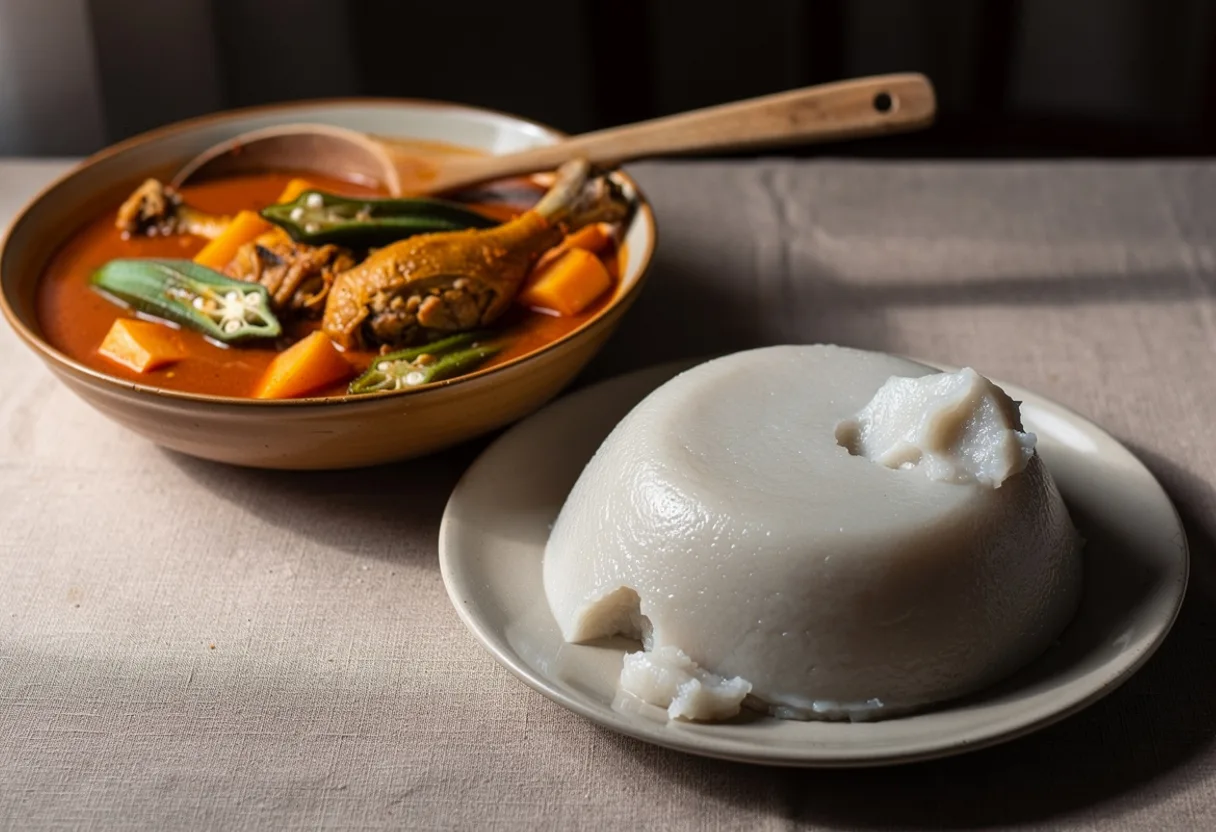
AI-generated illustration
Funge is the staple starch of Angola, the neutral, stretchy swallow that goes beside almost every stew with a sauce. In the north, around Luanda, it is funge de bombó, made from flour and pale grey in colour; in the south it is more often made from maize meal and turns out yellow.
There are only two ingredients, flour and water, and many cooks add no salt at all, since all the flavour comes from the sauce. The skill is in the beating. The flour goes into boiling water a little at a time while the cook beats it hard and without stopping with a wooden spoon, until the mixture turns from a lumpy paste into a smooth, gelatinous, elastic mass that pulls away from the pot.
Funge is eaten with the hands: a small piece is pinched off, rolled and dipped into the sauce. It is the partner to muamba de galinha, chicken in with and squash, to calulu, the dried-fish and greens stew, and to fish, beans in and more, at family meals, weddings and funerals alike.
Saved recipes and passport stamps are kept on this device. Sign in to keep them across your devices and leave reviews.
Make it yours
✓ Naturally vegetarian, vegan and gluten-, dairy-, nut-, egg- and pork-free. No swaps needed.
Toggle a diet and the ingredients rewrite themselves with regional substitutes.
🥕 Vegetarian
🌱 Vegan
🌾 Gluten-Free
🥛 Dairy-Free
🥜 Nut-Free
🥚 Egg-Free
🐖 Pork-Free
Dietary labels are a cooking guide, not allergen-safety advice. We track dairy, egg, gluten, tree nuts and peanuts (we count coconut as a tree nut, following FDA labeling), fish, and shellfish; we do not screen for sesame, soy, mustard, celery, or sulphites. If you have a food allergy, read the label on every product you use, and note that a kitchen can cross-contaminate in ways a recipe cannot control.
Ingredients
US
Metric
Serves 4
- 3 cups (720 ml) water
- 2 cups (about 300 g) flour (bombó or flour)Hard to find? 2 cups fine gari, sieved - toasted and slightly sour, so the funge comes out grainier and tangier
- a pinch salt, optional; many cooks add none
Instructions
- 1Bring the water to the boil in a deep, heavy pot and pour a cup of it into a jug to keep hot. Add the salt, if using, and turn the heat down to medium-low.
- 2Sprinkle in the cassava flour a handful at a time, beating hard with a sturdy wooden spoon after each addition so no lumps form.✎ Chef’s noteHold the pot steady with a cloth and beat with your whole arm. Constant, vigorous beating is what makes funge smooth and elastic rather than lumpy.
- 3Keep beating and folding the mixture against the side of the pot over low heat for about 10 minutes, until it is smooth, glossy and stretchy and comes away from the pot in one mass. If it is too stiff, beat in a little of the reserved hot water.✎ Chef’s noteOnly ever add hot water. Cold water shocks the starch and makes lumps.
- 4Wet a bowl or ladle, scoop the funge into it and turn it out onto a plate as a smooth dome. Serve at once with a stew, pinching off pieces with your fingers to scoop up the sauce.
Angolan home tradition (funge de bombó).
Ratings & reviews
Cooked it? Rate this dish:
No account needed. Sign in to leave a full review with a comment.
Cooked it?
Kept on this device, no account needed. Sign in to leave a review and keep your passport across your devices.
No reviews yet, be the first to cook it.
🌏 While it simmers, know your destination
📍
Luanda. The chilli sits on the table rather than in the pot. Gindungo is the condiment, small hot peppers worked with garlic and oil and added by whoever wants it, and the peanut version of the stew, moamba de ginguba, is the other one worth knowing after the palm oil original.
🗺️
Angola. Muamba de galinha is built on palm rather than tomato: chicken cooked in palm paste or palm oil with okra, garlic and squash until the sauce goes thick and orange. Funge comes two ways, funge de bombo from cassava and funge de milho from maize, and the choice tends to follow the region rather than the dish.
🌍
Africa. The structure repeats across most of the continent: one starch and one sauce. A grain or root is cooked stiff, torn or rolled by hand, and used to carry a stew of leaves, groundnut, okra or fish, usually from a shared bowl and with the right hand. UNESCO listings have followed that logic, inscribing couscous in 2020 as a shared Maghreb tradition and Ivorian attieke in 2024.
The story behind this dish is up top, worth a read while the pot works.
More from Angola
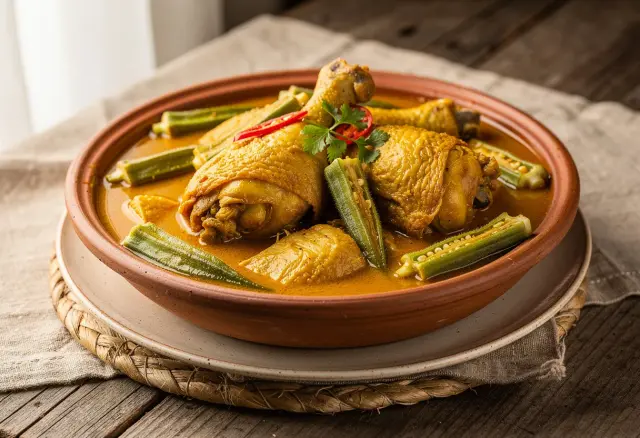
Muamba de GalinhaAngola’s national dish: chicken stewed golden in palm oil with okra, garlic, and chili until the sauce turns silk.
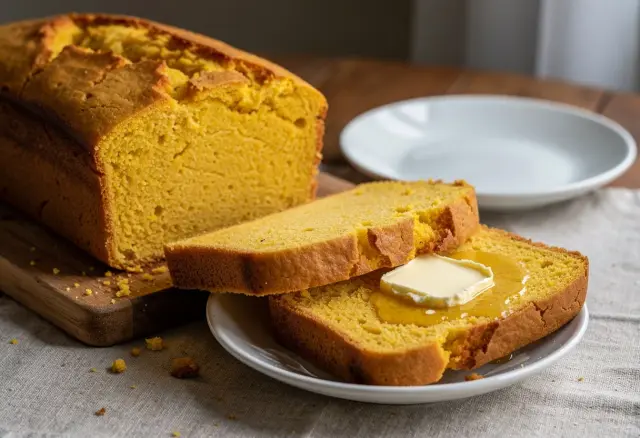
Pão de MilhoAngolan corn bread: a moist, golden cornmeal loaf, faintly sweet and rich with coconut, sliced for breakfast with butter and coffee.
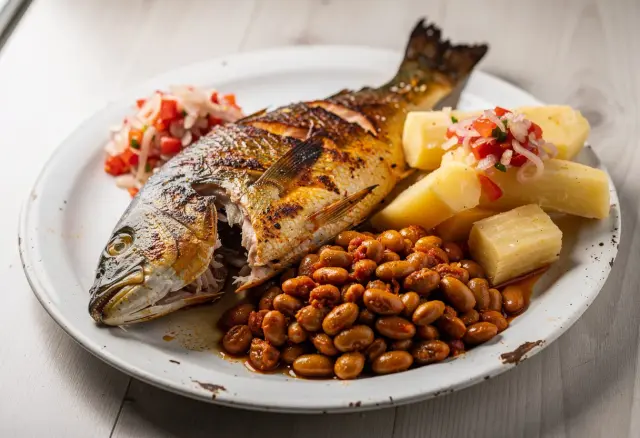
MufeteGrilled fish with beans, cassava, and sweet potato under a tangy palm-oil and onion sauce, an Angolan coastal feast.
Browse all Angola recipes →
Good to know
You’ll need: Pot or saucepan.
Storing it: Thickens as it sits. Reheat with extra water or milk to loosen, and keep 2 to 3 days refrigerated.
Make it an Angola meal

KissanguaDrink
Cocada AmarelaDessert
Similar dishes from around the world
Gozo (Central African Cassava Flour Dough)Central African Republic

Lituma (Congolese Mashed Plantain)DR Congo

Foutou Banane (Ivorian Pounded Plantain and Cassava)Côte d’Ivoire

Foofoo (Sierra Leonean Fermented Cassava)Sierra Leone
Pounded Yam (Iyan)Nigeria
Poi (Pounded Taro)Solomon Islands
Cuisine
Diet
Vegetarian Recipes from Around the World
Vegan Recipes from Around the World
Gluten-Free Recipes from Around the World
Dairy-Free Recipes from Around the World
Nut-Free Recipes from Around the World
Egg-Free Recipes from Around the World
Pork-Free Recipes from Around the World
Gluten-Free Angolan Recipes
Dairy-Free Angolan Recipes
Frequently asked questions
What is Funge (Angolan Cassava Flour Porridge)?
Cassava flour beaten into boiling water with a wooden spoon until it turns smooth, glossy and elastic, the swallow that carries muamba, calulu and every Angolan sauce.
Where does Funge (Angolan Cassava Flour Porridge) come from?
Funge (Angolan Cassava Flour Porridge) is an Angolan dish from Luanda, Angola.
Can Funge (Angolan Cassava Flour Porridge) be made vegan, gluten-free, or dairy-free?
This Funge (Angolan Cassava Flour Porridge) recipe includes substitution suggestions for vegetarian, vegan, gluten-free, dairy-free, nut-free, egg-free, and pork-free versions. Treat the substitutions as a starting guide rather than a guarantee, and see the allergen note below.
Is Funge (Angolan Cassava Flour Porridge) safe for people with food allergies?
Our dietary labels and substitutions are a cooking guide, not medical or allergen-safety advice. We track dairy, egg, gluten, tree nuts and peanuts (we still count coconut as a tree nut to be cautious, although the FDA stopped listing it as one in 2025), fish, and shellfish, but we do not screen for sesame, soy, mustard, celery, or sulphites. If you have a food allergy, always read the label on every product you use, and remember a home or commercial kitchen can cross-contaminate ingredients in ways a recipe cannot control.
How long does Funge (Angolan Cassava Flour Porridge) take to make?
About 20 minutes total (5 minutes prep, 15 minutes cooking), serving 4.
Get the Sunday Spin
One dish from somewhere in the world, in your inbox every Sunday. No spam, just dinner inspiration you can cook that day.