
🥔 SIDE
Lituma (Congolese Mashed Plantain)
Green and just-ripe plantains boiled until soft, then pounded into a smooth, heavy, dough-like mash and shaped to eat with pondu, fish or any Congolese stew.
Congolese · easy · serves 4
prep 10 min · cook 25 min
~230 cal · 2g protein · 58g carbs · 1g fat · 4g fiber · 27g sugars · 1g sat fat (estimated, per serving)
↓ Jump to Recipe
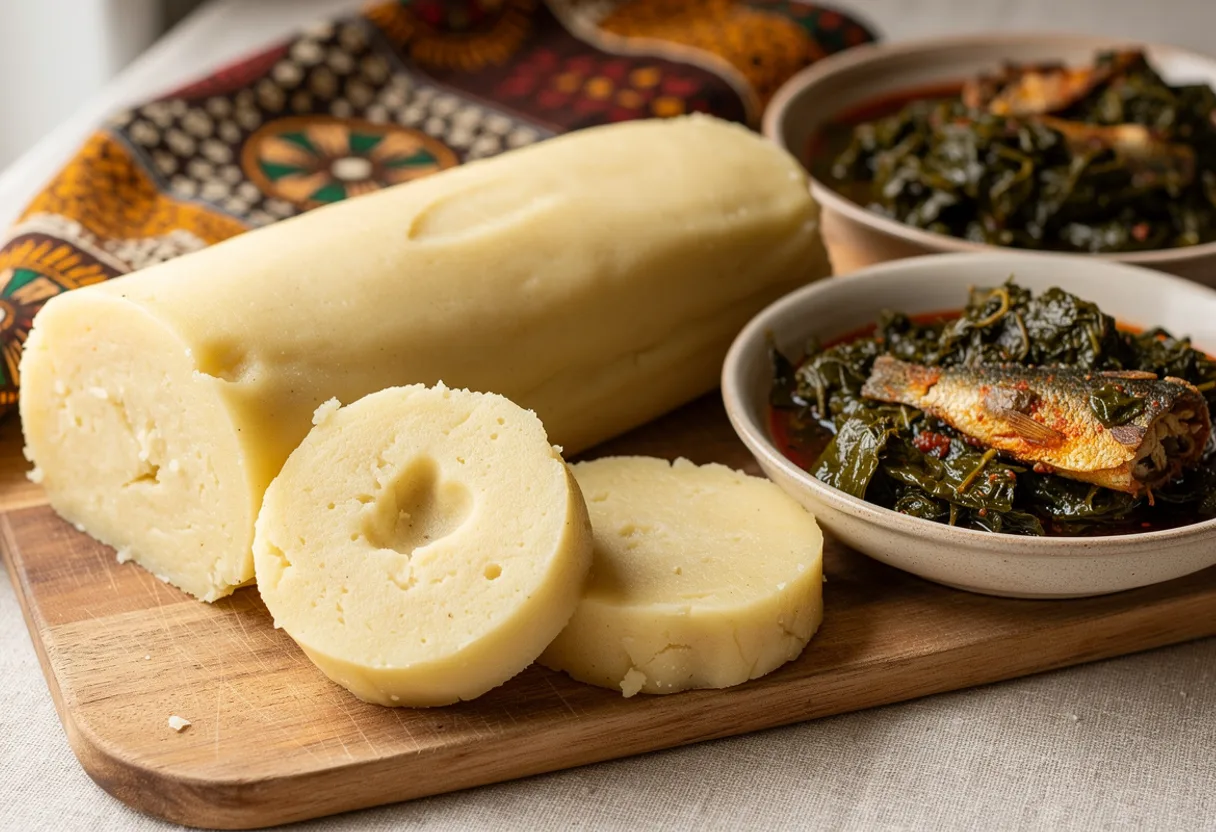
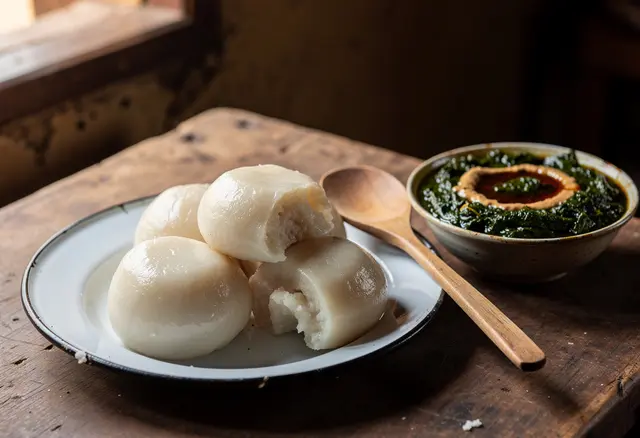
AI-generated illustration
Lituma is the answer to : boiled pounded into a smooth, heavy dough, shaped and set beside the stew. It is eaten in the Democratic Republic of the Congo and across the river in the Republic of the Congo, and it is especially prized by people from the equatorial forests of the central Congo basin.
It is meant to be plain. Unlike sweet fried , lituma is neither sugary nor crisp nor strongly seasoned, though some cooks work a few spices into the paste. Its job is to carry sauce, and in Kinshasa it goes with pondu, the -leaf stew, with fish in sauce and with greens. In some parts of the country the mash is rolled into balls and baked.
Cooks often mix green , which give it body and firmness, with a couple that have just started to ripen, which make it softer without making it sweet.
Saved recipes and passport stamps are kept on this device. Sign in to keep them across your devices and leave reviews.
Make it yours
✓ Naturally vegetarian, vegan and gluten-, dairy-, nut-, egg- and pork-free. No swaps needed.
Toggle a diet and the ingredients rewrite themselves with regional substitutes.
🥕 Vegetarian
🌱 Vegan
🌾 Gluten-Free
🥛 Dairy-Free
🥜 Nut-Free
🥚 Egg-Free
🐖 Pork-Free
Dietary labels are a cooking guide, not allergen-safety advice. We track dairy, egg, gluten, tree nuts and peanuts (we count coconut as a tree nut, following FDA labeling), fish, and shellfish; we do not screen for sesame, soy, mustard, celery, or sulphites. If you have a food allergy, read the label on every product you use, and note that a kitchen can cross-contaminate in ways a recipe cannot control.
Ingredients
US
Metric
Serves 4
- 2 green (unripe)
- 2 slightly ripe , yellow with no black spots
- enough to cover water, for boiling
- 1 tsp vegetable oil or , optional, for your hands
- 1 pinch salt, optional
Instructions
- 1Peel the plantains and cut them into large chunks.✎ Chef’s noteTo peel green plantains, cut off both ends, slit the skin along its length and prise it off with your thumb.
- 2Put them in a pot, cover with water and bring to the boil. Cook for 20 to 25 minutes, until completely soft when pierced and most of the water has boiled away.
- 3Drain, then pound the hot plantain in a mortar, or pulse it in a food processor, until it is smooth, heavy and dough-like, adding the salt if you like.
- 4Spread the mash on a plate for a few minutes to let the steam escape, then, with lightly oiled hands, roll it into a thick log and cut it into portions, or shape it into balls.
- 5Serve warm with pondu, fish or a stew, pinching off pieces to scoop up the sauce.
Congolese home tradition.
Ratings & reviews
Cooked it? Rate this dish:
No account needed. Sign in to leave a full review with a comment.
Cooked it?
Kept on this device, no account needed. Sign in to leave a review and keep your passport across your devices.
No reviews yet, be the first to cook it.
🌏 While it simmers, know your destination
📍
Kinshasa. Kinshasa is a megacity on the Congo River, fed by pondu, cassava leaves pounded and simmered slowly with palm oil and fish. Fufu and chikwangue made from cassava, grilled river fish, and fiery pili pili sauce carry the everyday meal.
🗺️
DR Congo. Chikwangue is not fufu. Cassava is soaked until it ferments, pounded, wrapped tightly in leaves and steamed into a dense, faintly sour loaf that keeps for days without refrigeration and travels well, which is exactly why it exists. Liboke is the same leaf-wrapping logic applied to fish, sealed with chilli and steamed over embers.
🌍
Africa. Much of what reads as timeless African cooking is younger than the Atlantic crossings. Maize, cassava, groundnut, chilli and tomato all arrived from the Americas after 1500 and pushed older crops aside; millet, sorghum, teff, yam and fonio are the ones that were already here, and the map still shows the join.
The story behind this dish is up top, worth a read while the pot works.
More from DR Congo
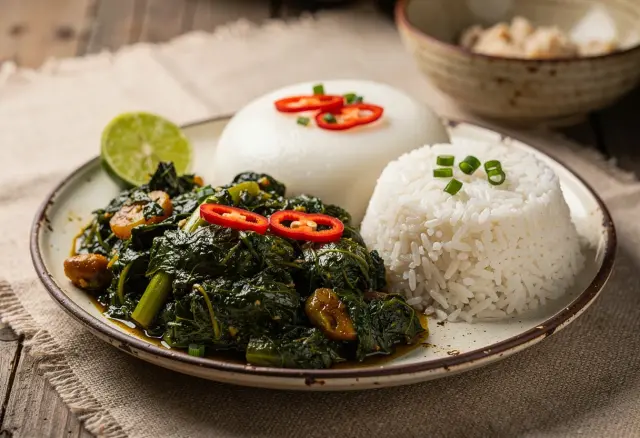
Pondu (Saka Saka)Cassava leaves pounded and simmered with palm oil, eggplant, and smoked richness, the Congo’s daily green.

MikateSweet Congolese fried dough balls, golden, pillowy, and dusted with sugar, for breakfast with tea.
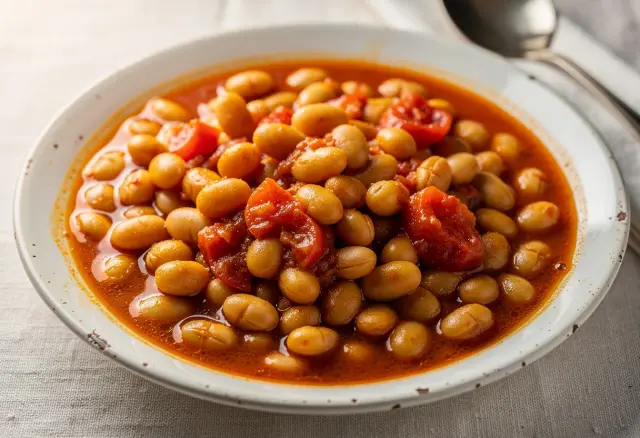
MadesuWhite beans simmered in a savory palm-oil, onion, and tomato sauce, an everyday staple of the DR Congo table.
Browse all DR Congo recipes →
Good to know
You’ll need: Pot or saucepan, Steamer, Food processor, Mortar and pestle.
Storing it: Thickens as it sits. Reheat with extra water or milk to loosen, and keep 2 to 3 days refrigerated.
Make it a DR Congo meal

Tangawisi (Congolese Ginger Tonic)Drink

Ndizi wa Nazi (Plantains in Coconut Milk)Dessert
Similar dishes from around the world
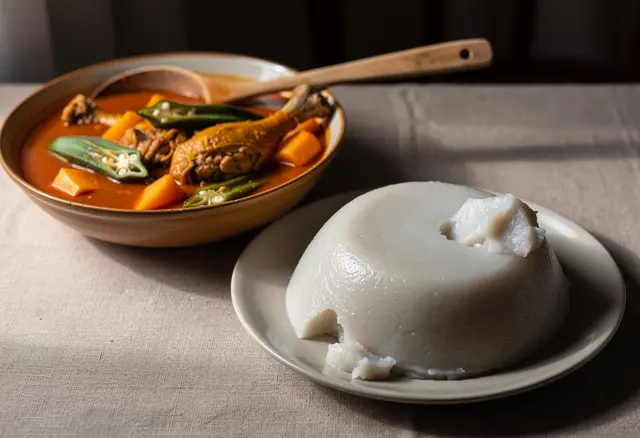
Funge (Angolan Cassava Flour Porridge)Angola
Gozo (Central African Cassava Flour Dough)Central African Republic

Foutou Banane (Ivorian Pounded Plantain and Cassava)Côte d’Ivoire
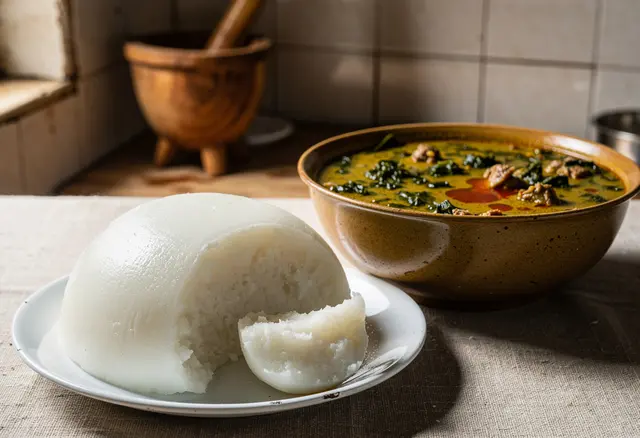
Pounded Yam (Iyan)Nigeria

Angu de Banana (Santomean Mashed Plantain)São Tomé and Príncipe

Foofoo (Sierra Leonean Fermented Cassava)Sierra Leone
Cuisine
Diet
Vegetarian Recipes from Around the World
Vegan Recipes from Around the World
Gluten-Free Recipes from Around the World
Dairy-Free Recipes from Around the World
Nut-Free Recipes from Around the World
Egg-Free Recipes from Around the World
Pork-Free Recipes from Around the World
Vegan Congolese Recipes
Gluten-Free Congolese Recipes
Dairy-Free Congolese Recipes
Frequently asked questions
What is Lituma (Congolese Mashed Plantain)?
Green and just-ripe plantains boiled until soft, then pounded into a smooth, heavy, dough-like mash and shaped to eat with pondu, fish or any Congolese stew.
Where does Lituma (Congolese Mashed Plantain) come from?
Lituma (Congolese Mashed Plantain) is a Congolese dish from Kinshasa, DR Congo.
Can Lituma (Congolese Mashed Plantain) be made vegan, gluten-free, or dairy-free?
This Lituma (Congolese Mashed Plantain) recipe includes substitution suggestions for vegetarian, vegan, gluten-free, dairy-free, nut-free, egg-free, and pork-free versions. Treat the substitutions as a starting guide rather than a guarantee, and see the allergen note below.
Is Lituma (Congolese Mashed Plantain) safe for people with food allergies?
Our dietary labels and substitutions are a cooking guide, not medical or allergen-safety advice. We track dairy, egg, gluten, tree nuts and peanuts (we still count coconut as a tree nut to be cautious, although the FDA stopped listing it as one in 2025), fish, and shellfish, but we do not screen for sesame, soy, mustard, celery, or sulphites. If you have a food allergy, always read the label on every product you use, and remember a home or commercial kitchen can cross-contaminate ingredients in ways a recipe cannot control.
How long does Lituma (Congolese Mashed Plantain) take to make?
About 35 minutes total (10 minutes prep, 25 minutes cooking), serving 4.
Get the Sunday Spin
One dish from somewhere in the world, in your inbox every Sunday. No spam, just dinner inspiration you can cook that day.