
🥔 SIDE
Sahawiq (Yemeni Fresh Chili and Tomato Relish)
Tomato, green chili, garlic, cumin and coriander crushed together into a coarse, fiery fresh relish, spooned beside rice, bread, beans and meat at almost every Yemeni meal.
Yemeni · easy · serves 4
prep 10 min · cook 0 min
~20 cal · 1g protein · 5g carbs · 0g fat · 1g fiber · 2g sugars · 0g sat fat (estimated, per serving)
↓ Jump to Recipe
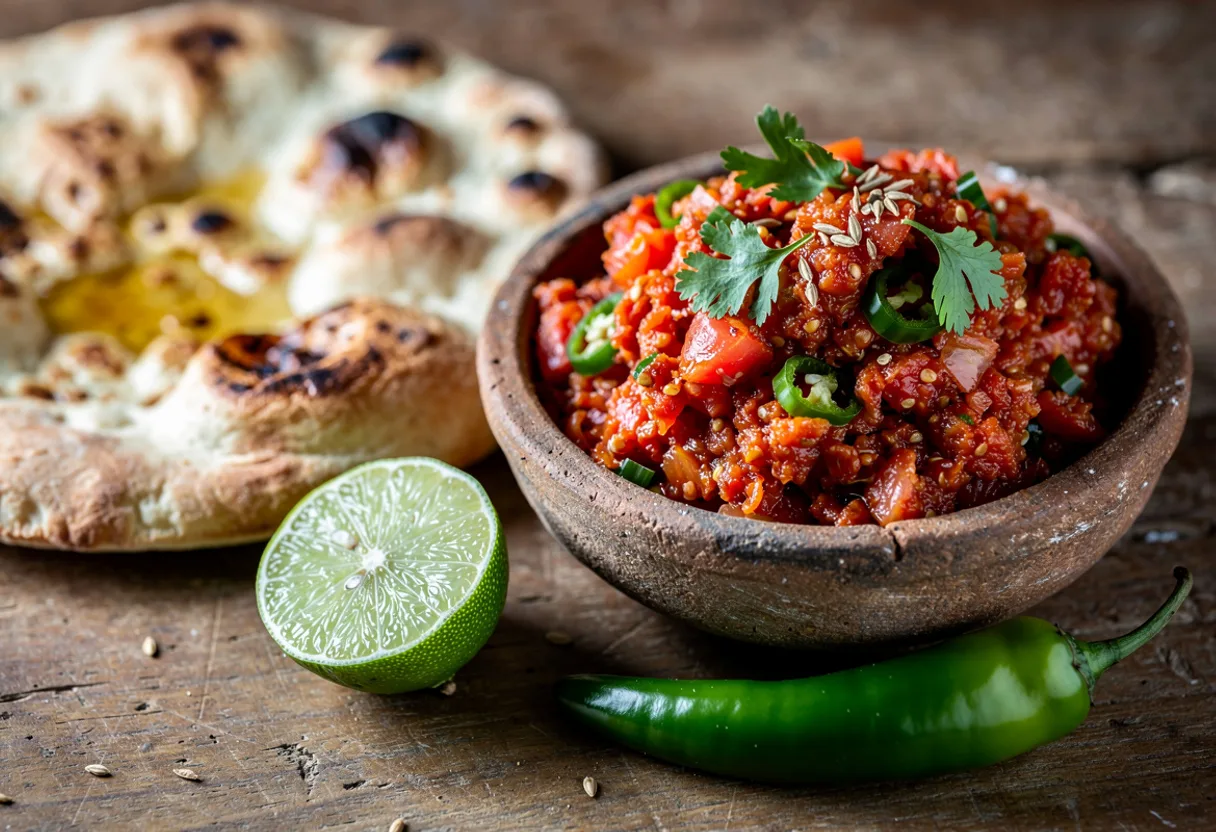
AI-generated illustration
Sahawiq is the fresh relish that sits beside almost every Yemeni meal. Its name comes from an Arabic root meaning to crush or pound, and traditional cooks make it exactly that way, grinding it between two stones: a large flat one called the marha' and a smaller one, the wdi, held in the hand. Today a mortar or a quick pulse in a blender does the job.
The everyday version is simple: a tomato, a green chili, a clove of garlic, a pinch of cumin, salt, often coriander and a squeeze of lemon or lime, crushed to a coarse pulp. It goes with rice, bread, yogurt, beans, fish and meat. A version with white cheese crushed in is eaten with fish, and a greener one of herbs without tomato is served with salads.
Yemenite Jews carried the relish to Israel, where it became known as zhug or skhug. In Yemen it is always made fresh, because it does not keep much beyond a day.
Saved recipes and passport stamps are kept on this device. Sign in to keep them across your devices and leave reviews.
Make it yours
✓ Naturally vegetarian, vegan and gluten-, dairy-, nut-, egg- and pork-free. No swaps needed.
Toggle a diet and the ingredients rewrite themselves with regional substitutes.
🥕 Vegetarian
🌱 Vegan
🌾 Gluten-Free
🥛 Dairy-Free
🥜 Nut-Free
🥚 Egg-Free
🐖 Pork-Free
Dietary labels are a cooking guide, not allergen-safety advice. We track dairy, egg, gluten, tree nuts and peanuts (we count coconut as a tree nut, following FDA labeling), fish, and shellfish; we do not screen for sesame, soy, mustard, celery, or sulphites. If you have a food allergy, read the label on every product you use, and note that a kitchen can cross-contaminate in ways a recipe cannot control.
Ingredients
US
Metric
Serves 4
- 3 medium (about 300 g) ripe tomatoes, chopped
- 2 to 4 fresh green chilies, chopped, to taste
- 3 cloves garlic
- 1/2 tsp cumin seeds or ground cumin
- 1 small bunch (about 20 g) fresh coriander, leaves and tender stems, chopped
- 1 tbsp lemon or lime juice, optional
- 1/2 tsp salt, or to taste
Instructions
- 1Chop the tomatoes, chilies and garlic into small pieces first, so they break down evenly and leave no large lumps.
- 2Put the garlic, chilies, cumin and salt in a mortar and pound them into a rough paste.✎ Chef’s noteA blender works too: pulse for about 30 seconds, no more. Sahawiq should stay coarse, not turn into a smooth sauce.
- 3Add the tomatoes and coriander and keep crushing until the tomato has collapsed into a juicy, chunky pulp.
- 4Stir in the lemon or lime juice if using, taste for salt and heat, and serve at once in a small bowl beside rice, bread, beans or grilled meat.✎ Chef’s noteFor the version eaten with fish, crush in two tablespoons of soft white cheese at the end. Sahawiq is best the day it is made.
Yemeni home tradition.
Ratings & reviews
Cooked it? Rate this dish:
No account needed. Sign in to leave a full review with a comment.
Cooked it?
Kept on this device, no account needed. Sign in to leave a review and keep your passport across your devices.
No reviews yet, be the first to cook it.
🌏 While it simmers, know your destination
📍
Sana’a. The stone pot does real work. A madra carved from soapstone holds heat well enough that the stew keeps bubbling for minutes after it arrives, and bread is torn and dipped straight into it rather than anything being served onto a plate. This is highland cooking, done at over 2,000 metres.
🗺️
Yemen. Yemeni food is rich and communal, famous for saltah (a bubbling stew topped with fenugreek froth), slow-cooked lamb, and the flaky flatbread malawah. The fiery green relish zhug and honey-drenched sweets are national treasures.
🌍
Asia. Asia is the world's largest and most populous continent, and its food spans the delicate seasonality of Japanese washoku, the chili-fired curries of India and Thailand, and the wheat-and-lamb traditions of Central Asia. Rice, noodles, soy, and fermentation recur across its regions, while ancient spice routes and religious traditions shaped distinct grammars of flavor. Whether from a street-cart wok or a monastery kitchen, eating is deeply communal and ritual-rich.
The story behind this dish is up top, worth a read while the pot works.
More from Yemen
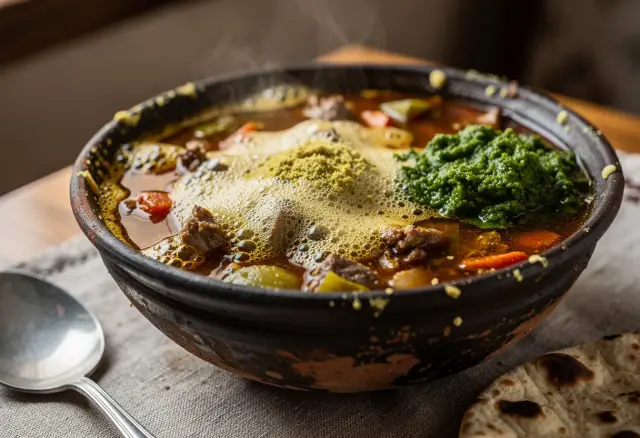
SaltahA bubbling stone-pot stew crowned with whipped fenugreek froth (hulba) and fiery green sahawiq, Yemen’s national dish.
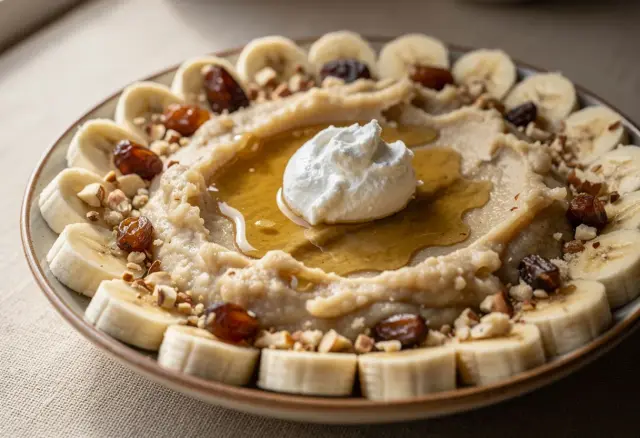
MasoubMashed flatbread and ripe banana bound with honey and topped with cream, nuts, and dates.

MandiSmoky spiced rice and tender meat traditionally cooked in an underground oven, a celebrated dish of Yemen and the Gulf.
Browse all Yemen recipes →
Good to know
You’ll need: Mortar and pestle.
Storing it: Stews and braises keep 3 to 4 days refrigerated and often taste better the next day. Reheat gently, adding a splash of water if it has thickened.
Make it a Yemen meal

QishrDrink

Bint al-SahnDessert
Similar dishes from around the world
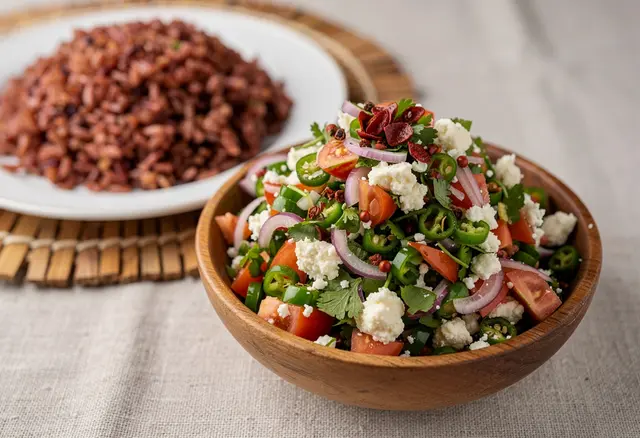
Ezay (Bhutanese Chili and Cheese Relish)Bhutan
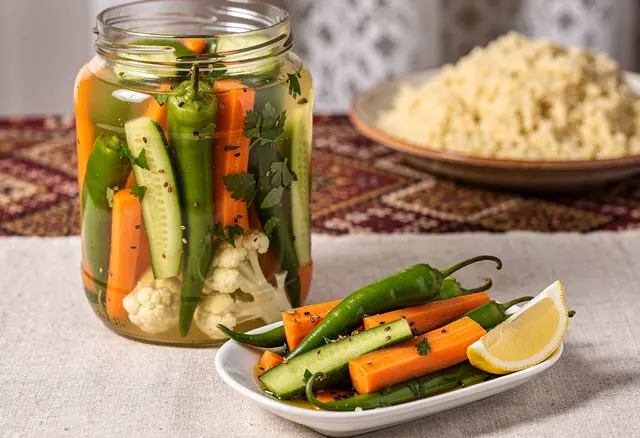
Mseyer (Libyan Quick Pickled Vegetables)Libya
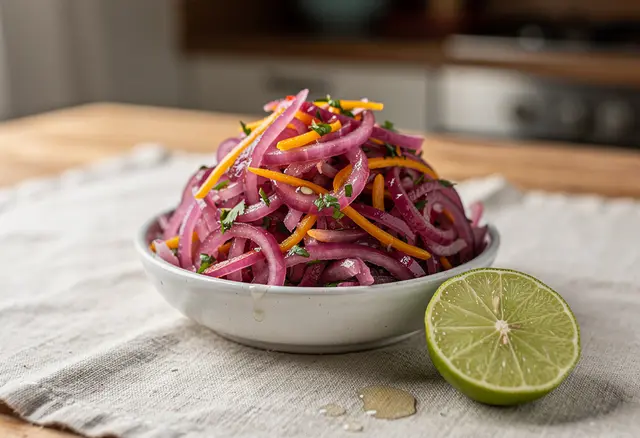
Salsa Criolla (Peruvian Red Onion Relish)Peru
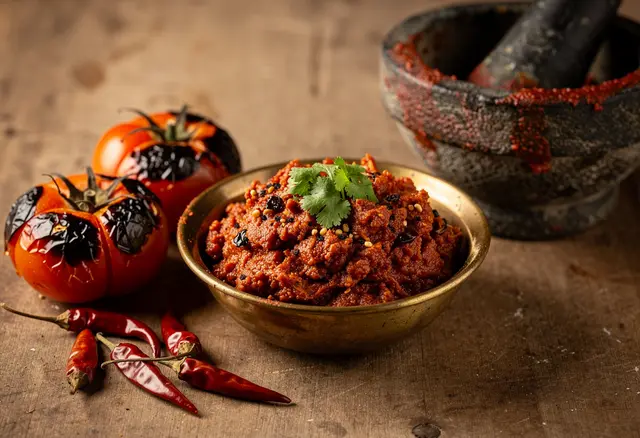
Golbheda ko Achar (Nepali Roasted Tomato Relish)Nepal
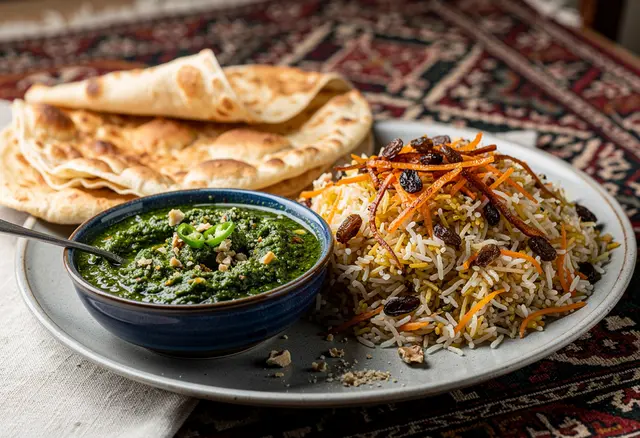
Chatni Gashneez (Afghan Coriander and Walnut Chutney)Afghanistan
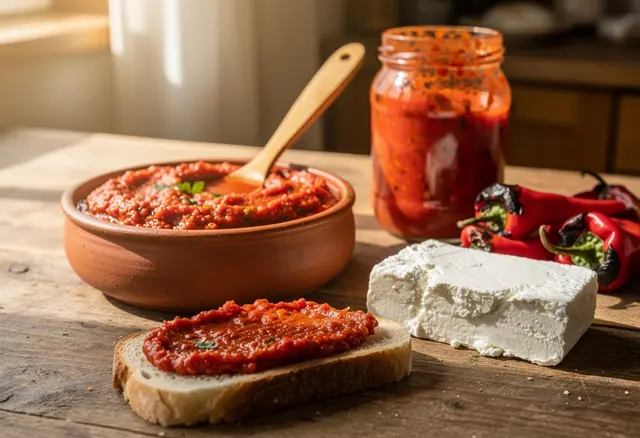
Lyutenitsa (Bulgarian Roasted Pepper and Tomato Relish)Bulgaria
Cuisine
Diet
Frequently asked questions
What is Sahawiq (Yemeni Fresh Chili and Tomato Relish)?
Tomato, green chili, garlic, cumin and coriander crushed together into a coarse, fiery fresh relish, spooned beside rice, bread, beans and meat at almost every Yemeni meal.
Where does Sahawiq (Yemeni Fresh Chili and Tomato Relish) come from?
Sahawiq (Yemeni Fresh Chili and Tomato Relish) is a Yemeni dish from Sana’a, Yemen.
Can Sahawiq (Yemeni Fresh Chili and Tomato Relish) be made vegan, gluten-free, or dairy-free?
This Sahawiq (Yemeni Fresh Chili and Tomato Relish) recipe includes substitution suggestions for vegetarian, vegan, gluten-free, dairy-free, nut-free, egg-free, and pork-free versions. Treat the substitutions as a starting guide rather than a guarantee, and see the allergen note below.
Is Sahawiq (Yemeni Fresh Chili and Tomato Relish) safe for people with food allergies?
Our dietary labels and substitutions are a cooking guide, not medical or allergen-safety advice. We track dairy, egg, gluten, tree nuts and peanuts (we still count coconut as a tree nut to be cautious, although the FDA stopped listing it as one in 2025), fish, and shellfish, but we do not screen for sesame, soy, mustard, celery, or sulphites. If you have a food allergy, always read the label on every product you use, and remember a home or commercial kitchen can cross-contaminate ingredients in ways a recipe cannot control.
How long does Sahawiq (Yemeni Fresh Chili and Tomato Relish) take to make?
About 10 minutes total (10 minutes prep, 0 minutes cooking), serving 4.
Get the Sunday Spin
One dish from somewhere in the world, in your inbox every Sunday. No spam, just dinner inspiration you can cook that day.