
🥔 SIDE
Di Gua Ye (Taiwanese Garlic Sweet Potato Leaves)
Tender sweet potato leaves and shoots stir-fried in a very hot wok with plenty of garlic and a splash of water until just wilted, silky and bright green.
Taiwanese · easy · serves 4
prep 10 min · cook 5 min
~100 cal · 3g protein · 7g carbs · 7g fat · 4g fiber · 1g sugars · 1g sat fat (estimated, per serving)
↓ Jump to Recipe
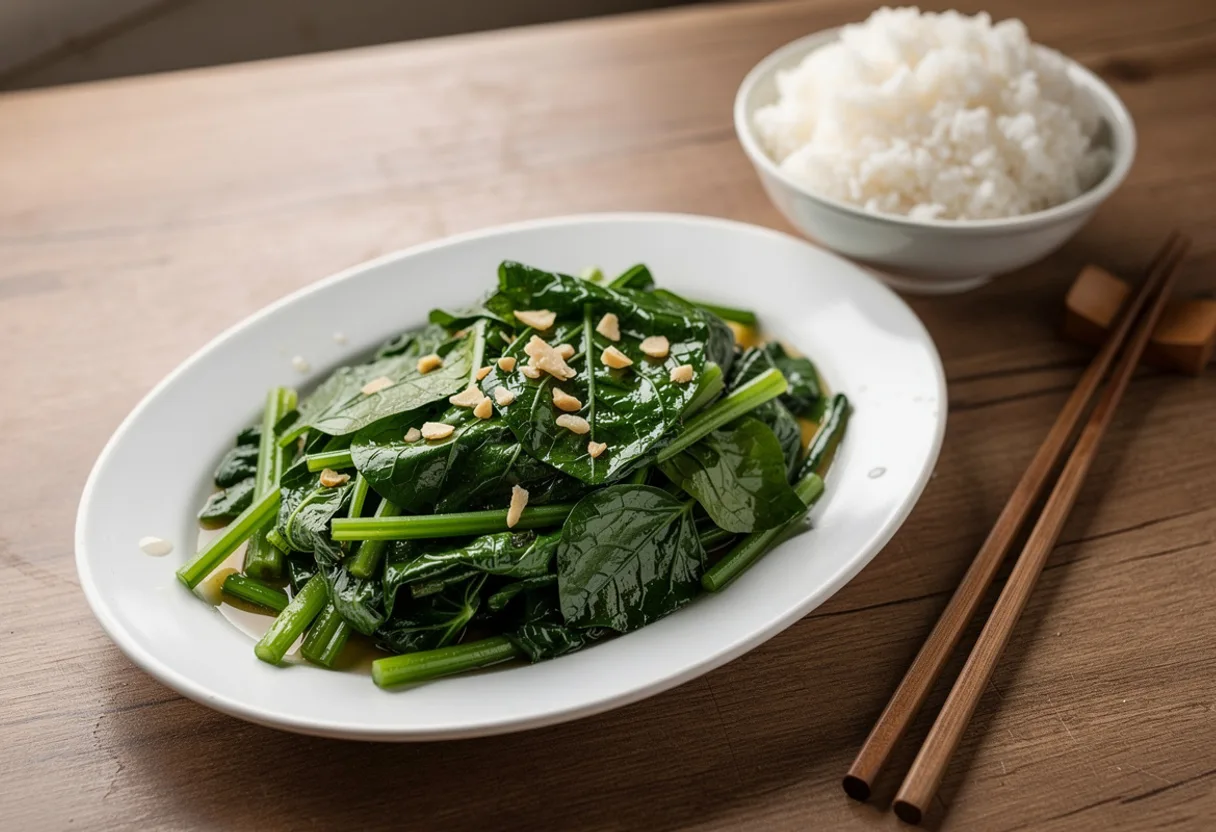
AI-generated illustration
Di gua ye, sweet potato leaves, are one of the most Taiwanese of vegetables. Not long ago they were thought of as pig feed, and older Taiwanese remember them as a food of hard times; now they are on the table in homes, lunch-box shops and stir-fry restaurants across the island, usually as the plate of greens that goes with rice and a few other dishes.
They are cooked simply: the tender leaves and top shoots are picked from the tough stems and thrown into a smoking wok with a lot of garlic, a little salt and a splash of water, and tossed for a minute or two until they wilt and turn silky. Another common Taiwanese way is to blanch them for under a minute and dress them with garlic oil, sesame oil and a savoury sauce.
The leaves are mild, a little earthy and slightly slippery once cooked, and they should be eaten straight from the wok while still bright green.
Saved recipes and passport stamps are kept on this device. Sign in to keep them across your devices and leave reviews.
Make it yours
✓ Naturally vegetarian, vegan and gluten-, dairy-, nut-, egg- and pork-free. No swaps needed.
Toggle a diet and the ingredients rewrite themselves with regional substitutes.
🥕 Vegetarian
🌱 Vegan
🌾 Gluten-Free
🥛 Dairy-Free
🥜 Nut-Free
🥚 Egg-Free
🐖 Pork-Free
Dietary labels are a cooking guide, not allergen-safety advice. We track dairy, egg, gluten, tree nuts and peanuts (we count coconut as a tree nut, following FDA labeling), fish, and shellfish; we do not screen for sesame, soy, mustard, celery, or sulphites. If you have a food allergy, read the label on every product you use, and note that a kitchen can cross-contaminate in ways a recipe cannot control.
Ingredients
US
Metric
Serves 4
- 400 g sweet potato leaves (di gua ye)Hard to find? 400 g water spinach or young spinach - water spinach is the closest in texture; spinach is softer and cooks in half the time
- 5 garlic cloves, chopped
- 2 tbsp
- 1/2 tsp salt
- 3 tbsp water
Instructions
- 1Pick the tender leaves and the top 10 cm or so of the shoots from the sweet potato stems, discarding the tough lower stems. Wash well in several changes of water and drain.
- 2Heat a wok over high heat until it smokes, add the oil and the garlic and stir-fry for 20 to 30 seconds, until fragrant and just starting to colour.
- 3Add the leaves all at once with the salt and the water, and toss constantly for 1 to 2 minutes, until they have just wilted and turned deep green.✎ Chef’s noteDo not cover or walk away. Sweet potato leaves go from silky to dark and slimy in a minute, and they carry on softening on the plate.
- 4Tip onto a plate at once and serve hot with rice.
Taiwanese home and stir-fry restaurant tradition.
Ratings & reviews
Cooked it? Rate this dish:
No account needed. Sign in to leave a full review with a comment.
Cooked it?
Kept on this device, no account needed. Sign in to leave a review and keep your passport across your devices.
No reviews yet, be the first to cook it.
🌏 While it simmers, know your destination
📍
Taipei. Taiwanese cooking carries a Japanese layer from fifty years of colonial rule, visible in the boxed lunch, in the taro and sweet potato sweets and in the shaved ice eaten through the summer. The Chinese regional cooking arrived separately and later, after 1949, with well over a million people from across the mainland.
🗺️
Taiwan. Beef noodle soup is a post-1949 dish. It arrived with the Nationalist retreat, when well over a million mainlanders came to an island where beef was barely eaten, and the leading account traces the Sichuan-style version to military dependants' villages around Gangshan in the south, where the spicy broad-bean paste it depends on is a local speciality. That account is a scholar's argument, not a settled fact.
🌍
Asia. A grain line runs across the continent. Rice dominates the wet south and east, wheat the drier north and west, and the tools follow it: the wok and the steamer where rice is milled, the tandoor and the griddle where wheat is ground. Tea travels the other way, drunk green, black, salted, buttered or with milk depending how far it got from China.
The story behind this dish is up top, worth a read while the pot works.
More from Taiwan
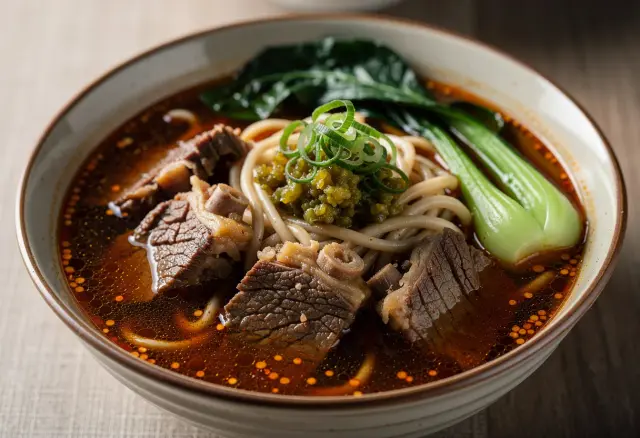
Taiwanese Beef Noodle SoupChewy wheat noodles in a dark, star-anise beef broth with melting shank and pickled mustard greens.

Dan BingA soft, chewy egg crepe rolled up and sliced, Taiwan's favorite hot breakfast off the griddle.
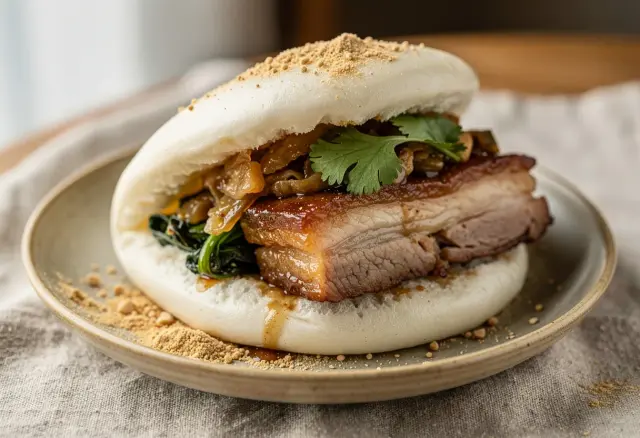
Gua Bao (Pork Belly Buns)Taiwan’s famous night-market bun: a pillowy folded steamed bun cradling red-braised pork belly, tangy pickled mustard greens, cilantro, and sweet peanut powder.
Browse all Taiwan recipes →
Good to know
You’ll need: Wok.
Storing it: Stews and braises keep 3 to 4 days refrigerated and often taste better the next day. Reheat gently, adding a splash of water if it has thickened.
Make it a Taiwan meal
Bubble TeaDrink
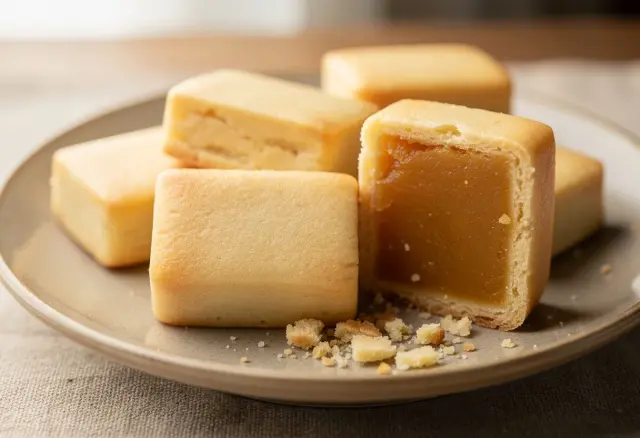
Pineapple CakeDessert
Similar dishes from around the world

Rau Muống Xào Tỏi (Stir-Fried Water Spinach with Garlic)Vietnam

Espinacs a la Catalana (Spinach with Raisins and Pine Nuts)Andorra
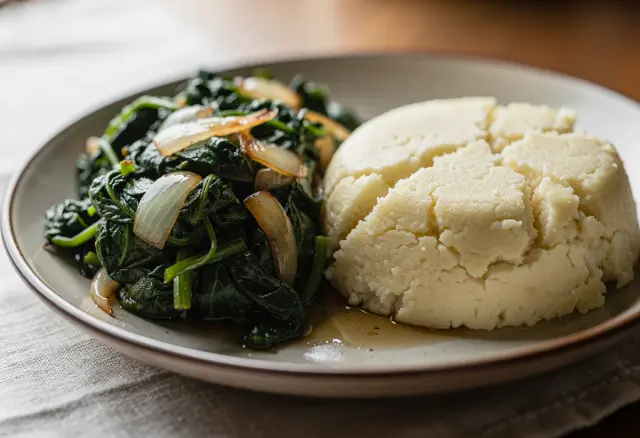
MorohoLesotho
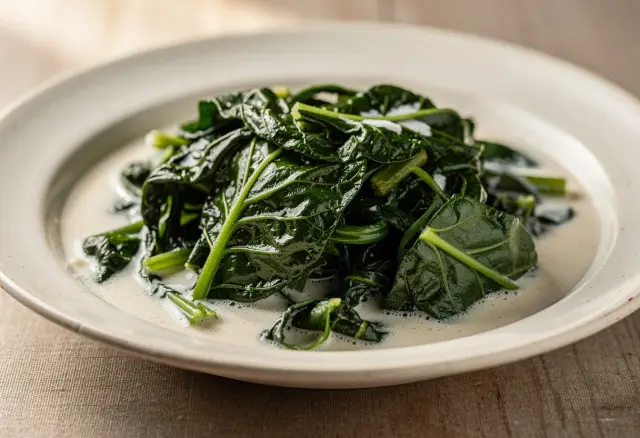
Rukau (Taro Leaves in Coconut Cream)Cook Islands

Therere (Malawian Okra Relish)Malawi
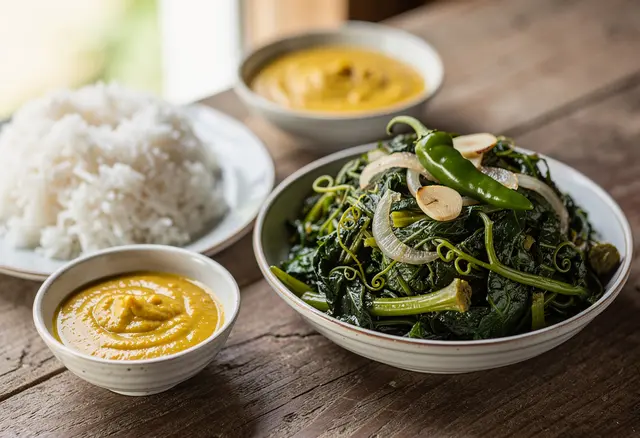
Toufé Brèdes (Mauritian Smothered Greens)Mauritius
Cuisine
Diet
Frequently asked questions
What is Di Gua Ye (Taiwanese Garlic Sweet Potato Leaves)?
Tender sweet potato leaves and shoots stir-fried in a very hot wok with plenty of garlic and a splash of water until just wilted, silky and bright green.
Where does Di Gua Ye (Taiwanese Garlic Sweet Potato Leaves) come from?
Di Gua Ye (Taiwanese Garlic Sweet Potato Leaves) is a Taiwanese dish from Taipei, Taiwan.
Can Di Gua Ye (Taiwanese Garlic Sweet Potato Leaves) be made vegan, gluten-free, or dairy-free?
This Di Gua Ye (Taiwanese Garlic Sweet Potato Leaves) recipe includes substitution suggestions for vegetarian, vegan, gluten-free, dairy-free, nut-free, egg-free, and pork-free versions. Treat the substitutions as a starting guide rather than a guarantee, and see the allergen note below.
Is Di Gua Ye (Taiwanese Garlic Sweet Potato Leaves) safe for people with food allergies?
Our dietary labels and substitutions are a cooking guide, not medical or allergen-safety advice. We track dairy, egg, gluten, tree nuts and peanuts (we still count coconut as a tree nut to be cautious, although the FDA stopped listing it as one in 2025), fish, and shellfish, but we do not screen for sesame, soy, mustard, celery, or sulphites. If you have a food allergy, always read the label on every product you use, and remember a home or commercial kitchen can cross-contaminate ingredients in ways a recipe cannot control.
How long does Di Gua Ye (Taiwanese Garlic Sweet Potato Leaves) take to make?
About 15 minutes total (10 minutes prep, 5 minutes cooking), serving 4.
Get the Sunday Spin
One dish from somewhere in the world, in your inbox every Sunday. No spam, just dinner inspiration you can cook that day.