Africa → South Africa → KwaZulu-Natal

🍢 SNACK
Biltong (South African Air-Dried Beef)
Thick strips of beef cured with coarse salt, toasted coriander, black pepper and vinegar, then hung to air-dry for days until dark outside and still tender within, sliced thin to eat.
South African · medium · serves 8
prep 30 min · cook 3 min · plus 4.5 days hands-off time
~321 cal · 33g protein · 2g carbs · 19g fat · 0g fiber · 2g sugars · 8g sat fat (estimated, per serving)
↓ Jump to Recipe
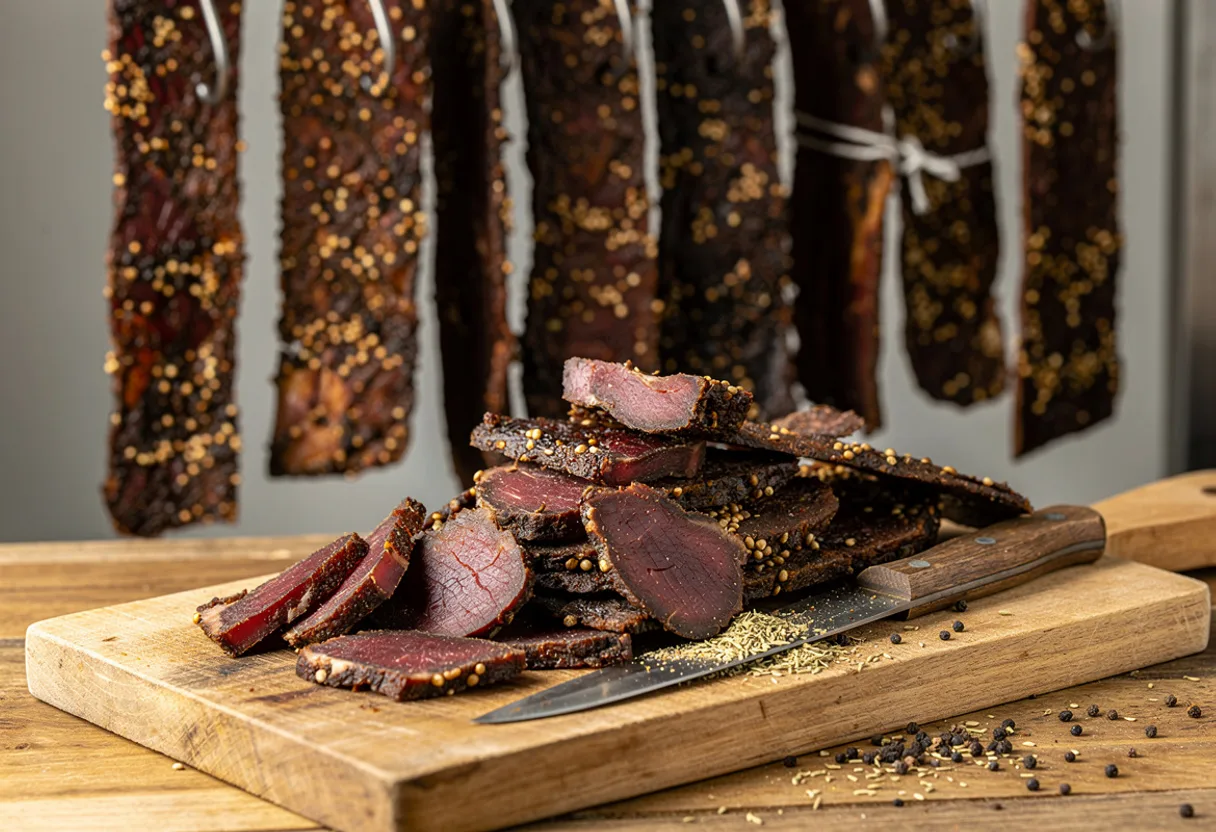
AI-generated illustration
Biltong is South Africa's snack of , air-dried meat. The name is Afrikaans, from bil, rump, and tong, strip. Long strips of beef or game are rubbed with salt, vinegar, black pepper and roasted coriander and hung to dry in cool, moving air, never heated. That sets it apart from jerky, which is cooked or smoked: biltong stays tender, and many South Africans like it still pink and moist in the middle.
Drying meat to keep it goes back a long way in southern Africa. Early European settlers most likely adopted the preserving methods of the region's indigenous peoples, and biltong sustained the Boer commandos across the veld during the Second Boer War. Traditionally it was made in the cold, dry winter of the Highveld, when the air did the work safely. The vinegar and coriander are not only for flavour: both help keep harmful bacteria in check.
Today it is eaten above all as a snack, sliced thin or in sticks, and also turns up in stews and sandwiches. Home cooks dry it in a biltong box, a simple ventilated cabinet with a light bulb or a small fan.
Saved recipes and passport stamps are kept on this device. Sign in to keep them across your devices and leave reviews.
Make it yours
✓ Naturally gluten-, dairy-, nut-, egg- and pork-free. No swaps needed.
Toggle a diet and the ingredients rewrite themselves with regional substitutes.
🥕 Vegetarian
🌱 Vegan
🌾 Gluten-Free
🥛 Dairy-Free
🥜 Nut-Free
🥚 Egg-Free
🐖 Pork-Free
Dietary labels are a cooking guide, not allergen-safety advice. We track dairy, egg, gluten, tree nuts and peanuts (we count coconut as a tree nut, following FDA labeling), fish, and shellfish; we do not screen for sesame, soy, mustard, celery, or sulphites. If you have a food allergy, read the label on every product you use, and note that a kitchen can cross-contaminate in ways a recipe cannot control.
Ingredients
US
Metric
Serves 8
- 1 kg (2.2 lb) beef silverside, topside or rump, in one piece
- 40 g (about 2 1/2 tbsp) coarse salt
- 3 tbsp whole coriander seeds
- 1 tbsp black peppercorns, coarsely cracked
- 1 tbsp brown sugar
- 125 ml (1/2 cup) brown or red wine vinegar
Instructions
- 1Trim off any sinew but keep a little fat. Cut the beef along the grain into strips about 2 to 3 cm thick and 5 cm wide.✎ Chef’s noteCutting with the grain keeps the strips whole as they dry; you slice across the grain only when you eat it.
- 2Toast the coriander seeds in a dry pan for 2 to 3 minutes until fragrant, cool them and crush them coarsely. Mix with the salt, pepper and sugar.
- 3Lay the strips in a glass or ceramic dish, sprinkle each layer with vinegar and rub it all over with the spice mix. Cover and leave to cure in the fridge for 12 hours, turning the strips once.
- 4Lift out the strips, dip each briefly in a little extra vinegar mixed with water to rinse off the excess salt, and pat dry. Press on any spice that fell off.
- 5Hang the strips on hooks, not touching, in a biltong box or another cool, dry, airy place with a gentle flow of air, and leave to dry for 4 to 6 days, until dark and firm outside. Check them from day 3: squeeze for the moist or dry texture you like.✎ Chef’s noteAirflow matters more than heat. In a humid kitchen use a biltong box with a fan, and discard any strip that grows fluffy mould.
- 6Slice thinly across the grain and eat as a snack. It keeps for about a week in a paper bag in a cool place, or longer in the fridge.
South African tradition.
Ratings & reviews
Cooked it? Rate this dish:
No account needed. Sign in to leave a full review with a comment.
Cooked it?
Kept on this device, no account needed. Sign in to leave a review and keep your passport across your devices.
No reviews yet, be the first to cook it.
🌏 While it simmers, know your destination
📍
KwaZulu-Natal. KwaZulu-Natal fuses Zulu and Indian traditions, most famously in Durban's bunny chow, a hollowed bread loaf filled with curry. Sugarcane coast and township kitchens define its spicy table.
🗺️
South Africa. The braai is a social form as much as a cooking method. Boerewors, a coiled sausage sold by length rather than by weight, goes on the coals beside chops and skewered sosaties, and pap, stiff maize porridge, waits alongside with chakalaka, a spiced relish of onion, pepper, carrot and beans, to be eaten together by hand.
🌍
Africa. Africa's fifty-four nations hold cuisines as different as Morocco's slow-cooked tagines and South Africa's open-fire braai, yet shared threads run through them: ancient grains like millet, sorghum, and teff; stews thickened with groundnut, okra, or palm; and fiery condiments from Tunisian harissa to Ethiopian berbere. Staple starches, fufu, injera, ugali, couscous, anchor communal meals often eaten by hand from a shared dish, where hospitality is a point of honor.
The story behind this dish is up top, worth a read while the pot works.
More from South Africa
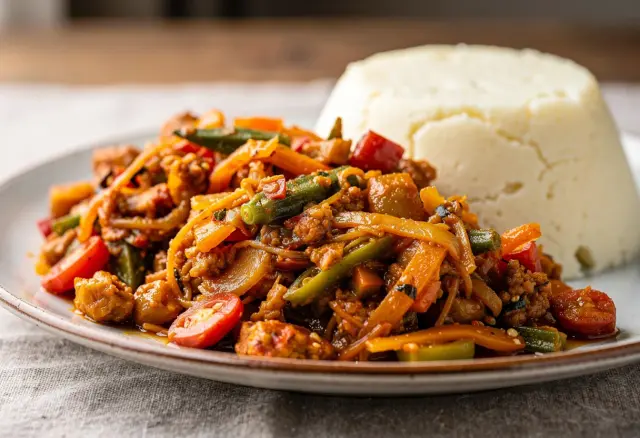
Chakalaka & PapA punchy curried vegetable-and-bean relish beside smooth white maize porridge, braai-day essentials.
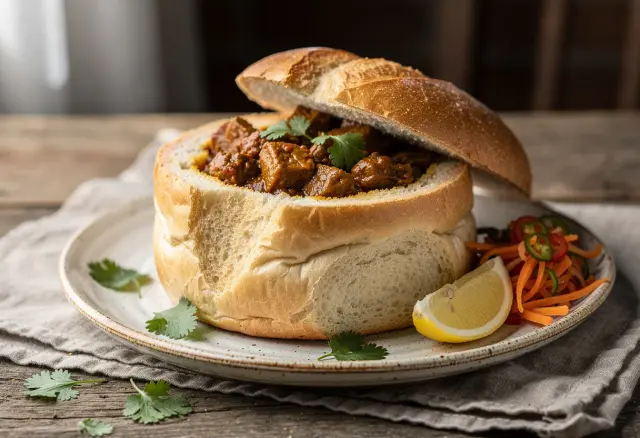
Bunny ChowA hollowed half-loaf of bread filled with fiery Durban curry, the ultimate hand-held street meal.
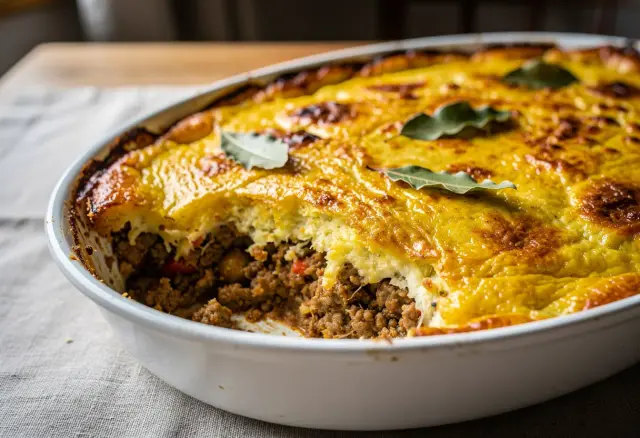
BobotieCurried spiced mince baked under a golden savory custard, sweet with dried fruit and fragrant with bay, South Africa’s national comfort.
Browse all South Africa recipes →
Good to know
Storing it: Fried food is best eaten fresh while crisp. Re-crisp leftovers in a hot oven or air fryer; the microwave makes them soft.
Make it a South Africa meal

Rooibos Iced TeaDrink
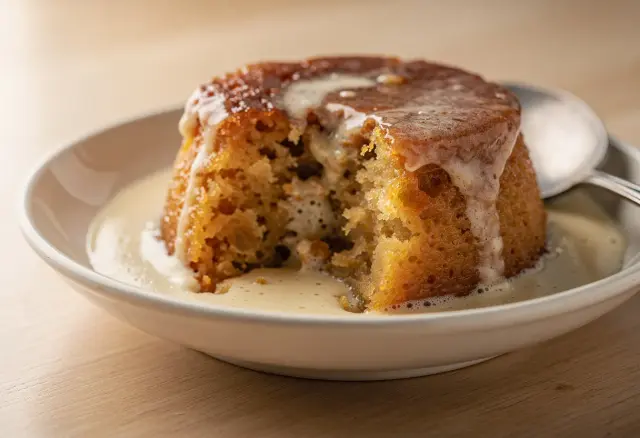
Malva PuddingDessert
Similar dishes from around the world
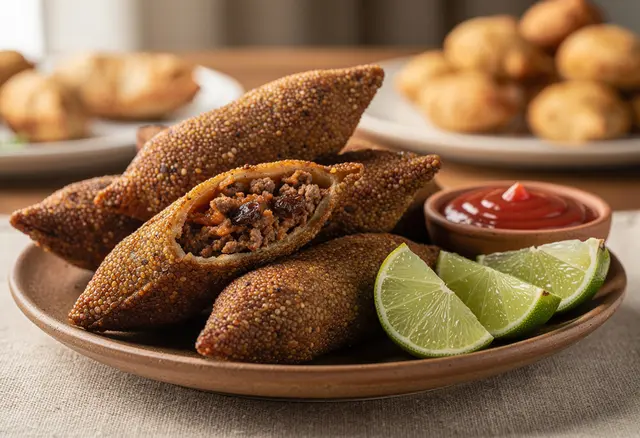
Quipes (Dominican Bulgur and Beef Fritters)Dominican Republic
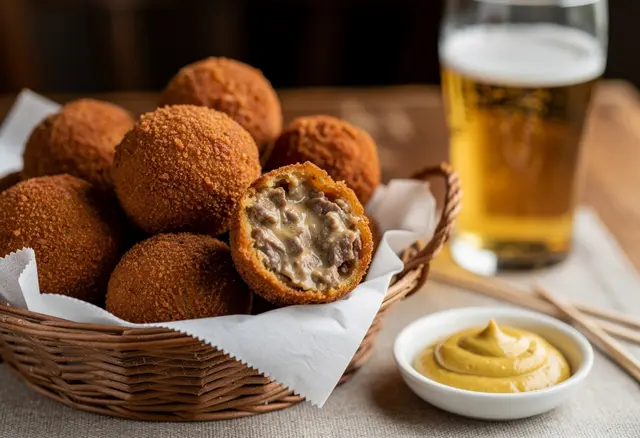
Bitterballen (Dutch Beef Ragout Croquettes)Netherlands
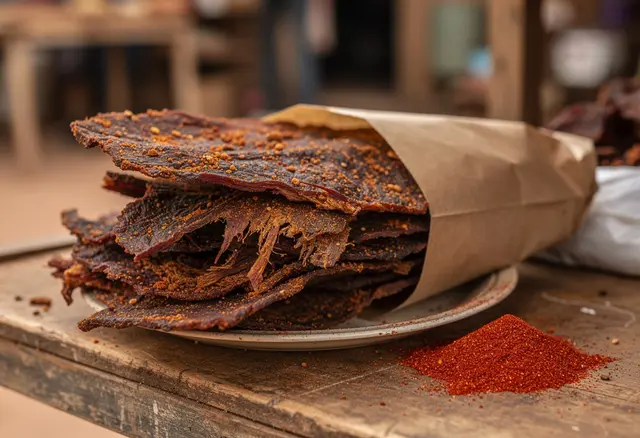
Kilishi (Nigerien Spiced Dried Beef)Niger

Carimañolas (Panamanian Beef-Stuffed Yuca Fritters)Panama

Empanadas ColombianasColombia

Frieten (Belgian Twice-Fried Chips)Belgium
Cuisine
Diet
Frequently asked questions
What is Biltong (South African Air-Dried Beef)?
Thick strips of beef cured with coarse salt, toasted coriander, black pepper and vinegar, then hung to air-dry for days until dark outside and still tender within, sliced thin to eat.
Where does Biltong (South African Air-Dried Beef) come from?
Biltong (South African Air-Dried Beef) is a South African dish from KwaZulu-Natal, South Africa.
Can Biltong (South African Air-Dried Beef) be made vegan, gluten-free, or dairy-free?
This Biltong (South African Air-Dried Beef) recipe includes substitution suggestions for vegetarian, vegan, gluten-free, dairy-free, nut-free, egg-free, and pork-free versions. Treat the substitutions as a starting guide rather than a guarantee, and see the allergen note below.
Is Biltong (South African Air-Dried Beef) safe for people with food allergies?
Our dietary labels and substitutions are a cooking guide, not medical or allergen-safety advice. We track dairy, egg, gluten, tree nuts and peanuts (we still count coconut as a tree nut to be cautious, although the FDA stopped listing it as one in 2025), fish, and shellfish, but we do not screen for sesame, soy, mustard, celery, or sulphites. If you have a food allergy, always read the label on every product you use, and remember a home or commercial kitchen can cross-contaminate ingredients in ways a recipe cannot control.
How long does Biltong (South African Air-Dried Beef) take to make?
About 4.5 days in all: 30 minutes prep and 3 minutes cooking, plus 4.5 days of hands-off waiting the method needs, serving 8.
Get the Sunday Spin
One dish from somewhere in the world, in your inbox every Sunday. No spam, just dinner inspiration you can cook that day.