
🥙 LUNCH
Himmel un Ääd (Heaven and Earth with Blood Sausage)
Buttery mashed potatoes with a chunky sweet-sour apple compote, crisp slices of fried blood sausage and a heap of golden onions, the Cologne brewhouse classic.
German (Rhineland) · easy · serves 4
prep 20 min · cook 35 min
~905 cal · 20g protein · 98g carbs · 49g fat · 13g fiber · 39g sugars · 21g sat fat (estimated, per serving)
↓ Jump to Recipe
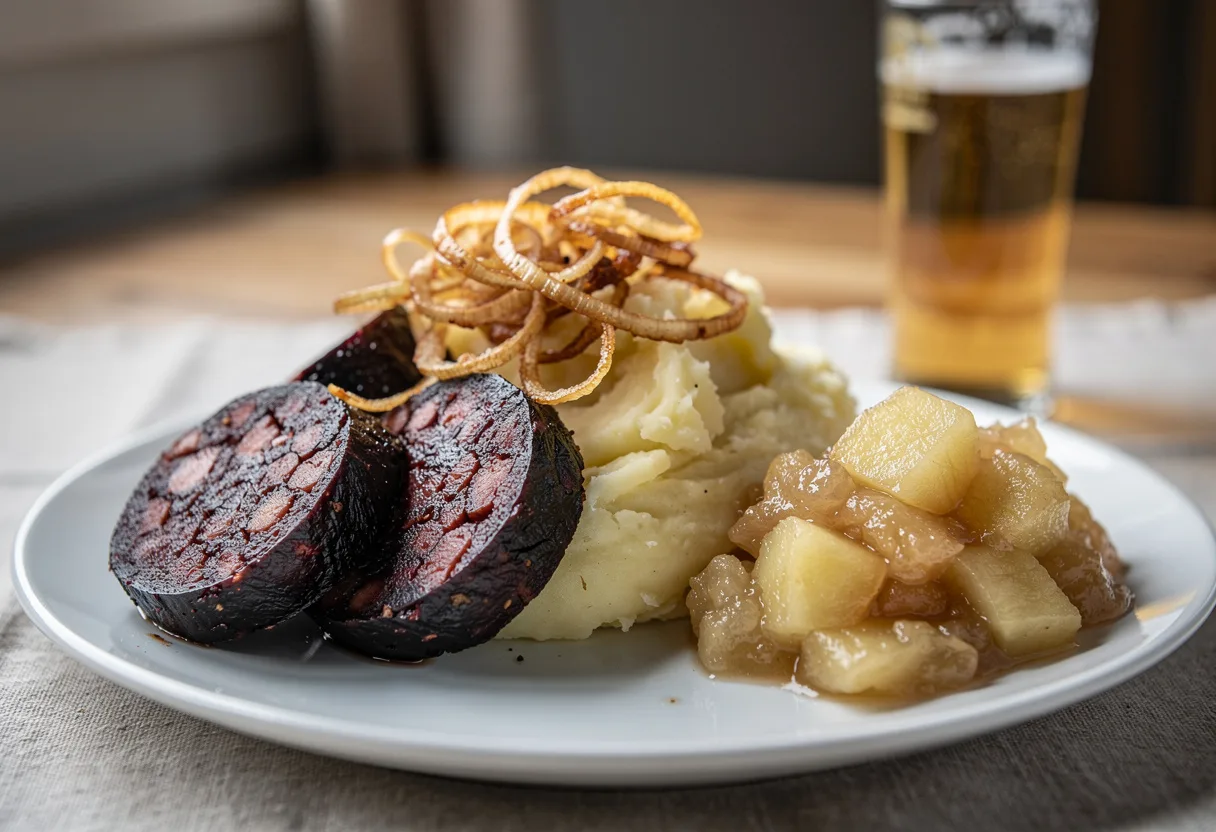
AI-generated illustration
Himmel un Ääd is Cologne dialect for Himmel und Erde, heaven and earth. The heaven is apples, which grow up in the trees; the earth is potatoes, once called Erdäpfel, earth apples. Put together on one plate they make one of the best-known dishes of the Rhineland, known since the 18th century and eaten across the Rhineland, Westphalia and Lower Saxony.
In Cologne the dish comes with Flönz, the local name for a soft blood sausage made from pork blood, bacon and spices. It is sliced, dusted with flour and fried until the edges crisp, then laid over the mash with onions fried slowly in butter until golden.
It began as cheap working-class food and is now a fixture on the menus of Cologne's old brewhouses, eaten with a small glass of Kölsch. Some cooks fold the apple through the potatoes, others keep the two side by side so each forkful can be balanced to taste.
Saved recipes and passport stamps are kept on this device. Sign in to keep them across your devices and leave reviews.
Make it yours
✓ Naturally nut- and egg-free. No swaps needed.
Toggle a diet and the ingredients rewrite themselves with regional substitutes.
🥕 Vegetarian
🌱 Vegan
🌾 Gluten-Free
🥛 Dairy-Free
🥜 Nut-Free
🥚 Egg-Free
🐖 Pork-Free
Dietary labels are a cooking guide, not allergen-safety advice. We track dairy, egg, gluten, tree nuts and peanuts (we count coconut as a tree nut, following FDA labeling), fish, and shellfish; we do not screen for sesame, soy, mustard, celery, or sulphites. If you have a food allergy, read the label on every product you use, and note that a kitchen can cross-contaminate in ways a recipe cannot control.
Ingredients
US
Metric
Serves 4
- 1 kg floury potatoes, peeled and cut into chunks
- 150 ml whole milk, warmed
- 70 g butter, divided
- a pinch nutmeg, freshly grated
- 750 g tart apples (such as Boskoop), peeled, cored and diced
- 150 ml apple juice
- 1 to 2 tbsp sugar, to taste
- 1 tbsp lemon juice
- 3 onions, sliced into thin rings
- 400 g Flönz or German blood sausage (Blutwurst), skinned and sliced 1.5 cm thick, Rhineland Flönz is traditionally made without grain, unlike British black pudding; if you avoid gluten, check the label
- 2 tbsp plain flour, for dusting
- 2 tbsp sunflower oil, for frying
- to taste salt and black pepper
Instructions
- 1Boil the potatoes in salted water until completely soft, about 20 minutes.
- 2Meanwhile put the apples in a saucepan with the apple juice, sugar and lemon juice, cover, and simmer 10 to 12 minutes until soft but still a little chunky. Taste: it should be sweet-sour, not sugary.
- 3Melt 30 g of the butter in a frying pan and cook the onion rings slowly over medium-low heat, stirring now and then, for about 15 minutes until soft and golden brown. Season with salt.
- 4Drain the potatoes, let them steam dry for a minute, then mash with the warm milk and the remaining butter. Season with salt, pepper and nutmeg and keep warm.
- 5Dust the blood-sausage slices lightly with flour and fry them in the oil over moderate heat for 2 to 3 minutes a side until crisp at the edges.✎ Chef’s noteKeep the heat moderate: blood sausage is already cooked and bursts if the pan is fierce.
- 6Plate the mash with the apple compote beside it (or folded through, as many Cologne cooks do), lay the blood sausage on top and heap the onions over everything. Serve at once.
Cologne and Rhineland brewhouse tradition.
Ratings & reviews
Cooked it? Rate this dish:
No account needed. Sign in to leave a full review with a comment.
Cooked it?
Kept on this device, no account needed. Sign in to leave a review and keep your passport across your devices.
No reviews yet, be the first to cook it.
🌏 While it simmers, know your destination
📍
Rhineland. The Rhenish sauerbraten is the version thickened with crumbled Lebkuchen and sweetened with raisins and sugar-beet syrup, which is what marks it off from the Swabian one bound with flour, the Franconian with soured cream and the Saxon with beer. The marinade runs four days or longer.
🗺️
Germany. The German bread register lists more than three thousand two hundred distinct varieties, which is less a boast than a consequence of rye, spelt and mixed grains being taken as seriously as wheat and of every region having kept its own. The country's bread culture is recognised as national intangible heritage in its own right.
🌍
Europe. Europe has written a great deal of its food into law. A regulation of 1992 created the protected designation of origin and the protected geographical indication, tying a name to a place and a method, and an EU evaluation published in 2021 counted more than three thousand registered names across those schemes, from cheeses and hams down to particular shapes of bread.
The story behind this dish is up top, worth a read while the pot works.
More from Germany
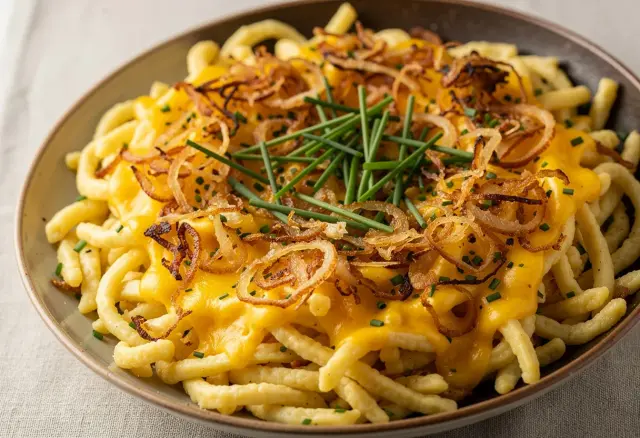
KäsespätzleFresh egg noodles scraped into boiling water, layered with alpine cheese and buried in crispy onions.

Schnitzel (Schweineschnitzel)The German pork schnitzel: a thin cutlet pounded flat, breaded in a loose golden crust, and fried until crisp, served with a wedge of lemon.
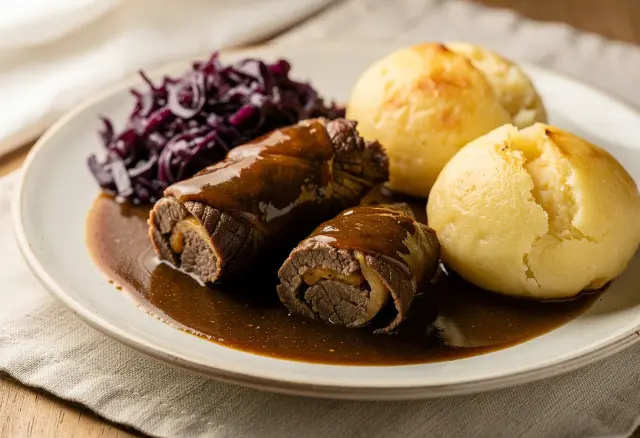
RinderrouladenThin beef rolled around mustard, bacon, onion, and pickle, braised into a deep gravy, Sunday dinner across Germany.
Browse all Germany recipes →
Good to know
You’ll need: Skillet or frying pan, Pot or saucepan, Steamer.
Storing it: Fried food is best eaten fresh while crisp. Re-crisp leftovers in a hot oven or air fryer; the microwave makes them soft.
Make it a Germany meal

Glühwein (German Mulled Wine)Drink
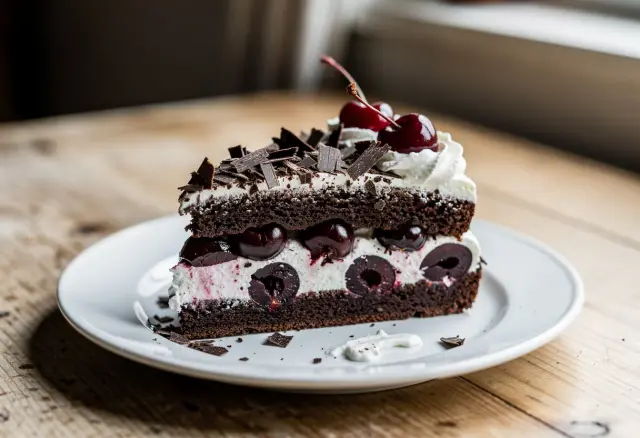
Schwarzwälder KirschtorteDessert
RinderrouladenDinner
Similar dishes from around the world
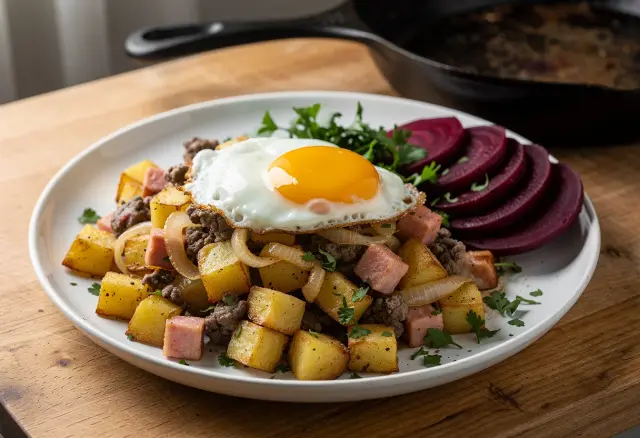
Pyttipanna (Swedish Hash with Fried Egg)Sweden
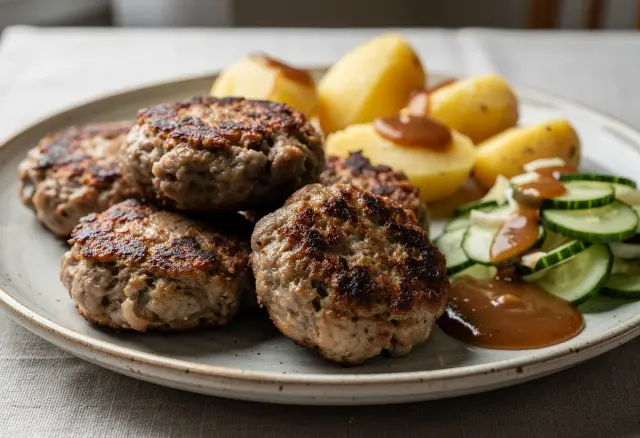
FrikadellerDenmark
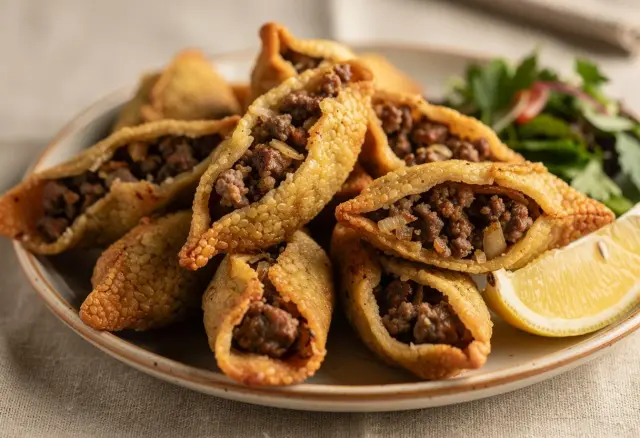
KoupesCyprus

UitsmijterNetherlands

TonkatsuJapan

Tierteg (Luxembourg Mashed Potatoes with Sauerkraut)Luxembourg
Cuisine
Diet
Frequently asked questions
What is Himmel un Ääd (Heaven and Earth with Blood Sausage)?
Buttery mashed potatoes with a chunky sweet-sour apple compote, crisp slices of fried blood sausage and a heap of golden onions, the Cologne brewhouse classic.
Where does Himmel un Ääd (Heaven and Earth with Blood Sausage) come from?
Himmel un Ääd (Heaven and Earth with Blood Sausage) is a German (Rhineland) dish from Rhineland, Germany.
Can Himmel un Ääd (Heaven and Earth with Blood Sausage) be made vegan, gluten-free, or dairy-free?
This Himmel un Ääd (Heaven and Earth with Blood Sausage) recipe includes substitution suggestions for vegetarian, vegan, gluten-free, dairy-free, nut-free, egg-free, and pork-free versions. Treat the substitutions as a starting guide rather than a guarantee, and see the allergen note below.
Is Himmel un Ääd (Heaven and Earth with Blood Sausage) safe for people with food allergies?
Our dietary labels and substitutions are a cooking guide, not medical or allergen-safety advice. We track dairy, egg, gluten, tree nuts and peanuts (we still count coconut as a tree nut to be cautious, although the FDA stopped listing it as one in 2025), fish, and shellfish, but we do not screen for sesame, soy, mustard, celery, or sulphites. If you have a food allergy, always read the label on every product you use, and remember a home or commercial kitchen can cross-contaminate ingredients in ways a recipe cannot control.
How long does Himmel un Ääd (Heaven and Earth with Blood Sausage) take to make?
About 55 minutes total (20 minutes prep, 35 minutes cooking), serving 4.
Get the Sunday Spin
One dish from somewhere in the world, in your inbox every Sunday. No spam, just dinner inspiration you can cook that day.