Europe → Luxembourg → Luxembourg City

🥗 STARTER
Rieslingspaschtéit (Luxembourg Riesling Pork Pie)
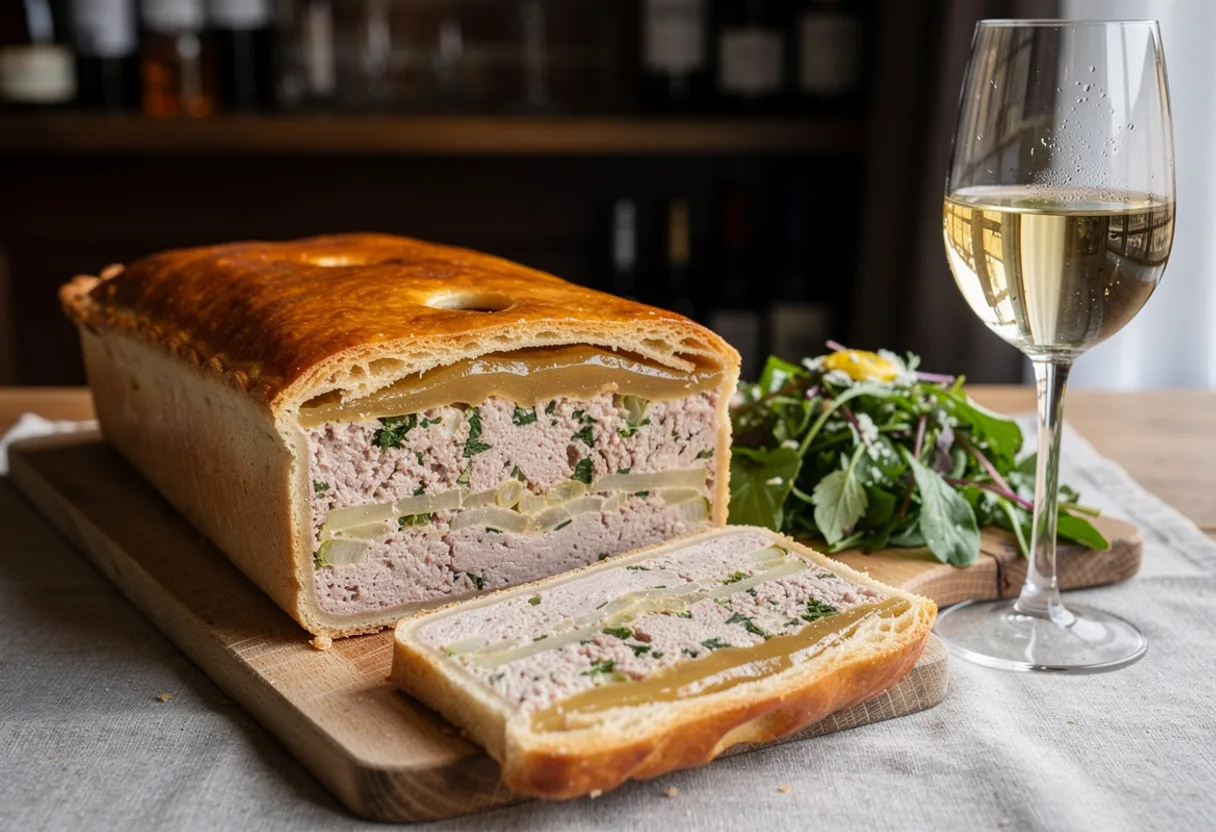
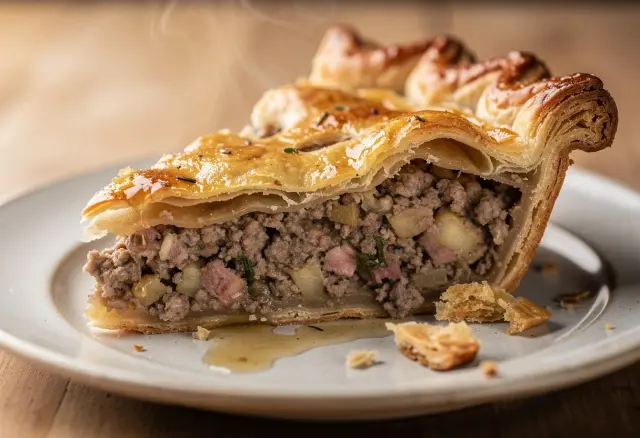
A loaf of crisp buttery pastry around a coarse pork filling seasoned with Riesling, leek, parsley and nutmeg, filled after baking with Riesling jelly through holes in the top and served cold in thick slices.
Luxembourgish · advanced · serves 10
prep 60 min · cook 80 min · plus 1 day hands-off time
~657 cal · 35g protein · 46g carbs · 36g fat · 2g fiber · 1g sugars · 18g sat fat (estimated, per serving)
↓ Jump to Recipe
AI-generated illustration
Rieslingspaschtéit, Riesling pie, is one of the proudest things on a Luxembourg table: a loaf-shaped pie of pastry around a pork filling, with a layer of Riesling jelly between meat and crust. The wine comes from the Moselle, where Luxembourg grows its Riesling, and it seasons both the filling and the jelly.
The Luxembourg delicatessen Kaempff-Kohler says its founder, Pierre Kaempff, created the pie in 1928 to go with an after-work snack. Today every good pastry shop and butcher sells it, whole or by the slice, each with its own crust and filling, and supermarkets it too. It is eaten cold, often as a starter with a little salad, at buffets and parties, and with a glass of Riesling.
Making one at home takes time more than skill. The pastry rests overnight, the meat and vegetables are minced coarsely and mixed with egg, wine and spices, and the loaf is baked with a few holes in the top. While it is still warm, the hot Riesling jelly is poured in through the holes, where it fills the space left as the meat shrinks and sets as the pie cools.
Saved recipes and passport stamps are kept on this device. Sign in to keep them across your devices and leave reviews.
Make it yours
✓ Naturally nut-free. No swaps needed.
Toggle a diet and the ingredients rewrite themselves with regional substitutes.
🥕 Vegetarian
🌱 Vegan
🌾 Gluten-Free
🥛 Dairy-Free
🥜 Nut-Free
🥚 Egg-Free
🐖 Pork-Free
Dietary labels are a cooking guide, not allergen-safety advice. We track dairy, egg, gluten, tree nuts and peanuts (we count coconut as a tree nut, following FDA labeling), fish, and shellfish; we do not screen for sesame, soy, mustard, celery, or sulphites. If you have a food allergy, read the label on every product you use, and note that a kitchen can cross-contaminate in ways a recipe cannot control.
Ingredients
US
Metric
Serves 10
- 500 g plain flour
- 2 pinches salt, for the pastry
- 250 g cold butter, cubed
- 6 tbsp cold water
- 125 g white bread, crusts removed
- 500 g fresh pork belly (unsmoked pancetta), rind removed
- 500 g lean pork
- 1/2 large leek, trimmed
- 3 cloves garlic, peeled
- 1 large onion, peeled
- 15 g parsley
- 1 egg
- 150 ml Riesling, for the filling
- 20 g salt, for the filling
- 4 g black pepper
- a pinch sugar
- 1/2 tsp ground nutmeg
- 1 egg yolk, whisked, for glazing
- 200 ml Riesling, for the jelly
- 300 ml water, for the jelly
- 1 sachet aspic jelly powder (gelatine-based), enough to set 500 ml
Instructions
- 1A day ahead, make the pastry: mix the flour and salt, rub in the cold butter with your fingertips, then add the cold water and work quickly into a smooth, firm dough. Wrap and refrigerate for 24 hours.
- 2For the filling, soak the bread in cold water and squeeze it dry. Put the pork belly, lean pork, leek, garlic, onion, parsley and bread through a meat grinder with a coarse plate.
- 3Add the egg, the Riesling, salt, pepper, sugar and nutmeg and mix well by hand into a firm, compact mass.
- 4Heat the oven to 200C (400F). Roll the pastry out on a floured surface into a rectangle about 6 mm thick. Lay the filling along the middle in a long loaf shape, brush the edges with egg yolk, fold the pastry over and seal it, and turn the loaf seam-side down onto a lined baking tray.
- 5Brush all over with egg yolk and cut two or three small round holes in the top. Bake for about 75 minutes, until the pastry is deep golden and the filling is cooked through.✎ Chef’s noteA thermometer pushed through one of the holes should read at least 72C (160F) in the middle of the filling.
- 6For the jelly, bring the Riesling and water to the boil, whisk in the jelly powder until dissolved and season with a little salt and pepper.
- 7Let the pie cool for 10 minutes, then slowly pour the hot jelly in through the holes, a little at a time, until no more will go in. Leave to cool on a rack, then chill for at least 4 hours, until the jelly has set. Serve cold in thick slices with a little salad and a glass of Riesling.
Luxembourg tradition, after the TaSty recipe.
Ratings & reviews
Cooked it? Rate this dish:
No account needed. Sign in to leave a full review with a comment.
Cooked it?
Kept on this device, no account needed. Sign in to leave a review and keep your passport across your devices.
No reviews yet, be the first to cook it.
🌏 While it simmers, know your destination
📍
Luxembourg City. Luxembourg City feasts on judd mat gaardebounen, smoked pork collar with broad beans, treated as the national dish. Its kitchen borrows freely from France and Germany, in river fish, black pudding with apple, and quetsch plum tart.
🗺️
Luxembourg. Judd mat Gaardebounen is tied to one village, Gostingen, whose inhabitants are nicknamed Bounepatscherten, bean-madmen. The smoked pork collar is soaked, then simmered with leeks, carrots, celery and cloves, often with Moselle wine, and served with broad beans. The word judd has no settled etymology, though one theory derives it from the Spanish judia, meaning bean.
🌍
Europe. Europe has written a great deal of its food into law. A regulation of 1992 created the protected designation of origin and the protected geographical indication, tying a name to a place and a method, and an EU evaluation published in 2021 counted more than three thousand registered names across those schemes, from cheeses and hams down to particular shapes of bread.
The story behind this dish is up top, worth a read while the pot works.
More from Luxembourg
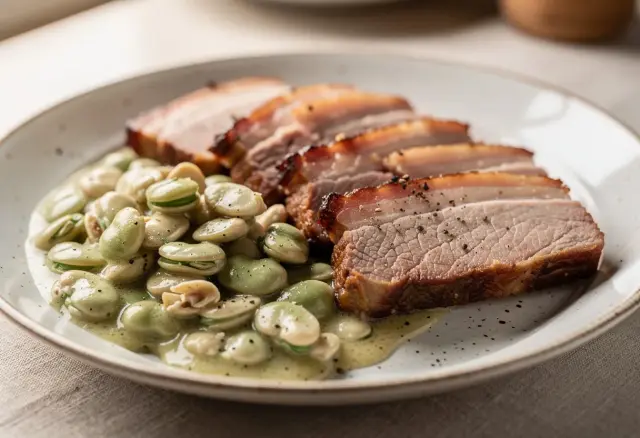
Judd mat GaardebounenLuxembourg's national dish: smoked pork collar simmered tender and served with a creamy broad-bean stew.
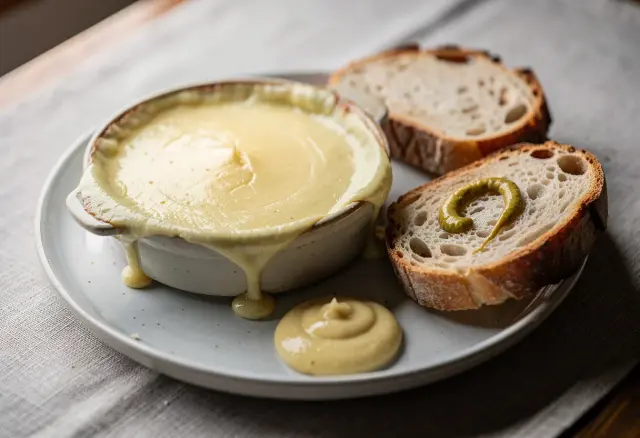
Kachkéis (Luxembourg Cooked Cheese)Aged curd melted down on the stove with butter and caraway into a glossy, tangy spreadable cheese, poured out to set and eaten on bread with mustard.

BouneschluppA green bean soup with potato and smoked sausage, the national soup of Luxembourg.
Browse all Luxembourg recipes →
Good to know
You’ll need: Oven, Whisk.
Storing it: Store in an airtight container. Most keep 2 to 3 days at room temperature, and longer refrigerated.
Make it a Luxembourg meal
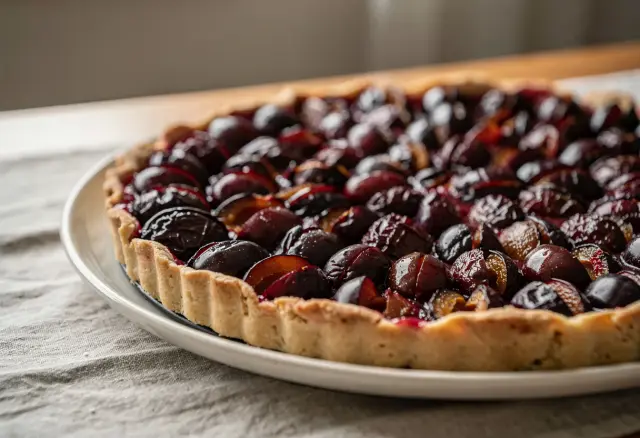
QuetschentaartDessert
Similar dishes from around the world

Aussie Sausage RollsAustralia

Quiche LorraineFrance
TourtièreCanada

Tarteletter med Høns i Asparges (Danish Chicken and Asparagus Tartlets)Denmark

Rissóis de Camarão (Mozambican Shrimp Turnovers)Mozambique

Pastels (Senegalese Fish Turnovers)Senegal
Frequently asked questions
What is Rieslingspaschtéit (Luxembourg Riesling Pork Pie)?
A loaf of crisp buttery pastry around a coarse pork filling seasoned with Riesling, leek, parsley and nutmeg, filled after baking with Riesling jelly through holes in the top and served cold in thick slices.
Where does Rieslingspaschtéit (Luxembourg Riesling Pork Pie) come from?
Rieslingspaschtéit (Luxembourg Riesling Pork Pie) is a Luxembourgish dish from Luxembourg City, Luxembourg.
Can Rieslingspaschtéit (Luxembourg Riesling Pork Pie) be made vegan, gluten-free, or dairy-free?
This Rieslingspaschtéit (Luxembourg Riesling Pork Pie) recipe includes substitution suggestions for vegetarian, vegan, gluten-free, dairy-free, nut-free, egg-free, and pork-free versions. Treat the substitutions as a starting guide rather than a guarantee, and see the allergen note below.
Is Rieslingspaschtéit (Luxembourg Riesling Pork Pie) safe for people with food allergies?
Our dietary labels and substitutions are a cooking guide, not medical or allergen-safety advice. We track dairy, egg, gluten, tree nuts and peanuts (we still count coconut as a tree nut to be cautious, although the FDA stopped listing it as one in 2025), fish, and shellfish, but we do not screen for sesame, soy, mustard, celery, or sulphites. If you have a food allergy, always read the label on every product you use, and remember a home or commercial kitchen can cross-contaminate ingredients in ways a recipe cannot control.
How long does Rieslingspaschtéit (Luxembourg Riesling Pork Pie) take to make?
About 1.5 days in all: 60 minutes prep and 80 minutes cooking, plus 1 day of hands-off waiting the method needs, serving 10.
Get the Sunday Spin
One dish from somewhere in the world, in your inbox every Sunday. No spam, just dinner inspiration you can cook that day.