South America → Uruguay → Montevideo

🥗 STARTER
Lengua a la Vinagreta (Uruguayan Beef Tongue in Vinaigrette)
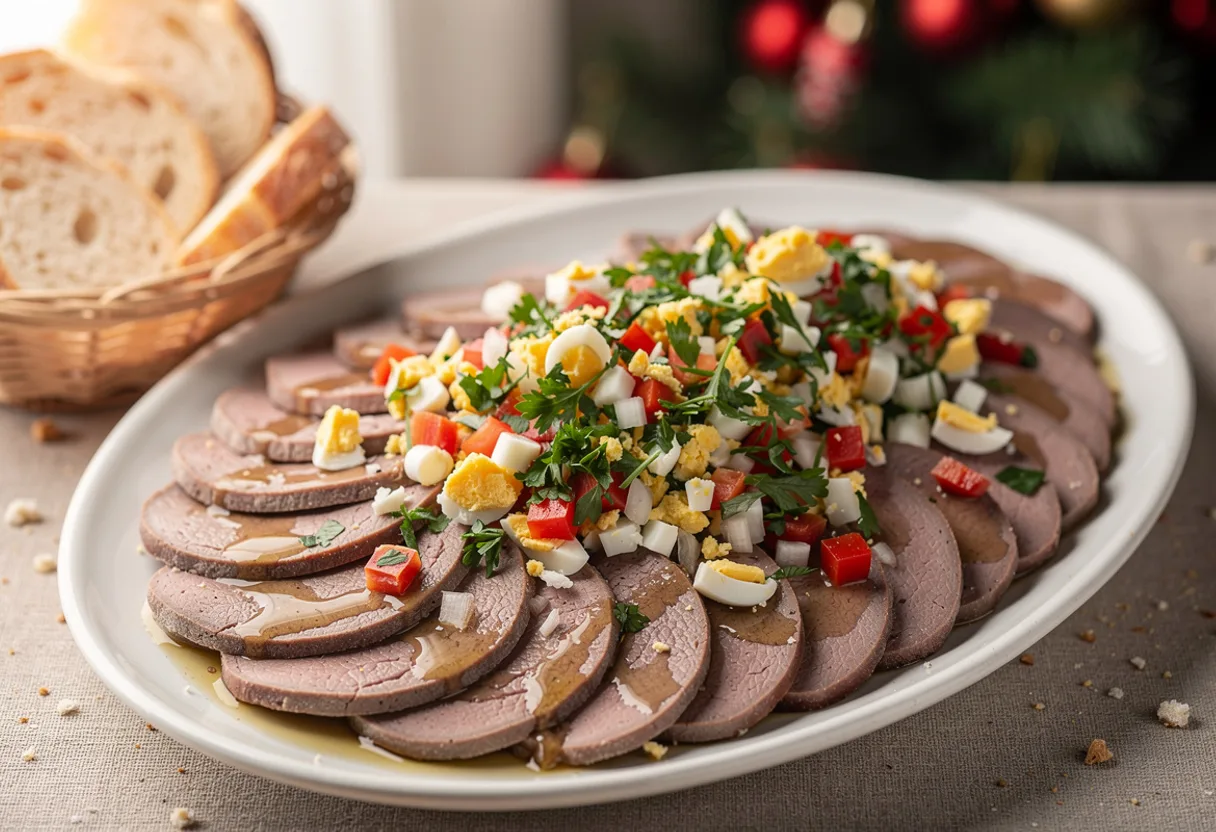
Beef tongue simmered for hours until meltingly tender, peeled, sliced thin and chilled under a sharp vinaigrette of garlic, parsley, pepper, onion and chopped egg, a cold starter of the Christmas table.
Uruguayan · medium · serves 8
prep 30 min · cook 180 min · plus 3 h hands-off time
~533 cal · 41g protein · 4g carbs · 38g fat · 1g fiber · 1g sugars · 11g sat fat (estimated, per serving)
↓ Jump to Recipe
AI-generated illustration
Lengua a la vinagreta is a cold starter eaten in Uruguay, Argentina and Paraguay, and in Uruguay it is one of the dishes of the Christmas and New Year table, alongside roast suckling pig, Russian salad, stuffed eggs and fruit salad. Christmas falls in high summer in the Río de la Plata, and cold dishes that can be made a day ahead suit the heat.
The tongue is boiled slowly with bay leaf, onion and a few vegetables for about three hours, until a fork slides in easily, then peeled while still warm. Once cold it is sliced thinly, laid on a platter and covered with a vinaigrette of oil, vinegar, garlic and parsley, often with chopped bell pepper, onion and hard-boiled egg, and left in the fridge so the flavours sink in.
It keeps for several days in the fridge and is served cold, with bread.
Saved recipes and passport stamps are kept on this device. Sign in to keep them across your devices and leave reviews.
Make it yours
✓ Naturally gluten-, dairy-, nut- and pork-free. No swaps needed.
Toggle a diet and the ingredients rewrite themselves with regional substitutes.
🥕 Vegetarian
🌱 Vegan
🌾 Gluten-Free
🥛 Dairy-Free
🥜 Nut-Free
🥚 Egg-Free
🐖 Pork-Free
Dietary labels are a cooking guide, not allergen-safety advice. We track dairy, egg, gluten, tree nuts and peanuts (we count coconut as a tree nut, following FDA labeling), fish, and shellfish; we do not screen for sesame, soy, mustard, celery, or sulphites. If you have a food allergy, read the label on every product you use, and note that a kitchen can cross-contaminate in ways a recipe cannot control.
Ingredients
US
Metric
Serves 8
- 1 (about 1.2 kg) beef tongue
- 1 onion, halved
- 1 each carrot and celery stalk, in chunks
- 2 bay leaves
- 10 black peppercorns
- 1 tbsp salt, plus more for the dressing
- 1/2 cup vegetable or olive oil
- 1/3 cup white or red wine vinegar
- 3 cloves garlic, finely chopped
- 3 tbsp flat-leaf parsley, finely chopped
- 1/2 red bell pepper, finely diced
- 1/2 onion, finely diced
- 2 hard-boiled eggs, chopped
- to taste black pepper
Instructions
- 1Rinse the tongue well. Put it in a large pot with the onion, carrot, celery, bay leaves, peppercorns and salt, and cover generously with water.
- 2Bring to the boil, skim, then lower the heat, partly cover and simmer for about 3 hours, until a fork slides easily into the thickest part. Top up with hot water if needed.✎ Chef’s noteUndercooked tongue is rubbery and hard to peel; keep going until it is truly tender.
- 3Lift out the tongue and, while it is still warm, peel off the thick outer skin; it comes away easily. Trim the rough end, let it cool, then chill it until firm.
- 4Whisk the oil, vinegar, garlic, parsley, bell pepper, onion, salt and pepper together, then stir in the chopped eggs.
- 5Cut the cold tongue into thin, even slices, lay them on a platter, spooning vinaigrette over each layer, and chill for at least 3 hours. Serve cold with bread.
Río de la Plata tradition.
Ratings & reviews
Cooked it? Rate this dish:
No account needed. Sign in to leave a full review with a comment.
Cooked it?
Kept on this device, no account needed. Sign in to leave a review and keep your passport across your devices.
No reviews yet, be the first to cook it.
🌏 While it simmers, know your destination
📍
Montevideo. Mate is a routine with rules. One person prepares it and keeps hold of the gourd, refilling and passing it round in a fixed order, and each drinker finishes the whole thing before handing it back. The thermos carried under one arm is a national posture, and Uruguay is usually reckoned the heaviest consumer per head anywhere.
🗺️
Uruguay. Uruguay eats more beef per head than almost anywhere, roughly fifty kilos a person a year, and exports about three quarters of what it produces. The grill it goes on is a parrilla with an adjustable brasero at the side, where wood burns down to embers that are raked under the grate as needed, so the cook controls heat by moving coals rather than the meat.
🌍
South America. The Andes are the potato's homeland and still hold something like four thousand native varieties, selected over thousands of years for altitude, colour and texture. The high plateau also worked out how to keep them: frozen overnight in the cold, trodden to press the water out, then dried in the sun into chuno, which stores for years.
The story behind this dish is up top, worth a read while the pot works.
More from Uruguay
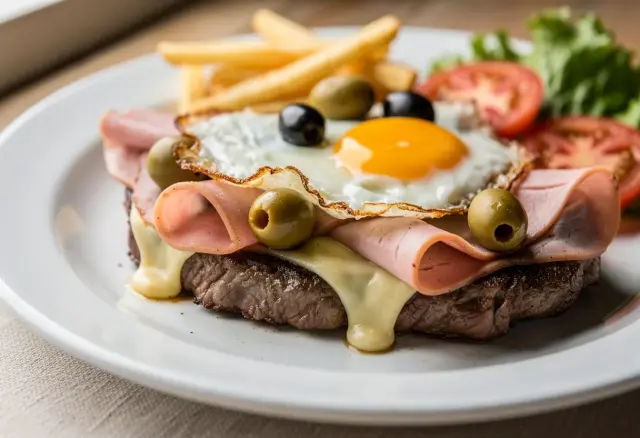
Chivito al PlatoUruguay’s glorious everything-plate: thin steak under ham, cheese, olives, and a fried egg with ensalada rusa.

Torta FritaGolden discs of fried dough with a slit in the middle, crisp-edged and pillowy, the treat Uruguayans make whenever it rains, dusted with sugar and dunked in mate.

Tarta PascualinaA flaky double-crust pie of chard and ricotta with whole eggs baked inside, an everyday River Plate lunch.
Browse all Uruguay recipes →
Good to know
You’ll need: Pot or saucepan, Whisk.
Storing it: Fried food is best eaten fresh while crisp. Re-crisp leftovers in a hot oven or air fryer; the microwave makes them soft.
Make it a Uruguay meal

Medio y MedioDrink

ChajáDessert
Similar dishes from around the world
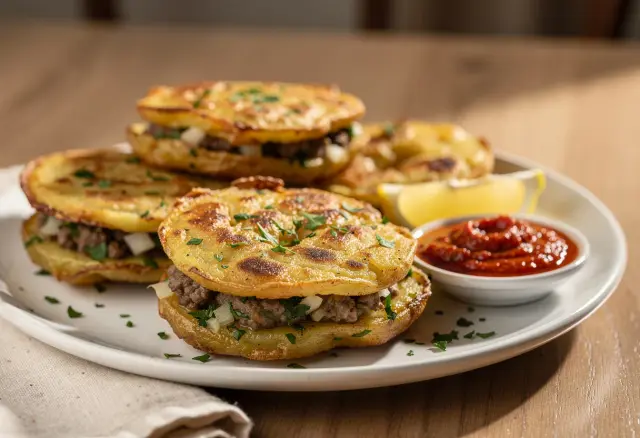
Mbatten (Stuffed Potato Fritters)Libya
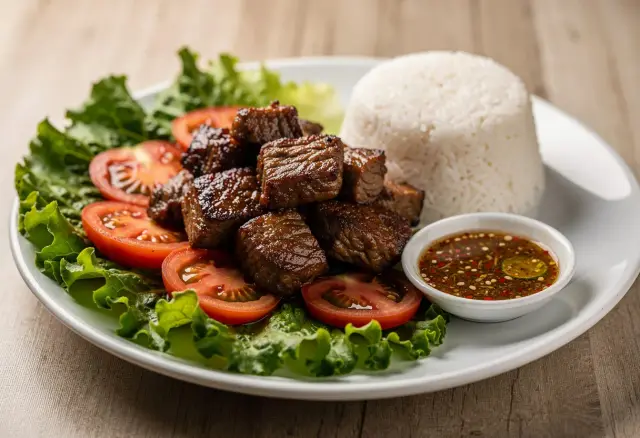
Beef Lok LakCambodia
Quipes (Dominican Bulgur and Beef Fritters)Dominican Republic
Bitterballen (Dutch Beef Ragout Croquettes)Netherlands

Vetkoek with MinceNamibia
Kilishi (Nigerien Spiced Dried Beef)Niger
Cuisine
Diet
Themes
Frequently asked questions
What is Lengua a la Vinagreta (Uruguayan Beef Tongue in Vinaigrette)?
Beef tongue simmered for hours until meltingly tender, peeled, sliced thin and chilled under a sharp vinaigrette of garlic, parsley, pepper, onion and chopped egg, a cold starter of the Christmas table.
Where does Lengua a la Vinagreta (Uruguayan Beef Tongue in Vinaigrette) come from?
Lengua a la Vinagreta (Uruguayan Beef Tongue in Vinaigrette) is a Uruguayan dish from Montevideo, Uruguay.
Can Lengua a la Vinagreta (Uruguayan Beef Tongue in Vinaigrette) be made vegan, gluten-free, or dairy-free?
This Lengua a la Vinagreta (Uruguayan Beef Tongue in Vinaigrette) recipe includes substitution suggestions for vegetarian, vegan, gluten-free, dairy-free, nut-free, egg-free, and pork-free versions. Treat the substitutions as a starting guide rather than a guarantee, and see the allergen note below.
Is Lengua a la Vinagreta (Uruguayan Beef Tongue in Vinaigrette) safe for people with food allergies?
Our dietary labels and substitutions are a cooking guide, not medical or allergen-safety advice. We track dairy, egg, gluten, tree nuts and peanuts (we still count coconut as a tree nut to be cautious, although the FDA stopped listing it as one in 2025), fish, and shellfish, but we do not screen for sesame, soy, mustard, celery, or sulphites. If you have a food allergy, always read the label on every product you use, and remember a home or commercial kitchen can cross-contaminate ingredients in ways a recipe cannot control.
How long does Lengua a la Vinagreta (Uruguayan Beef Tongue in Vinaigrette) take to make?
About 6 h 30 min in all: 30 minutes prep and 180 minutes cooking, plus 3 h of hands-off waiting the method needs, serving 8.
Get the Sunday Spin
One dish from somewhere in the world, in your inbox every Sunday. No spam, just dinner inspiration you can cook that day.