
🥔 SIDE
Yaki Gyōza (Japanese Pan-Fried Dumplings)
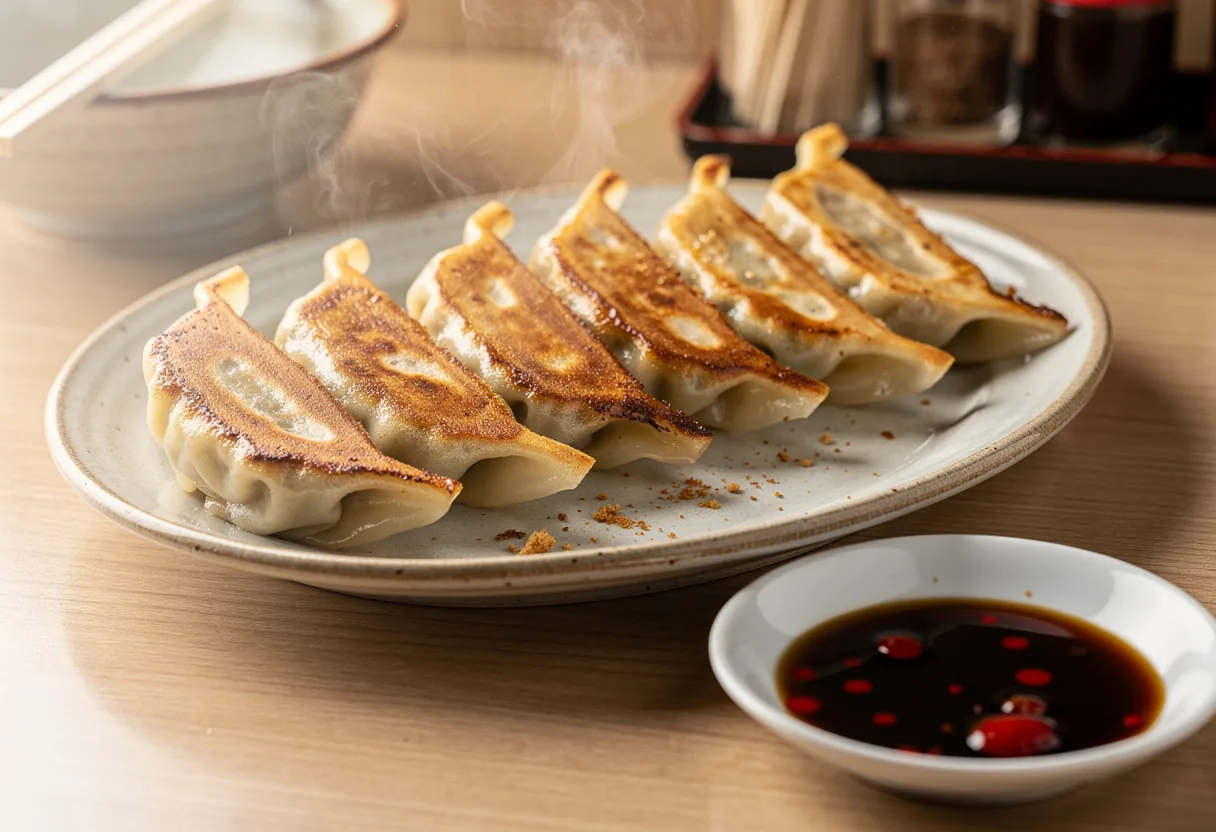
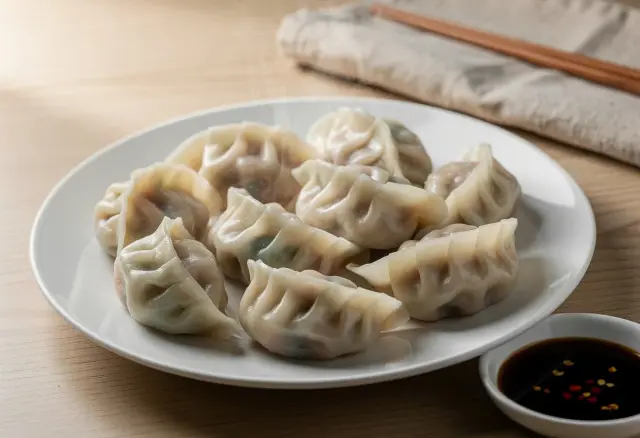
Thin-skinned dumplings of pork, cabbage, garlic chives, garlic and ginger, fried then steamed in the same pan until the bottoms are crisp and golden.
Japanese · medium · serves 4
prep 45 min · cook 15 min
~388 cal · 19g protein · 43g carbs · 14g fat · 3g fiber · 3g sugars · 4g sat fat (estimated, per serving)
↓ Jump to Recipe
AI-generated illustration
Gyōza are Japan's version of the Chinese jiaozi, brought home by Japanese returning from northern China after the Second World War. In Japan they changed: the wrappers became thinner, the filling heavier on cabbage, garlic and garlic chives, and the usual way to cook them became yaki gyōza, pan-fried, rather than boiled.
They are cooked by a method that is half frying and half steaming. The dumplings are set flat side down in a hot oiled pan until their bases brown, then a splash of water goes in and the lid goes on so they steam through; when the water has boiled away the bottoms fry crisp again. Plates of six arrive at almost every ramen shop in Japan as the standard side, and they are one of the most common dinners made at home.
The dipping sauce is mixed by each diner at the table from soy sauce, rice vinegar and a few drops of rāyu chili oil. Two cities, Utsunomiya in Tochigi and Hamamatsu in Shizuoka, compete every year for the title of Japan's gyōza capital, measured by what households spend on them.
Saved recipes and passport stamps are kept on this device. Sign in to keep them across your devices and leave reviews.
Make it yours
✓ Naturally dairy-, nut- and egg-free. No swaps needed.
Toggle a diet and the ingredients rewrite themselves with regional substitutes.
🥕 Vegetarian
🌱 Vegan
🌾 Gluten-Free
🥛 Dairy-Free
🥜 Nut-Free
🥚 Egg-Free
🐖 Pork-Free
Dietary labels are a cooking guide, not allergen-safety advice. We track dairy, egg, gluten, tree nuts and peanuts (we count coconut as a tree nut, following FDA labeling), fish, and shellfish; we do not screen for sesame, soy, mustard, celery, or sulphites. If you have a food allergy, read the label on every product you use, and note that a kitchen can cross-contaminate in ways a recipe cannot control.
Ingredients
US
Metric
Serves 4
- 30 (about 200 g) gyōza wrappers (thin wheat-flour dumpling skins)
- 200 g ground pork
- 250 g green cabbage, very finely chopped
- 1/2 tsp salt (to wilt the cabbage)
- 40 g nira (Japanese chives), finely chopped
- 2 (about 30 g) spring onions, finely chopped
- 1 clove garlic, grated
- 1 tsp ginger, grated
- 2 tsp soy sauce (for the filling)
- 2 tsp toasted sesame oil (for the filling)
- a pinch black pepper
- 1 tbsp (for frying)
- 60 ml water (for steaming)
- 1 tsp toasted sesame oil (to finish)
- 3 tbsp soy sauce (for dipping)
- 3 tbsp rice vinegar (for dipping)
- a few drops rāyu (Japanese chili oil), usually made with sesame oil
Instructions
- 1Toss the chopped cabbage with the salt and leave for 10 minutes, then squeeze out as much water as you can.✎ Chef’s noteWet cabbage makes the filling watery and the wrappers soggy, so squeeze it hard.
- 2Put the pork, cabbage, garlic chives, spring onions, garlic, ginger, 2 tsp soy sauce, 2 tsp sesame oil and pepper in a bowl and knead with your hand for a minute or two until the mixture turns sticky and pale.
- 3Put a heaped teaspoon of filling in the centre of a wrapper, wet the edge with a fingertip, fold it in half and pleat the front edge 4 or 5 times, pressing each pleat against the flat back so it seals. Stand it on its flat base and repeat.
- 4Heat the neutral oil in a large nonstick frying pan over medium heat. Arrange the gyōza flat side down in a single layer and fry for 2 to 3 minutes until the bottoms are golden.
- 5Pour in the water, cover at once with a lid and steam for 3 to 4 minutes, until the wrappers turn translucent. Uncover, let the rest of the water boil away, drizzle the 1 tsp sesame oil around the pan and fry for another minute until the bottoms are crisp.✎ Chef’s noteStand back when the water goes in; it spits. The lid goes on straight away.
- 6Turn the gyōza out onto a plate crisp side up. Serve at once with small dishes of soy sauce and rice vinegar mixed half and half, with a few drops of rāyu.
Japanese home and ramen-shop tradition.
Ratings & reviews
Cooked it? Rate this dish:
No account needed. Sign in to leave a full review with a comment.
Cooked it?
Kept on this device, no account needed. Sign in to leave a review and keep your passport across your devices.
No reviews yet, be the first to cook it.
🌏 While it simmers, know your destination
📍
Tokyo (Kanto). Tokyo is the world's densest food city, from Edo-style sushi and soba to izakaya small plates and more Michelin stars than anywhere. The Kanto region's refined, soy-forward cooking sets the national standard.
🗺️
Japan. Japanese cuisine (washoku) is a UNESCO-recognized art of seasonality, precision, and restraint, from sushi and ramen to simmered one-pots and delicate kaiseki. Dashi stock, soy, miso, and rice form its backbone, and presentation is considered part of the flavor.
🌍
Asia. A grain line runs across the continent. Rice dominates the wet south and east, wheat the drier north and west, and the tools follow it: the wok and the steamer where rice is milled, the tandoor and the griddle where wheat is ground. Tea travels the other way, drunk green, black, salted, buttered or with milk depending how far it got from China.
The story behind this dish is up top, worth a read while the pot works.
More from Japan
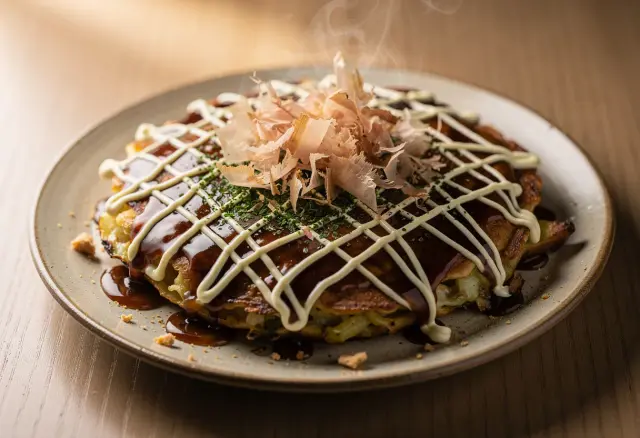
Osaka-Style OkonomiyakiA crisp-edged cabbage pancake griddled with pork belly, painted with sweet-savory sauce and mayo.
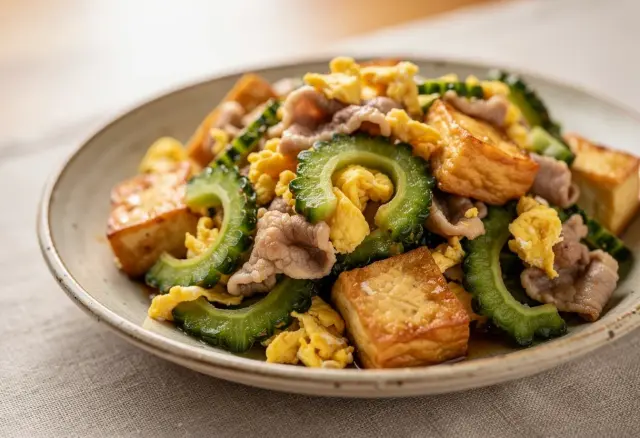
Goya ChampuruOkinawa’s signature stir-fry of bitter melon, firm tofu, pork, and egg, humble food from the island of long life.
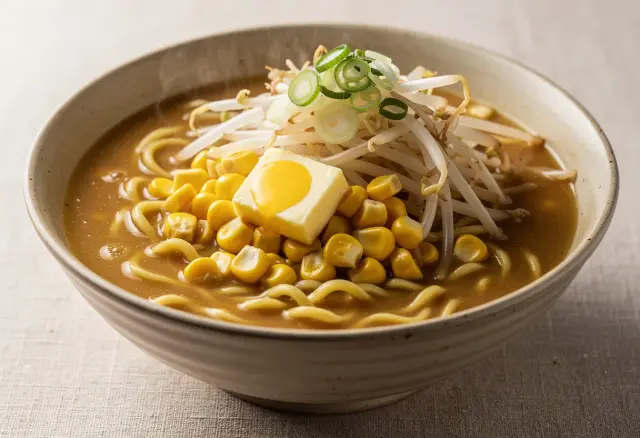
Sapporo Miso RamenSnow-country ramen: a rich miso broth with wok-seared vegetables, springy noodles, and butter melting on top.
Browse all Japan recipes →
Good to know
You’ll need: Skillet or frying pan, Steamer.
Storing it: Uncooked parcels freeze well and cook from frozen. Cooked ones keep 2 to 3 days refrigerated and steam or pan-warm to serve.
Make it a Japan meal
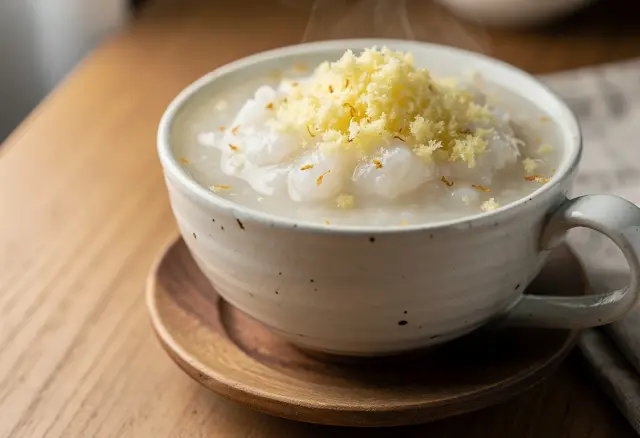
AmazakeDrink
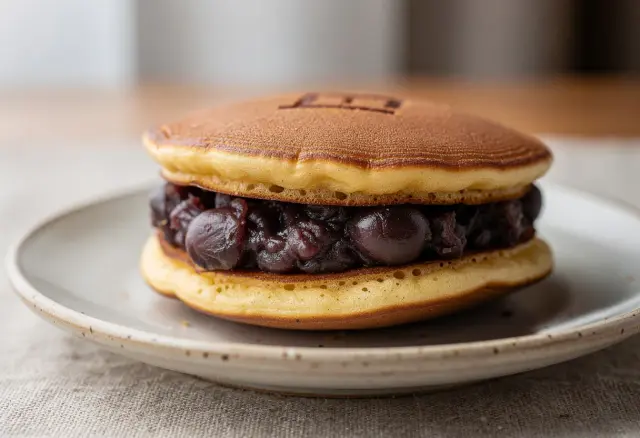
DorayakiDessert
Similar dishes from around the world
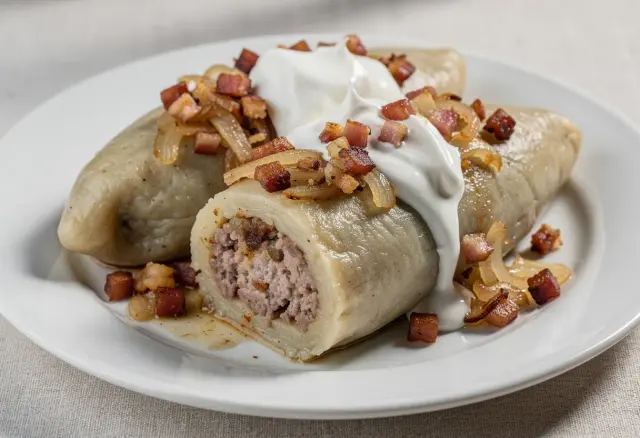
CepelinaiLithuania

KniddelenLuxembourg
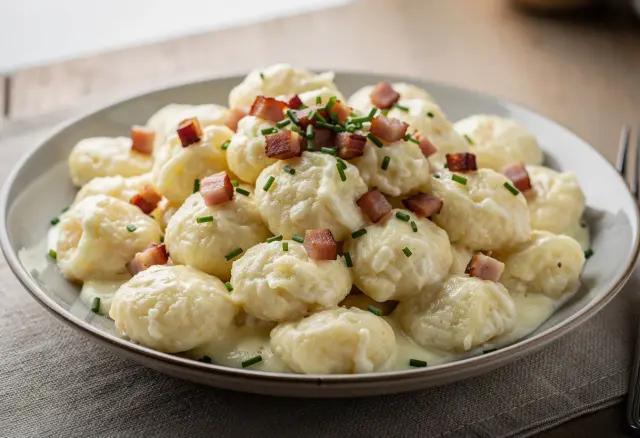
Bryndzové HaluškySlovakia

Bryndzové PirohySlovakia
Jiaozi (Pork and Cabbage Dumplings)China

Boil-Up with DoughboysNew Zealand
Cuisine
Diet
Frequently asked questions
What is Yaki Gyōza (Japanese Pan-Fried Dumplings)?
Thin-skinned dumplings of pork, cabbage, garlic chives, garlic and ginger, fried then steamed in the same pan until the bottoms are crisp and golden.
Where does Yaki Gyōza (Japanese Pan-Fried Dumplings) come from?
Yaki Gyōza (Japanese Pan-Fried Dumplings) is a Japanese dish from Tokyo (Kanto), Japan.
Can Yaki Gyōza (Japanese Pan-Fried Dumplings) be made vegan, gluten-free, or dairy-free?
This Yaki Gyōza (Japanese Pan-Fried Dumplings) recipe includes substitution suggestions for vegetarian, vegan, gluten-free, dairy-free, nut-free, egg-free, and pork-free versions. Treat the substitutions as a starting guide rather than a guarantee, and see the allergen note below.
Is Yaki Gyōza (Japanese Pan-Fried Dumplings) safe for people with food allergies?
Our dietary labels and substitutions are a cooking guide, not medical or allergen-safety advice. We track dairy, egg, gluten, tree nuts and peanuts (we still count coconut as a tree nut to be cautious, although the FDA stopped listing it as one in 2025), fish, and shellfish, but we do not screen for sesame, soy, mustard, celery, or sulphites. If you have a food allergy, always read the label on every product you use, and remember a home or commercial kitchen can cross-contaminate ingredients in ways a recipe cannot control.
How long does Yaki Gyōza (Japanese Pan-Fried Dumplings) take to make?
About 60 minutes total (45 minutes prep, 15 minutes cooking), serving 4.
Get the Sunday Spin
One dish from somewhere in the world, in your inbox every Sunday. No spam, just dinner inspiration you can cook that day.