
🍢 SNACK
Keke Pua'a (Samoan Steamed Pork Buns)
Soft, slightly sweet yeast buns wrapped round pork braised with onion, garlic and dark soy sauce, twisted shut and steamed until fluffy, Samoa's take on char siu bao.
Samoan · medium · serves 8
prep 45 min · cook 75 min · plus 2 h 15 min hands-off time
~558 cal · 33g protein · 52g carbs · 23g fat · 2g fiber · 8g sugars · 9g sat fat (estimated, per serving)
↓ Jump to Recipe
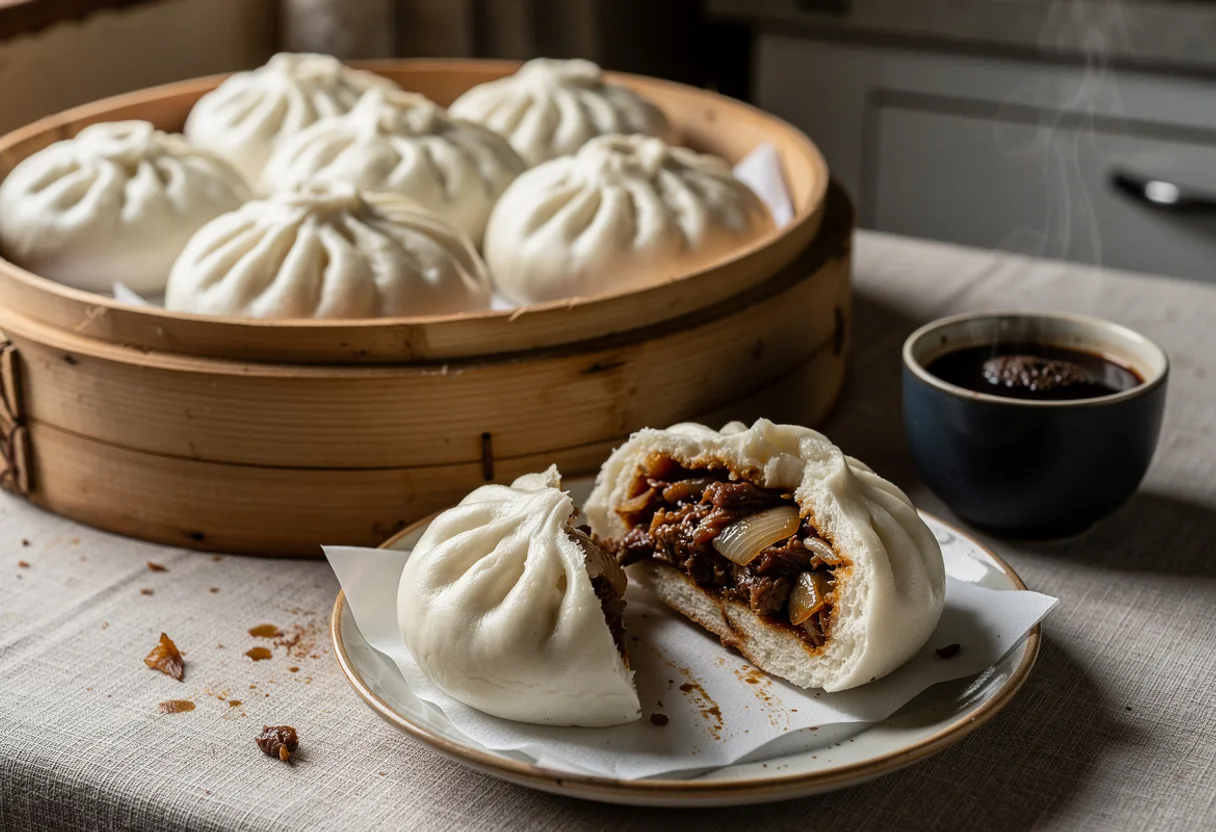
AI-generated illustration
Keke pua'a means pork cake, and it is Samoa's version of the Chinese steamed bun. Chinese traders were settling in Samoa by the 1870s, and in the German and New Zealand colonial years thousands of Chinese labourers, most of them Cantonese from Guangdong, came to work the plantations. Many stayed and married Samoan wives, and their food became Samoan food: rice (alaisa), noodles (lialia), chop suey (sapasui), Chinese pastries, and cha siu bao, which became keke pua'a.
The Samoan version is simpler than the Cantonese original. The filling is pork, chopped small or minced, cooked down with onion, garlic and dark soy sauce until tender, sometimes with ginger or a little oyster sauce, and thickened so it holds together. The dough is a soft, enriched yeast dough with milk, butter, egg and sugar.
Each bun is pleated or twisted closed over a spoonful of filling, left to rise again on a square of paper, and steamed until puffed and snow-white, though some families bake them. They are sold in bakeries and at roadside stalls, packed into lunchboxes and set out at family gatherings, and eaten warm with a cup of koko Samoa or tea.
Saved recipes and passport stamps are kept on this device. Sign in to keep them across your devices and leave reviews.
Make it yours
✓ Naturally nut-free. No swaps needed.
Toggle a diet and the ingredients rewrite themselves with regional substitutes.
🥕 Vegetarian
🌱 Vegan
🌾 Gluten-Free
🥛 Dairy-Free
🥜 Nut-Free
🥚 Egg-Free
🐖 Pork-Free
Dietary labels are a cooking guide, not allergen-safety advice. We track dairy, egg, gluten, tree nuts and peanuts (we count coconut as a tree nut, following FDA labeling), fish, and shellfish; we do not screen for sesame, soy, mustard, celery, or sulphites. If you have a food allergy, read the label on every product you use, and note that a kitchen can cross-contaminate in ways a recipe cannot control.
Ingredients
US
Metric
Serves 8
- 2 tbsp dry active yeast
- 1/4 cup warm water (for the yeast)
- 1/4 cup plus 1 tbsp sugar
- 1/2 cup warm milk
- 1/4 cup butter, melted
- 1/2 tsp salt
- 2 eggs
- 3 1/2 cups (440 g) all-purpose flour
- 750 g pork shoulder, finely chopped or minced
- 1 medium onion, finely chopped
- 4 cloves garlic, finely chopped
- 1 tsp fresh ginger, grated, optional
- 1/4 cup dark soy sauce
- 2 cups water (for the filling)
- 1 tbsp cornflour (cornstarch) mixed with 2 tbsp water
- 1 tbsp vegetable oil (for the filling)
Instructions
- 1Stir the yeast and 1 tablespoon of the sugar into the warm water and leave for 5 minutes until frothy. In a large bowl whisk the warm milk, melted butter, the remaining 1/4 cup sugar, the salt and the eggs, then stir in the yeast mixture.
- 2Mix in 3 cups of the flour to a soft dough, then knead on a floured surface for about 10 minutes, working in the rest of the flour, until smooth and no longer sticky. Put it in an oiled bowl, cover and leave in a warm place for about 1 1/2 hours, until doubled.
- 3Meanwhile make the filling: heat the oil in a wide pan and fry the pork and onion for 5 minutes, then the garlic and ginger for 5 minutes more. Add the soy sauce and water, bring to the boil and simmer uncovered for about 40 minutes, stirring now and then, until the pork is tender and most of the liquid has gone. Stir in the cornflour mixture and cook for 1 to 2 minutes until thick and glossy. Let it cool completely.✎ Chef’s noteThe filling must be cold and not runny, or the buns will not seal and the dough will turn soggy.
- 4Knock back the dough and divide it into 16 pieces. Roll each into a ball and flatten it into a 10 cm round, a little thinner at the edges. Put a heaped spoonful of filling in the middle, gather the edges up round it and pinch and twist them closed on top.
- 5Set each bun on a square of baking paper, cover loosely and leave to rise for about 45 minutes, until puffy.
- 6Steam the buns in batches, well spaced, over boiling water for about 15 minutes, until puffed and cooked through. Serve warm.✎ Chef’s noteDo not lift the lid while they steam. If you prefer them baked, brush with melted butter and bake at 180C for about 15 minutes until golden.
Samoan tradition (from Chinese-Samoan cha siu bao).
Ratings & reviews
Cooked it? Rate this dish:
No account needed. Sign in to leave a full review with a comment.
Cooked it?
Kept on this device, no account needed. Sign in to leave a review and keep your passport across your devices.
No reviews yet, be the first to cook it.
🌏 While it simmers, know your destination
📍
Upolu. Sunday is the fixed point. The umu is loaded early, the family goes to church, and the to'ona'i is eaten afterwards, taro and breadfruit and palusami and whatever fish or pork was put in, opened all at once. The oven is built on heated volcanic stones rather than deep in a pit, though accounts differ on how shallow the pit should be.
🗺️
Samoa. Coconut runs through the kitchen in three forms: the water, the grated flesh, and the cream squeezed out of it, which is poured over young taro leaves for palusami and over raw fish for oka. Taro and breadfruit supply the bulk, and cooking is organised around the aiga, the extended family, rather than around single households.
🌍
Oceania. Oceania spans Australia, New Zealand, and thousands of Pacific islands, where the ocean and the coconut palm define the pantry. Traditional Polynesian and Melanesian cooking centers on root crops, taro, yam, cassava, and sweet potato, slow-cooked in earth ovens (the umu or mumu) alongside fresh reef fish and rich coconut cream. Modern Australian and Māori kitchens blend these deep roots with waves of Asian and European influence.
The story behind this dish is up top, worth a read while the pot works.
More from Samoa

Palusami (Baked Coconut Taro Parcels)Taro leaves wrapped around rich coconut cream and onion, baked until silky, the crown of the umu feast.
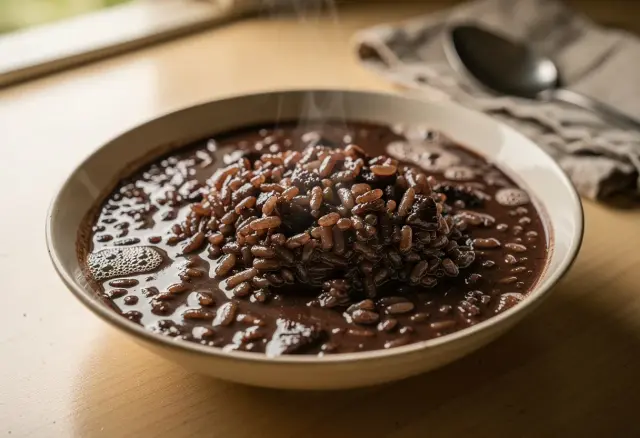
Koko AlaisaSamoan cocoa rice: short-grain rice simmered with rich local cocoa, coconut, and sugar into a warm, chocolatey porridge.
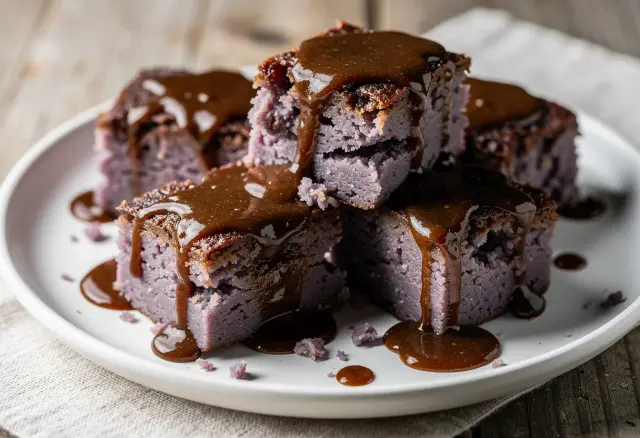
Fa'ausiWarm squares of grated-taro cake folded through a dark, salty-sweet coconut caramel, a Samoan Sunday favorite.
Browse all Samoa recipes →
Good to know
You’ll need: Steamer, Whisk.
Storing it: Keeps 2 to 3 days refrigerated. Resteam or warm through gently to serve.
Make it a Samoa meal

Koko SamoaDrink
Fa'ausiDessert
Similar dishes from around the world

Yuca Frita con ChicharrónEl Salvador
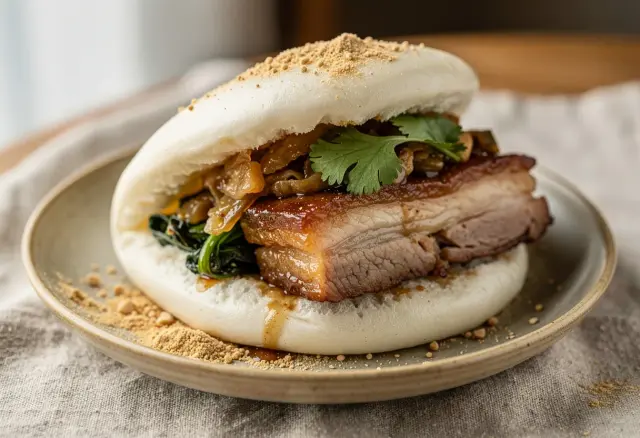
Gua Bao (Pork Belly Buns)Taiwan
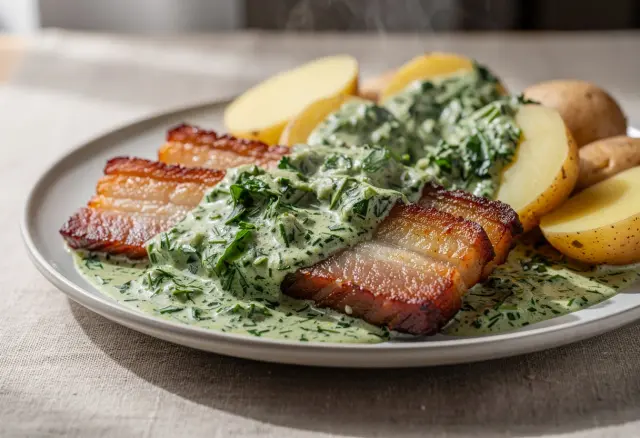
Stegt Flæsk med PersillesovsDenmark

Tamales ColoradosGuatemala

Highlands Mumu (Earth-Oven Vegetables)Papua New Guinea
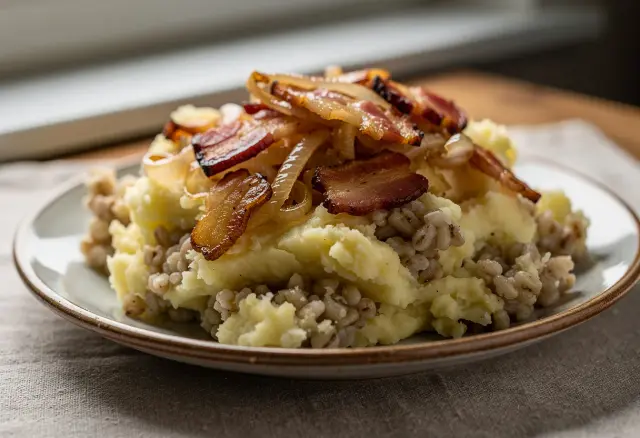
MulgipuderEstonia
Frequently asked questions
What is Keke Pua'a (Samoan Steamed Pork Buns)?
Soft, slightly sweet yeast buns wrapped round pork braised with onion, garlic and dark soy sauce, twisted shut and steamed until fluffy, Samoa's take on char siu bao.
Where does Keke Pua'a (Samoan Steamed Pork Buns) come from?
Keke Pua'a (Samoan Steamed Pork Buns) is a Samoan dish from Upolu, Samoa.
Can Keke Pua'a (Samoan Steamed Pork Buns) be made vegan, gluten-free, or dairy-free?
This Keke Pua'a (Samoan Steamed Pork Buns) recipe includes substitution suggestions for vegetarian, vegan, gluten-free, dairy-free, nut-free, egg-free, and pork-free versions. Treat the substitutions as a starting guide rather than a guarantee, and see the allergen note below.
Is Keke Pua'a (Samoan Steamed Pork Buns) safe for people with food allergies?
Our dietary labels and substitutions are a cooking guide, not medical or allergen-safety advice. We track dairy, egg, gluten, tree nuts and peanuts (we still count coconut as a tree nut to be cautious, although the FDA stopped listing it as one in 2025), fish, and shellfish, but we do not screen for sesame, soy, mustard, celery, or sulphites. If you have a food allergy, always read the label on every product you use, and remember a home or commercial kitchen can cross-contaminate ingredients in ways a recipe cannot control.
How long does Keke Pua'a (Samoan Steamed Pork Buns) take to make?
About 4 h 15 min in all: 45 minutes prep and 75 minutes cooking, plus 2 h 15 min of hands-off waiting the method needs, serving 8.
Get the Sunday Spin
One dish from somewhere in the world, in your inbox every Sunday. No spam, just dinner inspiration you can cook that day.