Oceania → Papua New Guinea → Highlands

🥔 SIDE
Kumu (Pumpkin Tips in Coconut Cream)
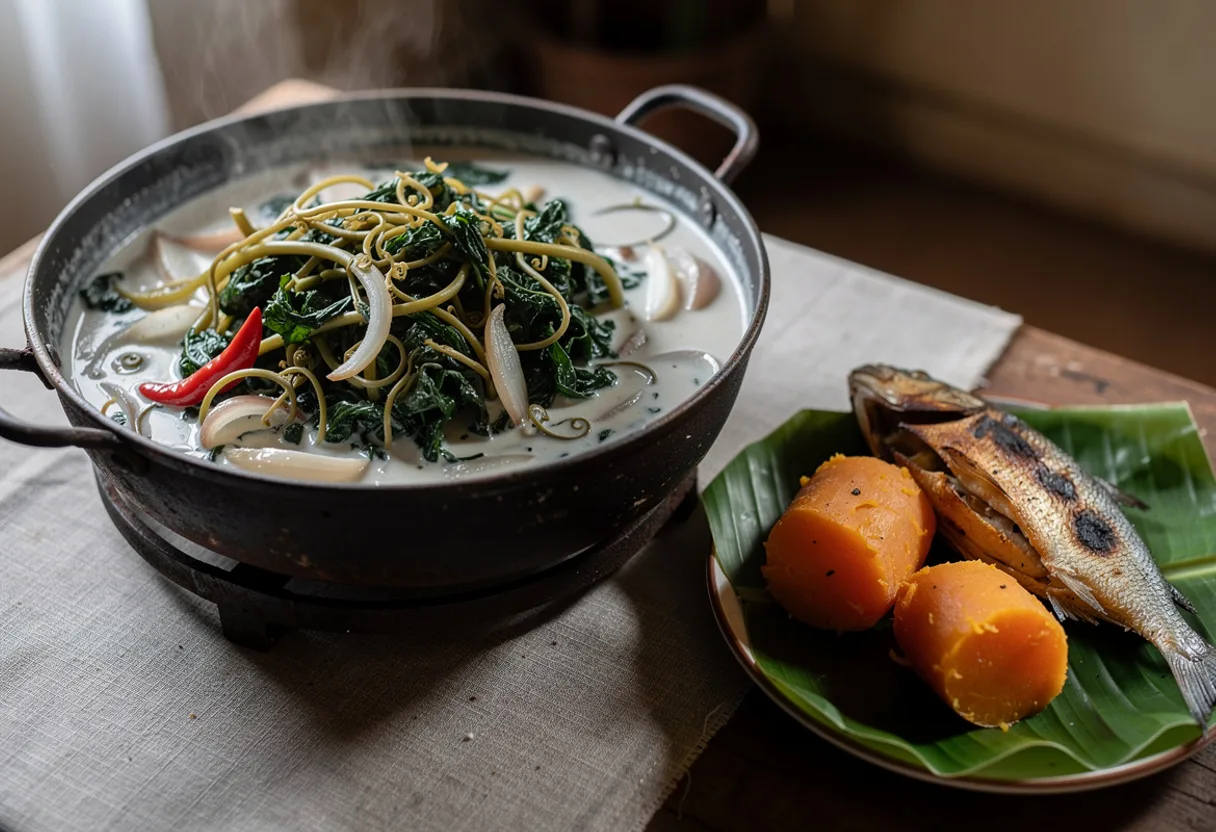
The tender shoots and young leaves of the pumpkin vine, stripped and wilted with onion, then simmered briefly in coconut cream with a little salt and chili.
Papua New Guinean · easy · serves 4
prep 15 min · cook 12 min
~247 cal · 4g protein · 17g carbs · 20g fat · 2g fiber · 8g sugars · 18g sat fat (estimated, per serving)
↓ Jump to Recipe
AI-generated illustration
Kumu is the Tok Pisin word for leafy greens, and in Papua New Guinea greens are eaten with almost every meal: aibika, amaranth, rungia, kangkong, fern fronds, choko and leaves, and above all pumpkin tips. Pumpkin came to the country with colonial contact and is now grown very widely, and more than 70 percent of people in both the highlands and the lowlands eat the cooked tips of its youngest leaves and vines.
The tips are the last 20 or 30 centimetres of the growing vine, with its soft shoot, curling tendrils and small leaves. The stalks are covered in a fine, prickly skin that is peeled back in strips before cooking, and the tough older leaves are left on the plant.
is the base of much of Papua New Guinea's cooking, and greens simmered in it are everyday food, especially near the coast; the fat also helps the body take up the vitamin A in the leaves. In the highlands, greens also go into the mumu earth oven with the pork and kaukau. The greens are wilted with onion, then simmered for a few minutes in until soft and silky, and served with kaukau (sweet potato), , rice, fish or chicken. Away from PNG, pumpkin tips are sold in some Asian and Pacific grocers; pea shoots or spinach make a good stand-in.
Saved recipes and passport stamps are kept on this device. Sign in to keep them across your devices and leave reviews.
Make it yours
✓ Naturally vegetarian, vegan and gluten-, dairy-, egg- and pork-free. No swaps needed.
Toggle a diet and the ingredients rewrite themselves with regional substitutes.
🥕 Vegetarian
🌱 Vegan
🌾 Gluten-Free
🥛 Dairy-Free
🥜 Nut-Free
🥚 Egg-Free
🐖 Pork-Free
Dietary labels are a cooking guide, not allergen-safety advice. We track dairy, egg, gluten, tree nuts and peanuts (we count coconut as a tree nut, following FDA labeling), fish, and shellfish; we do not screen for sesame, soy, mustard, celery, or sulphites. If you have a food allergy, read the label on every product you use, and note that a kitchen can cross-contaminate in ways a recipe cannot control.
Ingredients
US
Metric
Serves 4
- 500 g (about 2 large bunches) pumpkin tips (young shoots, tendrils and small leaves), pea shoots or spinach can stand in
- 1 onion, sliced
- 1 clove garlic, crushed, optional
- 1 small fresh chili, sliced, optional
- 1/2 cup water
- 1 cup
- to taste salt
Instructions
- 1Prepare the tips: snap off each stalk where it stops bending easily, and peel back the fine, prickly skin of the stalks in strips, starting from the cut end. Pull off any large, tough leaves. Wash well and cut the stalks and leaves into 5 cm lengths, keeping stalks and leaves apart.✎ Chef’s notePeeling the stalks is the step that makes pumpkin tips tender. Unpeeled, they stay stringy however long they cook.
- 2Put the water, onion, garlic and chili in a pot and simmer for 2 minutes. Add the stalks and cook for 2 minutes, then add the leaves and cook for 2 to 3 minutes, stirring, until wilted.
- 3Pour in the coconut cream, add salt, and simmer gently for about 5 minutes until the greens are soft and silky, without letting the cream boil hard.
- 4Taste for salt and serve hot with kaukau, taro, rice, fish or chicken.
Papua New Guinean home cooking.
Ratings & reviews
Cooked it? Rate this dish:
No account needed. Sign in to leave a full review with a comment.
Cooked it?
Kept on this device, no account needed. Sign in to leave a review and keep your passport across your devices.
No reviews yet, be the first to cook it.
🌏 While it simmers, know your destination
📍
Highlands. Papua New Guinea's Highlands cook the mumu earth oven, piling sweet potato (kaukau), greens, and pork over hot stones. In one of the world's most culturally diverse places, the garden and the pig are central.
🗺️
Papua New Guinea. Sweet potato is not ancient here. Its arrival transformed highland agriculture, allowing settlement at altitudes that could not support the older crops and supporting the pig herds that go with ceremonial exchange. The mumu earth oven belongs to the same family as the Fijian lovo, the Samoan umu, the Maori hangi and the Solomon Islands motu.
🌍
Oceania. The staple crops here were carried on purpose. Lapita voyagers moving east from roughly three thousand years ago brought taro, yam, banana, breadfruit and coconut with them along with pigs and chickens, because most of the islands they settled had almost nothing edible growing on them. The earth oven travelled too, as umu, imu, hangi, lovo, mumu, motu and um.
The story behind this dish is up top, worth a read while the pot works.
More from Papua New Guinea

Highlands Mumu (Earth-Oven Vegetables)Sweet potato, greens, corn, and coconut milk steamed in banana leaves, an oven-friendly take on the mumu feast.

Roasted Kaukau with CoconutKaukau (sweet potato) roasted in the embers and eaten with fresh grated coconut, an everyday Papua New Guinean breakfast.
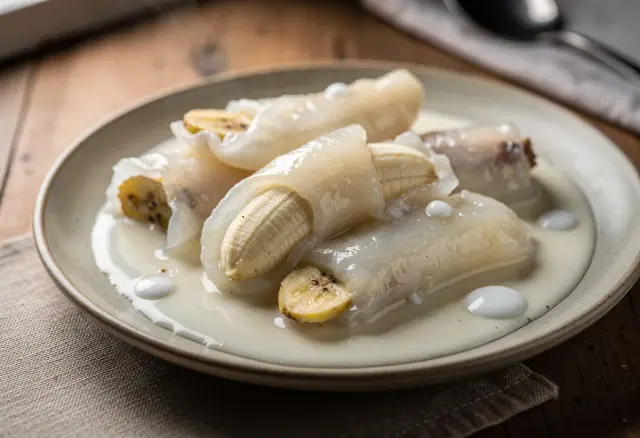
Saksak (Sago and Banana Dumplings)Pearls of sago and sweet banana set in coconut cream, the pudding that turns up at feasts across Papua New Guinea.
Browse all Papua New Guinea recipes →
Good to know
You’ll need: Pot or saucepan.
Storing it: Stews and braises keep 3 to 4 days refrigerated and often taste better the next day. Reheat gently, adding a splash of water if it has thickened.
Make it a Papua New Guinea meal

Papua New Guinea Highland CoffeeDrink

Dia (Sago and Banana in Coconut Cream)Dessert
Similar dishes from around the world
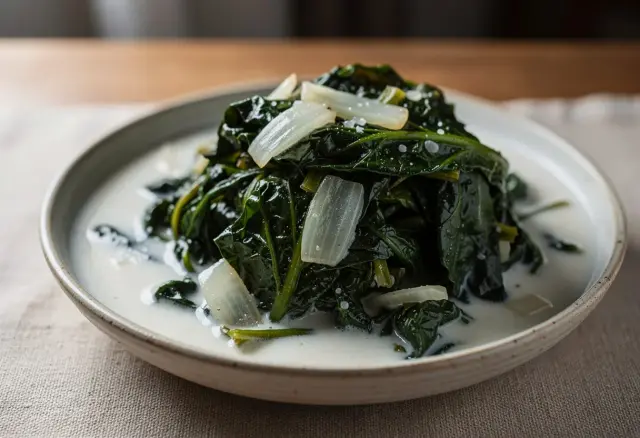
Aelan Kabis (Island Cabbage in Coconut Milk)Vanuatu
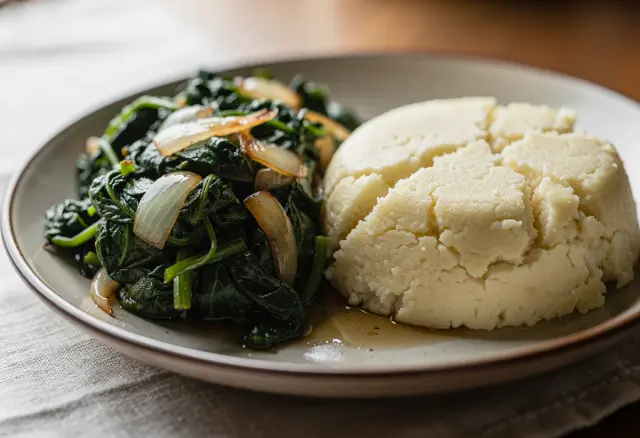
MorohoLesotho
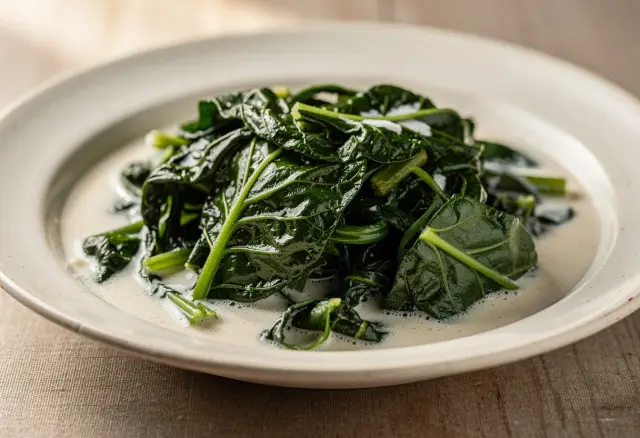
Rukau (Taro Leaves in Coconut Cream)Cook Islands
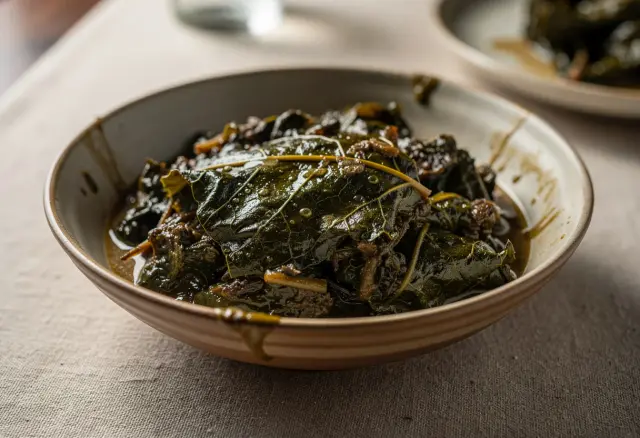
Rourou (Taro Leaves in Coconut Cream)Fiji

Therere (Malawian Okra Relish)Malawi
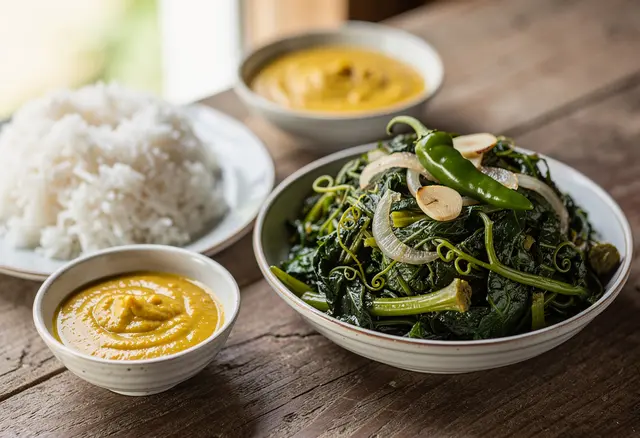
Toufé Brèdes (Mauritian Smothered Greens)Mauritius
Cuisine
Diet
Frequently asked questions
What is Kumu (Pumpkin Tips in Coconut Cream)?
The tender shoots and young leaves of the pumpkin vine, stripped and wilted with onion, then simmered briefly in coconut cream with a little salt and chili.
Where does Kumu (Pumpkin Tips in Coconut Cream) come from?
Kumu (Pumpkin Tips in Coconut Cream) is a Papua New Guinean dish from Highlands, Papua New Guinea.
Can Kumu (Pumpkin Tips in Coconut Cream) be made vegan, gluten-free, or dairy-free?
This Kumu (Pumpkin Tips in Coconut Cream) recipe includes substitution suggestions for vegetarian, vegan, gluten-free, dairy-free, nut-free, egg-free, and pork-free versions. Treat the substitutions as a starting guide rather than a guarantee, and see the allergen note below.
Is Kumu (Pumpkin Tips in Coconut Cream) safe for people with food allergies?
Our dietary labels and substitutions are a cooking guide, not medical or allergen-safety advice. We track dairy, egg, gluten, tree nuts and peanuts (we still count coconut as a tree nut to be cautious, although the FDA stopped listing it as one in 2025), fish, and shellfish, but we do not screen for sesame, soy, mustard, celery, or sulphites. If you have a food allergy, always read the label on every product you use, and remember a home or commercial kitchen can cross-contaminate ingredients in ways a recipe cannot control.
How long does Kumu (Pumpkin Tips in Coconut Cream) take to make?
About 27 minutes total (15 minutes prep, 12 minutes cooking), serving 4.
Get the Sunday Spin
One dish from somewhere in the world, in your inbox every Sunday. No spam, just dinner inspiration you can cook that day.