
🍢 SNACK
Bansh (Mongolian Boiled Dumplings)
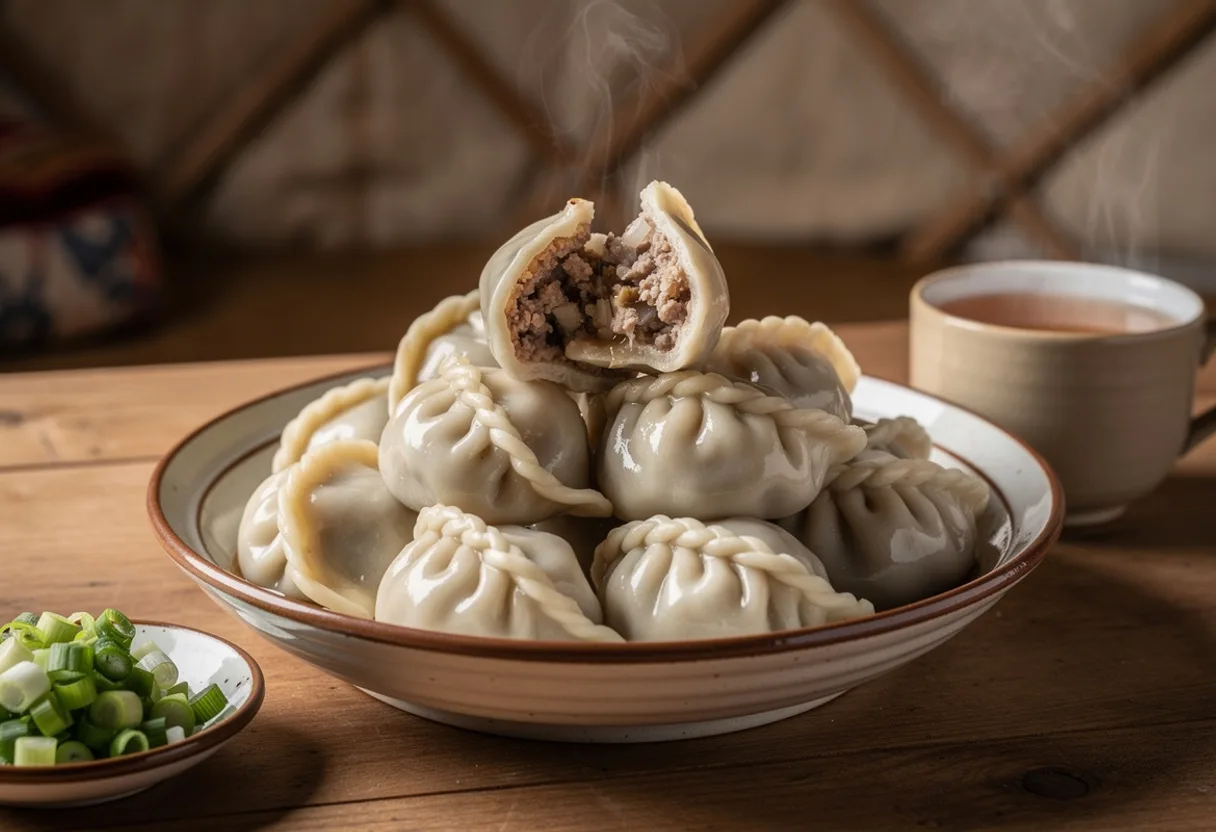
Small half-moon dumplings of plain flour dough filled with minced mutton or beef, onion and garlic, their edges braided shut, boiled until they float and eaten hot or in milk tea.
Mongolian · medium · serves 4
prep 60 min · cook 25 min · plus 15 min hands-off time
~440 cal · 26g protein · 52g carbs · 13g fat · 2g fiber · 2g sugars · 6g sat fat (estimated, per serving)
↓ Jump to Recipe
AI-generated illustration
Mongolian cooks make three kinds of filled dough from much the same meat and the same flour dough: buuz are steamed, khuushuur are fried flat, and bansh are small dumplings that are boiled. Bansh are the smallest, a teaspoon of filling each, folded into half moons with the edge braided or pleated shut, and a neat, tight seam is a point of pride.
The filling is simple: minced mutton or beef, onion, garlic, salt and pepper, sometimes caraway, loosened with a little water so it stays juicy. The dough is just flour and water, rested and rolled thin.
Bansh are boiled in salted water until they rise to the top, and eaten plain, in a clear broth or in banshtai tsai, the salty Mongolian milk tea with dumplings, a classic comfort food. They are made in batches at home for family gatherings and for the cold months.
Saved recipes and passport stamps are kept on this device. Sign in to keep them across your devices and leave reviews.
Make it yours
✓ Naturally dairy-, nut-, egg- and pork-free. No swaps needed.
Toggle a diet and the ingredients rewrite themselves with regional substitutes.
🥕 Vegetarian
🌱 Vegan
🌾 Gluten-Free
🥛 Dairy-Free
🥜 Nut-Free
🥚 Egg-Free
🐖 Pork-Free
Dietary labels are a cooking guide, not allergen-safety advice. We track dairy, egg, gluten, tree nuts and peanuts (we count coconut as a tree nut, following FDA labeling), fish, and shellfish; we do not screen for sesame, soy, mustard, celery, or sulphites. If you have a food allergy, read the label on every product you use, and note that a kitchen can cross-contaminate in ways a recipe cannot control.
Ingredients
US
Metric
Serves 4
- 250 g plain (all-purpose) flour
- 150 ml water (for the dough)
- a pinch salt (for the dough)
- 300 g minced mutton or beef, not too lean
- 1 onion, very finely chopped
- 2 garlic cloves, minced
- 1 tsp salt (for the filling)
- 1/2 tsp black pepper
- 1/4 tsp ground caraway, optional
- 3 tbsp cold water (for the filling)
Instructions
- 1Mix the flour, water and salt and knead to a smooth, firm dough. Cover and leave for 15 minutes.
- 2Mix the meat with the onion, garlic, salt, pepper, caraway and cold water until it is sticky and juicy.
- 3Roll the dough thin and cut out circles about 7 cm across. Put a teaspoon of filling on each, fold into a half moon and press the edges firmly together, then pleat or braid the edge to seal it.✎ Chef’s noteSeal them completely. Any gap lets water in and the filling out.
- 4Bring a large pot of salted water to the boil and cook the bansh in batches, stirring gently at first so they do not stick. They sink, then rise; cook for about 10 minutes in all, until they float and the filling is cooked through.
- 5Lift out with a slotted spoon and serve hot, plain, in broth or in salty milk tea.
Mongolian home tradition.
Ratings & reviews
Cooked it? Rate this dish:
No account needed. Sign in to leave a full review with a comment.
Cooked it?
Kept on this device, no account needed. Sign in to leave a review and keep your passport across your devices.
No reviews yet, be the first to cook it.
🌏 While it simmers, know your destination
📍
Ulaanbaatar. Ulaanbaatar is the world's coldest capital, and its food answers with fat and flour: mutton in nearly everything, steamed buuz dumplings, and tsuivan, hand-cut noodles fried with meat and cabbage. Dairy from the steppe, dried and cultured, carries through the winter.
🗺️
Mongolia. Mongolian cuisine is shaped by nomadic life on the steppe, mutton, dairy, and dough dominate, from steamed buuz dumplings to hearty noodle stews. Milk teas, dried curds, and whole-animal cooking reflect a herding heritage.
🌍
Asia. Fermentation is the thread that runs the whole way across: soy sauce and miso, Korean doenjang and kimchi, Southeast Asian fish sauces, the soured batter behind an idli. Chilli is the newcomer among them, arriving only after 1500 with Portuguese and Spanish traders, which makes the heat in Sichuan, Thai and Korean cooking far younger than the fermenting underneath it.
The story behind this dish is up top, worth a read while the pot works.
More from Mongolia

Khuushuur (Fried Meat Pastry)Crisp deep-fried half-moon pastries filled with minced mutton, onion, and garlic, the taste of the Naadam festival.

TsuivanSteppe-style fried noodles steamed over a mutton and vegetable braise, Mongolia’s one-pan answer to a cold night.

BoortsogSimple fried dough biscuits eaten with milky, lightly salted tea across the Mongolian steppe.
Browse all Mongolia recipes →
Good to know
You’ll need: Pot or saucepan.
Storing it: Uncooked parcels freeze well and cook from frozen. Cooked ones keep 2 to 3 days refrigerated and steam or pan-warm to serve.
Make it a Mongolia meal

Suutei TsaiDrink
Khailmag (Caramelized Clotted Cream)Dessert
Similar dishes from around the world

MantuAfghanistan

Sini MantiArmenia
MantiTurkey

Kazakh MantiKazakhstan

PelmeniRussia
Shish BarakSyria
Cuisine
Diet
Frequently asked questions
What is Bansh (Mongolian Boiled Dumplings)?
Small half-moon dumplings of plain flour dough filled with minced mutton or beef, onion and garlic, their edges braided shut, boiled until they float and eaten hot or in milk tea.
Where does Bansh (Mongolian Boiled Dumplings) come from?
Bansh (Mongolian Boiled Dumplings) is a Mongolian dish from Ulaanbaatar, Mongolia.
Can Bansh (Mongolian Boiled Dumplings) be made vegan, gluten-free, or dairy-free?
This Bansh (Mongolian Boiled Dumplings) recipe includes substitution suggestions for vegetarian, vegan, gluten-free, dairy-free, nut-free, egg-free, and pork-free versions. Treat the substitutions as a starting guide rather than a guarantee, and see the allergen note below.
Is Bansh (Mongolian Boiled Dumplings) safe for people with food allergies?
Our dietary labels and substitutions are a cooking guide, not medical or allergen-safety advice. We track dairy, egg, gluten, tree nuts and peanuts (we still count coconut as a tree nut to be cautious, although the FDA stopped listing it as one in 2025), fish, and shellfish, but we do not screen for sesame, soy, mustard, celery, or sulphites. If you have a food allergy, always read the label on every product you use, and remember a home or commercial kitchen can cross-contaminate ingredients in ways a recipe cannot control.
How long does Bansh (Mongolian Boiled Dumplings) take to make?
About 1 h 40 min in all: 60 minutes prep and 25 minutes cooking, plus 15 min of hands-off waiting the method needs, serving 4.
Get the Sunday Spin
One dish from somewhere in the world, in your inbox every Sunday. No spam, just dinner inspiration you can cook that day.