
🍢 SNACK
Karipap (Malaysian Curry Puffs)
Half-moon pastries with a crimped rope edge, filled with a dry curry of potato, chicken and onion and deep-fried until golden, the teatime and street-stall favourite of Malaysia.
Malaysian (Malay) · medium · serves 6
prep 50 min · cook 40 min · plus 30 min hands-off time
~420 cal · 13g protein · 53g carbs · 17g fat · 3g fiber · 2g sugars · 7g sat fat (estimated, per serving)
↓ Jump to Recipe

AI-generated illustration
Karipap, curry puffs, are one of the most popular kuih in Malaysia: small half-moon pastries filled with a thick, dry curry and usually deep-fried. They are sold from roadside stalls and eaten at breakfast and teatime. They are believed to have been created by the Malays, though some writers see Portuguese influence in the shape, which is close to that of Iberian turnovers.
The classic filling is potato cooked with onion and curry powder, usually with a little chicken or beef, and sometimes a slice of hard-boiled egg; sweet potato and sardine fillings are also common. The pastry comes in two main styles: a smooth, short dough, or karipap pusing, a spiral pastry made from two doughs rolled together into flaky layers.
What every good karipap shares is the edge, pinched and folded over by hand into a neat rope along the curve.
Saved recipes and passport stamps are kept on this device. Sign in to keep them across your devices and leave reviews.
Make it yours
✓ Naturally nut-, egg- and pork-free. No swaps needed.
Toggle a diet and the ingredients rewrite themselves with regional substitutes.
🥕 Vegetarian
🌱 Vegan
🌾 Gluten-Free
🥛 Dairy-Free
🥜 Nut-Free
🥚 Egg-Free
🐖 Pork-Free
Dietary labels are a cooking guide, not allergen-safety advice. We track dairy, egg, gluten, tree nuts and peanuts (we count coconut as a tree nut, following FDA labeling), fish, and shellfish; we do not screen for sesame, soy, mustard, celery, or sulphites. If you have a food allergy, read the label on every product you use, and note that a kitchen can cross-contaminate in ways a recipe cannot control.
Ingredients
US
Metric
Serves 6
- 300 g plain flour
- 1/2 tsp salt (for the pastry)
- 75 g cold butter or margarine, cubed
- 120 ml cold water
- 2 tbsp vegetable oil (for the filling)
- 1 large onion, finely chopped
- 2 garlic cloves, minced
- 2 tbsp Malaysian meat curry powder, mixed to a paste with 2 tbsp water
- 150 g boneless chicken thigh, finely diced
- 400 g potatoes, peeled and cut into 1 cm dice
- 150 ml water (for the filling)
- 1 tsp sugar
- 1 tsp salt (for the filling)
- 1 litre vegetable oil, for deep-frying
Instructions
- 1Make the pastry: mix the flour and salt, rub in the butter until it looks like breadcrumbs, then add the cold water a little at a time and knead briefly into a smooth, soft dough. Cover and rest for 30 minutes.
- 2Meanwhile make the filling: heat the 2 tbsp oil in a pan and fry the onion and garlic for 4 to 5 minutes until soft. Add the curry paste and fry for 2 minutes, stirring, until fragrant and the oil separates.
- 3Add the chicken and potatoes and stir to coat, then add the water, sugar and salt. Cover and simmer for 12 to 15 minutes, stirring now and then, until the potatoes are tender and the filling is thick and dry. Mash a few pieces of potato to bind it and let it cool completely.✎ Chef’s noteThe filling must be dry and cold before it goes in the pastry, or it will make the dough soggy and burst in the oil.
- 4Roll the pastry out to about 3 mm thick and cut it into 9 to 10 cm circles, re-rolling the scraps.
- 5Put a heaped tablespoon of filling in the middle of each circle, fold it into a half moon and press the edges together. Starting at one corner, pinch and fold the edge over itself all along the curve to make a rope pattern.
- 6Heat the oil to about 170C (340F). Fry the karipap a few at a time for 3 to 4 minutes on each side, until golden and crisp. Drain on a rack and eat warm, with tea.
Malay kuih and street-stall tradition.
Ratings & reviews
Cooked it? Rate this dish:
No account needed. Sign in to leave a full review with a comment.
Cooked it?
Kept on this device, no account needed. Sign in to leave a review and keep your passport across your devices.
No reviews yet, be the first to cook it.
🌏 While it simmers, know your destination
📍
Penang. Nasi kandar really did begin here, sold by Tamil Muslim vendors who carried rice and curries slung from a shoulder pole, which is what kandar describes. Penang assam laksa is the other local signature and contains no coconut milk at all, being a sour broth of mackerel and tamarind rather than a curry.
🗺️
Malaysia. The hawker centre and the mamak stall are the country's two great equalisers, open late, run by families, and serving three culinary traditions within a few metres. Roti canai is stretched, slapped and folded to order, laksa changes completely depending on which state you are in, and everything comes with a saucer of sambal on the side.
🌍
Asia. Asia is the world's largest and most populous continent, and its food spans the delicate seasonality of Japanese washoku, the chili-fired curries of India and Thailand, and the wheat-and-lamb traditions of Central Asia. Rice, noodles, soy, and fermentation recur across its regions, while ancient spice routes and religious traditions shaped distinct grammars of flavor. Whether from a street-cart wok or a monastery kitchen, eating is deeply communal and ritual-rich.
The story behind this dish is up top, worth a read while the pot works.
More from Malaysia
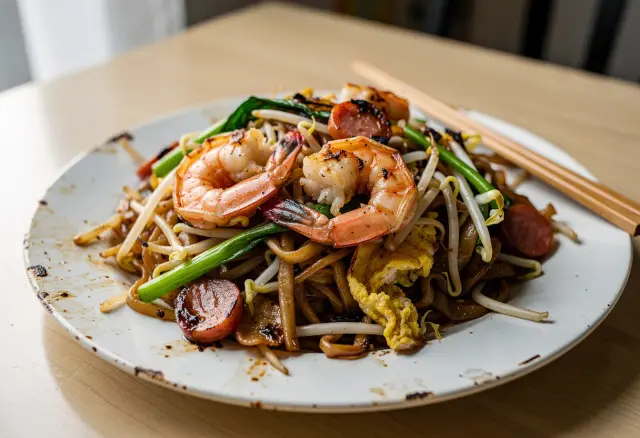
Char Kway TeowFlat rice noodles seared in a screaming wok with prawns, egg, chives, and dark soy, Penang’s hawker crown.

Nasi LemakFragrant coconut rice with spicy sambal, fried anchovies, peanuts, cucumber, and egg, Malaysia's national breakfast.
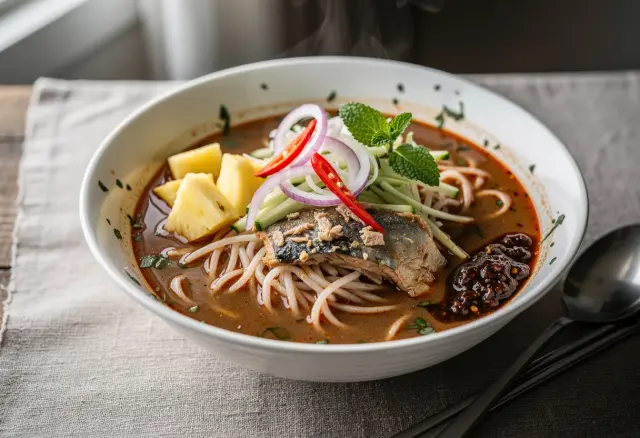
Penang Asam LaksaA tart, spicy mackerel-and-tamarind noodle soup topped with pineapple, mint, and ginger flower, Penang's iconic bowl.
Browse all Malaysia recipes →
Good to know
Storing it: Store in an airtight container. Most keep 2 to 3 days at room temperature, and longer refrigerated.
Make it a Malaysia meal

Teh TarikDrink
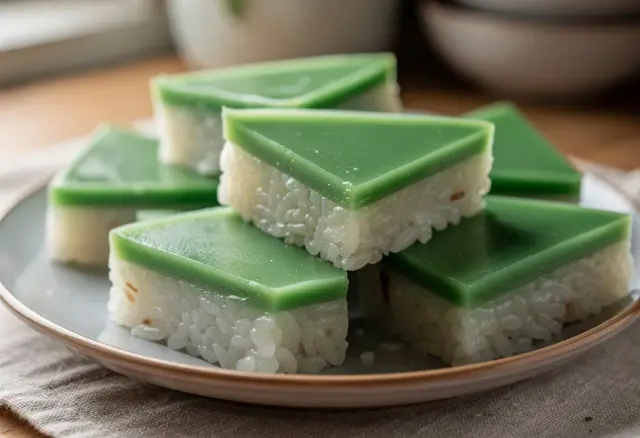
Kuih Seri MukaDessert
Similar dishes from around the world
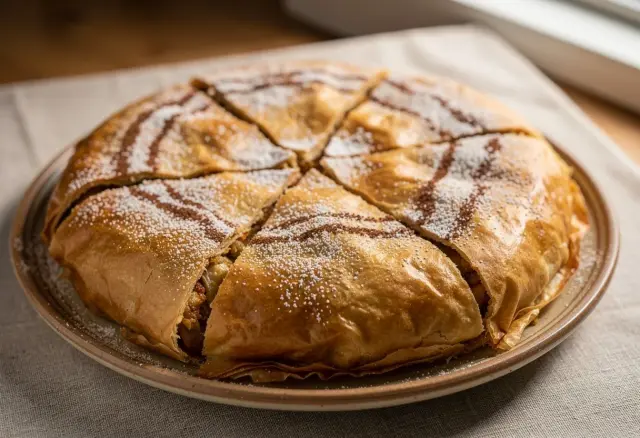
Chicken BastillaMorocco
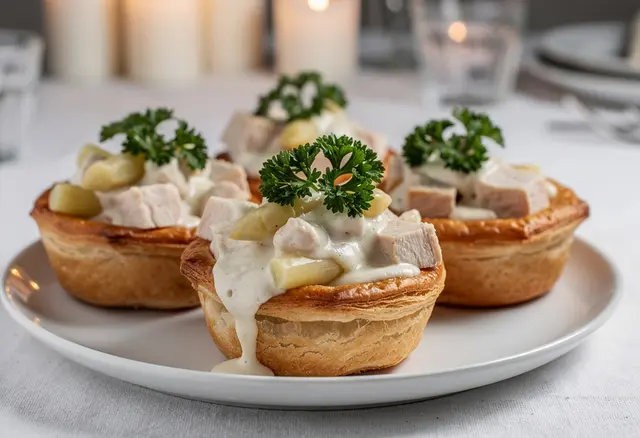
Tarteletter med Høns i Asparges (Danish Chicken and Asparagus Tartlets)Denmark
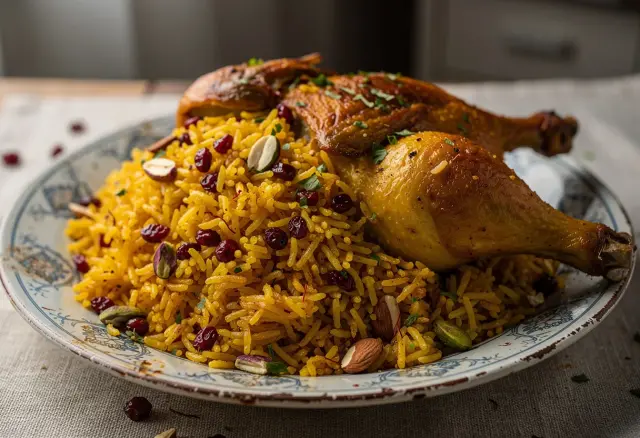
Zereshk Polo ba Morgh (Barberry Rice with Chicken)Iran

Lihapiirakka (Finnish Fried Meat Pie)Finland
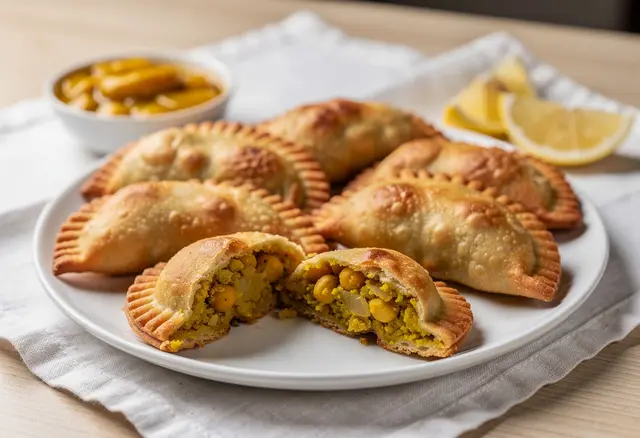
Sambusak b'Tawa (Iraqi Chickpea Turnovers)Iraq
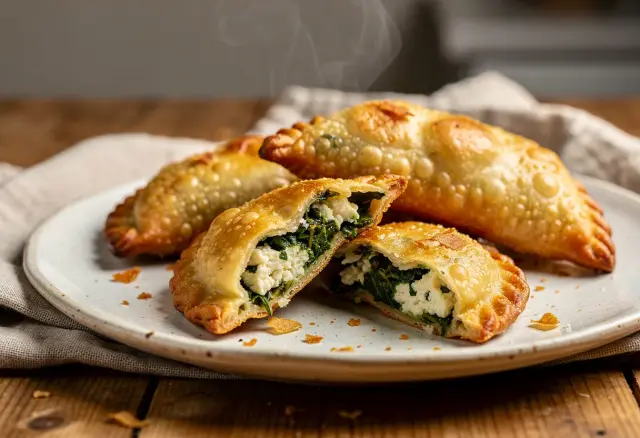
BarbagiuanMonaco
Cuisine
Diet
Frequently asked questions
What is Karipap (Malaysian Curry Puffs)?
Half-moon pastries with a crimped rope edge, filled with a dry curry of potato, chicken and onion and deep-fried until golden, the teatime and street-stall favourite of Malaysia.
Where does Karipap (Malaysian Curry Puffs) come from?
Karipap (Malaysian Curry Puffs) is a Malaysian (Malay) dish from Penang, Malaysia.
Can Karipap (Malaysian Curry Puffs) be made vegan, gluten-free, or dairy-free?
This Karipap (Malaysian Curry Puffs) recipe includes substitution suggestions for vegetarian, vegan, gluten-free, dairy-free, nut-free, egg-free, and pork-free versions. Treat the substitutions as a starting guide rather than a guarantee, and see the allergen note below.
Is Karipap (Malaysian Curry Puffs) safe for people with food allergies?
Our dietary labels and substitutions are a cooking guide, not medical or allergen-safety advice. We track dairy, egg, gluten, tree nuts and peanuts (we still count coconut as a tree nut to be cautious, although the FDA stopped listing it as one in 2025), fish, and shellfish, but we do not screen for sesame, soy, mustard, celery, or sulphites. If you have a food allergy, always read the label on every product you use, and remember a home or commercial kitchen can cross-contaminate ingredients in ways a recipe cannot control.
How long does Karipap (Malaysian Curry Puffs) take to make?
About 2 h in all: 50 minutes prep and 40 minutes cooking, plus 30 min of hands-off waiting the method needs, serving 6.
Get the Sunday Spin
One dish from somewhere in the world, in your inbox every Sunday. No spam, just dinner inspiration you can cook that day.