← For Teachers
🌍 Country of the Week · A Spin the Globe Teacher's Guide
El Salvador
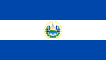 El Salvador
North America · This week's dish comes from San Salvador
About El Salvador
El Salvador is the land of the pupusa, a thick stuffed corn cake griddled and topped with tangy curtido slaw. Corn, beans, and a warm street-food culture anchor its comforting national table.
The pupusa has a national day, the second Sunday in November, set by legislative decree in 2005, and Honduras also claims the form, so El Salvador's claim is best put as national status rather than sole invention. Olocuilta is where the rice-flour version is associated, and loroco, an edible flower bud, is the filling that surprises visitors most.
Curtido is not a garnish but the other half of the dish: cabbage, carrot and onion lightly fermented in vinegar with oregano, piled on top so the sourness cuts through the cheese. The pupusa is patted between wet palms, sealed around the filling and cooked on a comal, and the seam is the part cooks are judged on.
The wider picture: A collision of Indigenous, colonial, and immigrant tables.
This week's dish: Plátanos Fritos con Frijoles y Crema
Caramelized fried plantains with thick refried beans and a swirl of crema, the humble Salvadoran típico breakfast.
Serves 4 · Prep 10 min · Cook 20 min · Difficulty: easy
See the full recipe: ingredients, steps and dietary swaps →
Grown-up jobs: any step that uses a hot stove, oven, boiling water, or a sharp knife is for a teacher or parent. Children can measure, mix, and assemble.
Discussion prompts
1. Find El Salvador on a world map or globe. It sits in North America. Which oceans or neighboring countries does it touch, and roughly how far is it from where you live?
2. Plátanos Fritos con Frijoles y Crema comes from San Salvador, in El Salvador. Read its ingredient list together. Which of those foods do you think are grown or raised nearby, and how might the country's climate and landscape explain that?
3. Read the short story behind Plátanos Fritos con Frijoles y Crema. How have the people, trade routes, and history of El Salvador shaped what ends up on the plate there?
4. Compare Plátanos Fritos con Frijoles y Crema to a dish your own family cooks. What is similar, what is different, and what one question would you ask a family in El Salvador about how they make and share it?
5. After you cook Plátanos Fritos con Frijoles y Crema, add El Salvador to a classroom map and give it a stamp. Write down one fact about its food or geography that you did not know this morning.
🌍 Spin the Globe · Geography through food · spintheglobeofficial.com/for-teachers
🍽 Open the full Plátanos Fritos con Frijoles y Crema recipeServings dial, dietary swaps for every table, and its own print button.
🍳 Kitchen SchoolShort lessons on the core skills the recipes lean on.
📋 More teacher resourcesThe printable passport, how to run Country of the Week, and every country page.